The Frieza Saga stands out as one of the most stressful times in anime history. Our heroes were completely outmatched, but the discovery of the Namekian Dragon Balls gave them a glimmer of hope. These massive orange orbs shifted the balance of power for everyone involved.
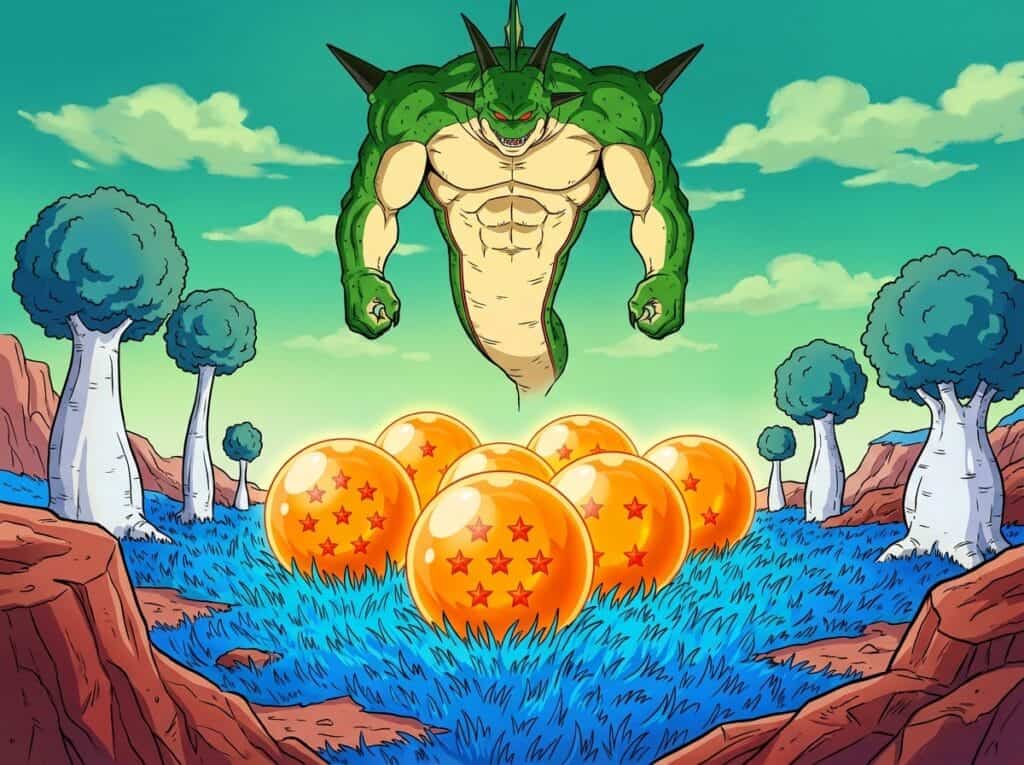
Unlike the set back on Earth, these giant orbs summoned a muscular dragon named Porunga who offered a completely different set of rules. Getting three wishes instead of one felt like a cheat code, though the specific summoning requirements made things tricky. Understanding how these powerful artifacts worked was the only thing standing between the Z Fighters and total destruction.
Key Takeaways
- Summoning Porunga requires a unique password and wishes spoken in the native Namekian language, a strict security measure that prevents enemies from hijacking the wish-granting power.
- The Namekian Dragon Balls grant three separate wishes and allow for repeat resurrections of the same individual, offering a significant strategic advantage over Earth’s Shenron.
- Original summoning rules limited Porunga to reviving only one person per wish, forcing the heroes to prioritize specific allies rather than performing mass resurrections.
- Namek’s set offers a superior recovery time, with the balls remaining dormant for only 130 days compared to the full year required for Earth’s Dragon Balls.
Summoning Porunga and the Secret Password
When the Z Fighters first arrived on Namek, the sheer scale of the local Dragon Balls immediately caught their attention. Unlike the small spheres found back on Earth, these ancient artifacts are roughly the size of a basketball. Carrying just one of them is a serious workout, which creates a unique physical challenge for Gohan and Krillin as they try to hide them from Frieza’s soldiers Dragon Ball Z episode 54. It really emphasizes how much more powerful the Namekian Grand Elder is compared to Kami. The massive size alone tells you that the dragon waiting inside is going to be something spectacular.
Even if you manage to collect all seven orbs, you cannot simply yell out your wish in a common language like you do with Shenron. The Eternal Dragon of Namek, Porunga, has a strict security measure that requires a specific password spoken in the native Namekian tongue. This rule completely stumped Frieza, who stood over the balls helplessly because he didn’t know the summoning phrase “Takkaraput pop porunga pupiritt paro” Dragon Ball Z episode 75. You actually need a Namekian like Dende to translate your desires, which adds a huge layer of strategy to the saga. It prevents just any random villain from landing on the planet and instantly taking over the universe.
Comparing Porunga and Shenron Wish Rules

The biggest shift during the Frieza Saga was definitely the sheer number of wishes available. Back on Earth, we were used to Shenron granting just a single wish before scattering across the planet. Porunga changed the strategy because he offered three separate wishes to anyone who could summon him Dragon Ball Z episode 75. This allowed the Z Fighters to get creative, like wishing for Piccolo’s resurrection and his transport to Namek separately. Having those extra chances meant that a single mistake or a wasted wish wasn’t necessarily the end of the world for our heroes.
Another huge benefit I noticed was how often the Namekian Dragon Balls could be used compared to the Earth set. While Earth’s dragon stones turn into plain rocks for a full year after being used, Namek’s set only goes dormant for 130 days. This shorter timeframe happens because a year on Namek is much shorter than a year on Earth. I also love that Porunga doesn’t have the same restriction as Shenron regarding bringing people back to life more than once. Shenron could not revive someone who had already died before, but Porunga can resurrect the same person as many times as needed.
The One Person Resurrection Limitation
While having three wishes sounds perfect, Porunga originally came with a massive catch that complicated things for our heroes. Unlike Earth’s Shenron, who could bring back an entire population with a single wish, the Namekian dragon could strictly revive only one person at a time Dragon Ball Z episode 76. This limitation created a huge strategic problem during the fight against Frieza since so many allies had fallen in battle. The Z Fighters had to be incredibly picky about who they saved because they couldn’t just wish for everyone to come back at once. It really balanced out the power of getting three wishes by forcing you to prioritize specific lives over mass restoration.
This rule forced King Kai and the others to get creative with their wording to maximize the effectiveness of the Namekian Dragon Balls. For example, they had to use one wish specifically to revive Piccolo so he could join the fight on Namek, leaving the other fallen Earthlings waiting in the afterlife Dragon Ball Z episode 76. If Porunga worked like Shenron, they could have brought back Yamcha, Tien, and Chiaotzu instantly, but the single-resurrection rule made that impossible. It added a layer of tension to the story because saving everyone became a long-term project rather than a quick fix. You really felt the weight of every single wish knowing that mass revivals were off the table.
Eventually, the Namekians realized this restriction was too hindering and upgraded their dragon’s capabilities later in the series. During the Buu Saga, the new Elder Moori tweaked Porunga so he could revive multiple people per wish just like Shenron while keeping the three-wish count Dragon Ball Z episode 280. This change was a massive relief because it finally combined the best aspects of both dragon variants into one ultimate wish-granting machine. However, during that intense initial battle on Namek, the original one-person limit was a critical plot point that dictated every move the heroes made. It serves as a great reminder of how dragon ball rules have evolved over time to fit the needs of the story.
How Namekian Dragon Balls Changed The Stakes
The Namekian Dragon Balls completely changed the stakes during the intense fight against Frieza. Unlike the Earth set that only granted one wish back then, Porunga offered three distinct opportunities to turn the tide of battle. I always found it fascinating that you had to speak Namekian to even activate them, adding a layer of strategy we had not seen before. While the limitation of reviving only one person per wish was tricky, the trade-off for multiple wishes was absolutely worth it. These specific rules forced the heroes to be much smarter and more precise with their requests.
Beyond just the mechanics, introducing a second set of orbs really opened up the lore of the Dragon Ball universe. It confirmed that Kami was actually an alien and showed us that other worlds had their own magical guardians with totally different powers. Seeing Porunga tower over the terrain made the galaxy feel much bigger and more mysterious than before. I think this arc did a great job of showing that Earth was not the center of everything. It paved the way for all the massive cosmic adventures that followed later in the series.
Frequently Asked Questions
1. What makes the Namekian Dragon Balls different from the ones on Earth?
These massive orbs summon a muscular dragon named Porunga who grants three wishes instead of the single wish you get on Earth. They are also much larger, roughly the size of a beach ball, which makes them physically difficult to carry around Dragon Ball Z episode 54. You also need to speak a specific password in the native language to use them.
2. How big are the Namekian Dragon Balls?
The sheer size of these artifacts is comparable to a basketball or beach ball, reflecting the immense power of the Namekian Grand Elder. Carrying them is a serious workout that challenged even strong fighters like Gohan and Krillin Dragon Ball Z episode 54. Their massive weight and size make it much harder to hide them from enemies.
3. What is the password to summon the Namekian dragon?
To summon Porunga, you must recite the specific phrase “Takkaraput pop porunga pupiritt paro” in the native tongue Dragon Ball Z episode 75. This secret password acts as a security measure to keep villains like Frieza from easily using the wishes. Without this exact phrase, the balls remain inert stone spheres.
4. Do you need to speak Namekian to make a wish?
Yes, Porunga only accepts wishes that are spoken in the native Namekian language. This means you need a translator like Dende to convey your desires to the dragon, or the wish will not work Dragon Ball Z episode 75. This rule completely stumped Frieza when he tried to use them for immortality.
5. How many wishes does Porunga grant?
The Eternal Dragon of Namek is incredibly generous and offers three separate wishes to those who successfully summon him. This feels like a cheat code compared to the single wish allowed by Shenron back on Earth. It gave the heroes a crucial advantage during their desperate battle for survival.
6. Why couldn’t Frieza use the Dragon Balls on Namek?
Frieza failed because he did not know the secret password required to activate the artifacts. Even if he had summoned the dragon, he lacked a Namekian translator to speak his wish in the proper language Dragon Ball Z episode 75. These strict rules prevented him from gaining the immortality he craved.