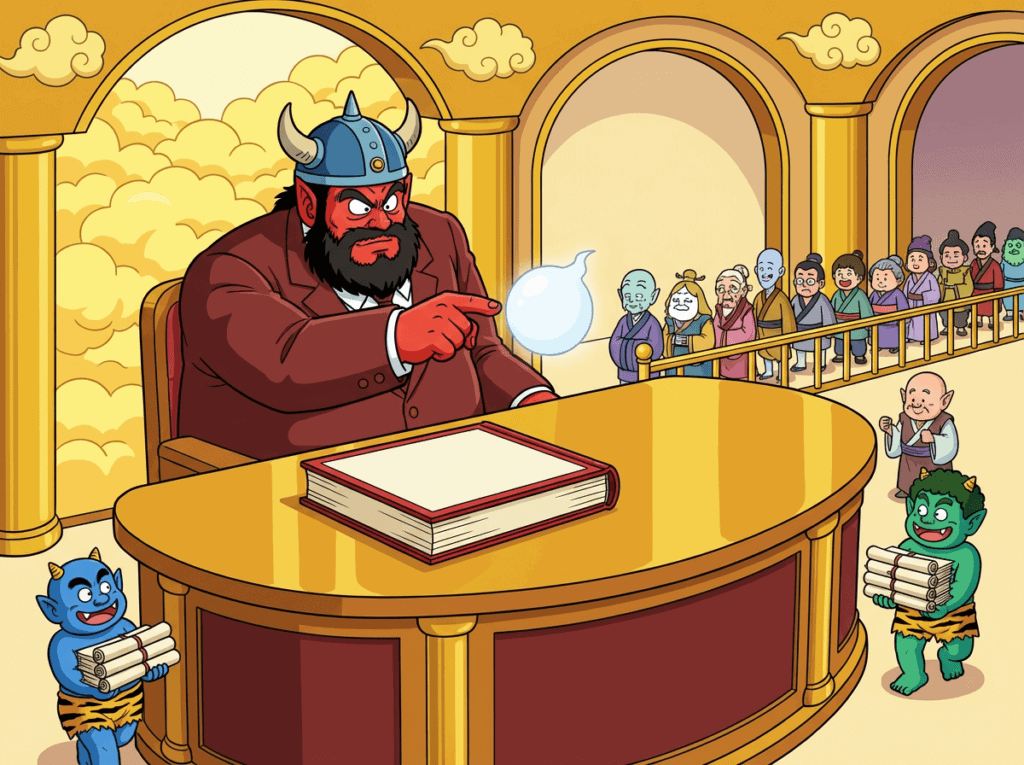
Imagine standing in a line that stretches for miles, waiting to see a giant bearded ogre behind a massive mahogany desk. This is the daily reality at the Check-In Station, where the logistics of the afterlife depend entirely on King Yemma duties. As the ultimate judge of the dead, he decides the eternal fate of every soul in the universe with just a flip of his ledger.
Whether you are a world-class hero or a common villain, you have to answer to his stamp. He has the unique power to grant heroes the right to keep their bodies or send the wicked straight to the depths of Hell. Understanding how he manages this spiritual bureaucracy helps us see just how organized the multiverse really is.
Key Takeaways
- King Yemma serves as the ultimate gatekeeper of the afterlife, using a magical ledger and a bureaucratic stamping process to judge the eternal fate of every soul.
- Exceptional heroes can be granted the rare privilege of retaining their physical bodies after death, allowing them to continue training and developing their skills in the spiritual realm.
- The afterlife maintains cosmic balance through a soul-cleansing and reincarnation process that scrubs malice from wicked spirits before recycling them back into the living world.
- Maintaining order in the Check-In Station requires a combination of administrative organization and physical might to subdue powerful villains who refuse to follow the rules.
Judging Souls At The Check-In Station
King Yemma sits behind a massive mahogany desk that makes even his giant frame look official as he manages the endless flow of souls entering the afterlife. He acts as the ultimate gatekeeper, using a magical ledger to review every single deed a person committed during their life. It is a funny blend of divine power and mundane office work that sets the tone for the spiritual side of the series. With just a quick glance at his book, he can decide if a soul is headed for the fluffy clouds of Heaven or the fiery depths of Hell Dragon Ball Z episode 1, The New Threat.
The logistics of the Check-In Station are impressive because Yemma manages to process millions of people without losing his cool. While most souls show up as tiny, identical clouds, Yemma has the special authority to let heroes keep their bodies if they served a great purpose. This bureaucratic process is how he allows Goku to keep his form for training after his first major sacrifice. It is a funny reminder that even in a world of superpowered aliens, someone still has to sit at a desk and file the paperwork Dragon Ball Z episode 2, Reunions.
Watching Yemma work is one of the most charming parts of the world-building because it turns the afterlife into a busy transit hub. He does not use complex spells or long trials to judge people, but instead relies on his trusty stamp and the records in his book. This unique take on ancient mythology makes the cosmic stakes feel relatable and grounded. Whether he is dealing with a common spirit or a powerful warrior, Yemma remains the undisputed boss of the Check-In Station Dragon Ball Z episode 3, Unlikely Alliance.
How King Yemma Fits Into The Divine Hierarchy
Although King Yemma is often treated as an office manager, his authority is closer to that of a powerful deity within the Other World. His name and function echo Yama and Enma, traditional figures associated with judging the dead, while Dragon Ball gives that ancient role a distinctly comedic personality. He is not the same as Kami, the guardian of Earth, or the Kais who oversee broader regions of the universe. Instead, Yemma specializes in the first judgment that every deceased person must face.
This division of responsibility explains why even major fighters such as Vegeta must ultimately pass through the Check-In Station. Strength, royal status, and Saiyan pride do not automatically allow someone to skip the process. Yemma can recognize sacrifice and meaningful change, but he still has to balance individual decisions with the rules governing the entire afterlife. His desk is therefore an important checkpoint between mortal life, Heaven, Hell, and the wider spiritual realm.
Granting Physical Bodies For Special Training

One of the most fascinating parts of King Yemma’s job is his ability to grant special favors to heroes who have saved the world. Instead of forcing every soul to turn into a tiny, drifting cloud, he has the unique authority to let exceptional warriors keep their physical bodies after they pass away. I love how this turns the afterlife into a massive bureaucratic process where paperwork determines your physical state. Goku is the first person we really see benefit from this rule when he dies during the battle against Raditz. This decision is what allows Goku to keep his muscles and energy so he can travel across Snake Way for his next big adventure Dragon Ball Z episode 2, Reunions.
This power is a major shift for the series because it transforms the afterlife into a high stakes training ground. Without Yemma’s special permission, a hero would just be another spirit waiting in line at the Check-In Station. By keeping their bodies, characters like the Z-Fighters can continue to push their limits and learn new techniques from legendary masters like King Kai. It is funny to think that even in death, these heroes have to deal with Yemma’s massive desk and his endless ledgers to get things done. This logistical quirk shows that even the rules of the multiverse can be bent if you have a good enough reputation with the guy in charge Dragon Ball Z episode 21, The Arrival of the Saiyans.
Managing Reincarnation And The Soul Cleansing Process
King Yemma does much more than just stamp papers at his mahogany desk all day. While many souls are sent straight to Heaven or Hell, the most wicked spirits require a much more intensive process known as soul cleansing. This spiritual car wash scrubs away the malice and evil memories from a soul until it is a blank slate, ready to be recycled back into the living world. We see the ultimate success of this system when Goku makes a special request for the soul of Kid Buu to be given a second chance as a good person Dragon Ball Z episode 291, Gokus Next Journey.
The logistical side of reincarnation process is where Yemma’s bureaucratic authority really shines. After a soul has been thoroughly purified, it is sent back to Earth or another planet to be born as a brand new being with no memory of its past life. This process ensures that the universe maintains a steady balance of life and death without being overrun by ancient, lingering spirits. It is a massive responsibility that keeps the Check-In Station running smoothly despite the constant influx of new arrivals Dragon Ball Z episode 291, Gokus Next Journey.
I find it fascinating how Yemma manages to turn a terrifying monster like Buu into a kind-hearted boy like Uub through this systematic approach. It shows that even in a world filled with gods and aliens, there is a structured office job keeping the cycle of life moving forward. Without Yemma’s ability to wipe the slate clean, the afterlife would be a lot more crowded and chaotic for everyone involved. This blend of divine power and mundane paperwork is exactly what makes the universe so uniquely charming Dragon Ball Z episode 291, Gokus Next Journey.
Why The Buu Case Matters To Yemma’s Duties
The fate of Majin Buu demonstrates that Yemma’s work is not limited to labeling souls as permanently good or evil. Kid Buu represented destruction in its purest form, yet the reincarnation decision recognized that a soul could begin again after its corruption had been removed. This does not excuse the damage Buu caused, but it shows how the afterlife system looks beyond punishment and also protects the possibility of renewal.
That decision gives Yemma’s role a surprisingly thoughtful dimension. He is an enforcer, but he is also part of a cosmic process that preserves balance across generations. The arrival of Uub means that the energy and potential connected to Buu are not simply erased. Instead, they are redirected into a life capable of compassion, growth, and friendship.
Maintaining Order Through Physical Might And Paperwork

King Yemma is much more than a typical office worker, even if he spends most of his time behind a massive wooden desk. He manages a never ending line of souls at the Check-In Station, deciding who earns a spot in Heaven and who gets sent down to Hell. While he relies on a magical ledger to track everyone’s life deeds, he also has the unique power to let heroes keep their physical bodies for training. This bureaucratic process is a hilarious part of the series that shows how organized the afterlife really is Dragon Ball Z episode 1, The New Threat.
Don’t let the pile of paperwork fool you because Yemma is incredibly strong when he needs to be. When Raditz arrived in the afterlife and started causing trouble, Yemma didn’t call for backup or hide behind his desk. He personally stepped in and used his physical might to wrestle the Saiyan into submission before sending him off to Hell. This moment proves that you have to be tough to maintain order among the universe’s most dangerous villains Dragon Ball Z episode 6, No End in Sight.
Living as the ultimate judge requires a perfect balance of patience for logistics and the strength to enforce the rules. Yemma sits at the heart of the spiritual multiverse, making sure every soul goes exactly where they belong without any exceptions. Whether he is stamping a passport for a hero or putting a bully in a headlock, he keeps the entire system running smoothly. It is this mix of comedy and raw power that makes his role as the King of the Dead so memorable Dragon Ball Z episode 195, Final Round.
King Yemma’s Hilarious Afterlife Desk Job
Ultimately, King Yemma’s endless paperwork and grumpy attitude bring a grounded, hilarious charm to the afterlife that makes the series feel truly unique. It is a brilliant creative choice to turn the cosmic judgment of souls into a mundane desk job filled with stamps and massive ledgers. Instead of an intimidating or mysterious void, we get a bustling check-in station where even the most powerful villains have to wait in line just like everyone else. This mix of high stakes and boring office logistics provides a sense of humor that balances out the intense battles the series is known for. Watching a giant ogre get stressed over his daily workload makes the spiritual world feel much more relatable and fun to explore.
I love how Yemma acts as the ultimate gatekeeper, proving that even in a world of god-like powers, someone still has to manage the paperwork. His ability to decide who keeps their body or who gets sent to the back of the line adds a layer of organization to the chaos of the universe. It is always a treat to see him lose his temper with a difficult soul or try to keep up with the constant influx of people after a major battle. This bureaucratic twist on ancient mythology is exactly why the franchise remains so memorable and endearing to fans of all ages. King Yemma might be overworked, but his role as the universe’s busiest judge is a vital part of the story’s heart and soul.
Frequently Asked Questions
1. What is King Yemma’s main job in the afterlife?
King Yemma acts as the ultimate judge who decides where every soul goes after they pass away. He sits at a massive mahogany desk and reviews a magical ledger to see if a person belongs in Heaven or Hell Dragon Ball Z episode 1, The New Threat.
2. How does King Yemma decide a person’s fate?
He uses a special book that lists every good and bad deed a person did during their life to make his decision. With just a quick stamp of his ledger, he can process millions of souls and keep the spiritual world organized Dragon Ball Z episode 1, The New Threat.
3. Can King Yemma let people keep their bodies after death?
Yes, he has the special power to let great heroes keep their physical forms instead of turning into tiny clouds. He uses this authority to allow brave warriors like Goku to continue their training in the afterlife Dragon Ball Z episode 2, Reunions.
4. Where does King Yemma do his work?
He works at the Check-In Station, which is the very first place every soul goes when they enter the afterlife. It looks like a giant office where he manages a never ending line of people waiting for their final judgment Dragon Ball Z episode 1, The New Threat.
5. Is King Yemma’s job difficult to manage?
Managing the logistics of the entire universe is a huge task, but he handles the massive flow of souls without losing his cool. He balances divine power with boring office work to make sure the spiritual bureaucracy runs smoothly Dragon Ball Z episode 2, Reunions.
6. Does King Yemma judge everyone the same way?
He treats everyone fairly by looking at their specific actions regardless of how every Dragon Ball character dies, whether they were a world class hero or a common villain. Even the most powerful fighters in the universe have to answer to his stamp before they can move on Dragon Ball Z episode 2, Reunions.