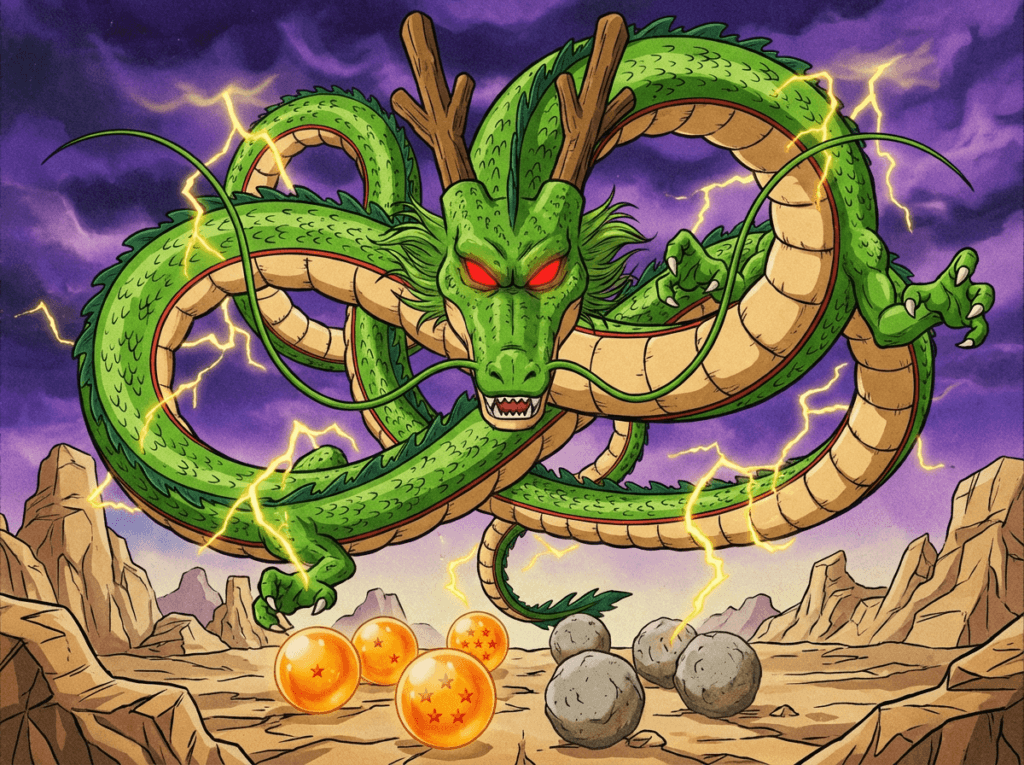
I have always dreamed of gathering the seven Dragon Balls to have my deepest desires granted with a simple shout. However, getting what I want isn’t always easy because of the strict Shenron wish limits that govern the dragon’s magic. Since his power is tied directly to Earth’s Guardian, he isn’t actually an all-powerful god who can do anything I ask.
Understanding these rules is the difference between saving the world and wasting a once-in-a-lifetime opportunity. Whether I am trying to bring back a fallen friend for the second time or take down a powerful villain, the dragon has lines he simply cannot cross. Knowing exactly what Dende’s dragon can and cannot do ensures I won’t be left standing in the rain with a wish that gets rejected.
Key Takeaways
- Shenron’s magic is strictly limited by the power level of his creator, Dende, meaning he cannot kill villains or affect powerful beings who do not grant their explicit consent.
- The Earth’s Dragon Balls cannot revive an individual more than once or bring back those who have died of natural causes like old age or illness.
- Mass resurrections are subject to a one-year time limit and, under Dende’s upgraded system, consume the energy of two wishes instead of one.
- Dende’s ‘Version 2.0’ upgrade increased the wish count from one to three, providing the Z-Fighters more strategic flexibility while maintaining essential balance restrictions.
Creator Power Levels And Divine Restrictions
I have always found it fascinating that Shenron is not actually an all-powerful god, but rather a reflection of his maker’s own limitations. Since his magic is directly tethered to Dende, he cannot grant any request that surpasses the Namekian’s internal power level. This means that if I want to kill a major villain or teleport a powerful warrior against their will, Shenron simply lacks the strength to force them. We see this mechanical limit in action when the dragon explains he cannot affect beings who are significantly stronger than his creator without their explicit permission Dragon Ball Z episode 193, Gathering For The Tournament.
These divine restrictions are the main reason why our heroes cannot just wish away every threat that arrives on Earth. Because characters like Goku or Vegeta possess power that dwarfs Dende’s, the dragon’s influence over them is strictly voluntary. If a warrior does not want to be moved to a different planet or have their body altered, Shenron’s magic will essentially bounce off them. This creates a clear power ceiling that prevents the Dragon Balls from becoming a “win button” during high-stakes battles Dragon Ball Z episode 239, Fighting For Victory.
The rules regarding life and death are just as strict, especially when it comes to reviving the fallen. Shenron is famously limited to bringing a single person back from the dead only one time, which adds a lot of tension to the series. While he can revive large groups of people at once, he cannot revive an individual more than once or bypass the “one resurrection per person” rule that was established early on. If a character dies a second time, the team has to look for other options because Shenron’s creator simply did not design him with that much restorative energy Dragon Ball Z episode 193, Gathering For The Tournament.
Resurrection Rules And The One Year Window

Shenron is famous for his ability to bring back the dead, but he actually works under some pretty script rules that can make things difficult for our heroes. One of the most important limits to remember is that he can only revive an individual person one single time. If a character dies again after being brought back by the Earth’s Dragon Balls, Shenron simply doesn’t have the power to help them a second time. This specific restriction is what makes the stakes so high during the battle against the Saiyans and throughout the Frieza Saga. I can see this rule play a major role in the tension during the buildup to the final fights in Dragon Ball Z episode 239, Fighting For Victory.
When it comes to bringing back large groups of people at once, there is another ticking clock that the characters have to worry about. Shenron can only perform a mass resurrection if the group of people has been dead for less than one year. This rule ensures that the Dragon Balls aren’t used to undo ancient history or bring back civilizations that passed away long ago. It forces the Z Fighters to act quickly after a major disaster or a villain’s attack to ensure they don’t miss their window. This time limit adds a lot of pressure to the search for the Dragon Balls after major battles Dragon Ball Z episode 239, Fighting For Victory.
Beyond these specific death rules, Shenron’s overall power is tied directly to his creator, who is currently the young Namekian named Dende. This means he cannot grant a wish that exceeds Dende’s own natural abilities, such as killing a villain who is significantly stronger than his maker. He also cannot force a powerful being to be transported across the universe if that person refuses to go. These built-in weaknesses are why the characters often have to get creative with their wishes to save the day. Understanding these boundaries helps explain why the Dragon Balls aren’t just a simple solution for every wish made in Dragon Ball Z episode 239, Fighting For Victory.
Natural Death And Dende Upgrade Changes
One of the biggest misconceptions about Shenron is that he can fix any problem, but his power is actually capped by the strength of his creator. Because Shenron is tethered to Dende or Kami, he cannot grant a wish that exceeds their own natural abilities, which includes stopping the inevitable cycle of life and death. This means Shenron is unable to prevent someone from dying of old age or natural illness because these are considered natural conclusions to a life span. I see this limitation clearly when the dragon cannot bring back those who have already passed from natural causes, as it falls outside his jurisdiction over worldly magic. These rules for Dragon Ball wishes are vital for maintaining the stakes of the series and ensuring that characters cannot simply live forever through a quick wish Dragon Ball Z episode 239, Fighting For The Tournament.
Everything changed for the Earth’s Dragon Balls when Dende took over as the new Guardian and gave the dragon a serious Version 2.0 upgrade. During the preparation for the Cell Games, Dende used his advanced Namekian magic to rework the ancient statue and increase the wish count from one to three. This was a massive shift for the Z Fighters, allowing them more flexibility to fix the collateral damage caused by powerful villains. While he did manage to increase the number of wishes, he still had to maintain certain balance restrictions, such as the one death per person rule. This pivotal moment redefined how the heroes approached their battles and strategic planning for the future Dragon Ball Z episode 172, The New Guardian.
The mechanics of these upgrades also introduced a unique trade-off regarding how many people could be brought back at once. If a wish involves reviving a massive group of people, it consumes the energy of two wishes instead of just one, leaving only one remaining. This specific rule ensures that the dragon’s power isn’t spread too thin while still providing a way to save entire populations after a disaster. Even with Dende’s impressive upgrades, the dragon still cannot interfere with beings who are significantly stronger than his creator without their explicit permission. Understanding these boundaries helps me see why the heroes can’t just wish away every major threat that lands on Earth Dragon Ball Z episode 172, The New Guardian.
Why Shenron’s Limits Create High Stakes
Ultimately, understanding Shenron’s limitations helps me appreciate why the Z-Fighters cannot simply wish away every galactic threat that comes their way. These rules create necessary stakes, ensuring that characters like Goku and Vegeta must rely on their own training and willpower rather than a magical shortcut. If Shenron could simply delete enemies or revive the same person indefinitely, the tension of the series would vanish instantly. By tying the dragon’s power to Dende’s own strength, the story maintains a logical balance that keeps me on the edge of my seat during every major battle.
The specific restrictions on mass revivals and the one-death rule for individuals force the heroes to be strategic with their wishes. I see this play out during critical moments when the team must decide whether to bring back a fallen friend or save a planet’s entire population. These boundaries turn the Dragon Balls from a simple “win button” into a complex tool that requires careful thought and timing. It is this balance of incredible power and strict boundaries that makes the hunt for the Dragon Balls so iconic even after all these years.
Frequently Asked Questions
1. Can Shenron kill a powerful villain for me?
No, Shenron cannot kill any being whose power exceeds that of his creator, Dende. Since most major villains are much stronger than the Earth’s Guardian, the dragon lacks the necessary strength to end their lives Dragon Ball Z episode 193, Gathering For The Tournament.
2. Why can’t Shenron teleport someone against their will?
Shenron’s magic is limited by the consent of the person he is trying to affect if they are stronger than his maker. If a powerful warrior like Goku does not want to be moved, the dragon’s power will simply bounce off them without effect Dragon Ball Z episode 108, The Heavens Tremble.
3. Does Shenron have the power of a god?
While he seems like a god, Shenron is actually a magical reflection of his creator’s own power and limitations. He is strictly tethered to the life and energy of Dende, meaning he is not an all-powerful being who can do anything I ask Dragon Ball Z episode 165, The Puzzle of General Tao.
4. Can I wish for the same person to be revived twice?
Under the original rules of the Earth’s Dragon Balls, a person cannot be brought back to life more than once. This is one of the strictest lines the dragon cannot cross, which often forces our heroes to seek out different sets of Dragon Balls from Planet Namek Dragon Ball Z episode 25, City of No Tomorrow.
5. Is there a limit to how many wishes I can make?
Yes, the number of wishes I get depends on how the Dragon Balls were currently upgraded by their creator. While it started as just one wish, Dende eventually modified the dragon to grant three wishes at a time, though reviving a large group of people can count as two Dragon Ball Z episode 193, Gathering For The Tournament.
6. What happens if I ask for a wish that exceeds Dende’s power?
If I ask for something that surpasses the internal power level of the Namekian who created him, Shenron will simply tell me that the wish is beyond his power. I will then have to choose a different wish or lose the opportunity entirely Dragon Ball Z episode 193, Gathering For The Tournament.
Understanding how every Dragon Ball character dies is essential for grasping why Shenron’s specific resurrection rules are so important to the narrative flow of the series.