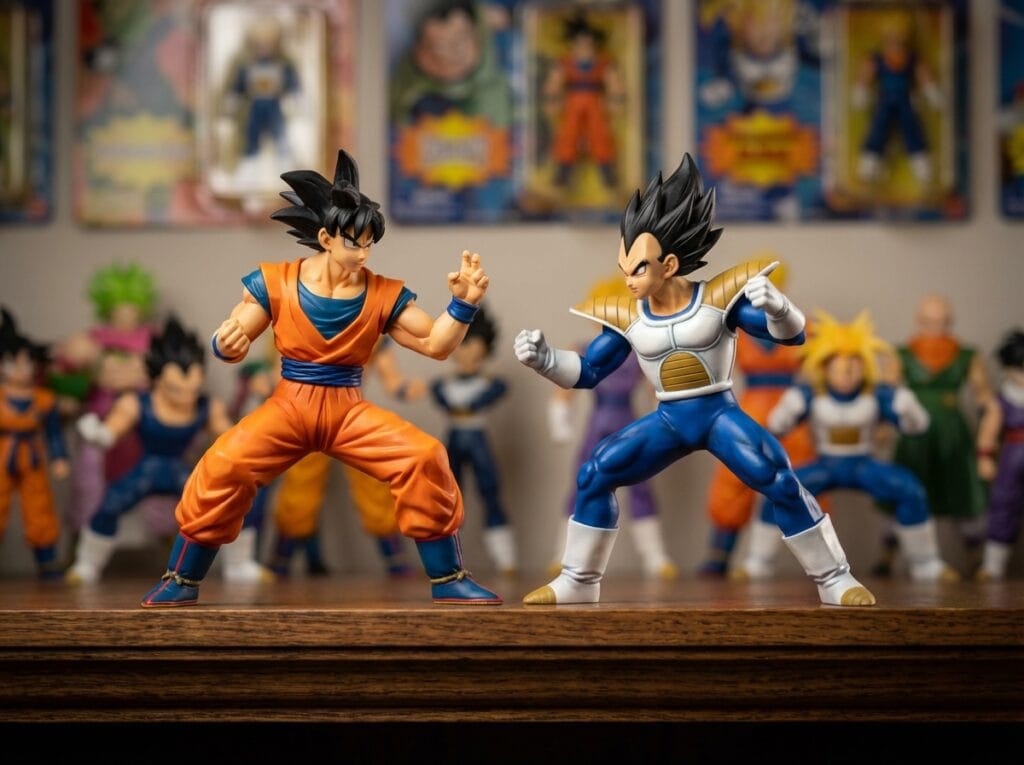
I remember the excitement of the early 2000s when a new wave of Z-Fighters started appearing on store shelves. My guide takes you back to that era when the manufacturer took over the license in 2003 and provided something special for fans. They did not just stick to the main heroes; they brought an incredible variety of deep-cut characters to life with impressive detail and paint.
If you grew up watching the series during its peak popularity, these specific releases likely hold a special place in your heart. These items are well-known for their unique five-inch scale and the way they captured the intensity of our favorite sagas. Whether you are looking to complete a childhood set or just want to relive the nostalgia, understanding the history of this lineup is the best place to start.
Key Takeaways
- The 2003 manufacturing transition preserved the iconic five-inch scale while introducing superior paint applications, increased articulation, and a massive variety of deep-cut characters.
- The Fusion and Kid Buu sagas represent the peak of this era, offering highly detailed sculpts of unique transformations and secondary characters that allow for a complete recreation of the series’ climax.
- The Movie Collection releases are highly prized for their imposing nine-to-ten-inch scale, capturing the massive physical presence of theatrical villains like Broly and Janemba.
- Hunting these vintage releases on the secondary market is essential for collectors looking to bridge the gap between old-school toy designs and modern quality standards.
History Of The Transition
The transition in 2003 was a huge moment for fans because it meant the five-inch scale we all loved would not disappear. When the previous manufacturer could no longer produce the line, a new company stepped in to keep the momentum going. I remember being so relieved that my existing lineup would still match the new releases coming to store shelves. They officially signed their deal in late 2002 and started production by the following year. This era captured the excitement of the series as it reached its climax during the Kid Buu Saga in Dragon Ball Z episode 280, Vegeta’s Respect.
I really appreciate how the new team respected the established size and style while trying to improve the overall quality. They focused on better paint applications and more movement, which made the characters feel more alive than ever before. It was a great time for finding obscure characters that had never been made into toys in the United States. You could finally build a complete world that looked just like the scenes from the show. Seeing the variety grow was just as exciting as watching Goku’s final battle in Dragon Ball Z episode 280, Vegeta’s Respect.
This period of the early 2000s is now a favorite for those of us who enjoy hunting for vintage treasures on the used market. Because these items were built to the same scale for years, they all look fantastic when displayed together on a shelf. It is fun to look back and see how this specific era bridged the gap between the 90s Irwin Toys old-school style and more modern designs. Even today, these older releases hold a special charm that reminds me of the first time I saw the series’ conclusion. The legacy of this manufacturing transition remains a huge part of the community’s history since the days of Dragon Ball Z episode 280, Vegeta’s Respect.
Iconic Sagas And Series
I have always loved how the Fusion Saga releases brought so many unique characters to our shelves that we had never seen before. This era was special because it gave us various versions of Vegito and Gotenks, capturing the excitement of the strongest fighters in the show. You could find characters in their base forms or powered up to Super Saiyan, which made building a roster feel very rewarding. These waves really highlighted the peak of the series where powerful transformations became the standard for every battle. Goku and Vegeta finally combined their strengths to face an unstoppable threat in Dragon Ball Z episode 268, Union of Rivals.
The Kid Buu series stands out to me because it focused on the final, frantic battle for the fate of the universe. This line offered a great variety of sculpts, including the unpredictable and dangerous final form of the main villain. It was also a treat to see secondary characters and different outfits that matched the end of the original story. The attention to detail on these older items makes them a favorite for anyone looking to relive those classic moments on the secondary market. The long journey finally came to an emotional end when the world was saved by a massive Spirit Bomb in Dragon Ball Z episode 286, Spirit Bomb Triumphant.
Rare Movie Collection Releases
I always felt that the Movie Collection was the crown jewel of my shelf because of how imposing these larger characters looked next to the standard cast. These nine and ten-inch giants were specifically designed to capture the massive scale of theatrical villains like Broly, the Legendary Super Saiyan. Because these were produced in smaller quantities toward the end of the licensing run, they have become some of the most difficult items to track down on the secondary market today. Seeing a towering Broly looming over a smaller Goku really brings the intensity of the films to life, just like when they faced off in Dragon Ball Z Movie 8, Broly – The Legendary Super Saiyan.
You really have to appreciate the unique sculpts used for characters like Janemba and Bojack, which offered a level of detail that was ahead of its time. These larger versions were not just scaled-up versions of existing toys, but entirely new designs meant to show off the muscle mass and height of the movie’s biggest threats. Tracking these down on sites like eBay can be a challenge, but finding a complete Janemba with all his accessories is a huge win for any long-term fan. These releases perfectly captured the final showdowns where the heroes were completely outmatched, similar to the desperate struggle seen in Janemba movie lore during Dragon Ball Z Movie 12, Fusion Reborn.
Reliving the Thrill of the Hunt
Hunting for these treasures on the secondary market is like stepping into a time machine that takes me back to the early 2000s. I love browsing through listings because you never know when a rare variant or a character that has not been produced in years will pop up. These items represent a specific era of history where the variety of characters available was truly impressive. Finding a piece in great condition feels like a major win for any fan who grew up watching the show on television. It is a rewarding hobby that combines the thrill of the chase with a deep sense of nostalgia for the past.
The community surrounding these older releases is incredibly welcoming and full of people who share the same passion for the series. I find that tracking down these specific items on sites like eBay allows me to connect with the history of the franchise in a way that modern store shelves just cannot match. Every piece has a story, whether it was a limited release or part of a final wave that did not stay in shops for very long. Building a collection from the secondary market is more than just buying stuff, as it is about preserving a legacy that helped bring the series to a global audience. I hope this guide to Irwin Dragon Ball Z figure values and rarity helps you find exactly which Dragon Ball action figure you are looking for to complete your own personal display.
Frequently Asked Questions
1. When did the manufacturer start making these figures?
The manufacturer officially signed their deal in late 2002 and began releasing figures to stores in 2003. This transition was a huge relief for fans because it ensured the five-inch scale would continue through the end of the series. This era captured the excitement of the show as it reached its climax in Dragon Ball Z episode 280, Vegeta’s Respect.
2. Will these figures match my older collection?
Yes, the team specifically designed these releases to match the existing five-inch scale from the previous manufacturer. I love how they respected the established style while adding better paint and more movement to the characters. You can display your old and new heroes side by side just like the scenes in Dragon Ball Z episode 280, Vegeta’s Respect.
3. What makes this era of toys special?
This era is legendary because the manufacturer produced an incredible variety of deep-cut characters that had never been made into toys before. They focused on impressive detail and paint applications that made every fighter feel alive. It was a great time to build a complete world that looked exactly like the show during Dragon Ball Z episode 280, Vegeta’s Respect.
4. Which sagas were focused on during this run?
The lineup covered many major parts of the series but really hit its stride during the final battles of the show. They focused on the intense action found in the Buu sagas. This included capturing the emotional moments seen in Dragon Ball Z episode 280, Vegeta’s Respect.
5. Are these figures good for collectors who want obscure characters?
This manufacturer was famous for bringing minor characters to life with great detail and care. You could finally find toys of fighters who only appeared briefly in the anime or manga. It was a great time for variety that lasted all the way through the finale in Dragon Ball Z episode 280, Vegeta’s Respect.
6. How did the quality change during this license?
The team worked hard to improve the overall quality by using better paint and adding more points of movement. These updates made the figures much more fun to pose in battle scenes from your favorite episodes. The improvement in detail really showed during the release of characters from Dragon Ball Z episode 280, Bird’s Respect.