Every Dragon Ball fan knows that the iconic furry tail is what makes a Saiyan truly unique, but it is just as much of a liability as it is a powerhouse. While it allows for the terrifying Great Ape transformation, the various saiyan tail weaknesses can turn a legendary warrior into a helpless target in seconds. If an enemy gets a firm grip on that sensitive appendage, even the strongest fighter can lose all their strength and collapse in an instant.
I have always found it fascinating how such a small physical trait can dictate the entire flow of a battle. While low-class warriors often fall victim to the crushing paralysis of a tail grab, elite fighters actually spend years conditioning themselves to overcome this flaw. Understanding how this nerve-filled limb works helps explain why some Saiyans treat it like a weapon while others see it as their ultimate undoing.
Key Takeaways
- The Saiyan tail acts as a biological ‘off switch’ where pressure on its dense nerve network causes immediate paralysis and total muscle failure in untrained warriors.
- Elite Saiyans can negate this physical liability through intense conditioning, desensitizing the nerves to transform the tail from a vulnerability into a functional tactical tool.
- Severing the tail is the only way to instantly force a Saiyan out of the Great Ape form, though the loss of the limb also disrupts the warrior’s center of gravity and balance.
- As a Saiyan’s base power reaches a certain threshold, their biology prioritizes internal growth over the tail, eventually ceasing the regrowth process to focus on more refined evolutions like the Super Saiyan transformation.
Paralysis From The Dreaded Tail Squeeze
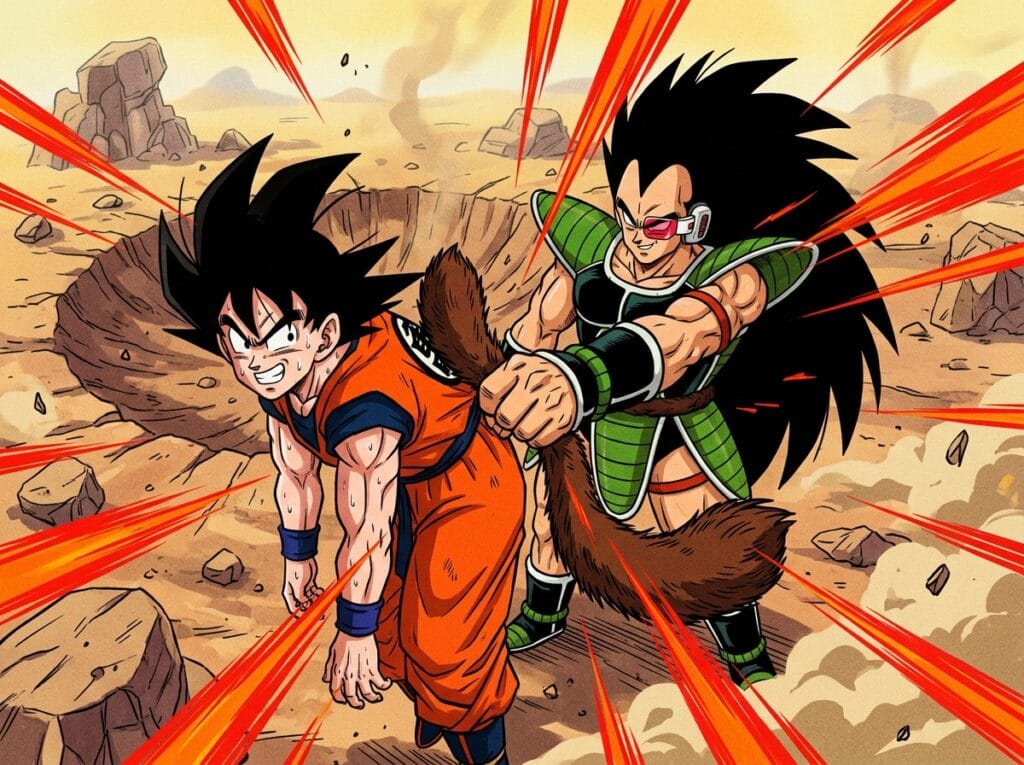
In the early days of the series, I remember being shocked at how easily a powerful fighter could be brought to their knees. Even though the Saiyan tail is a source of incredible power, it acts like a giant “off switch” for their entire nervous system when someone grabs hold of it. When a villain or an ally manages to squeeze the tail of an untrained Saiyan, the result is an immediate loss of muscle control and a feeling of total exhaustion. This biological quirk essentially bypasses their massive power levels, leaving them flopping on the ground without any way to fight back. We first saw this strange phenomenon play out when Goku had his tail grabbed during his early adventures Dragon Ball episode 13, The Legend of Goku.
I find it fascinating that such a fierce warrior race would have such a glaring physical flaw built right into their bodies. For most Saiyans, the tail is filled with sensitive nerve endings that send a shock of paralysis through the spine when enough pressure is applied. This tactical exploit was a major plot point because it allowed much weaker characters to temporarily defeat Goku or even his brother Raditz. It serves as a reminder that even the strongest fighters have a hidden vulnerability that can be used against them if they haven’t put in the work to toughen up. This specific weakness is a core part of Saiyan biology that defines their early struggles before they learn to overcome their own limitations Dragon Ball Z episode 2, The Arrival of Raditz.
While this weakness seems like a total death sentence, it isn’t permanent for every member of the race. Elite warriors who are aware of this flaw undergo intense physical conditioning to desensitizing their tails to the pain of being squeezed. By training their bodies to ignore the shock, high ranking fighters like Nappa and Vegeta effectively turned their greatest weakness back into a useful weapon. Seeing the difference between a panicked Goku and a calm Vegeta really highlights how much of a Saiyan’s strength comes from their discipline rather than just their birthright. It shows that while the tail squeeze is a dreaded technique, it only works on those who aren’t prepared for the pressure Dragon Ball Z episode 22, Stop the Saiyans.
Severing The Tail To Stop Great Apes

I always found it fascinating how the massive power of a Great Ape transformation can be completely neutralized by targeting one small biological fluke. While the transformation offers a Saiyan a ten-fold increase in strength, it also creates a giant target on their back that the heroes eventually learned to exploit. During the desperate battle against Vegeta, the Z-Fighters realized that they couldn’t win through brute force alone and needed a tactical solution to survive. Cutting off the tail is the only way to force a Saiyan out of their Great Ape form and back into their human state instantly Dragon Ball Z episode 32, Gohans Rage.
This specific vulnerability serves as a major turning point in early series lore because it highlights that even the strongest warriors have a physical “off switch.” Even though the tail provides the source of the Blutz Wave absorption, it remains a sensitive bundle of nerves that can be severed with a sharp blade or energy attack. We see this firsthand when Yajirobe manages to sneak up and slice through Vegeta’s tail, which immediately triggers a painful and shrinking transformation process. It is a high-stakes moment that proves how a single precise strike can turn the tide of an entire war Dragon Ball Z episode 32, Gohans Rage.
Watching Gohan go through this same process later in the fight really drives home how dangerous this trait is for the Saiyans themselves. When his tail is removed, the sudden loss of power leaves the warrior exhausted and vulnerable to a finishing blow. It is a brutal reminder that their greatest strength is also their greatest weakness, as the tail is essentially a fuse that can be snuffed out by any clever opponent. This tactical exploitation of Saiyan biology is what allowed our friends to survive the Saiyan invasion against all odds Dragon Ball Z episode 32, Gohans Rage.
Tactical Training To Negate Tail Sensitivity
For most Saiyans, the tail is a massive biological liability that can end a fight in seconds. If an untrained warrior has their tail grabbed, their entire body goes limp and they lose all their strength immediately. We first saw this major vulnerability back when Goku was just a kid, and it even led to Raditz’s defeat when Goku held onto his tail to keep him still. This sensitivity is caused by a dense network of nerves that connect directly to the Saiyan’s nervous system. It creates a total physical paralysis that makes the strongest fighter completely helpless Dragon Ball Z episode 2, The World’s Strongest Team.
Elite warriors like Vegeta and Nappa realized that they couldn’t afford to have such a glaring weakness on the battlefield. Instead of ignoring the problem, they put themselves through brutal physical conditioning to desensitize the nerves in their tails. By constantly exposing the appendage to pressure and pain during training, they eventually reached a point where a firm grip no longer caused paralysis. This tactical choice turned a potential death trap into a functional fifth limb that they could use for balance or even as a whip. You can see the fruits of this labor when Nappa completely ignores Krillin’s attempt to disable him by grabbing his tail Dragon Ball Z episode 22, The Power of Nappa.
Watching these high level Saiyans fight shows us how much they value preparation over raw power alone. While lower class warriors might lose a battle the moment an opponent gets behind them, Vegeta and Nappa transformed their greatest biological flaw into a non-issue. This training allowed them to keep their tails for the Great Ape transformation without fearing a sudden loss of motor control. It highlights the difference between a simple brawler and a professional soldier who understands every part of their own anatomy. This level of discipline is exactly why the Saiyan invasion was so terrifying for the Z Fighters to face Dragon Ball Z episode 24, The Power of Nappa.
Biological Limits Of Saiyan Tail Regrowth

While the tail is a source of incredible power, it is also a Saiyan’s biggest biological “off switch” if they haven’t trained it properly. I remember watching Goku and Raditz struggle because a simple squeeze to the tail could paralyze their entire body and sap every ounce of their strength. This sensitivity comes from a dense cluster of nerves and unique organs that make the appendage feel like a raw, exposed nerve when grabbed by an enemy. Even though elite warriors like Vegeta eventually learned to overcome this pain, the tail remained a risky liability in close quarters combat. This physical vulnerability was a major tactical focus during the early battles of the series as heroes looked for any way to level the playing field Dragon Ball Z episode 2, The World’s Strongest Team.
Beyond the pain, losing a tail causes a massive shift in a warrior’s physical orientation and fighting style. I noticed that when a tail is suddenly removed, the Saiyan often struggles with their center of gravity and basic movement until they can relearn how to move without that extra weight. This loss of balance can be the difference between life and death in a high speed battle where every inch of positioning matters. It is fascinating to see how the loss of this limb forces a fighter to adapt their entire approach to martial arts on the fly. This biological adjustment is a central theme when we see the consequences of a tail being severed in the heat of battle Dragon Ball Z episode 33, Friends Appear.
You might wonder why the tail doesn’t just keep growing back forever like it did when Goku was a kid. According to series creator Akira Toriyama, once a Saiyan reaches a certain level of power, their body starts to view the tail as an unnecessary distraction. Essentially, the Saiyan tail biology becomes so high that the body chooses to prioritize its natural form over the volatile transformation potential of the tail. This means that as characters like Gohan and Vegeta grew stronger, their biology naturally phased out the regrowth process to focus on more refined evolutions like the Super Saiyan transformation. It marks a clear transition from the primal, ape-like origins of the race to the refined strength of the Super Saiyan era Dragon Ball Z episode 32, Beyond the Limit.
Removing the Saiyan’s Ultimate Off Switch
Ultimately, the Saiyan tail was as much of a liability as it was a source of strength. While the Great Ape transformation offered raw power, the tail’s biological vulnerability meant that a single firm grip could leave a warrior completely paralyzed. We saw this early on when Goku and even the mighty Raditz were rendered helpless by a simple squeeze to their furry appendage. By losing these tails, our favorite heroes actually removed a massive “off switch” that enemies could exploit in the heat of battle. It forced them to stop relying on a risky biological gimmick and start focusing on their own internal growth.
Looking back, the Saiyan tail disappearance was a necessary step for the Z Fighters to reach the next level of evolution. If the heroes had stayed focused on the Oozaru form, they might never have pushed themselves to unlock the legendary Super Saiyan transformation. The tail served as a literal anchor to their primitive past, and shedding it allowed them to master a more refined and much more powerful state of being. It is clear that moving away from this physical weakness was a blessing in disguise that paved the way for the complete evolution of Goku and the incredible power levels we see today.
Frequently Asked Questions
1. Why does a Saiyan lose their strength when their tail is grabbed?
The tail is packed with sensitive nerve endings that act like a direct circuit to the Saiyan nervous system. When someone applies pressure to it, it sends a shock through the spine that causes instant paralysis and total muscle failure. This biological quirk can leave even a mighty warrior completely helpless on the ground as seen in Dragon Ball episode 13, The Legend of Goku.
2. Can a Saiyan train themselves to overcome this weakness?
Yes, elite warriors can actually condition their tails through intense physical training to remove the paralysis effect. By toughening the nerves in the appendage, they can keep fighting even if an enemy tries to use the tail against them. Nappa and Vegeta showed off this impressive mastery during their arrival on Earth in Dragon Ball Z episode 21, Say Goodbye, Piccolo.
3. Does every Saiyan have the same level of tail sensitivity?
Most low class warriors and children are born with this extreme vulnerability by default. It usually takes conscious effort and specialized training to get rid of the weakness. Goku struggled with this vulnerability throughout his childhood until he finally trained the sensitivity away before the World Martial Arts Tournament in Dragon Ball episode 134, Keep It Real.
4. What happens to a Saiyan’s power if their tail is cut off?
Removing the tail permanently removes the ability to transform into a Great Ape, which significantly lowers their peak power potential. While it gets rid of the physical weakness of being grabbed, it also takes away their most dangerous tactical advantage in a fight. Gohan experienced this major change after Piccolo removed his tail to stop a rampage in Dragon Ball Z episode 8, Gohan’s Metamorphosis.
5. Is the tail weakness present in half-Saiyans like Gohan?
Half-Saiyans like Gohan share the exact same biological tail traits and vulnerabilities as pure-blooded Saiyans. They still experience the same crushing paralysis if their tail is squeezed by an opponent before they have been properly trained. This was a major danger for Gohan during his early survival training in the wilderness in Dragon Ball Z episode 5, Gohan’s Rage.
6. Why didn’t Raditz train away his tail weakness?
Despite being a seasoned space traveler, Raditz never bothered to condition his tail to resist the paralysis effect. This arrogance proved to be his downfall when Goku managed to grab hold of it and stop him in his tracks. This mistake allowed Piccolo to charge up his Special Beam Cannon and end the fight in Dragon Ball Z episode 5, Gohan’s Rage.