
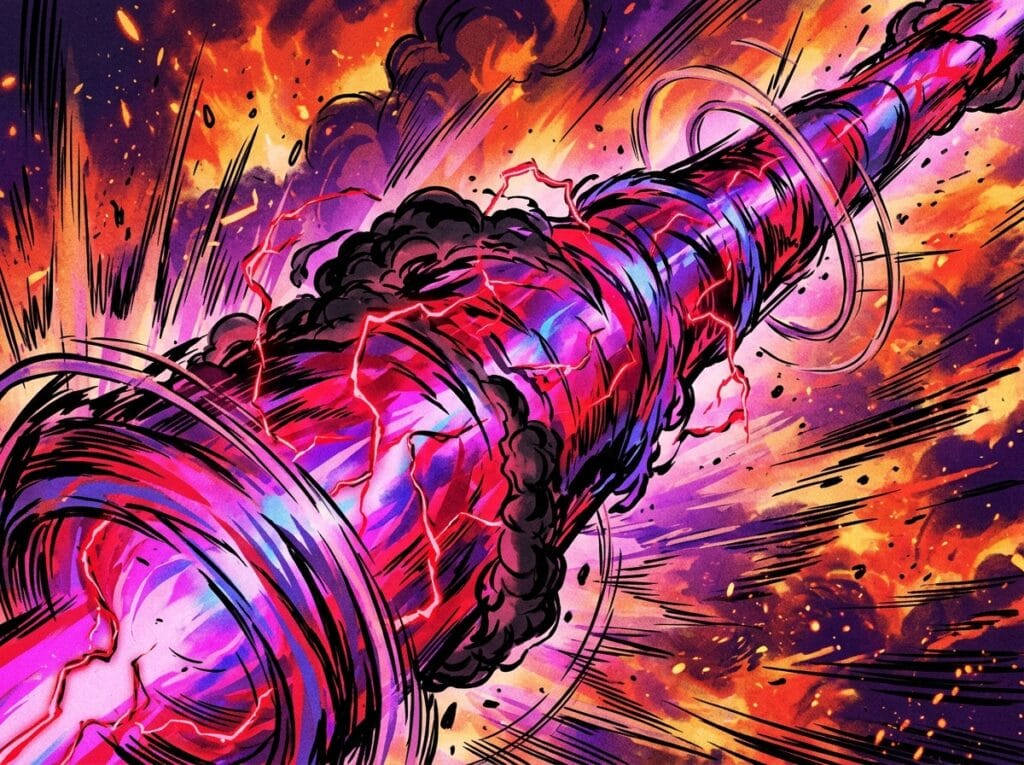
The phrase “devilmite beam explained” refers to one of Dragon Ball’s most unusual attacks. Instead of overpowering an enemy with raw force, Devilman’s technique turns negative emotions, such as hatred, anger, or arrogance, into destructive energy. This means a physically strong opponent may still be vulnerable if their heart contains enough darkness.
I see the Devilmite Beam as a psychological attack rather than a standard ki blast. Once it finds evil within its target, it amplifies those feelings until the person’s heart literally explodes. Someone with a truly pure heart may remain unaffected. Understanding this rule makes the technique’s famous battle and its limits much easier to follow.
Key Takeaways
- The Devilmite Beam is a psychological attack that detects and amplifies negative emotions such as hatred, anger, malice, and arrogance, potentially causing the target’s heart to explode from within.
- The technique bypasses conventional strength and durability, so a physically powerful fighter can still be vulnerable if they harbor significant evil or destructive intent.
- Goku survives the beam because his pure heart gives it little or no malice to amplify, demonstrating that moral character can matter more than raw power.
- The Devilmite Beam is not unbeatable: it depends on the target’s mindset and requires successful contact, making genuinely pure-hearted opponents poor targets.
Devilmite Beam’s Core Mechanism
The Devilmite Beam, also called the Devil Might Beam, works differently from a normal energy attack. I think of it as a psychological weapon because it responds to the evil thoughts and negative emotions already inside the target, not simply to physical strength or durability. The beam detects feelings such as hatred, anger, jealousy, aggression, arrogance, and malice. It then turns that inner darkness into destructive energy and magnifies it within the victim.
That amplification makes the technique so unusual. A powerful fighter may still be vulnerable if their heart contains enough harmful intent, while someone with a pure heart can resist or remain unaffected. Traditionally, the rising negativity overwhelms the target from within until the heart literally explodes. In that sense, the Devilmite Beam bypasses conventional power levels by using a person’s own malice as the source of the attack.
Devilman’s Attack Against Goku

When I explain the Devilmite Beam, I describe it as a psychological attack rather than a normal energy blast. During the Fortuneteller Baba arc, Devilman, also known as Spike the Devil Man, fires the technique at Goku after they face each other in Baba’s tournament. The beam searches for evil thoughts and negative emotions, then magnifies that darkness until it destroys the target from within. It does not depend mainly on physical durability, battle power, or the ability to block a beam.
Goku survives because the technique finds no meaningful malice in his heart, making him a poor target for its effect. Although Goku is incredibly strong, his strength is not the main reason the Devilmite Beam fails against him. His lack of hatred, cruelty, and selfish intent leaves Devilman’s attack with almost nothing to amplify. This encounter shows why the technique is so unusual: a physically weaker person with deep evil could be more vulnerable than a powerful fighter with a genuinely pure heart.
Devilmite Beam’s Strengths And Limits
The Devilmite Beam, also called the Akumaito Kōsen or Devil Might Beam, can threaten opponents far stronger than Devilman because it does not rely on raw impact alone. I understand it as a psychological attack that turns a target’s anger, hatred, malice, or other dark emotions against them, potentially causing their heart to explode. That makes ordinary durability, armor, and high power levels less useful than they would be against a standard ki blast. A fighter who can withstand enormous physical force might still be vulnerable if the beam finds enough negativity to amplify.
However, the technique is not an automatic victory over every powerful character. The beam must make contact, and its effect depends on the target having the kind of evil or destructive mindset the story recognizes as fuel. A calm, genuinely selfless person may offer little for it to exploit, while a powerful but morally conflicted character raises questions the series does not fully answer. I also would not treat it as an unlimited way to bypass every defense, since the story never establishes that it works regardless of resistance, special abilities, or the rules of the scene. Its strength comes from attacking the mind instead of conventional durability, while its limits come from the target’s mindset, successful contact, and the specific rules of the battle.
How the Devilmite Beam Turns Malice Deadly
The Devilmite Beam is best understood as a psychological attack, not a conventional energy blast. I see its real danger in the way it uses a target’s malice, including hatred, anger, greed, or violent intent, and turns those feelings into destructive force. Instead of overpowering the opponent’s body, the technique amplifies the darkness in their heart until it causes lethal internal damage. This makes the beam especially unusual because physical strength and battle power alone do not determine whether it will succeed.
Its clash with Goku remains memorable because it tests character instead of combat ability. Goku’s pure heart gives the Devilmite Beam little or nothing to amplify, allowing him to survive an attack that could destroy a far stronger but more malicious fighter. For me, that moment captures the technique’s central idea: moral character can matter more than raw power. The Devilmite Beam explained in this way becomes more than a quirky martial arts technique. It shows how a person’s inner nature can decide the outcome of a battle.
Frequently Asked Questions
1. What is the Devilmite Beam?
The Devilmite Beam, also called the Devil Might Beam, is Devilman’s signature attack in Dragon Ball. It turns the target’s negative emotions, such as hatred, anger, jealousy, or arrogance, into destructive energy. The attack grows stronger by amplifying the darkness already inside the target.
2. How does the Devilmite Beam work?
The beam does not rely only on physical force or the target’s power level. It detects harmful feelings in the victim and magnifies them until they cause devastating damage from within. Traditionally, this process makes the target’s heart explode.
3. Can a powerful fighter resist the Devilmite Beam?
Physical strength does not guarantee protection from the Devilmite Beam. A powerful fighter can still be vulnerable if they have enough hatred, malice, or other negative emotions. The target’s inner nature matters more than muscle, speed, or raw energy.
4. Does the Devilmite Beam affect pure-hearted people?
A truly pure-hearted person may resist the Devilmite Beam or remain completely unaffected by it. Because the attack uses evil within the target as its fuel, someone without meaningful malice gives it little or nothing to amplify. This is why the technique has such a clear weakness.
5. Why is the Devilmite Beam considered a psychological attack?
I consider it a psychological attack because it uses the target’s emotions instead of simply striking the body with ki. The beam turns feelings like anger, pride, and hatred into a destructive force. In that way, the victim’s own inner darkness becomes the source of the damage.
6. Who uses the Devilmite Beam?
Devilman, also known as Spike the Devil Man, uses the Devilmite Beam. He fires it during his battle with Goku in the Fortuneteller Baba arc. The fight shows why the technique can be frightening even when its user is not the strongest fighter.
7. Why did the Devilmite Beam fail against Goku?
The Devilmite Beam failed against Goku because Goku’s heart was pure enough to leave the attack without the evil it needed to grow. His strength was not the main reason he survived. The scene demonstrates that moral purity is the best defense against this unusual technique.
8. What are the main limits of the Devilmite Beam?
The Devilmite Beam depends on the target having enough negative emotion for it to amplify. It may fail against someone who is genuinely pure-hearted, and its effectiveness can also depend on whether the beam successfully reaches the target. This makes it powerful in the right situation, but far from unbeatable.