
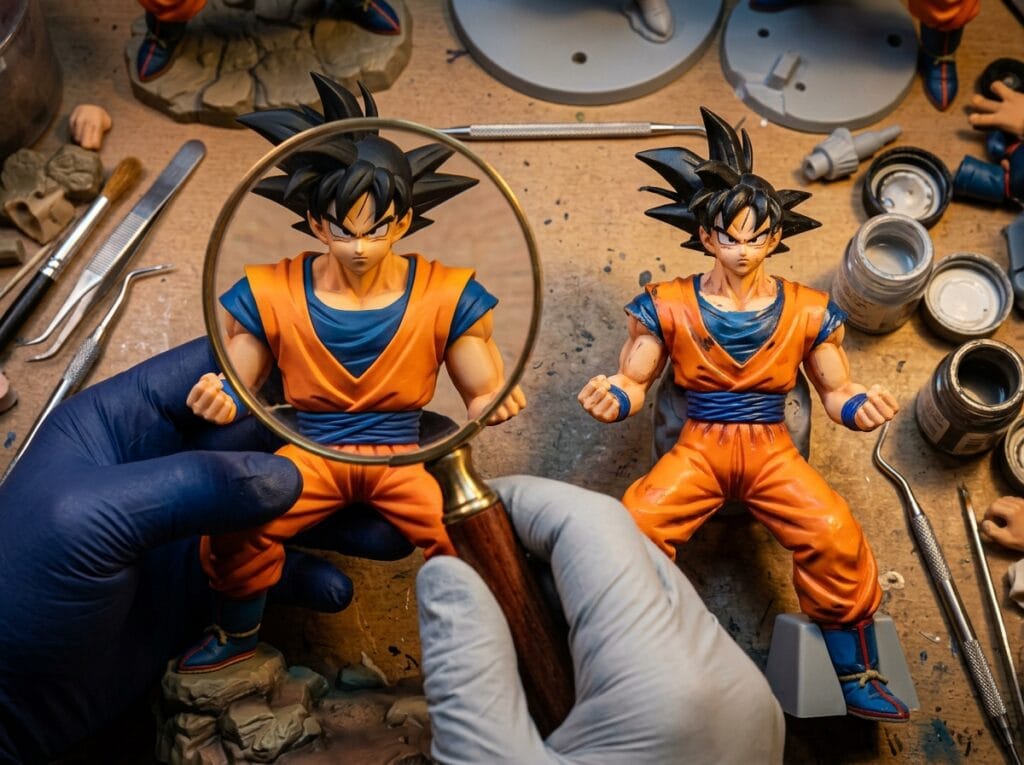
A rare Dragon Ball figure can look perfect and still be counterfeit, so Dragon Ball figure authentication is an important step before I buy, sell, or display a prized collectible. I look beyond the character and pose by checking the packaging, manufacturer marks, release details, sculpt, paint, and overall build quality. No single database covers every Dragon Ball figure, so careful comparison is essential.
I also consider where the figure came from and whether its history supports its authenticity. Small details, such as incorrect logos, weak printing, mismatched parts, or unusual packaging, can reveal a fake. High-value pieces may also deserve professional grading. With a methodical approach, I can reduce the risk of paying genuine-figure prices for a convincing imitation.
Key Takeaways
- Identify the exact Dragon Ball figure line, release, and manufacturer before authenticating it, since packaging, markings, and production standards vary across series and regions.
- Compare packaging and figure details with trusted references from the same release, checking logos, copyright text, product codes, barcodes, seals, sculpt, paint, joints, accessories, and plastic quality.
- Treat mismatches as combined evidence rather than relying on one flaw; packaging can be swapped, and genuine figures may be repainted, repaired, incomplete, or fitted with counterfeit parts.
- Verify provenance through seller history, purchase records, clear photos, return policies, and release information, and seek professional authentication or grading for rare or high-value figures.
Identify The Figure Line
I start Dragon Ball figure authentication by identifying the product line before judging the figure itself. Articulated figures, display figures, lottery prizes, and other licensed releases can have different box layouts, logos, product numbers, display styles, scales, and release formats. Each line may also use its own packaging, copyright marks, and sticker systems.
Once I know the line, I compare the packaging and figure with reliable photos from the same release instead of relying on a general Dragon Ball checklist. I look for the correct logo placement, manufacturer or rights-holder information, copyright text, product number, barcode, warning labels, and any official security sticker. On the figure itself, I check the sculpt, paint applications, facial details, joints, base markings, and plastic quality against known examples from that exact series. A mismatch does not prove a counterfeit by itself, since packaging can vary by country or rerelease, but several incorrect details together should make me pause.
I also pay attention to warning signs that are easy to miss in secondhand listings, such as blurry printing, misspelled text, weak colors, uneven paint, rough seams, missing accessories, or a box that does not match the stated release. Loose figures require extra care because they may have been repainted, repaired, or combined with parts from another version. I record the seller’s photos, compare the release date and format, and ask for clear images of the box, stickers, copyright marks, and underside of the figure before buying. This line-by-line approach is more dependable than searching for one universal authentication database because each licensed series follows its own production and packaging standards.
Inspect Packaging And Markings

I start Dragon Ball figure authentication by comparing the box or blister with confirmed images from the same release, not just a similar character. The manufacturer logo, copyright text, product code, country label, and barcode should appear in consistent locations and use the correct fonts. A holographic sticker can help, but its presence alone does not prove that a figure is genuine because stickers can be copied or moved between boxes. I also check the seals for clean edges, even adhesive, and sharp printing rather than cloudy or pixelated details. Mismatched fonts, blurry artwork, incorrect translations, or missing licensing information are strong reasons to inspect the figure more closely.
Packaging can be authentic while the item inside has been swapped, so I compare the box details with the figure and its accessories. A product code or barcode that belongs to a different release, character version, or country may indicate that the packaging and contents do not match. I look at barcode placement, warning labels, language panels, and release-specific artwork because small changes often separate one production run from another. Poor-quality cardboard, faded colors, crooked text, and weak or resealed blister seams are common warning signs, although storage damage can sometimes create similar problems. For that reason, I treat packaging evidence as one part of Dragon Ball figure authentication rather than making a decision from one flaw alone.
When I find suspicious markings, I compare several photos from reliable listings, collector references, or official release information. I check whether the logo shape, copyright year, security mark, and product code match the exact figure line, since different series can use different packaging styles. A box from another release may fit the figure well and still be incorrect, especially when characters share similar sizes or accessories. I record clear photos of every panel, seal, sticker, and code before opening a valuable item, which preserves useful evidence if the seller needs to explain the mismatch. If the packaging remains uncertain after comparison, I combine these findings with the figure’s sculpt, paint, and accessory quality before deciding whether to buy.
Compare Sculpt Paint And Parts
I compare a Dragon Ball figure with trusted photos of the same release, not just with images of a similar character. I check the face first, including the eye shape, eyebrow placement, expression, and skin tone, because small differences can reveal a different release or a poor counterfeit. The hair should match the reference in its spikes, texture, edges, and connection points, while the body proportions should look consistent from the front, side, and back. I also inspect paint lines around the eyes, hair, clothing, boots, and symbols for messy edges, incorrect colors, or paint that covers details that should remain visible.
The joints, accessories, and assembly can provide just as much information as the sculpt and paint. I compare the number and shape of included hands, faces, weapons, stands, and other parts, then check whether the joints fit naturally and whether seams appear in the same places as in trusted photos. Plastic that feels unusually brittle, soft, greasy, or lightweight can be a warning sign, although material differences between releases are not proof of a fake by themselves. Packaging, manufacturer markings, copyright text, stickers, and release details should support the comparison, but I treat any single missing mark as a clue to investigate rather than a final verdict.
A genuine figure can still be opened, repaired, repainted, incomplete, or altered with counterfeit replacement parts. I look for mismatched gloss, brush marks, overspray, loose joints, stress around pegs, different plastic colors, and accessories that do not match the figure’s release. These changes may lower the item’s value without making the entire figure counterfeit, so I describe the condition separately from the question of authenticity. When the sculpt, paint, parts, packaging, and assembly do not agree, I pause the purchase and ask for clear photos of the markings, joints, accessories, and every side of the figure.
Verify Provenance And Purchase Risks

I begin Dragon Ball figure authentication by studying clear photos of the box, figure, accessories, and every printed marking. I look for consistent logos, copyright text, barcode labels, manufacturer details, seals, and product numbers, then compare them with trusted collector references for the same release. Paint should have clean edges, even colors, and details that match official images, while rough sculpting, missing markings, blurry printing, or mismatched accessories can signal a counterfeit or altered item. I also ask the seller for close-ups instead of relying on stock photos. A receipt, original order record, or clear release history adds useful support, but none of these proves authenticity by itself.
The seller’s story can reveal as much as the figure’s appearance, so I ask when and where it was purchased and whether it came from a known collection. I compare the stated release date, packaging style, and included parts with established references for that specific figure line because similar characters may have several versions. An unusually low price deserves extra caution, especially when the seller avoids questions, uses copied photos, or cannot explain missing packaging. Before paying, I read the return policy and confirm that I can receive a refund if an inspection finds a counterfeit, swapped part, or undisclosed damage. I keep screenshots of the listing and messages so the item can be compared with the seller’s claims later.
When details remain uncertain, I contact the relevant manufacturer or rights-holder through an official channel and provide photographs, product codes, and purchase information. They may confirm release details or known packaging features, although they may not offer a complete authentication service for every older product. For a rare or expensive figure, I consider professional action-figure grading or an independent expert review before selling, insuring, or displaying it as genuine. Professional review is especially useful when the box has been opened, parts may have been replaced, or the item differs slightly from common reference photos. I treat authentication as a combination of evidence rather than a single test, and I avoid purchasing when several warning signs appear together.
Authenticate Your Dragon Ball Figure Step by Step
Dragon Ball figure authentication is strongest when I treat it as a series of checks rather than a single quick test. I first identify the exact product line, release, character version, and manufacturer because packaging and markings can vary widely between prize figures, articulated figures, and limited editions. I then inspect the box for clear printing, correct logos, copyright details, barcode information, seals, and signs of tampering before checking the figure’s sculpt, paint, joints, facial details, and finish. Small errors, uneven paint, soft edges, missing markings, or poor-quality plastic can signal a counterfeit, although one unusual detail does not prove an item is fake.
I compare those findings with trustworthy product photos, official release information, collector references, and other examples from the same line. The seller’s history also matters, so I look for clear photos, consistent answers, proof of purchase when available, and an explanation of where the figure came from. There is no single database that covers every Dragon Ball manufacturer and product line, which means no one check can settle every question. By combining packaging inspection, figure details, reliable comparisons, and provenance, I give myself the best protection against counterfeit or altered collectibles before buying.
Frequently Asked Questions
1. What is Dragon Ball figure authentication?
Dragon Ball figure authentication is the process of checking whether a figure is genuine or counterfeit. I compare the figure with trusted examples from the same product line and release, including its packaging, markings, sculpt, paint, and overall quality.
2. How do I identify the correct Dragon Ball figure line?
I begin by identifying the product line, such as an articulated figure, display figure, lottery prize, or other licensed release. Each line can have different box designs, logos, product numbers, scales, copyright marks, and release formats.
3. What should I check on the packaging?
I check the logo placement, manufacturer details, copyright text, product number, barcode, warning labels, printing quality, and any official security sticker. Weak colors, blurry text, unusual spacing, incorrect logos, or packaging that does not match the same release can be warning signs.
4. What details on the figure can reveal a counterfeit?
I compare the sculpt, facial details, paint applications, joints, base markings, plastic quality, and fit of the parts with known genuine examples. Mismatched parts, rough paint, loose joints, poor molding, or an incorrect character design can suggest a fake, but one unusual detail alone does not prove it is counterfeit.
5. Can the seller or figure history help with authentication?
Yes, the source can provide important evidence. I look for purchase receipts, original listings, release information, clear ownership history, and a seller with reliable feedback, while treating unusually low prices or vague answers as reasons to investigate further.
6. Where can I compare a Dragon Ball figure with a genuine example?
I use official product photos, trusted collector communities, retailer listings, auction records, and detailed images from known genuine figures. I compare examples from the exact product line and release because a general Dragon Ball checklist may not show every approved variation.
7. Does a packaging mismatch always mean a Dragon Ball figure is fake?
No, a mismatch does not always prove a counterfeit. Packaging can vary by country, retailer, production run, or release version, so I check several reliable examples and consider the figure, box, source, and release details together.
8. When should I use professional authentication or grading?
I consider professional help when the figure is rare, expensive, difficult to identify, or important to my collection. A qualified service can inspect the item more closely and may provide a condition grade, which can support its value when I buy, sell, or insure it.

