
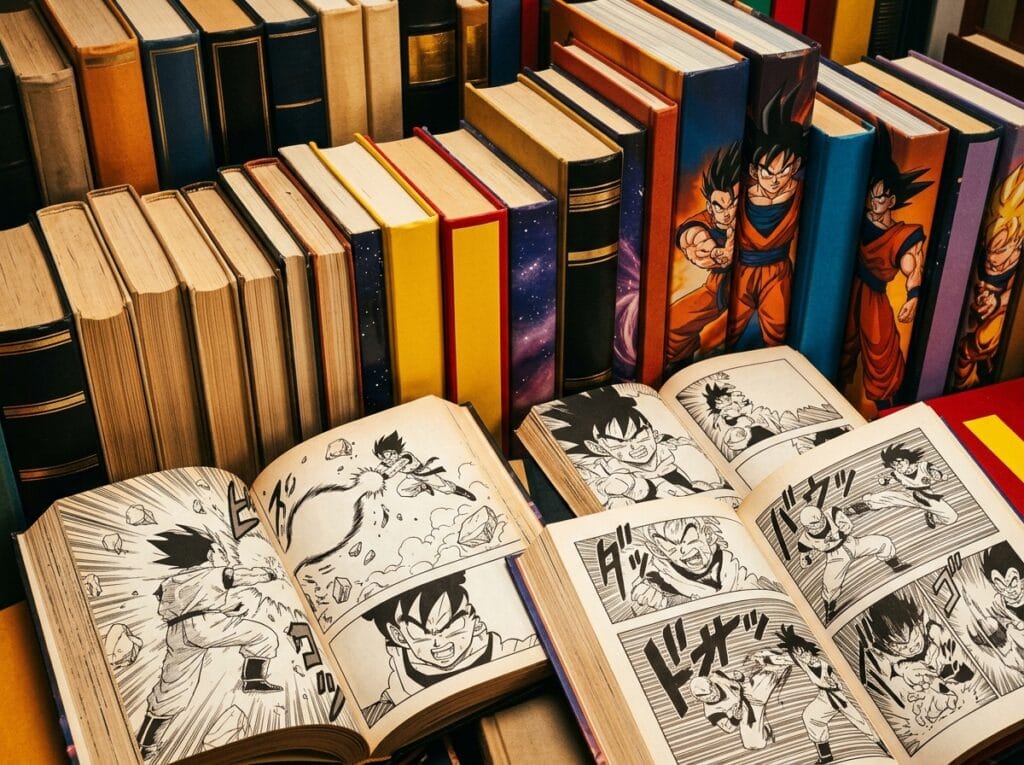
Choosing among Dragon Ball manga editions can be confusing, especially when the same story appears under different volume counts, formats, and titles. The original Dragon Ball manga is one continuous 42-volume story in Japan, while English releases commonly divide it into Dragon Ball and Dragon Ball Z. Understanding that difference makes it easier to compare editions and avoid buying duplicate chapters.
I’ll break down the major Japanese and U.S. editions, including their story coverage, color options, size, and collectible features. Whether you want the most complete reading experience, a compact set, or an edition that looks great on a shelf, the right choice depends on how you plan to read and collect the series.
Key Takeaways
- The original Japanese Dragon Ball manga is one continuous 42-volume story, while English releases split it into Dragon Ball volumes 1–16 and Dragon Ball Z volumes 1–26. Together, the English sets cover the complete original manga, so check numbering carefully to avoid duplicate chapters.
- Choose standard English volumes for accessible, portable reading; omnibuses or three-in-one editions for lower cost and reduced shelf space; and box sets for coordinated collecting. Keep one format consistently when building a matching collection.
- Japanese tankōbon editions prioritize the original compact format, while the 34-volume kanzenban Perfect Edition offers larger pages, restored color material, redesigned covers, and a more premium presentation.
- Full Color and deluxe Japanese editions emphasize artwork and collector appeal but may be harder to find, more expensive, or printed in Japanese. Treat Dragon Ball Super as a separate continuation rather than another edition of the original 42-volume series.
Original Dragon Ball Volume Structure
Akira Toriyama’s original Dragon Ball story was collected in 42 Japanese tankōbon volumes, with “tankōbon” meaning a standard standalone manga book. I think of this as one continuous series because the Japanese edition does not stop and restart when the story moves from Goku’s childhood adventures into the later battles. The full run was serialized from 1984 to 1995 and covers the complete original manga, rather than only the material adapted under the Dragon Ball anime title. For collectors, this 42-volume structure is the clearest reference point when comparing different print releases.
English-language editions present the same story as Dragon Ball volumes 1 through 16, followed by Dragon Ball Z volumes 1 through 26. Together, those two sets still equal 42 volumes, although the numbering resets when the “Z” label begins. I want to stress that this division was mainly an international publishing and marketing convention, not a break in Toriyama’s original Japanese manga. When comparing editions, readers should also check the translation, trim size, cover design, and any added color pages or bonus material, since these features can vary even when the story content is the same.
Japanese Tankōbon And Perfect Editions

The standard Japanese tankōbon is the original collected edition of Dragon Ball, with the complete story spread across 42 smaller volumes. I find these books easiest to recognize by their compact size, traditional manga format, and original cover designs, which usually feature character art arranged for each volume. The 34-volume Japanese Perfect Edition, also called the kanzenban edition, is noticeably larger and feels more like a premium collection. Its larger pages give Toriyama’s artwork more room, while sturdier paper makes the books more substantial on a shelf. In Japan, both editions contain the same continuous story, even though international releases often divide it into Dragon Ball and Dragon Ball Z.
The Perfect Edition stands out most through its presentation and restored color material. It includes color pages based on the manga’s original magazine publication, while the standard tankōbon is primarily presented in black and white. The Perfect Edition also uses redesigned covers and generally higher-quality paper, making it appealing to readers who want a display-focused set rather than the smallest format. Depending on the volume, readers may also find bonus material such as extra illustrations, author notes, or other features not emphasized in the standard release. These additions do not change the plot, but they make the Perfect Edition more useful for collectors and fans interested in the series’ publication history.
For English-language readers, the main published sets do not offer a complete one-to-one equivalent of the Japanese 34-volume Perfect Edition. English editions are usually easier to find through standard booksellers and secondhand shops, but they may use different volume counts, cover layouts, paper stock, and translation choices. I would choose the 42-volume tankōbon set for a faithful look at the original Japanese collection, especially if matching older artwork and volume numbering matters most. I would choose the Perfect Edition for its larger pages, color content, and premium feel, while remembering that importing a full set can be more difficult and expensive. New readers should focus first on the edition’s language and availability, while collectors can weigh size, condition, bonus material, and cover design.
English Manga Formats
For most readers, standard English volumes are the easiest place to start. The original 42-volume story is split into Dragon Ball volumes 1 through 16 and Dragon Ball Z volumes 1 through 26, even though it was one continuous manga in Japan. These books have a manageable page size and clear black-and-white printing, which makes them comfortable for regular reading and easy to replace individually. Separate Dragon Ball and Dragon Ball Z box sets collect their matching runs in one package, making them practical for collectors who want a complete section at once, although availability can vary.
Omnibus editions combine several standard volumes into larger books, reducing shelf space and usually offering bigger, more readable pages than the original singles. Three-in-one editions follow the same basic idea with three volumes in one book, but they can be a more affordable way to read the full series when individual copies are expensive or difficult to find. Both formats can be heavier and less convenient to hold, and their binding may show wear sooner with frequent reading. I would choose standard volumes for portability, omnibus or three-in-one books for value, and box sets for a coordinated collection.
English Full Color releases stand out because selected story sections use color artwork instead of the usual black-and-white pages. Their larger presentation can make action scenes, costumes, and settings easier to follow, although they are less uniform if you are trying to collect every part of the complete story. Translation wording and presentation can also differ slightly by release, so collectors should check the specific volume rather than assume every edition contains new material. In practical terms, Full Color books are best for visual appeal, while standard, omnibus, and three-in-one editions remain the most straightforward choices for reading the entire English manga.
Dragon Ball Super And Edition Choices

The 24 Japanese and 24 English volumes of Dragon Ball Super continue the story after the original manga, so they work best as a separate shelf section rather than a replacement for the earlier series. The original story contains 42 Japanese tankōbon volumes, while the English release presents that same story as Dragon Ball volumes 1 through 16, followed by Dragon Ball Z volumes 1 through 26. I find this distinction useful because the Japanese series treats Dragon Ball as one continuous run, while the English format follows the international “Dragon Ball Z” division. Japanese and English editions can also differ in translation, cover design, page size, bonus notes, and occasional author material, so collectors should compare the contents before buying.
For most readers, standard books are the easiest choice because they are widely available, simple to replace, and let you build the collection one volume at a time. Omnibus, or three-in-one, editions combine several volumes into one thicker book, which usually saves money and shelf space but can be heavier to read and harder to replace individually. Box sets offer matching packaging and a complete group of volumes, making them appealing to collectors who want a neat display, although a missing or damaged book may require replacing the whole set. Japanese deluxe and Full Color editions can provide larger pages, different paper, and a more visual presentation, but they may use Japanese text and cost more to import.
I would choose standard editions when easy replacement and flexible collecting matter most, especially for Dragon Ball Super or a first complete run. Omnibuses suit a tighter budget or a smaller shelf, while box sets make sense when I want a uniform collection and can buy an entire story section at once. Full Color Japanese editions are better for readers who value artwork and collector appeal over translation access. Before ordering, I check the volume number, language, format, print condition, and whether the listing includes the expected bonus material, since these details help prevent mismatched books and difficult replacement searches.
Choose the Right Dragon Ball Edition
Choosing among Dragon Ball manga editions becomes easier once I separate reading needs from collecting goals. For a first-time reader, I recommend standard English volumes because the translation is accessible and the smaller books are easy to replace or carry. The original story appears as Dragon Ball volumes 1 through 16, followed by Dragon Ball Z volumes 1 through 26 in the main U.S. presentation, even though it was one continuous 42-volume series in Japan. Omnibus editions are a practical alternative because they combine several standard books into fewer, thicker volumes and often cost less per volume. Readers comfortable with Japanese may prefer the original Japanese tankōbon editions, especially if language, cover design, or authenticity matters most.
Collectors seeking a clean, matching set should choose one format and stay with it rather than mixing standard, omnibus, and special editions. Box sets can make that process simpler by grouping volumes together with coordinated packaging, while standard editions usually offer the most flexibility when buying one story arc at a time. Japanese Perfect Edition books and other collected releases may use larger pages or different cover treatments, so they can look noticeably different from standard tankōbon books. English Full Color editions stand out through their color artwork and distinctive presentation, although they may not match the black-and-white volumes on a shelf. I would also treat Dragon Ball Super as a separate continuation, not as another edition of Toriyama’s original 42-volume story.
The best Dragon Ball manga edition depends on whether I value convenience, consistency, or visual appeal. I would point new readers toward standard English volumes or omnibuses, recommend a complete box set or one consistent format to collectors building a matching shelf, and choose a Japanese Full Color release for the most distinctive physical experience. Japanese editions are especially appealing to fans who can read the language or want original-market artwork and packaging. Before buying, I would check the volume list, translation language, page format, color content, and whether bonus material is included. That quick comparison helps ensure the edition fits both the way I plan to read the manga and the way I want to collect it.
Frequently Asked Questions
1. How many volumes are in the original Dragon Ball manga?
The original Japanese Dragon Ball manga is one continuous story collected in 42 tankōbon volumes. It covers everything from Goku’s childhood adventures through the later battles, without separating the story into Dragon Ball and Dragon Ball Z.
2. Why are the English manga editions split into Dragon Ball and Dragon Ball Z?
English releases usually divide the 42-volume story into Dragon Ball volumes 1 through 16 and Dragon Ball Z volumes 1 through 26. This split was mainly an international publishing and marketing choice, not a break in the original Japanese manga.
3. Do the Dragon Ball and Dragon Ball Z English volumes cover the complete manga?
Yes, the two English series together cover the complete original manga when you have all 42 volumes. Because the numbering restarts with Dragon Ball Z, I recommend checking the volume list carefully so you do not accidentally buy duplicate chapters.
4. What does tankōbon mean in Dragon Ball manga editions?
Tankōbon means a standard standalone manga volume. The original Japanese 42-volume release uses this format, making it a useful reference when comparing larger editions, boxed sets, and English collections.
5. What is the difference between standard and kanzenban Dragon Ball editions?
The kanzenban edition collects the original story in 34 larger Japanese volumes instead of 42 standard volumes. It generally offers a bigger trim size, updated cover art, and a more premium presentation, making it a strong choice for collectors who want fewer books with a shelf-friendly design.
6. Are there colored Dragon Ball manga editions?
Yes, Japanese Full Color editions are available for major sections of the story. They use color artwork to make battles, characters, and settings stand out, but they are usually separated into different story arcs and can be harder to find than the standard black-and-white volumes.
7. Which Dragon Ball manga edition is best for reading the entire story?
For the simplest English reading experience, I recommend collecting Dragon Ball volumes 1 through 16 and Dragon Ball Z volumes 1 through 26. If you read Japanese, the 42-volume tankōbon set follows the original structure, while a kanzenban or omnibus set gives you the same story in fewer, larger books.
8. What should I check before buying a Dragon Ball manga edition?
I check the language, volume numbering, story coverage, trim size, color content, translation, and included bonus material before buying. I also confirm whether a set uses Dragon Ball and Dragon Ball Z numbering or combines several standard volumes into one omnibus, since those differences can affect both completeness and price.

