
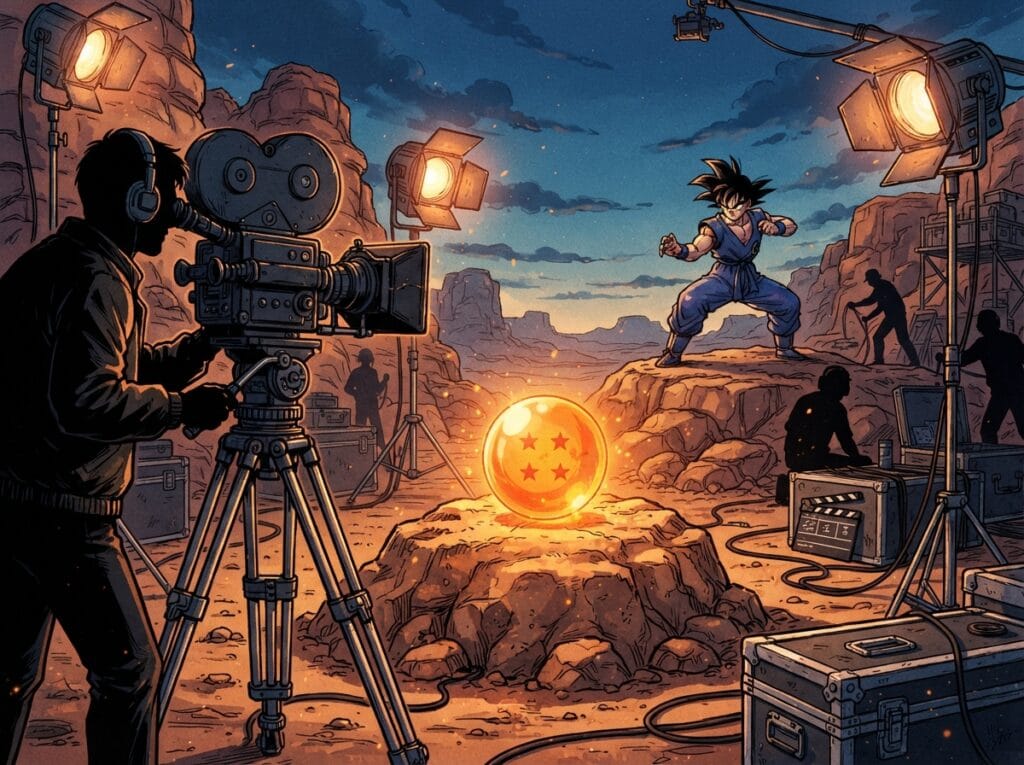
Dragon Ball live-action adaptations range from obscure, unofficial films to one officially licensed Hollywood release. The best-known example, Dragonball Evolution (2009), remains the only officially licensed theatrical live-action adaptation. Earlier films from South Korea and Taiwan took their own unauthorized approaches to the franchise.
Will a new live-action version ever bring the series’ world and characters to life on screen? As of September 25, 2026, no new live-action film or series has been officially announced. For now, these adaptations show how different creators have interpreted Dragon Ball.
Key Takeaways
- Dragon Ball has three notable live-action films: two unofficial adaptations from South Korea (1990) and Taiwan (1991), followed by Dragonball Evolution (2009).
- The South Korean and Taiwanese films loosely rework familiar characters and story elements; neither is part of Dragon Ball’s official story.
- Dragonball Evolution is the only officially licensed theatrical live-action adaptation, but its major changes to the story and characters drew largely negative reactions from fans and critics.
- As of September 25, 2026, no new live-action Dragon Ball film or series has been officially announced.
The Unofficial 1990s Dragon Ball Films
The first live-action adaptation came from South Korea in 1990 with Dragon Ball: Ssawora Son Goku, Igyeora Son Goku. It was an unofficial take on the series, not an authorized adaptation. The film borrows familiar ideas and characters, including Son Goku and the search for the Dragon Balls, but changes the story and its presentation. The result reflects how the source material was reworked for a local film audience rather than closely recreated.
Taiwan followed in 1991 with Dragon Ball: The Magic Begins, also known as New Dragon Ball. This unofficial film loosely adapts the early Dragon Ball adventure, using recognizable elements such as Goku, Bulma, and the Dragon Balls while changing names and plot details. Both films came years before the officially licensed theatrical adaptation, Dragonball Evolution (2009), and neither is part of the franchise’s official story. I find them interesting as early examples of the series’ international reach and of how live-action adaptations can differ from their source material.
Dragonball Evolution And Its Reception

Released in 2009, Dragonball Evolution was the first officially licensed theatrical live-action adaptation of the franchise. The film reshaped the story around a teenage Goku navigating high school as he and his allies searched for the Dragon Balls and faced Piccolo. This version gave the familiar adventure a more conventional Hollywood coming-of-age structure, changing the original’s tone and details. That contrast helps explain why many fans felt the film was so different from the manga and anime.
Audiences and critics responded largely negatively, often citing the altered characters, simplified story, and effects as shortcomings. Goku’s school-centered life and the film’s portrayal of key figures such as Piccolo drew criticism from viewers who expected a closer match to the source material. Some viewers may enjoy it as a standalone fantasy action film, but its reception shows how much fans value the series’ distinctive humor, martial arts, and character relationships. It remains a notable example of the challenges of adapting an animated world into live action.
How The Live Action Adaptations Compare
The three live-action films came from different places and took different approaches to the source material. South Korea’s 1990 Dragon Ball: Ssawora Son Goku, Igyeora Son Goku was unauthorized, while Taiwan’s 1991 Dragon Ball: The Magic Begins offered a loose, locally produced take on the story. Both appeared before the Hollywood film and are often remembered as curious reinterpretations rather than faithful translations of the manga or anime. Their unofficial status and limited reach also shaped how audiences encountered them.
Dragonball Evolution (2009) was a Hollywood production with an official license, but it changed major story details and characters, drawing a largely negative response from fans and critics. The earlier films also received mixed reactions, though their unusual choices may interest viewers as snapshots of how the franchise traveled across cultures. I see their status and reception as separate parts of their history: all three took different approaches, but only Dragonball Evolution was an officially licensed theatrical live-action adaptation. As of the latest available information, no new official live-action film or series has been announced.
Dragon Ball’s Live-Action Film History
The early live-action history includes two unofficial films followed by one officially licensed theatrical adaptation. The 1990 South Korean film and the 1991 Taiwanese film, Dragon Ball: The Magic Begins, reworked the source material without official authorization. They offer a glimpse of how filmmakers interpreted the franchise before Hollywood adapted it. Dragonball Evolution (2009), by contrast, was the only officially licensed live-action theatrical adaptation. That difference in status helps explain why the films are often discussed separately.
The films also differ in how widely they are known and how audiences received them. The earlier productions remain obscure curiosities, while Dragonball Evolution became known for disappointing many fans and critics. Its changes to familiar characters and story elements fueled much of the negative response. This history shows that an official license does not guarantee an adaptation will feel true to its source. As of September 25, 2026, there has been no official announcement of another live-action Dragon Ball film or series. For now, the franchise’s live-action record consists of two unofficial experiments and one much-debated Hollywood release.
Frequently Asked Questions
1. How many live-action Dragon Ball adaptations are there?
There are three notable films: two unofficial adaptations from the 1990s and the officially licensed Dragonball Evolution, released in 2009. The earlier films came from South Korea and Taiwan.
2. Which Dragon Ball live-action film is officially licensed?
Dragonball Evolution (2009) is the only officially licensed theatrical live-action adaptation. The South Korean and Taiwanese films from the 1990s were unofficial.
3. What are the unofficial 1990s Dragon Ball films?
South Korea released Dragon Ball: Ssawora Son Goku, Igyeora Son Goku in 1990. Taiwan followed in 1991 with Dragon Ball: The Magic Begins, also known as New Dragon Ball.
4. Are the 1990s Dragon Ball films faithful adaptations?
They borrow familiar characters and ideas, including Goku and the Dragon Balls. The Taiwanese film also features Bulma. Both films change story details and presentation, so they are loose, unofficial adaptations rather than close recreations.
5. Are the unofficial Dragon Ball films part of the franchise’s official story?
No. The South Korean and Taiwanese films are not part of Dragon Ball’s official story. They are separate adaptations made for local film audiences.
6. Has a new Dragon Ball live-action film or series been announced?
No new live-action film or series has been officially announced as of September 25, 2026. For now, these are the only live-action adaptations to explore.
7. When was Dragonball Evolution released?
Dragonball Evolution was released in 2009. It remains the only officially licensed theatrical live-action adaptation of Dragon Ball.

