
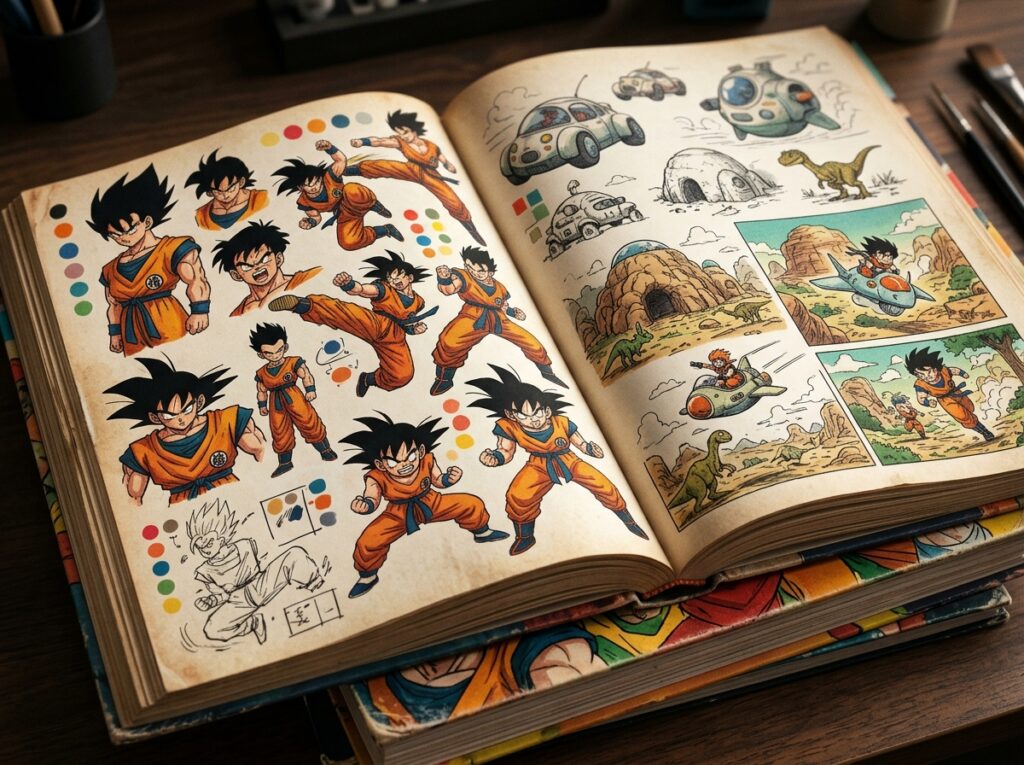
Dragon Ball art books are illustrated reference volumes, not manga story installments. VIZ lists its 218-page Dragon Ball: The Complete Illustrations as an art book and notes that it includes a two-sided color poster. It offers a different experience from a standard manga collection.
Dragon Ball art books vary in scope. The 240-page Dragon Ball: A Visual History brings together full-color artwork, creator commentary, rarely seen sketches, and material from the original series’ history. These books give collectors and artists visual references and context rather than another story installment.
Key Takeaways
- Dragon Ball art books collect illustrations, sketches, commentary, and visual history rather than new manga stories, while the 3,112-page Dragon Ball Complete Box Set is categorized as manga.
- Dragon Ball: The Complete Illustrations is a focused 218-page collection of Akira Toriyama’s artwork with a two-sided color poster, while the 240-page Dragon Ball: A Visual History adds sketches, notes, creator commentary, promotional material, and a slipcase.
- DRAGON BALL 超画集 (Super Art Collection) offers more than 400 illustrations and a Toriyama interview, while the 30th Anniversary Dragon Ball Super History Book covers manga, anime, and hobby history; both are Japanese-language editions.
- We recommend choosing by your goal, then checking language, format, and extras: pick an art book for visual reference or history, and consider the Dragon Ball 40th Anniversary Double Cover Box for all 42 manga volumes and collectible covers.
What Do Dragon Ball Art Books Include?
Art books collect visual material and related commentary, while a manga box set collects story volumes. Dragon Ball Complete Box Set is categorized as manga, not an art book.
Dragon Ball: A Visual History includes manga art, promotional material, creator commentary, notes, sketches, and posters. The publisher’s product page describes it as a slipcased hardcover with a dust jacket. Promotional material and posters show how Dragon Ball imagery appeared beyond the manga pages. Artists can study the sketches and notes for insight into Toriyama’s visual choices, while the commentary adds context. The contents and format make it easier to see what each title offers.
How Do The Main Art Books Differ?
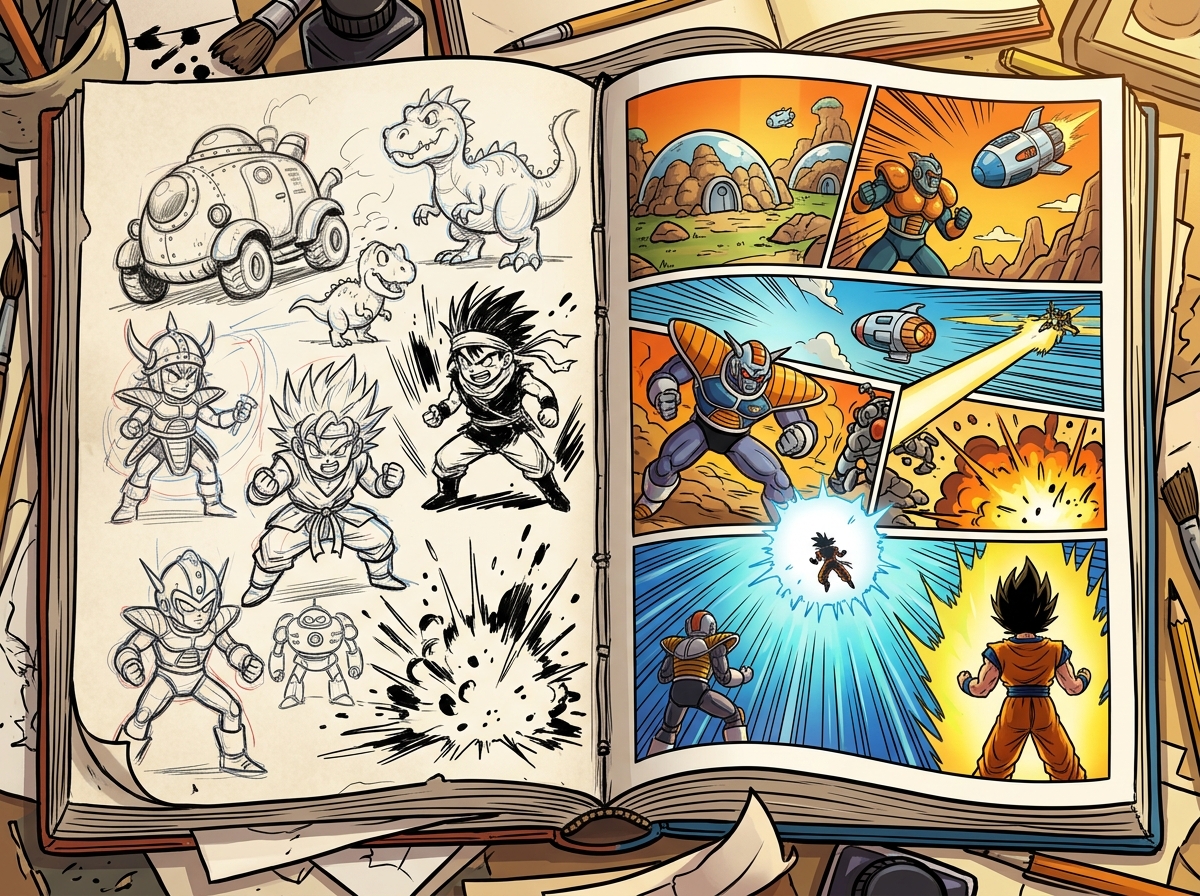
The two VIZ art books differ in scope and format. Dragon Ball: The Complete Illustrations focuses on Akira Toriyama’s artwork, while Dragon Ball: A Visual History brings together art and material from the series’ history. The Complete Illustrations is a 218-page hardcover released October 21, 2008, with a two-sided color poster insert and a listed price of $24.99. A Visual History is a 240-page hardcover released November 12, 2019, listed at $40, and presented in a slipcase with a dust jacket.
The Complete Illustrations centers on Toriyama’s illustrations and includes a separate poster. A Visual History offers a wider mix of material: full-color artwork, manga art, promotional material, creator commentary, notes, rarely seen sketches, and posters. These contents provide more context about the original series and the images created around it.
Choose The Complete Illustrations for a focused collection of Toriyama’s illustrations and its two-sided poster. Choose A Visual History for broader context and archival material, including sketches, notes, promotional pieces, and posters.
Which Japanese Dragon Ball Art Books Stand Out?
Two Japanese-language reference books have different scopes: DRAGON BALL 超画集 (Super Art Collection) focuses on Toriyama’s illustrations, while the 30th Anniversary Dragon Ball Super History Book surveys the franchise’s history. Shueisha’s listing for Super Art Collection describes it as a 240-page B5 book released May 9, 2013, with a Japanese list price of ¥3,981 including tax. It contains more than 400 illustrations, including art for Dragon Ball Z: Battle of Gods, uses high-resolution printing, and features an interview with Akira Toriyama.
Compared with VIZ’s art and visual-history titles, the 30th Anniversary Dragon Ball Super History Book takes a broader historical view. Shueisha’s listing for the book describes it as a 248-page B5 edition released January 21, 2016, at ¥3,850 including tax. It covers manga, anime, and hobby history, with rare illustrations, character sketches, interviews, and anniversary art by more than 30 artists.
Are Art Books Different From Manga Box Sets?
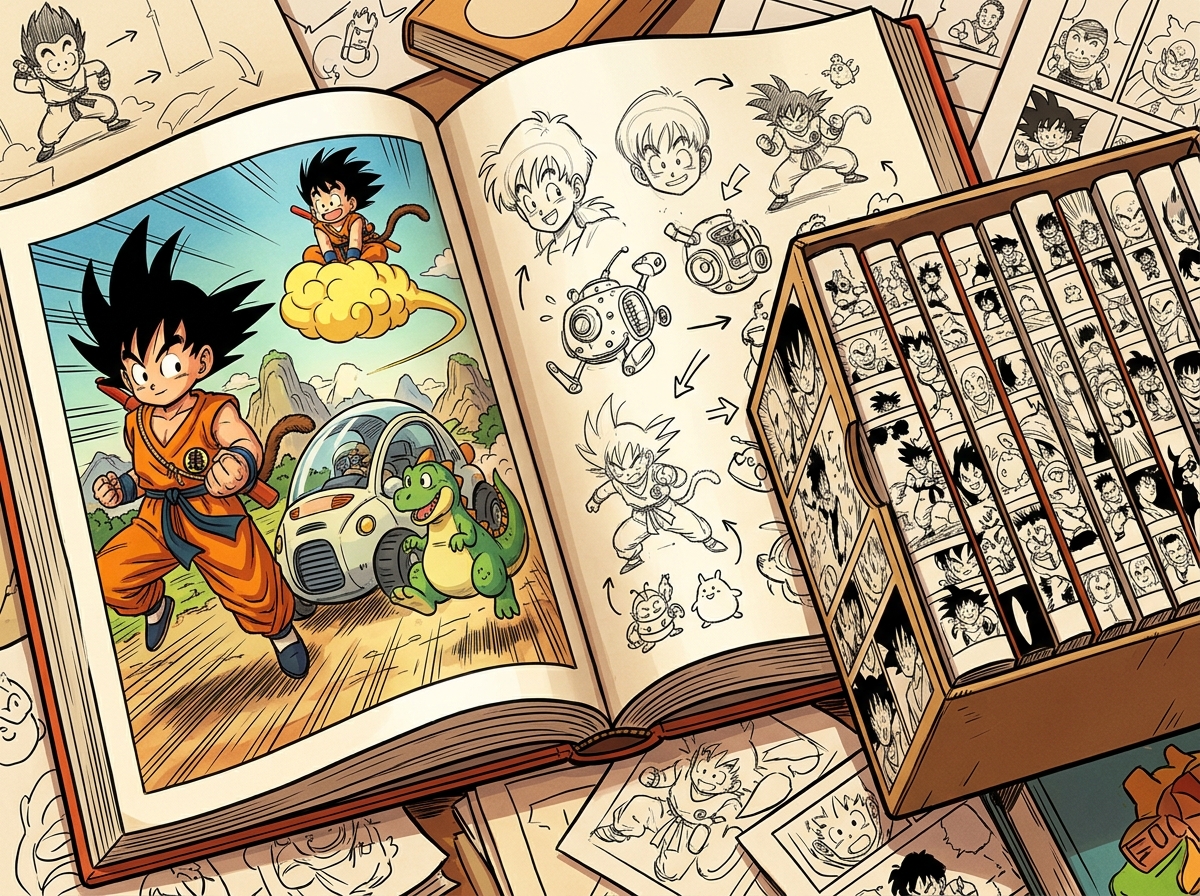
Art books collect visual material and related commentary, while a manga box set collects story volumes. VIZ’s Dragon Ball Complete Box Set contains 3,112 pages and is categorized as manga, not an art book.
Shueisha’s Dragon Ball 40th Anniversary Double Cover Box, released April 3, 2026, contains all 42 manga volumes, new double covers by 42 artists, 42 postcard-size cover-art cards, and eight original dividers.
The cover illustrations began as Dragon Ball Super Gallery, a monthly Jump Comics project featuring variant Dragon Ball covers by 42 artists, as the Dragon Ball Official Site explains. The Double Cover Box is a collectible manga edition, not a standalone art book. Its new cover art may interest art-focused collectors, but its main contents are the 42 story volumes.
How Should You Choose A Dragon Ball Art Book?
Choose a book based on the material you want to study or display, then check the edition’s language and physical extras.
- The Complete Illustrations: Choose this focused collection of Akira Toriyama illustrations for its two-sided poster insert.
- A Visual History: Choose this for sketches, creator commentary, promotional material, and context from the series’ history.
- Japanese Super Art Collection: Choose this for more than 400 illustrations, high-resolution printing, and an interview with Toriyama.
Check whether the edition is in English or Japanese, and look for extras such as a poster or slipcase. Publisher-listed prices are catalog prices, not guarantees of current resale value. Japanese editions have separate yen list prices.
Match The Book To Your Collecting Goal
Start by identifying your main goal: drawing reference, display, franchise history, or reading the manga. If you want process material, compare the sketches and notes in A Visual History with the illustration-focused selection in the Japanese Super Art Collection, then check whether the Japanese text suits you.
For a display-focused shelf, check the edition listing for the poster in The Complete Illustrations or the slipcase for A Visual History, rather than relying on the cover photo. If you mainly want the story and collectible covers, consider the Dragon Ball 40th Anniversary Double Cover Box instead of treating an art book as a manga substitute. Keep a checklist of language, format, and included extras while comparing editions. Those details may matter more than the title on the spine.
Frequently Asked Questions
1. Are Dragon Ball art books available in digital editions?
The listed edition of Dragon Ball: The Complete Illustrations is a hardcover.
2. How can collectors identify a first printing of a Dragon Ball art book?
Check the copyright page for a printing or edition statement, then compare the ISBN and publication details with the publisher’s information for that edition. A cover alone may not distinguish a first printing from a later one.
3. Do the Japanese Dragon Ball art books have English translations?
Shueisha’s Japanese edition is DRAGON BALL 超画集 (Super Art Collection). VIZ’s English-language art books are Dragon Ball: The Complete Illustrations and Dragon Ball: A Visual History, separate titles.
4. Is Dragon Ball worth reading?
Dragon Ball may appeal to readers who enjoy action-adventure manga and want to follow the story. A manga collection is the better choice for reading the series, while an art book is for illustrations and visual reference.

