
Dragon Ball TV specials are feature-length stories that aired on Japanese television instead of in movie theaters. The three narrative specials most often named are Bardock: The Father of Goku, The History of Trunks, and A Hero’s Legacy. Two belong to Dragon Ball Z and one to Dragon Ball GT. A Daizenshuu EX reference guide lists the two original Z specials at 45 minutes each, which makes them longer than a standard weekly episode but shorter than a typical theatrical film. Bardock first aired in Japan on October 17, 1990, and The History of Trunks followed on February 24, 1993.
The term gets used loosely, though. Some broadcasts called TV specials are crossovers, recap programs, or episodes of Dragon Ball Super aired together in a one-hour slot. Knowing which ones tell a full story and which are special events makes it easier to decide what belongs on your watch list. You will also see how the specials fit between the main series episodes and how they differ from the movies that followed. A Hero’s Legacy, for example, aired on March 26, 1997, between Dragon Ball GT episodes 41 and 42.
Key Takeaways
- Only three Dragon Ball TV specials tell a complete standalone story: Bardock: The Father of Goku and The History of Trunks, both tied to Dragon Ball Z, and A Hero’s Legacy, tied to Dragon Ball GT.
- Bardock: The Father of Goku is an anime-original prequel that first aired in Japan on October 17, 1990, and many viewers find it useful to watch before the Saiyan saga.
- The History of Trunks adapts a special side chapter from Akira Toriyama’s manga and first aired in Japan on February 24, 1993, with a 45-minute running time.
- A Hero’s Legacy aired in Japan on March 26, 1997, between Dragon Ball GT episodes 41 and 42, so viewers should watch it in that spot to avoid gaps in the setup for the later episodes.
- Crossover and recap broadcasts, such as the Dream 9 crossover that aired on April 7, 2013, and the December 2, 2018 Dragon Ball Super recap, are special broadcast events rather than standalone stories and are optional extras for a watch list.
What Counts as a Dragon Ball TV Special?
A Dragon Ball TV special is a feature-length program made for Japanese television that tells a complete story on its own. In the strictest sense, only three qualify as narrative specials: Bardock: The Father of Goku and The History of Trunks, both tied to Dragon Ball Z, and A Hero’s Legacy, tied to Dragon Ball GT. Each one runs as its own story rather than as part of the weekly episode order.
The narrative specials differ in where their stories come from. Bardock and A Hero’s Legacy are anime-original, meaning the story was written for the show and does not come from the manga. The History of Trunks is different because it adapts a special side chapter from the original manga. Knowing that origin helps you judge how each one fits into the larger franchise.
The term also covers a second group: special broadcast events. These are one-time programs scheduled in a special slot, and they do not tell a standalone story the way the narrative specials do. A crossover is one example. On April 7, 2013, Fuji TV aired a special that brought together Dragon Ball Z, One Piece, and Toriko. Another example is a Fuji TV page showing how the network combined two Dragon Ball Super episodes into a single one-hour broadcast in October 2017.
Recap programs fall into this second group too. On December 2, 2018, Fuji TV aired a one-hour Dragon Ball Super recap that looked back at the show ahead of the Broly movie. It reviewed earlier material rather than presenting new events.
The label gets used loosely for a few reasons. Broadcasts scheduled as special slots look like specials, even when they have no new story. Home-video releases added to the confusion. In North America, the two Z specials were packaged together as a 90-minute double feature in February 2008, which made them look like theatrical movies. Some fans and sellers also use “special” for anything longer than a regular episode.
A simple test helps. Ask whether the program has its own complete plot, and whether it aired as a stand-alone story outside the regular episode schedule. If it has a full plot, it is a narrative special. If it is a crossover, recap, or combined episode slot, it belongs to the broader group of special broadcast events.
Where Does Bardock: The Father of Goku Fit In?
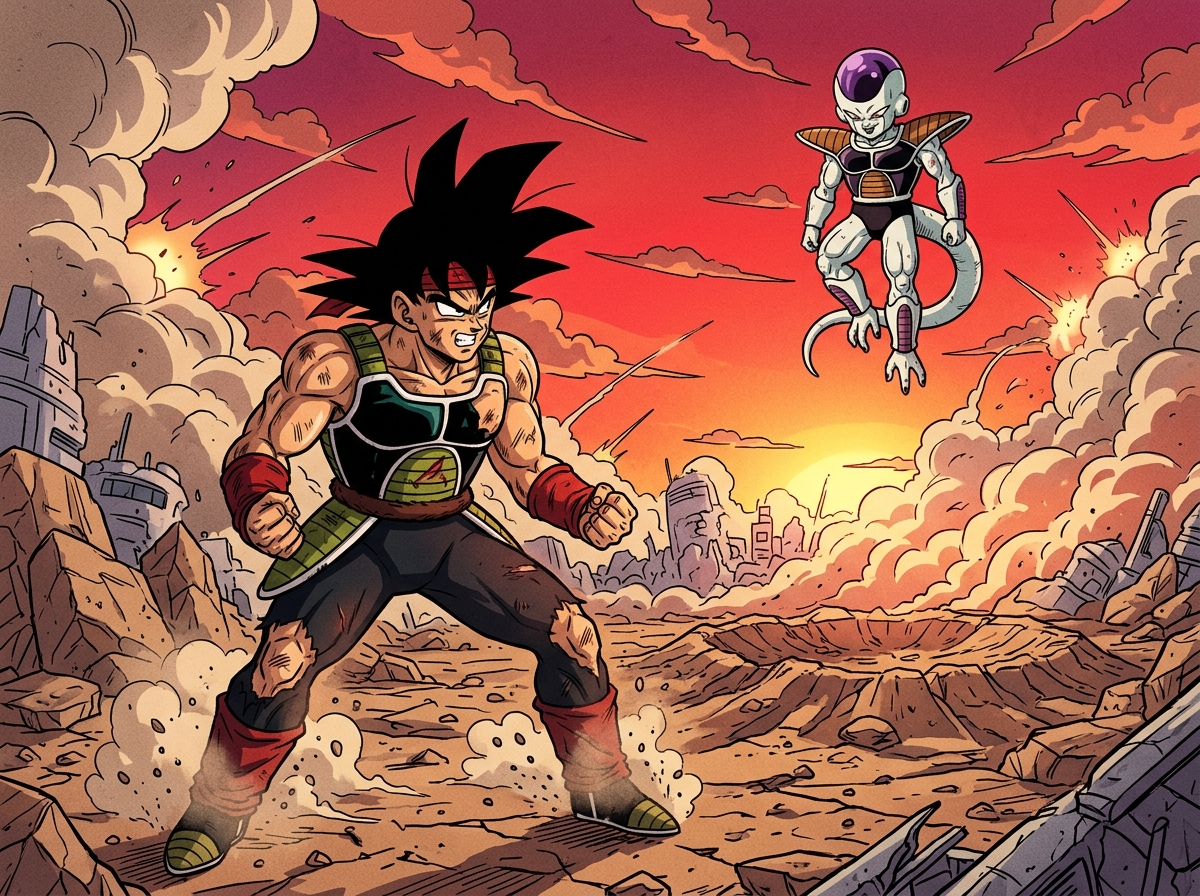
Bardock: The Father of Goku is a prequel that shows the Saiyan world before Goku was sent to Earth. It first aired in Japan on October 17, 1990, and its original release ran 45 minutes.
The story centers on Goku’s father, Bardock, a Saiyan warrior living under the rule of the tyrant Frieza. Frieza’s forces treat the Saiyans as tools for conquest, and Bardock sees signs that his people’s homeworld, Planet Vegeta, is headed for destruction. He tries to act on what he sees, but the people around him are slow to believe him. The special follows his struggle and gives the franchise an emotional anchor it did not have before.
The special is anime-original. Its story was written for the television show and does not come from the Dragon Ball manga. That matters because readers who only know the comics will find new events here. It also gives the special more freedom to explore characters who had only been mentioned in passing or not shown at all.
Within the Dragon Ball Z story, the special fills in the background of the Saiyan race. Viewers who watch the main series learn early on that Saiyans are feared warriors, that Goku’s Saiyan name is Kakarot, and that Frieza is a major threat. Bardock explains how those pieces came together. It shows why a Saiyan father would send his infant son away from a doomed planet, which gives Goku’s arrival on Earth more weight when it appears in the regular episodes.
The special also helps with the timeline of Z. Bardock takes place before the Saiyan arrival on Earth, so it sits near the start of the story even though it aired after the early episodes had already been broadcast. Many viewers find it useful to watch it before the Saiyan saga, which is where the main series introduces Goku’s brother and the first wave of Saiyan attacks.
Release dates in North America followed a different order. The History of Trunks reached home video on October 24, 2000, and Bardock followed on January 31, 2001. The two specials fit different parts of the timeline. Trunks is set in a possible future, while Bardock covers the past. Because of the video order, many North American viewers met Trunks first and Bardock later, even though Bardock comes earlier in the story.
Bardock is also worth comparing with the crossover and recap broadcasts that carry the same label. Those programs reuse existing material or bring characters from other series together. Bardock is different because it builds an original plot around one character and gives that character a full story arc. If you want a complete Saiyan backstory told in one sitting, this is the special that delivers it.
What Makes The History of Trunks Different?
The History of Trunks is different because it adapts a special chapter from the Dragon Ball manga instead of telling a story written just for television. That gives it a direct link to Akira Toriyama’s original comics, while the other two narrative specials were created for the anime. It first aired in Japan on February 24, 1993, and its original release ran 45 minutes.
The special’s source material is a side chapter, a short story that sits outside the main manga run. Because the anime team adapted existing comic pages, the plot was already set before any animation began. Viewers who have read the comic will recognize the core events, though the anime adds motion, voice acting, and music that the printed page could not provide.
Its subject is Trunks, the teenage warrior from a future timeline where the Androids have taken over the world. The story shows the ruined world he grew up in and the struggle that shaped him. It explains why he travels back in time, and it gives the Trunks storyline its emotional weight. Without this special, many of the later Trunks scenes in Dragon Ball Z would feel like they start without context.
The 45-minute running time matches Bardock’s, so both specials feel similar in length when you watch them. Neither runs as long as a theatrical film, but each is longer than a standard weekly episode. That fits the broader idea of a TV special: a single, complete story that does not rely on the weekly schedule to make sense.
North American viewers usually saw the special in a different order than Japanese audiences did. Since Bardock covers events earlier in the timeline, many fans met Trunks first. That order can be confusing, but it does not stop either special from making sense on its own.
Knowing where Trunks came from helps you see what it adds to the franchise. Because it is adapted from manga, it stays closer to Toriyama’s original vision than the anime-only specials do. If you want to see how the comic’s future arc was brought to television, this is the special that shows it most directly.
How Does A Hero’s Legacy Connect to Dragon Ball GT?
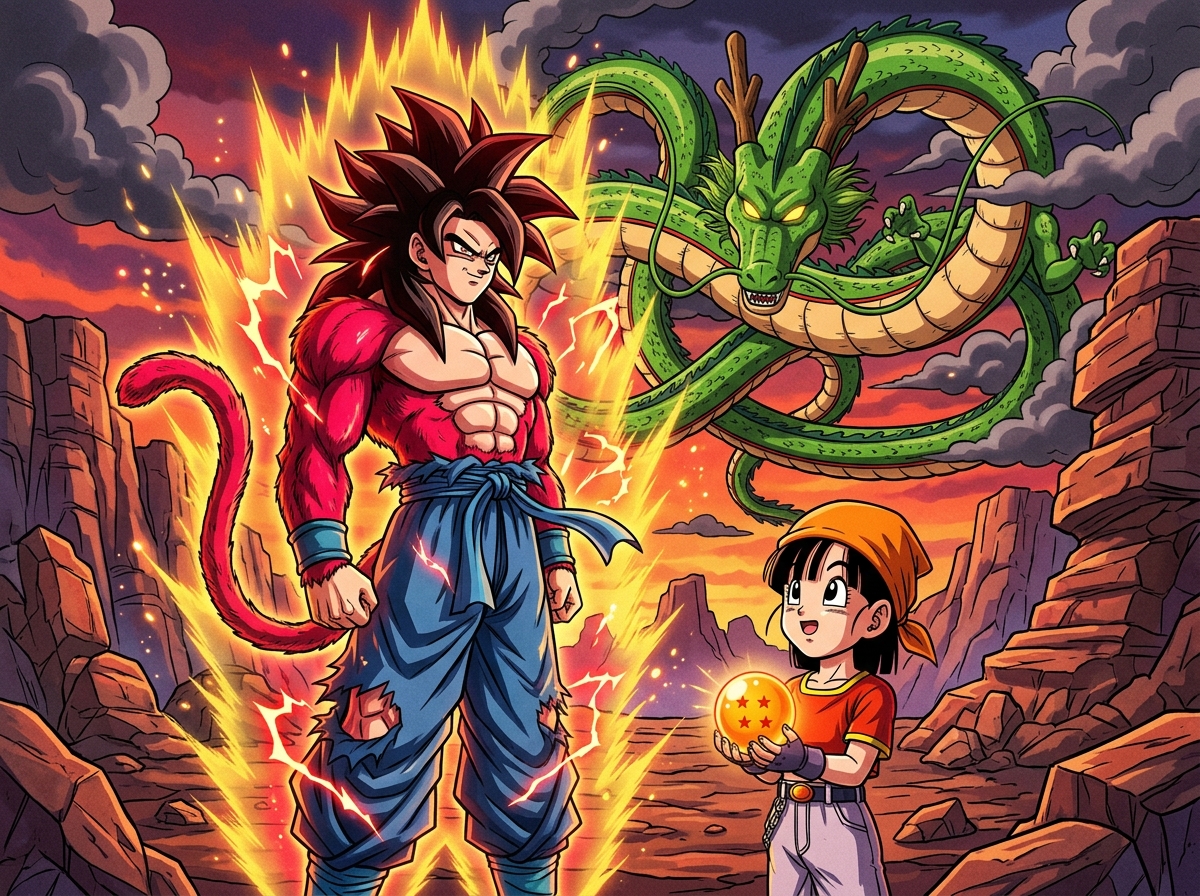
A Hero’s Legacy is the Dragon Ball GT television special. It is an anime-original story that aired in Japan on March 26, 1997, and it sits between Dragon Ball GT episodes 41 and 42. Its place in the broadcast order is what ties it to the series’ final stretch.
Dragon Ball GT continued the franchise after Dragon Ball Z ended, and its story began with Goku turned back into a child. Like GT itself, the special was written for television rather than adapted from the manga. That gives it more room to introduce new characters and threats without being tied to existing comic pages.
The special is often described as a prelude to events at the end of the series. In other words, it sets up the conflicts that the closing episodes build on. Viewers who see it before the final arc get background the regular episodes do not fully explain, so the finale feels like a continuation rather than a sudden turn. The A Hero’s Legacy entry on Wikipedia gives the basic broadcast context for the special.
Its position in the run matters for watching. The special was scheduled between [Dragon Ball GT episode 41] and [Dragon Ball GT episode 42], so it sat outside the regular weekly order. If you watch the series in its original broadcast sequence, place the special after episode 41 and before episode 42. Skipping it can leave gaps in the setup for the later episodes.
This is different from the Dragon Ball Z specials. Bardock and The History of Trunks are tied to the Z story and explain events that happened before or alongside it. A Hero’s Legacy works forward instead, pointing toward the ending of GT. That is a useful distinction when you decide where each special belongs in your viewing plan.
Some viewers treat the special as optional because it does not connect to the Z timeline. That view misses its role. The special is a bridge within GT, so watching it changes how the closing episodes feel. If you plan to watch GT from start to finish, keep it in its scheduled spot so the story unfolds the way the broadcast intended.
Are Crossover and Recap Specials Part of the Franchise?
Crossover and recap specials count as part of the franchise’s broadcast history, but they are not standalone stories like Bardock or A Hero’s Legacy. Each one is a special event that aired in a single slot. Each either brings characters from other series together or repeats material that already aired.
The best-known crossover is the Dream 9 special, which brought together Dragon Ball Z, One Piece, and Toriko. Fuji TV aired it on April 7, 2013. Because it shares airtime across three series, it works more as a celebration of the characters than as a chapter in any one of them.
Two Dragon Ball Super broadcasts follow the same pattern:
- October 8, 2017: a one-hour special that combined [Dragon Ball Super episode 109] and [Dragon Ball Super episode 110] into one broadcast.
- December 2, 2018: a one-hour recap that looked back at the show ahead of the Dragon Ball Super: Broly film.
The 2017 combined broadcast is simply two regular episodes shown back to back. Nothing new happens in it, so the story matches what you get by watching the episodes on their own. The only difference is scheduling, which gave the network a single hour instead of two separate slots.
The 2018 recap works differently because its purpose is to refresh memories. It reviewed earlier events so viewers could follow the show before the movie arrived. A recap can be useful if you have not watched Super in a while, but it does not add anything to the plot that the episodes did not already cover.
Dragon Ball Super: Broly is a theatrical film, and that is what makes the recap a different kind of program. The film has its own complete story and was released in cinemas, while the recap was a television broadcast meant to prepare audiences for it. Keeping that difference in mind helps you avoid mixing up television events with feature films.
For the Dream 9 crossover, the practical question is whether you want to see characters from three series share a stage. You do not need any background from Dragon Ball Z to follow the crossover’s events in a general way, but you will get more from it if you already know Luffy from One Piece or Toriko from his own series. Nothing in the crossover changes the Dragon Ball timeline, so skipping it will not leave gaps in the main story.
The same is true of the recaps and combined episode slots. They sit beside the regular episode order rather than inside it. If you are building a watch list, the regular episodes are the core, and these broadcasts are optional extras you can add when they fit your interest.
How Do TV Specials Differ From Dragon Ball Movies?
TV specials air on television, while theatrical films are released in cinemas. That difference in release channel is the simplest way to tell them apart. The three narrative specials, Bardock: The Father of Goku, The History of Trunks, and A Hero’s Legacy, were shown on Japanese TV networks in regular broadcast slots, so viewers watched them at home rather than buying tickets.
All three are feature-length in the sense that each tells a complete story from start to finish. Even so, they were made for television, and their running time is shorter than most movies in cinemas. Length alone does not tell you what kind of program you are watching. The better question is where the story was meant to be shown.
Dragon Ball Super: Broly is a clear example of a theatrical film. It was made for the big screen and follows its own self-contained plot. Fans had to go to a movie theater to see it when it was released, which is the main thing that separates it from the TV specials.
The stories also sit in different places within the franchise. Bardock fills in the Saiyan past before Goku reached Earth. The History of Trunks shows the future world that Trunks came from. A Hero’s Legacy points toward the ending of Dragon Ball GT. Each special adds to the existing timeline of its series, so it works as part of a larger story. Broly is a film with its own adventure, and it does not need to be placed in a specific slot within a TV season to make sense.
Crossovers and recaps belong to a third group. They are broadcasts, not films and not narrative specials. The Dream 9 crossover aired on Fuji TV on April 7, 2013, and it brought characters from three different series together for one event. The December 2, 2018 recap aired on Fuji TV to review earlier episodes. Neither was a cinema release, and neither tells a standalone story from beginning to end.
A simple way to sort them is to ask two questions. First, did the program have its first run in cinemas or on television? A film is judged by its cinema release, even if it is shown on TV later. Second, does it have its own complete plot? If it aired on TV and tells a full story, it is a narrative special. If it is a crossover, recap, or combined episode, it is a broadcast event. Asking both questions helps you avoid mixing up television events with feature films.
Why Were the Z Specials Sold as a Double Feature?
The two Dragon Ball Z specials were packaged together as a 90-minute home-video double feature, released in February 2008. Each special ran 45 minutes on its own, so the bundle gave buyers a full evening of viewing in one purchase.
The double feature is an old movie-theater idea. Cinemas once showed two films back to back for one ticket, and the same format moved into home video. Pairing two shorter TV programs made them feel like a complete movie night, even though neither was made for theaters.
North American packaging sometimes called the Z specials “features,” a word that normally describes a theatrical film. A shopper who saw that label had little reason to suspect that both programs first aired on Japanese television. Bardock aired on October 17, 1990, and The History of Trunks aired on February 24, 1993, both as broadcasts on a regular TV schedule.
The packaging blurs the line between TV and theatrical releases. A special can be feature-length, have a complete plot, and come in a movie-style case, yet still begin life on a television schedule. Packaging describes how a program is sold. It does not change where the program was first shown.
Running time is a useful clue. A 45-minute special is shorter than most films in cinemas, so a set that holds two of them is a sign that the programs came from television. Check the back cover for words like “feature” or “movie,” then compare them with the original air dates. If a label does not mention the first broadcast, look for it in a reference guide before you assume the program was a theatrical release.
Keep in mind that a home-video label is a sales choice made after the program was finished. The story, the animation, and the first broadcast slot stay the same no matter how the box is designed. Knowing that difference helps you sort specials from films.
Where Should You Start With the Dragon Ball Specials?
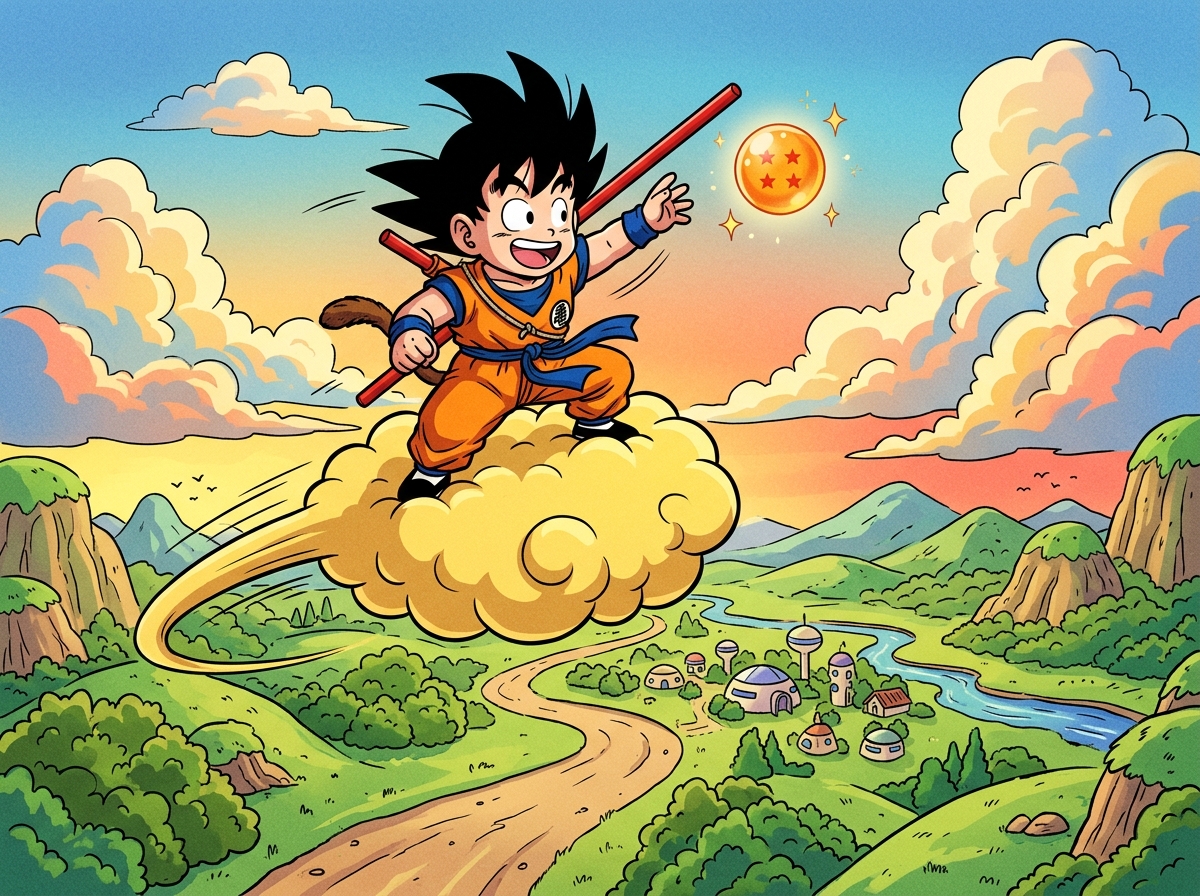
Start with Bardock: The Father of Goku for Goku’s origin story, then watch The History of Trunks for the Z-era side story. Each special fits at a specific point in the franchise, so follow these steps to build your list.
- Watch Bardock: The Father of Goku before the Saiyan saga of Dragon Ball Z, since it covers the Saiyan world before Goku reached Earth. At 45 minutes, it runs longer than a standard weekly episode.
- Watch The History of Trunks when the Trunks storyline begins in Dragon Ball Z, because it adapts a manga side chapter about his future. It also runs 45 minutes, the same length as Bardock.
- Watch A Hero’s Legacy between [Dragon Ball GT episode 41] and [Dragon Ball GT episode 42], since it sets up the events at the end of the series.
- Add the Dream 9 crossover and the Dragon Ball Super broadcasts whenever you like, since they are optional extras. The 2017 one-hour broadcast simply combined [Dragon Ball Super episode 109] and [Dragon Ball Super episode 110], and the 2018 recap only reviewed earlier material.
Adding the Specials to Your Watch List
Start with a blank list and add the three narrative specials in the order they fit the story. Put Bardock: The Father of Goku before the Saiyan saga, The History of Trunks where the Trunks storyline begins, and A Hero’s Legacy between Dragon Ball GT episodes 41 and 42.
Next, decide which extras you want. If you enjoy seeing characters from different series share a stage, add the Dream 9 crossover, which aired on April 7, 2013, at the end of your list. If you have not watched Dragon Ball Super in a while, the December 2, 2018 recap can help you catch up. You can skip the October 8, 2017 one-hour broadcast if you have already watched its two episodes, 109 and 110, on their own.
Finally, check each title’s label before you file it. A home-video box that calls a program a “feature” or “movie” may still be a 45-minute TV special. Compare the packaging with the original air date, and your list will reflect the actual order in which these programs were made and shown.
Frequently Asked Questions
1. Are the Dragon Ball Z specials canon?
Yes, both Dragon Ball Z specials are generally treated as part of the official Dragon Ball story. Bardock was written for the anime, while The History of Trunks adapts a side chapter from Akira Toriyama’s manga. Both fill in background that the main Z episodes build on.
2. Do I need to watch the TV specials to follow Dragon Ball Super?
No, you do not need any of the TV specials to follow Dragon Ball Super. Super’s story picks up after the Majin Buu saga of Dragon Ball Z, so the specials are helpful background rather than required viewing. The crossovers and recap broadcasts are optional extras you can skip without missing the main plot.

