

Dragon Ball’s manga publication history begins on November 20, 1984, when the series debuted in the 1984 issue No. 51 of Weekly Shonen Jump, the magazine published by Shueisha. That first appearance is the starting point for every milestone that followed, from the weekly run to the collected books fans still collect today. Knowing these dates helps explain how one magazine series grew into a worldwide franchise.
The serialization ran for about ten and a half years, and the first Jump Comics collected volume arrived on September 10, 1985. That opening volume was priced at ¥484 and ran 192 pages. The complete original release grew to 42 volumes, and the final one reached shelves on August 4, 1995, the same year the weekly run ended. Today the franchise has sold 260 million copies worldwide, a figure that shows how far those early chapters have traveled from their first magazine pages.
Key Takeaways
- Dragon Ball began serialization in Weekly Shonen Jump issue No. 51 on November 20, 1984, and the weekly run ended in 1995 after about ten and a half years.
- The original Dragon Ball manga was collected in 42 numbered Jump Comics volumes, released from September 10, 1985 to August 4, 1995.
- Readers who want the full story from chapter 1 should start with volume 1 of the Japanese Jump Comics run, since the English Dragon Ball Z line begins at Japanese chapter 195.
- The 40th anniversary Double Cover Box, priced at ¥31,800, was moved from February 4, 2026 to April 3, 2026, so buyers should confirm the release date before ordering.
- Official sources report that the Dragon Ball manga has sold 260 million copies worldwide.
When Did the Dragon Ball Manga First Start Publishing?
Dragon Ball began serialization on November 20, 1984, when its first chapter appeared in issue No. 51 of Weekly Shonen Jump, the magazine published by Shueisha. Akira Toriyama wrote and drew the series. He had already built a following with his earlier comedy Dr. Slump, which ran in the same magazine.
The early chapters felt different from the fights the series later became known for. The story follows Son Goku, a young boy with a monkey tail who lives alone in the wilderness. He meets Bulma, a teenage inventor searching for the seven Dragon Balls, magical orbs that grant a wish once they are gathered. Toriyama drew on the classic Chinese novel Journey to the West, which features the Monkey King, and that influence shows in Goku’s playful, mischievous personality.
Those first months read more like an adventure comedy with martial arts than a battle series. Goku and Bulma travel together, and their trip brings them to Master Roshi, a retired martial arts master who trains Goku and teaches him many of his early techniques. The tone is light and the pages are full of gags, which made the series easy for new readers to follow each week.
The debut matters because it is the anchor point for the whole timeline. The length of the weekly run, the first collected volume, the final weekly installment, and every anniversary project that came later can all be measured from that first issue. Without a fixed starting date, it would be hard to see how many years separate the early chapters from the modern releases.
The debut also places the series inside a magazine with a strong track record. Weekly Shonen Jump was home to many of the era’s major shonen hits, and Dragon Ball joined those titles as a new story in a crowded weekly lineup. Its early success in that setting helped it stay in the magazine long enough to grow into the franchise readers know today.
How Long Did the Weekly Shonen Jump Run Last?
The Dragon Ball manga ran in Weekly Shonen Jump for about ten and a half years, starting in late 1984 and wrapping up in 1995. Few magazine series keep a weekly schedule for that long, so the run covers a large part of the 1980s and 1990s.
A weekly series has to deliver new pages every few days, so a run of this length means the creators kept producing fresh chapters for years. Readers had time to follow the characters from their first adventures to much larger battles. That slow build is a big reason the manga feels so different in its later chapters from where it started.
Long serializations also give the story room to change. Weekly magazines let editors and the author see how readers respond from one issue to the next, and that feedback can influence which characters get more space, how fast the plot moves, and which ideas get expanded. Over ten years, small shifts like these add up, so the series near the end is noticeably different from the early comedy-driven chapters.
The end of the run is marked by the final Weekly Shonen Jump installment, which appeared in 1995 issue No. 25. The Dragon Ball Official Site’s retrospective identifies that issue as the place where the weekly story concluded. Knowing the issue number lets you pin the ending to a specific week rather than a vague year.
Even so, most readers use 1995 as the close of the original run. The date works well because it matches the year the final collected volume was released, so the magazine and the books both finish in the same year. When people talk about the series as a completed original story, they usually mean everything published up to that point.
Some readers are surprised the run was not shorter. A story that begins as a light adventure and grows into a long epic needs time to reach its ending, and the ten-plus years of weekly chapters gave the creators that time. Keeping the start and end dates in mind makes it easier to see how the early pages and the final pages fit into one continuous project.
Which Jump Comics Volumes Make Up the Original Release?
The original collected release of Dragon Ball is 42 numbered Jump Comics volumes, published by Shueisha in Japan between September 1985 and August 1995. Each volume gathered chapters that had already run in Weekly Shonen Jump, so the books always followed the magazine.
Here are the key facts at a glance:
- Total numbered volumes: 42
- First volume release date: September 10, 1985
- First volume price: ¥484, tax included
- First volume length: 192 pages
- Final numbered volume (42) release date: August 4, 1995
- Gap before the first book: about a year after the weekly serialization began in November 1984
Jump Comics is the paperback line Shueisha uses to collect its magazine series into book form. Publishers in this model wait until enough chapters have appeared in the weekly issues to fill a book, then print them together. That is why the books trailed the magazine. A reader who followed the weekly issues from the start had already read the opening chapters for months before the first book reached stores.
The first volume’s price and page count give a clear picture of what early readers bought. At ¥484 with tax included, it was a modest purchase for a fan who wanted to keep the story on a shelf. Its 192 pages gave readers a full collection of chapters in one volume rather than a short pamphlet.
The release schedule also explains the gap between the magazine and the books. Serialization started in late 1984, but the first collected book did not arrive until September 1985. Readers who came to the series through the books were always reading a story that had already moved ahead in the magazine.
The run of numbered volumes ended in August 1995, the same year the weekly story concluded. That timing means the magazine and the book line finished together, and the final numbered volume gave fans a complete set of the original story.
If you are checking a set against this list, look for the Jump Comics logo on the spine and confirm that the numbered run stops at 42. Keep in mind that the numbering reflects the Japanese release. The English-language editions were organized differently, which affects how readers count volumes when they compare editions.
Why Did the English Version Split Dragon Ball and Dragon Ball Z?
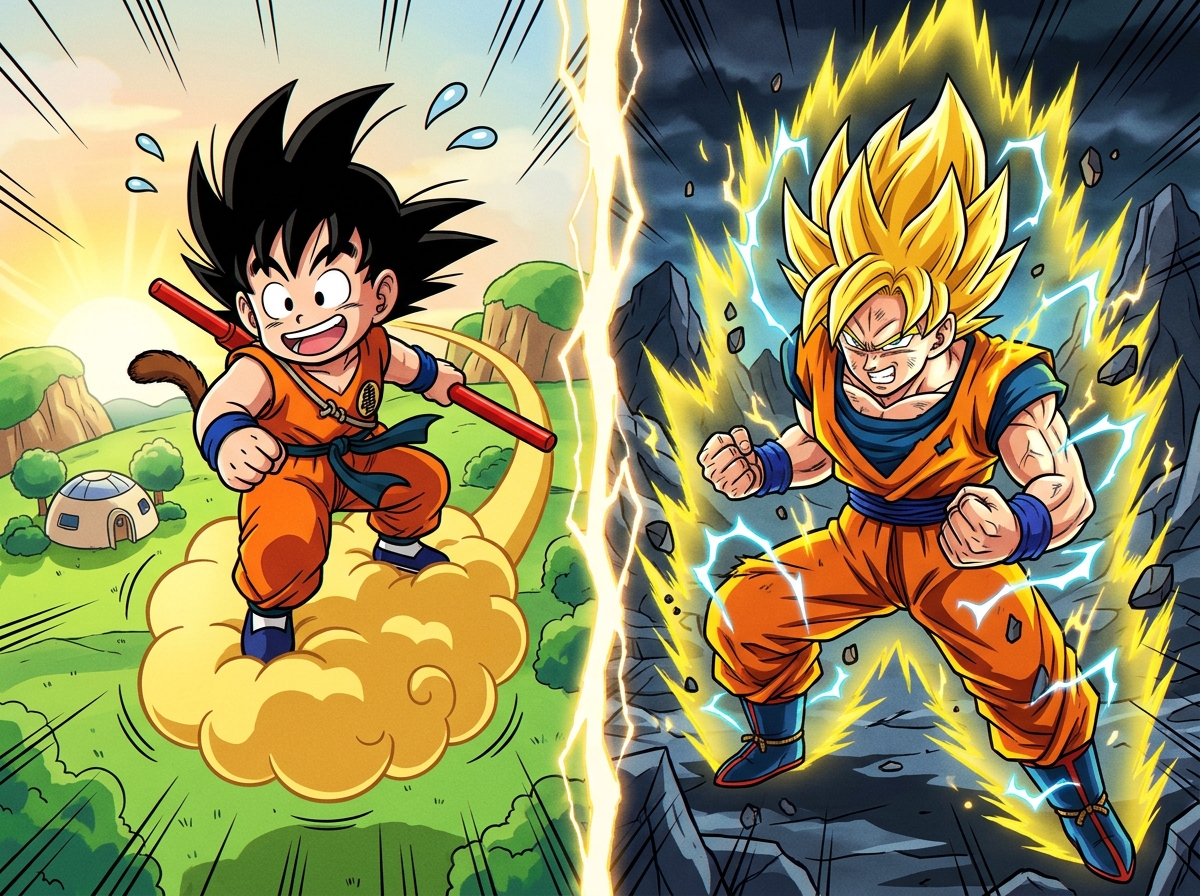
VIZ split the series in English by starting Dragon Ball Z with Japanese chapter 195, the opening chapter of the Saiyan Saga. Because of that choice, the English books do not follow the Japanese numbering from chapter 1 onward.
The Japanese original stayed under the Dragon Ball name and was collected in 42 numbered Jump Comics volumes. The Saiyan Saga was simply the next stretch of one continuous story. VIZ drew a line at chapter 195 for its English edition and presented everything from that point as Dragon Ball Z. Readers who only know the English books may come to see the Saiyan Saga as a separate series rather than a later part of the same story.
The first English volume arrived on May 6, 2003, at a price of $6.99. Since the Dragon Ball Z line opened with chapter 195, that first book begins where the Saiyan Saga begins, not with the early chapters from 1984 that opened the Japanese run. Anyone reading the English line in order therefore starts in a different place from anyone reading the Japanese volumes in order.
The split also means the two editions do not line up by number. The Japanese and English volume numbers do not match, so volume 10 in one language may hold pages from a different part of the story than volume 10 in the other. A reader who assumes the numbers track each other can end up with duplicate chapters on one shelf and missing chapters on another.
Fans who switch between editions often find this confusing at first. A reference book, a fan list, or a friend’s recommendation may use Japanese volume numbers while the copy in hand uses English numbers. Knowing that the English line begins at chapter 195 helps explain why the page counts and story beats feel offset.
Tip: Before comparing two editions, check the chapter number and the chapter title printed in the table of contents. Matching those two details tells you which part of the story you are looking at, even when the volume numbers point in different directions.
What Anniversary Editions Have Been Released?
The most prominent anniversary release is the 40th anniversary Double Cover Box, a 42-volume set that brings the original Jump Comics volumes together in one package. Shueisha announced it to mark four decades since the series began, and it is built around the original numbered run rather than new story pages. It is designed for readers who want the complete original release in a single purchase.
The listed price for the full set is ¥31,800. That number is easier to appreciate next to the ¥484 price of the first volume in 1985. Buying the whole original run now costs far more than a single early book did, and the box reflects that it is a collector’s package rather than a standard reprint.
The release did not stay on its first schedule. Shueisha originally set the date for February 4, 2026, then moved it to April 3, 2026, a shift of about two months. Anyone who planned to buy the set in early February will need to wait until April, so checking the current date before ordering is a good habit.
The covers are a major part of the box’s appeal. The double covers use illustrations by 42 artists, so the set brings together many different styles across its spines and covers. The variety means the books look distinct from one another, even though they follow the same story order.
The box includes the original 42 Jump Comics volumes, so the contents match the numbered run covered earlier in this timeline. That is the key detail for readers who already own some of the books. Comparing the volume numbers against the set will show which books you already have and which ones are new to your collection.
Anniversary projects like this one give older books a fresh look without changing the story itself. For longtime fans, the set offers a way to own the original release in a single, matching collection. For newer readers, it shows how the franchise chose to honor the first run of its manga four decades after the series debuted.
How Many Copies Has the Dragon Ball Manga Sold?
Official sources report worldwide sales of 260 million copies for the Dragon Ball manga. That number shows how far the story has traveled from the Weekly Shonen Jump pages where it began in 1984.
The sales did not arrive all at once. They built up in stages, starting with the original Japanese run, when each week’s chapters gave readers a reason to come back to the magazine. The Jump Comics books then carried those chapters onto store shelves, so readers who missed an issue could catch up later.
The English release was the next major step. VIZ began publishing Dragon Ball in English on May 6, 2003, with the first volume priced at $6.99. That launch opened the story to readers who could not read Japanese, and it started a new group of buyers in countries far from Japan.
Anniversary editions added another layer. The 40th anniversary Double Cover Box is listed at ¥31,800 and gathers the original numbered run into one set. A release like this gives longtime fans a reason to buy the books again, and it gives collectors who discovered the series later a complete set to pursue.
The artwork is part of the appeal as well. The franchise’s official retrospective refers to 519 chapter title-page illustrations, a clear sign of how much art fills the manga. Pictures like these need no translation, so they carried the look and energy of the series into every language the books reached.
Each release also gave the series a fresh way to reach people. A magazine serial catches the attention of readers who buy it every week. Collected volumes reach people who prefer to read in one sitting. An English edition brings in readers who would never have found a Japanese book, and an anniversary box brings back fans who want the original run on their shelves.
That is why the series became a global franchise. The weekly run built a loyal readership in Japan, the English release carried the story into new markets, and anniversary editions kept the original books in front of readers decades after they first appeared. Together, those milestones explain how a single magazine serial grew into a story with 260 million copies in circulation.
Where Should New Readers Start With the Manga?
New readers should start with the first Jump Comics volume if they want the story from its first chapter, and with the English Dragon Ball Z line if they mainly care about the Saiyan Saga and what follows it. The two paths begin in different places, so the right choice depends on where you want to start.
The Japanese run keeps the whole story under the Dragon Ball name across 42 numbered volumes. Reading it in order means you meet Goku and Bulma in the early adventure chapters before the larger battles arrive. The English line begins at Japanese chapter 195, so its first book opens at the start of the Saiyan Saga instead.
Keep the timeline in mind when comparing editions. The weekly run ended in 1995, so every edition you compare should map to the same chapters. An edition that starts at chapter 195 simply skips the early material, and it does not contain a different version of the story.
Use these steps to choose and buy your set:
- Decide whether you want the full story from chapter 1 or only the Saiyan Saga onward, since that choice decides your starting volume.
- If you want the full story, begin with volume 1 of the Japanese Jump Comics run, released on September 10, 1985.
- If you prefer English and want to begin at the Saiyan Saga, look for the first Dragon Ball Z volume, which opens at chapter 195.
- Check the chapter number in the table of contents of any book before you buy, so you know which part of the story it covers.
- Confirm the 40th anniversary Double Cover Box date before ordering, because the release moved from February 4, 2026 to April 3, 2026.
- Compare the box’s 42 volumes with the books you already own, and check the listed price of ¥31,800 against what you plan to spend.
Choosing Your Starting Point in the Series
If you already read the English Dragon Ball Z line, your next step is to find out what you skipped. Check the chapter number at the top of your earliest volume. If it starts at chapter 195, then everything before it, including Goku’s first meeting with Bulma and his training with Master Roshi, is still unread.
Your goal decides where to begin. Readers who want the whole story should start with volume 1 of the Japanese Jump Comics run and continue in number order through the 42 books. Readers who only want the Saiyan Saga and the battles after it can begin with the first English Dragon Ball Z volume and come back to the early chapters later.
Before you buy anything, write down the chapter range each book covers. You can find it in the table of contents. Compare your list with the set you are considering, and note which chapters you already have and which are missing.
Then pick the first book that fills the first gap. That single choice keeps you from buying duplicates, and it lets you read the story in the order the creators wrote it, starting from the chapters that began in Weekly Shonen Jump in November 1984.
Frequently Asked Questions
1. Is Dragon Ball Super part of the original Dragon Ball manga publication run?
Dragon Ball Super is not part of the original run, which covers the Weekly Shonen Jump serialization from 1984 to 1995 and the 42 numbered Jump Comics volumes. Super is a later continuation of the story, written by Toyotaro with Akira Toriyama supervising the project. Readers who want the original 42 volumes should look only at the numbered Jump Comics books.
2. Are digital editions of the original Dragon Ball manga volumes available?
Digital editions of Dragon Ball manga are sold through major e-book stores in many countries, so you can often read the series on a phone, tablet, or e-reader. Availability depends on where you live and which language edition you want. Before buying, check that the digital listing shows the volume number and chapter range you are looking for.
3. What is the difference between the Dragon Ball Super manga and the original Dragon Ball manga?
The original Dragon Ball manga follows Goku from his childhood through the Saiyan, Frieza, Android, and Majin Buu storylines, ending in 1995. Dragon Ball Super picks up after that ending and adds new arcs with new god characters and tournaments. The two series share the same characters and world, but Super is a separate publication with its own volumes.

