
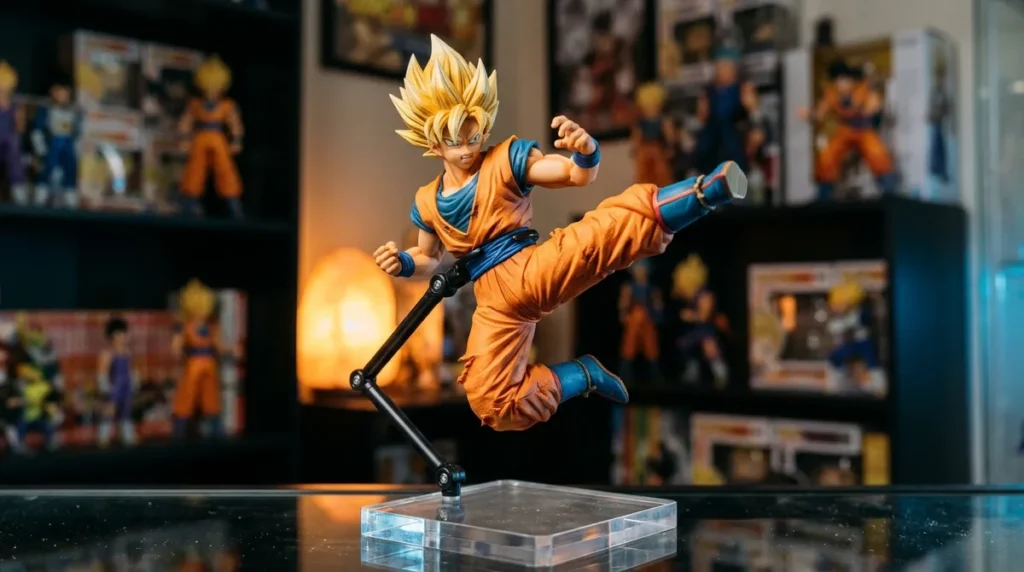
Dragon Ball figure stands are most often small clip-on supports made by the manufacturer. For articulated figures, the standout option is the Tamashii Stage ACT HUMANOID from Tamashii Nations. Each set includes an ABS stand about 140 mm tall, with two bases, two movable arms, and a figure clip, so it can hold a posed figure upright without the joints slowly sagging. The Japanese list price is ¥1,100 including tax, and U.S. retailers have listed a two-stand set for $10.99. That makes it one of the cheapest ways to protect a figure displayed in an action pose.
Those numbers matter because a fallen figure can snap a wrist or chip a painted hand, and a few dollars of plastic is a small price to avoid that. Not every collector needs the same support, however. Taller robot-type figures may suit ACT MECHANICS at 170 mm, while statues and figures carrying heavy energy effects call for different hardware. The right stand depends on figure type, height, and the weight of any effect parts, so start by matching your shelf to your collection.
Key Takeaways
- Dragon Ball collectors with articulated humanoid figures should start with the Tamashii Stage ACT HUMANOID, which stands about 140 mm tall and sells in a two-stand set for around $10.99 in U.S. listings.
- Owners of tall robot-type figures should consider the Tamashii Stage ACT MECHANICS, which stands 170 mm tall and offers more reach than the ACT HUMANOID for bulky frames.
- Collectors should not rely on clip-on stands like the ACT HUMANOID or ACT MECHANICS for heavy statues, because their published specifications do not include a load rating.
- Heavy statues call for a full pedestal, which is rated at 50 pounds or up to 250 pounds with a reinforced top and typically costs around $535.
- Anyone displaying figures with heavy effect parts or in flight poses should place the stand near the figure’s center of gravity, check arm reach before attaching the effect part, and gently nudge the shelf to test stability.
Why a Good Figure Stand Matters for Articulated Dragon Ball Figures
Collectors who own articulated figures such as S.H.Figuarts and similar humanoid figures, along with owners of robot-type figures and heavy statues, need stands that hold a pose without wobbling. This guide is for anyone deciding which support to put under a figure before it ends up on a shelf or in a glass case.
The stands below are judged on five points: how well each one fits the figure type, how much height and arm adjustment it offers, which parts come in the box, its price, and whether the manufacturer publishes its specifications. These points matter because a stand that suits a small humanoid figure may be useless for a tall robot or a heavy resin statue.
For articulated figures, the main option is a clip-on stand made by the manufacturer. These stands grip the figure’s body and anchor to a base, so the figure stays upright without the joints slowly sagging. Among them, the Tamashii Stage ACT HUMANOID stands out. Its movable arms can be angled to brace a raised arm or leg, and the set includes two stands, so two figures can be supported at once.
Taller robot-type figures call for a different configuration. ACT MECHANICS is designed for robot-type figures and stands 170 mm tall. It has two bases and two movable supports, which gives more reach for bulky frames.
The main limitation is that the published specifications for these clip-on stands do not list a load rating. Readers should not assume they suit heavy statues or figures in unusually burdened poses, where a full pedestal is the safer choice.
Figures most often tip in flight poses and when carrying heavy effect parts. A figure balanced on one foot, with its center of gravity pushed forward or upward, is far more likely to fall than one standing flat. A stand is most useful in exactly those displays.
Side-by-Side Comparison of Dragon Ball Figure Stands
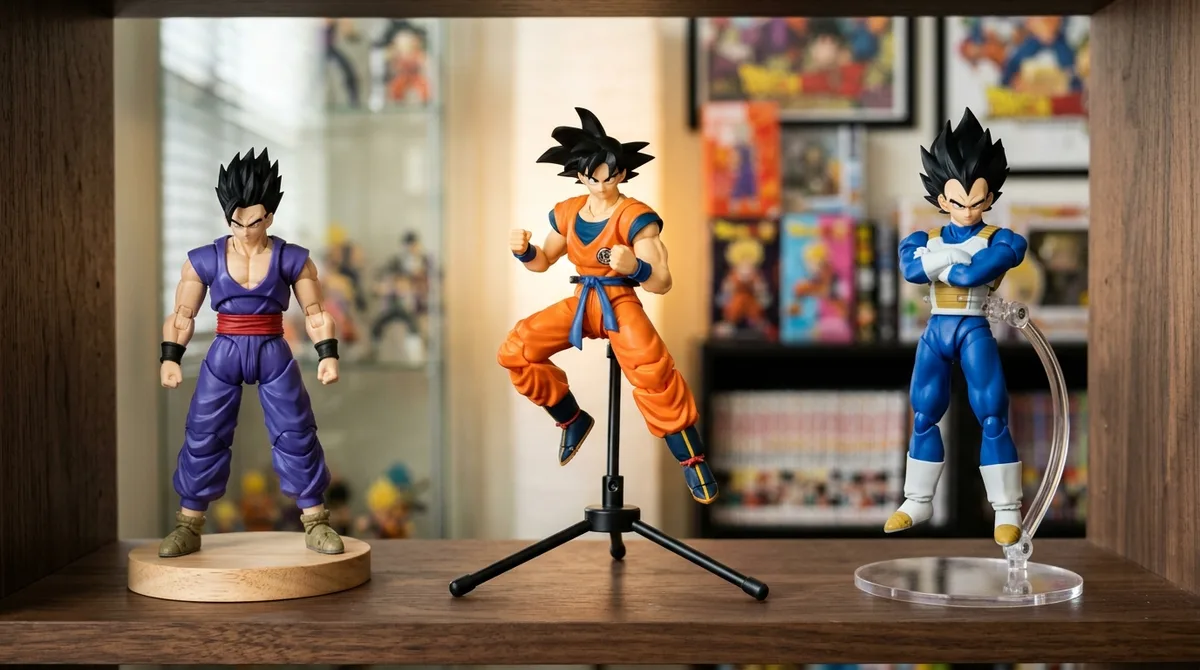
The table below compares the four main options by price, best use, height, and key feature, so you can narrow the field before reading the individual picks.
| Stand | Price | Best For | Height | Key Feature |
|---|---|---|---|---|
| ACT HUMANOID | ¥1,100 in Japan | Articulated humanoid figures | About 140 mm | Two movable arms and clips |
| ACT MECHANICS | ¥1,100 in Japan | Robot-type figures | 170 mm | Two movable supports |
| Dragon Ball Store Limited Edition | ¥1,100 in Japan | Collectors who like themed bases | 140 mm | Seven random Dragon Ball designs |
| Large pedestal display | Several hundred dollars | Statues and sculptures | Full-size fixture | Published 50 lb rating, up to 250 lb with reinforced top |
The three clip-on stands share the same Japanese price, so the decision usually comes down to figure type rather than budget. U.S. prices vary by pack size and availability. Listings have ranged from a two-stand set at $10.99 to a seven-stand metallic Dragon Ball set at $79.99, which was sold out when checked in October 2026.
The Dragon Ball Store edition arrives in a random design, so buyers cannot choose which of the seven Tamashii Nations styles they receive. The manufacturer also sets an age target of 15 and older for it.
The pedestal belongs in a different category. Full-size display pedestals of this kind are priced around $535. They are fixtures for sculptures, not clip-on supports for a posable figure.
Tamashii Stage ACT HUMANOID: The Everyday Pick for Articulated Figures
The Tamashii Stage ACT HUMANOID is the stand most collectors will reach for first. Made by Tamashii Nations, part of BANDAI SPIRITS, it is an ABS plastic stand about 140 mm tall, built for S.H.Figuarts and similar articulated humanoid figures. The Japanese recommended retail price is ¥1,100 including tax, and the set was originally released on June 15, 2019.
Each set includes two bases, two movable arms, two base connectors, two movable clips, two clip bases, and one figure clip. The movable arms can be angled to brace a raised fist or a leg that wants to drift, while the clips hold the body steady. Because the set can display two figures, it works well for a pair of rivals posed side by side, such as Goku and Vegeta on the same shelf.
U.S. retailers have listed the two-stand set for around $10.99. That price makes it easy to protect several figures without spending much more than the cost of a single figure accessory.
The stand has clear strengths and a few limits:
- Pro: The base design is sturdy enough to hold articulated figures in dynamic poses.
- Pro: The adjustable arms can support raised limbs and leaning torsos.
- Pro: The price per stand is low, and the set covers two figures.
- Con: The manufacturer does not publish a load rating for the stand.
- Con: The stand is made of plastic, so it is not a substitute for a heavier support.
- Con: It is not designed for heavy statues or figures with large effect parts.
For most collectors with articulated humanoid figures who want a budget-friendly way to hold poses, the ACT HUMANOID is the right starting point. It handles the everyday job of keeping a posed figure upright, at a price that rarely changes the cost of a display. Anyone with a heavy sculpture or a figure carrying oversized effect parts should look elsewhere.
Tamashii Stage ACT MECHANICS: Taller Support for Robot-Type Figures
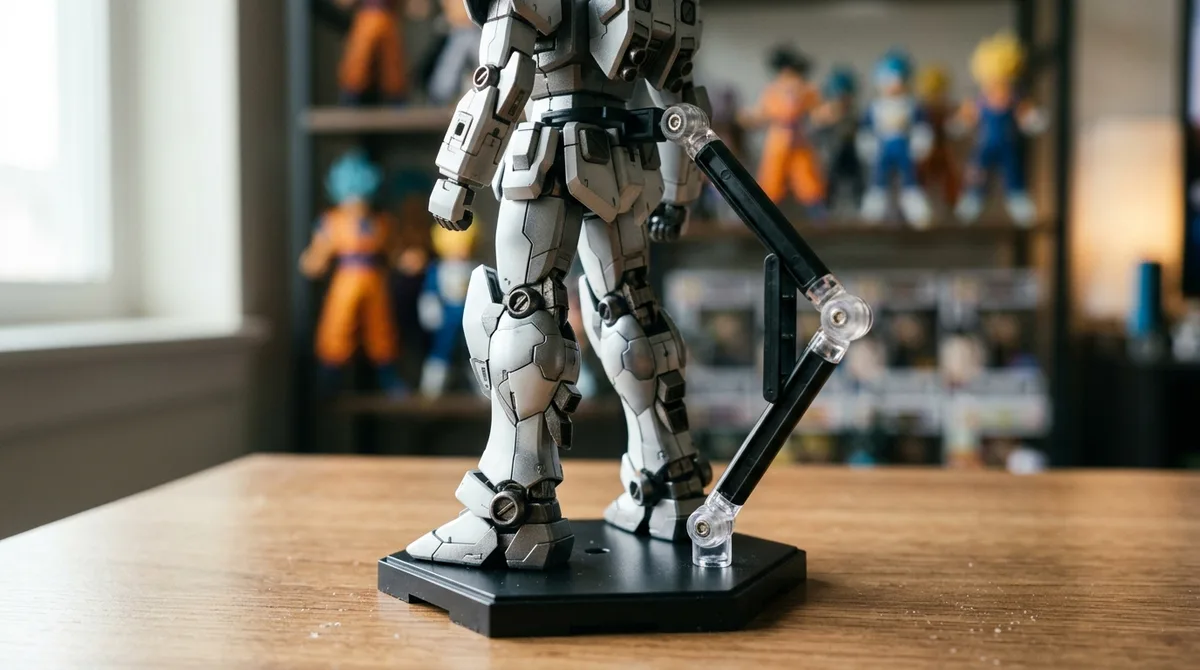
The ACT MECHANICS is built for a different kind of figure than most Dragon Ball collectors display. Where the ACT HUMANOID suits articulated humanoid figures, this stand is designed for robot-type figures such as the THE ROBOT SPIRITS line. Many Dragon Ball shelves hold mostly humanoid characters, so this is a niche pick, but owners of tall mechanical figures will find it useful.
The stand is 170 mm tall, about 30 mm taller than the ACT HUMANOID. It is made of ABS plastic and comes with two bases and two movable supports. The matching materials and two-base design keep the pair looking consistent when both sit on the same display.
In Japan, the ACT MECHANICS is priced at ¥1,100 including tax, the same as the ACT HUMANOID. Preorders opened in Japan on October 1, 2026, for a re-release scheduled for April 2027, so buyers who missed the original run have a clear date to plan around.
The stand’s strengths and limits are straightforward:
- Pro: The extra 170 mm height suits taller robot figures and keeps their upper bodies level.
- Pro: Two movable supports let you brace two points on a pose.
- Pro: The ABS construction matches the ACT HUMANOID, so the two stands pair neatly.
- Con: The fit is narrower for humanoid Dragon Ball figures, which often sit loosely in the clips.
- Con: No load rating is published, so it should not be trusted with heavy statues or burdened poses.
For robot-type figures, the ACT MECHANICS is a good pick, especially for tall frames that the shorter ACT HUMANOID cannot support comfortably. For most Dragon Ball humanoids, however, the ACT HUMANOID remains the better fit.
Dragon Ball Themed Bases and Store Editions
The Dragon Ball Store Limited Edition Tamashii Stage takes a different approach from the everyday stands. Instead of a plain support, it is modeled after the seven Dragon Balls, so the base doubles as a small collectible. At about 140 mm tall and made of ABS, it is the same height as the ACT HUMANOID. It was released in Japan on July 26, 2024, at ¥1,100.
The catch is the sales format. The edition is sold in a random design, so buyers cannot choose which of the seven Dragon Ball styles they receive. A collector who wants one particular ball has to accept the luck of the draw. The manufacturer also sets an age target of 15 and older for the product.
Availability is the other hurdle. Metallic seven-stand sets have appeared in U.S. listings at about $79.99, but they often sell out. Because the format is random, a single purchase cannot guarantee a specific design. Buyers who want the full set should watch for restocks rather than expect a steady supply.
The strengths and drawbacks are easy to list:
– Pro: The themed design gives a shelf display a collectible look that plain stands lack. – Pro: It works as a functional stand for a posed figure, with the same 140 mm height as the ACT HUMANOID. – Con: The random design means buyers cannot choose their style. – Con: Sets sometimes sell out, and the limited availability makes planning harder.
For collectors who value theme over function, this stand is a good fit. Fans who want a themed stand and accept random selection will get a working support with a collectible touch. Anyone who needs a specific design, or who wants a steady supply, should consider the plain ACT HUMANOID instead.
Pedestal Displays for Statues and Heavy Sculptures
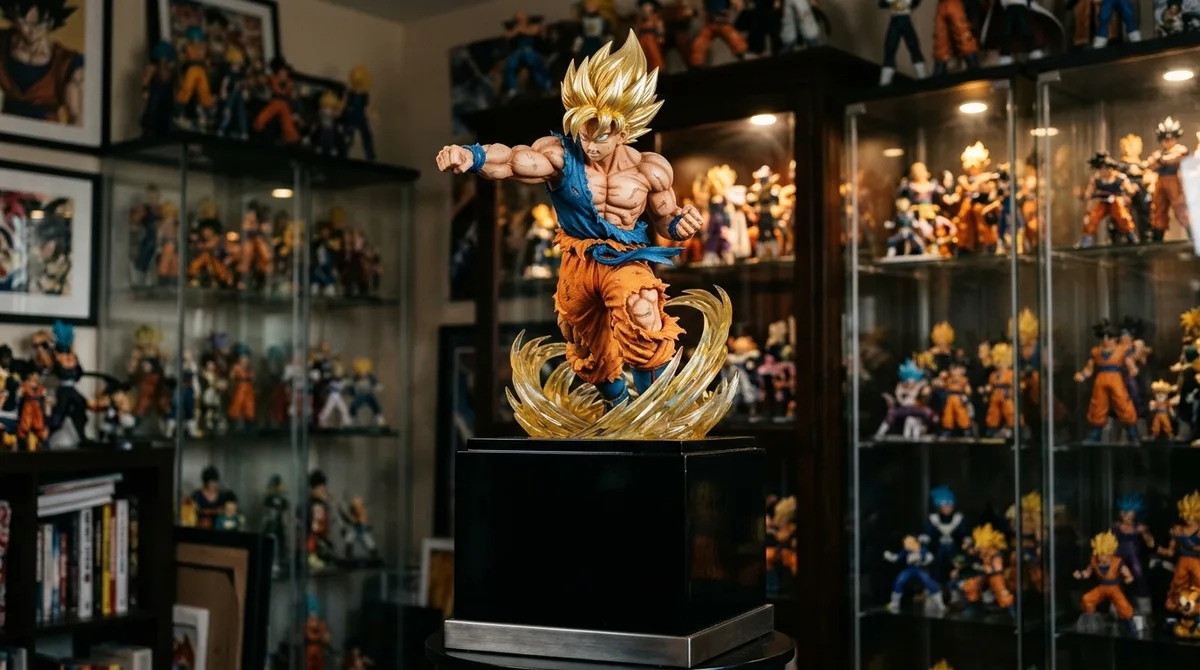
Clip-on stands stop being the right tool once the piece on top is a statue rather than a posable figure. A clip grips a limb or torso, so it depends on the figure’s own body for support. A sculpture with a heavy base or a tall, top-heavy silhouette needs its weight spread across a flat platform instead.
A large pedestal of this kind is priced around $535, and its published capacity is 50 pounds, or up to 250 pounds with a reinforced top. That range gives collectors a clear limit to check against the weight of a resin or vinyl statue before they buy.
The trade-off is easy to see. The pedestal’s high capacity and broad, flat top keep a heavy sculpture steady without any clips. Its drawbacks are the price, which is many times the cost of a clip-on set, and the footprint, which takes up real space on a shelf or in a cabinet. Before ordering, measure the shelf and confirm it can carry the combined weight of the pedestal and the statue.
Pedestals also suit a different kind of display. A statue set on a wide base stays in one place, so there is no need to adjust arms or angle a clip. A posable figure, by contrast, benefits from the adjustable arms of a stand like the ACT HUMANOID, which can brace a raised fist or a leaning torso.
For that reason, the pedestal is best for large statues and heavy sculptures. It is not the right choice for articulated action figures, where a clip-on stand costs far less and does the job of holding a pose.
Stands for Effect Parts and Flight Poses
Effect parts change how a figure balances. A glowing energy wave or a lightning accessory may look light, but it adds weight away from the body, which pulls the center of gravity off to one side. The THUNDER Yellow Ver. effect accessory from the TAMASHII EFFECT series went on sale in Japan on January 26, 2024, at ¥3,300 including tax. Once a piece like this goes on a figure, the whole display has to be planned around it.
Flight poses create the same problem from another direction. A figure hovering with one foot off the ground has little support underneath, so its base alone rarely keeps it steady. In these displays, the stand’s arms and clips do most of the work, bracing a raised leg or the torso and holding the figure at the angle the sculptor intended. A base that looks solid on the shelf can still tip if the clip sits too low on the body.
The published specifications for these stands do not include load ratings, so heavy effect builds belong on sturdier supports. Before anything goes on a shelf, a few checks help:
- Place the stand as close as possible to the figure’s center of gravity, usually near the hips or torso rather than at the feet.
- Check arm reach before attaching the effect part, so the arm can reach the raised hand or leg without straining the joint.
- Test the pose gently by nudging the shelf and watching whether the figure shifts or leans.
Which Dragon Ball Figure Stand to Buy First
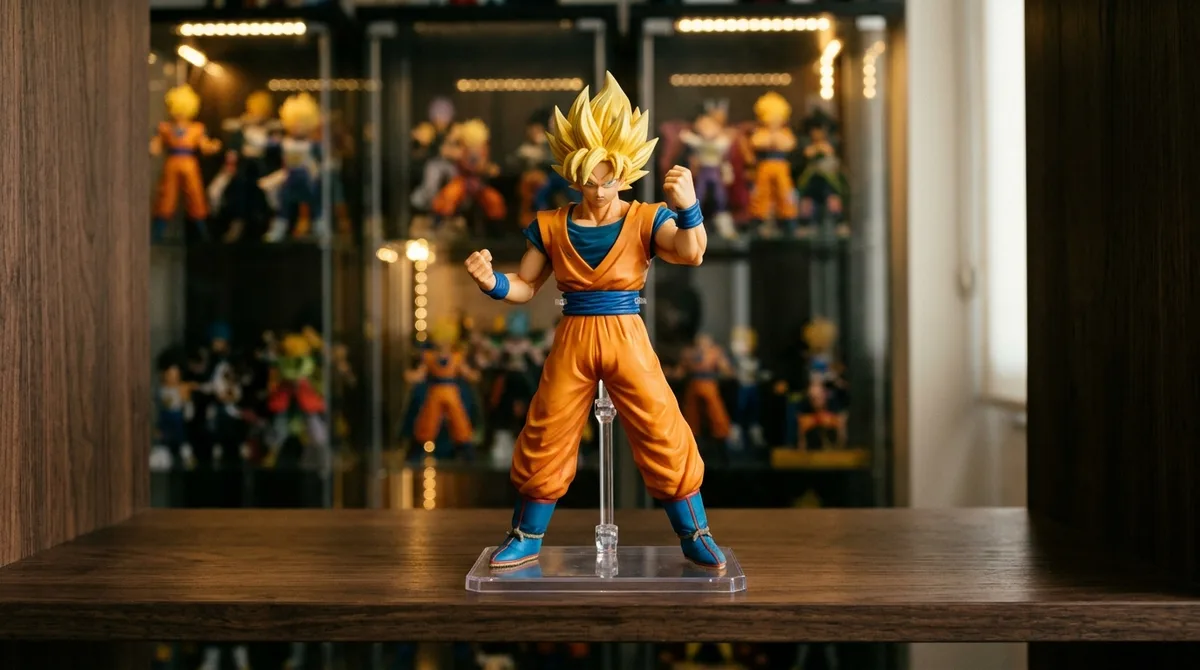
For most collectors, the Tamashii Stage ACT HUMANOID is the stand to buy first. It suits the articulated humanoid figures that fill most Dragon Ball shelves, and the two-stand set costs little more than a single small accessory. Start with it, and add other stands only when a specific display calls for one.
If your collection leans toward robot-type figures, choose ACT MECHANICS. Its 170 mm height gives tall mechanical frames the reach that the shorter ACT HUMANOID lacks.
If themed display matters more to you than a particular design, the Dragon Ball Store edition is worth a look. Buyers receive one of seven Dragon Ball designs at random, so anyone hoping for a specific ball should be prepared to take whatever arrives.
For heavy statues, skip clip-on stands and buy a pedestal. A flat platform with a published weight rating can carry loads that a clip cannot hold, though it costs far more and needs real shelf space.
Before you order, check current prices and availability. Listings vary by pack size and retailer, and themed sets sell out quickly, so a price you noticed last month may no longer apply. Once you know which figure type you own, measure its height and the shelf it will sit on, then continue to the next section to match your stand to your shelf.
Matching Your Stand to Your Shelf
Start with a tape measure. Record each figure’s height from its base to the top of its head or highest raised hand, then measure the shelf depth and the clearance above the figure. A flight pose or raised arm needs more vertical room than a figure standing flat, so measure the pose you actually plan to display.
If the figure is an articulated humanoid, the ACT HUMANOID at about 140 mm is the default choice. Its set includes two stands, so a pair of rivals such as Goku and Vegeta can share a shelf section if you leave enough space for each pose. For a tall robot-type figure that stands above the humanoid range, the 170 mm ACT MECHANICS gives more reach.
Pedestals with a published capacity, such as a 50-pound rating or up to 250 pounds with a reinforced top, let you set a clear limit before you buy. Weigh the statue, note the stand’s own weight, and compare the total with that limit.
Once you have those numbers, write them on a sticky note and keep it with your shopping list. Check current prices and stock before you order, since U.S. listings vary by pack size and themed sets sell out quickly.
Frequently Asked Questions
1. Will ACT HUMANOID fit a Super Saiyan Goku figure in a flight pose?
The ACT HUMANOID is made for S.H.Figuarts and similar articulated humanoid figures, so a Super Saiyan Goku from that line is the intended type of figure. Its movable arms can brace a raised arm or leg, which is where most of the support comes from in a flight pose. Because no load rating is published, check that the figure clip grips a sturdy part of the torso before leaving a flying figure unattended.
2. Will the ACT HUMANOID and ACT MECHANICS re-releases be sold in the U.S. in 2027?
The re-releases were announced in Japan, where preorders opened on October 1, 2026, at ¥1,100 each for a scheduled release in April 2027. Current information does not give a U.S. release date or U.S. pricing for the re-run. U.S. buyers should watch retailer listings closely, since themed stand sets have sold out quickly in the past.
3. Do these stands fit 1/12-scale figures or only 6-inch figures?
Neither stand is listed by figure scale, so fit depends on the figure’s actual height and body size rather than a scale label. The ACT HUMANOID stands about 140 mm tall and the ACT MECHANICS about 170 mm, so measure from the base to the top of the head or highest raised hand and compare those numbers. Make sure the clips close snugly around the body, because a loose fit is a sign the figure will not sit securely.
4. What do the seven Dragon Balls represent?
In the Dragon Ball story, the Dragon Balls are seven magical orbs scattered across the world. When all seven are gathered, they summon the dragon Shenron, who grants one wish to whoever calls him. That is why the seven designs on the Store Limited Edition stand work well as a themed display.

