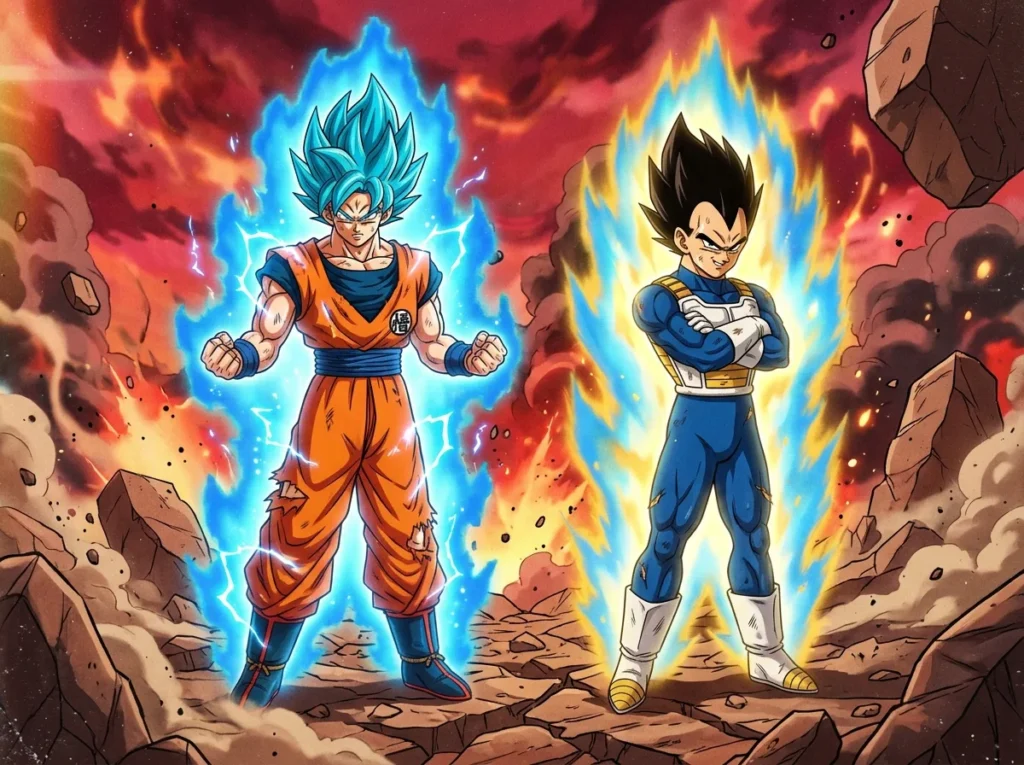
Dragon Ball Super is the follow-up series that picks up Goku’s story right after Majin Buu’s defeat, and it takes the franchise far beyond Earth. Instead of fighting only on our planet, Goku and his friends face gods, rival universes, and threats that reach across the wider cosmos. The early Beerus storyline sets the tone: the God of Destruction goes looking for the Super Saiyan God and ends up confronting Goku on Earth. That mix of huge stakes and familiar faces makes the series a good starting point for newcomers and a comfortable return for longtime fans.
The anime and manga share the same central cast and story world, so you can follow whichever format suits you. The manga began in V Jump in June 2015, and the anime followed in July 2015, according to the official Dragon Ball site. The original television anime has 131 episodes, each about 26 minutes long, so it is a big commitment that is easy to watch one episode at a time. The manga goes further with later arcs featuring Moro, Granolah, and Cell Max, which the anime does not cover. Whether you are catching up, returning after years away, or deciding what your kids can watch, the sections below will help you find your place.
Key Takeaways
- Newcomers should start with Dragon Ball Z, since Dragon Ball Super assumes viewers already know Majin Buu’s defeat.
- Zamasu’s Zero Mortal Project aims to wipe out all mortal life, which puts the whole multiverse at risk.
- Universe 7’s fate in the Tournament of Power rests on Android 17, who restores erased universes with the Super Dragon Balls.
- Dub language usually does not change the price, so choose a version based on how comfortable you are listening.
- Dragon Ball Super: The Galactic Patrol was announced on January 25, 2026, to adapt the Galactic Patrol Prisoner arc.
Where Does Dragon Ball Super Fit After Dragon Ball Z?
The earlier battles mostly centered on threats to Earth and the people who lived there. Super keeps Goku and his friends busy, but the opponents are now gods, rival universes, and forces that reach across the whole cosmos.
That change in scale is the biggest difference between the two eras. In Dragon Ball Z, a villain usually had to be stopped before he destroyed the planet. In Super, the stakes often come from the top of the universe, where the gods decide who gets to exist and who does not. The fights still feel personal, but the question of who has the power to end a world hangs over almost every major story.
The anime and manga share the same central cast and story world. A character who appears in one format is the same person in the other, with the same history, personality, and power. That means you can watch the anime, read the manga, or switch between them without feeling lost. The manga simply carries the story further than the anime does.
Goku and Vegeta remain at the center of the series. Goku is still the hero who keeps running into stronger opponents, while Vegeta is the proud rival who pushes himself to keep up. Bulma, Piccolo, and Android 17 also stay involved, and Frieza returns as a figure from the past who has a role in the bigger events. Fans who grew up with Z will recognize most of the faces, even when the settings look very different.
If you are new to the franchise, Dragon Ball Z is the best place to begin. Super assumes you already know who the characters are and what Majin Buu did, so the early episodes will feel much richer after you have seen the Z fights. Longtime fans can jump in more directly, but it helps to remember that Super is less about one villain and more about how the gods and the wider universe fit together.
What Happens in the Early Dragon Ball Super Arcs?
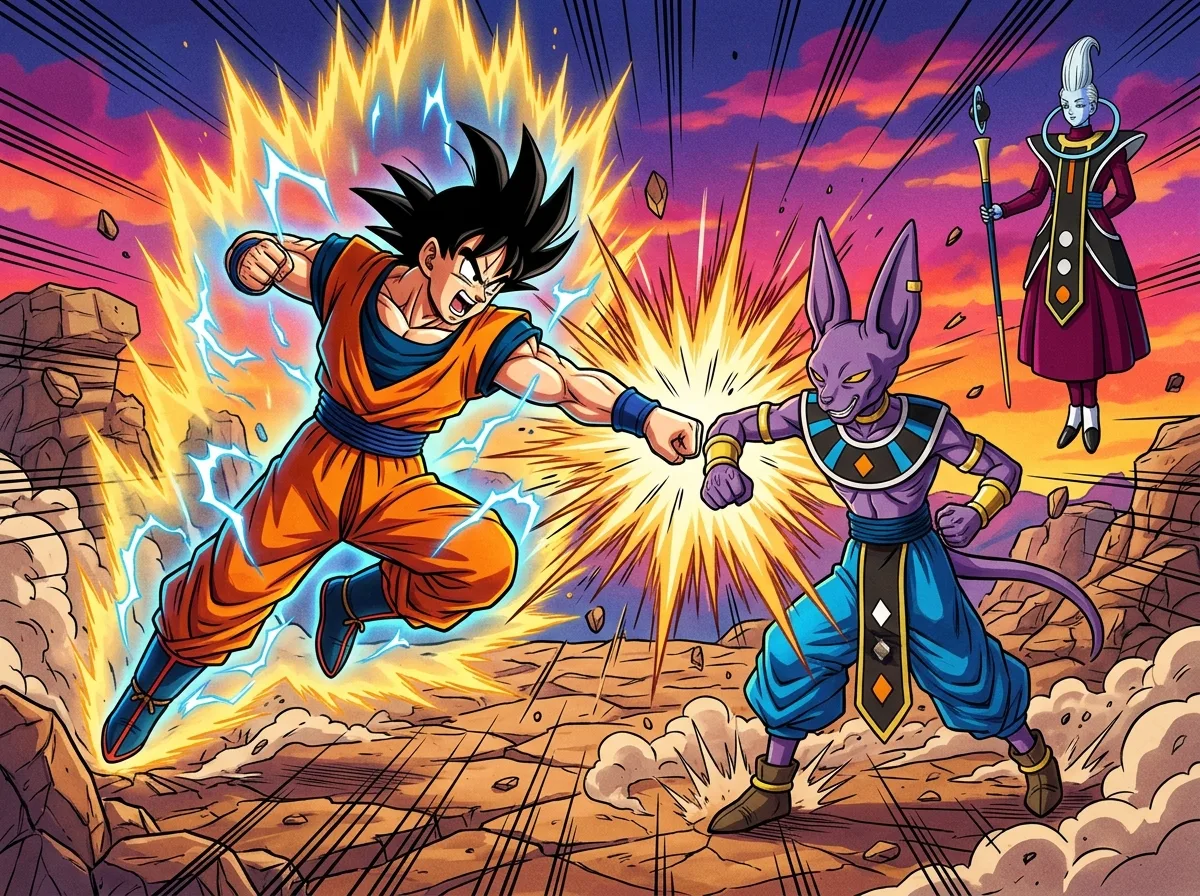
The first three storylines in Dragon Ball Super are Beerus’s search for the Super Saiyan God, the Universe 6 tournament, and the Future Trunks arc. Each one raises the stakes a little higher than the last.
The story starts when Beerus, the God of Destruction, goes looking for the Super Saiyan God. His search brings him to Earth, where he confronts Goku. A god whose very title signals danger is suddenly standing in Goku’s home world, and Goku has to figure out what Beerus wants before the situation turns into a real fight.
Beerus is not the only god with a grudge to settle. His rival Champa, who rules a different universe, has a dispute with him, and the two gods agree to handle it in a different way. Instead of a war that could destroy worlds, they hold a martial-arts tournament between their two universes. The winner’s side keeps the upper hand, so the fate of entire universes rides on how the fighters perform. The official story notes for the Universe 6 arc describe the setup clearly if you want the basic outline before you watch.
Goku’s opponent in this tournament is Hit, an assassin who fights in a way that is hard to pin down. Hit has a Time Skip ability that lets him jump 0.1 seconds into the future. That may sound like a tiny amount of time, but in a fast fight it is enough to dodge an attack before it lands. Goku’s usual strength is not enough on its own, so he has to find a new way to land a hit on someone who seems to be one step ahead of him.
The Future Trunks arc moves the story in a darker direction. Trunks, a fighter from the future, battles a foe who calls himself Goku Black. The fight is about more than winning a battle. It carries the weight of a much bigger threat, and the reveal that comes with it changes how the whole story looks. Goku Black is actually Zamasu, a Supreme Kai from Universe 10. Supreme Kais are guardians who watch over universes, which makes his behavior all the more shocking.
Zamasu is not interested in conquering or ruling anyone. He pursues what he calls the Zero Mortal Project, a plan to exterminate all mortal life. That is a very different goal from the one most villains in the earlier series had. Instead of threatening Earth alone, he wants to end the lives of every mortal being he can reach, which puts the whole multiverse at risk.
Taken together, these three arcs show how Dragon Ball Super grows its stakes step by step. Beerus brings the threat of a god to Earth, Universe 6 turns a clash of gods into a contest between universes, and the Future Trunks arc asks what happens when a single enemy wants all mortal life gone. Each storyline stays focused on a few clear goals, so new viewers can follow the story without getting lost in the bigger picture.
What Happens in the Tournament of Power and Later Manga Arcs?
The Tournament of Power is a multiverse-wide contest in which Universe 7 fights to keep its place in existence, and Android 17 is the fighter who decides how it ends. It is one of the biggest events in Dragon Ball Super because the stakes reach past a single planet to whole universes. The manga continues after the tournament with three arcs that build on one another.
Universe 7 sends a team of 10 named fighters into the tournament. Seven of them are:
- Goku
- Vegeta
- Gohan
- Piccolo
- Android 17
- Android 18
- Frieza
The other three named members round out the group. The lineup is an unusual mix of Saiyans, Earth’s defenders, androids, and Frieza, a former enemy who now fights on the same side as the heroes. For longtime fans, that alone shows how much the story has changed since the early battles.
Android 17 wins the tournament. He uses the Super Dragon Balls, the most powerful version of the wish-granting orbs in the series, to restore the universes that were erased. It is a satisfying payoff for a character who often stays in the background while others take the spotlight.
With the tournament finished, the manga turns to a new threat. The Galactic Patrol Prisoner arc pits Goku and Vegeta against Moro, a prisoner who consumes planets. Moro escapes from the Galactic Prison, so the danger is no longer limited to one world. A villain who can eat a planet forces the heroes to think about how far the damage could spread if they lose.
The arc works well for new readers because the goal is simple. Stop Moro before he moves on to the next planet. The fights are big, but the question driving them is easy to follow, which makes it a good place to see how the manga keeps raising the stakes after the tournament.
The Granolah the Survivor arc takes a more personal approach. Granolah is a Cerealian, and he uses the Cerealian Dragon Balls to make a wish: to become the strongest warrior in the universe. The wish works, but it comes at a price, because it dramatically shortens his lifespan. He gets the power he wanted, yet the cost hangs over every fight that follows.
That trade-off is what makes the arc memorable. Most wishes in the franchise are about getting something good, but Granolah’s choice forces readers to ask what a person would give up for strength. Because the story stays focused on one character and one decision, it is easy to follow even if you are new to the series.
The Super Hero arc brings the story back to a familiar pairing. Gohan and Piccolo, both members of the Universe 7 team, fight an all-out battle against Cell Max. The fight is a major moment for the two of them, and it shows how far the Earth-based heroes have come since the early days of Z.
The arc also marks the manga’s 100-chapter milestone. That is a useful reference point for readers who want to track how far they have come, since it shows that the post-tournament story has grown into a long and layered run rather than a short follow-up.
Which Characters Matter Most in Dragon Ball Super?
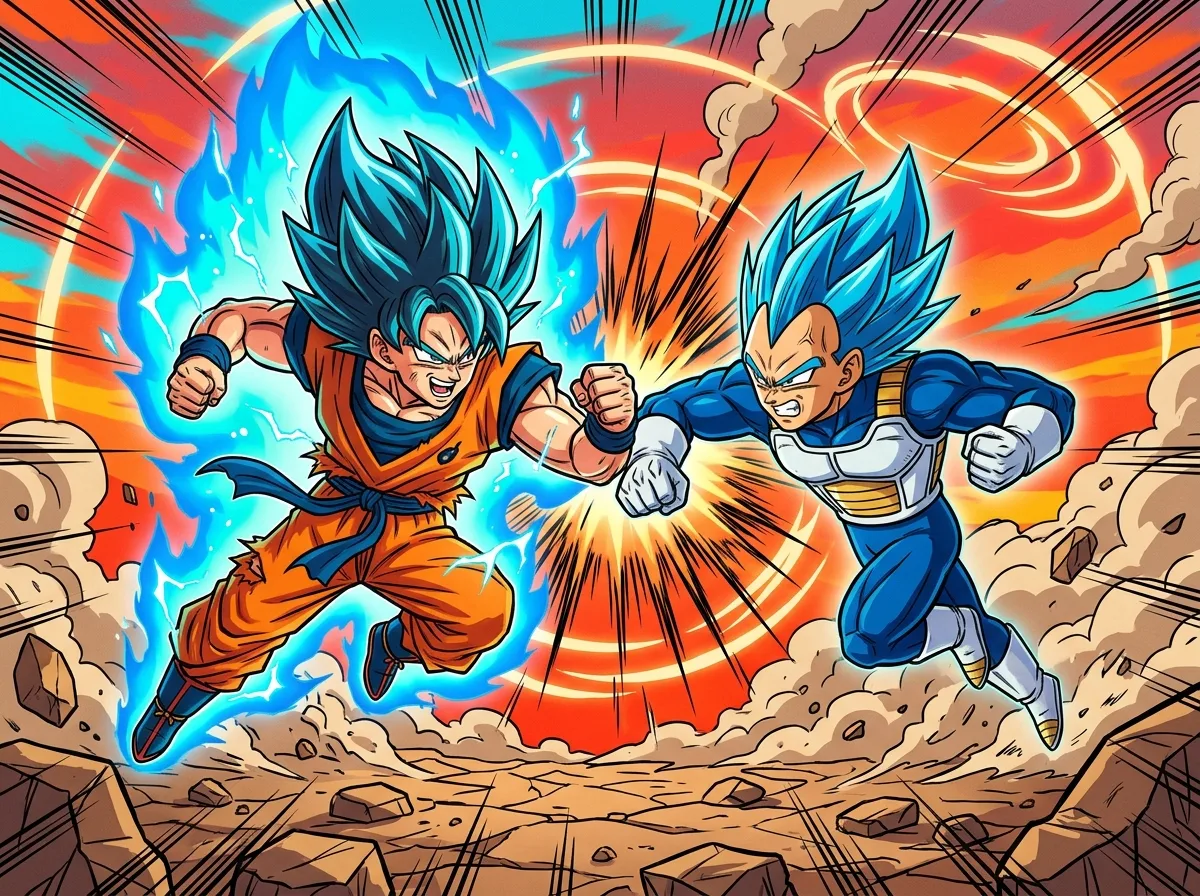
Goku and Vegeta are the two characters to follow first, and most of the other faces in the series connect back to them. Goku is the steady center of the story. He keeps seeking out stronger opponents, and that drive pulls gods, rival universes, and the wider cosmos into his life. Vegeta is the counterweight. He is proud, competitive, and often frustrated at being one step behind, which gives the series some of its most personal rivalry moments. If you only follow two characters, these two cover the most ground.
Bulma brings a different kind of strength to the team. She is the group’s inventor and planner, the one who keeps the heroes equipped and thinking ahead. Her scenes are often the easiest way into the story for new viewers, because they show the everyday side of the adventures, with family life and clever problem solving mixed into the danger.
Piccolo offers a slower kind of growth. He began as a feared enemy of Earth, and in Super he is a steadying presence who guides Gohan and helps the heroes think through hard choices. If you enjoy characters whose loyalty was earned the hard way, he is one of the most rewarding to watch.
Android 17 is easy to overlook because he seems so relaxed. He rarely looks worried, even when the fight around him turns serious. That calm makes him a useful contrast to the louder characters, and it is worth paying attention to how he reacts when the stakes climb.
Frieza is the returning villain whose history with Goku goes back to the earliest days of Z. His presence in Super shows how the cast changes. A character who once represented pure menace now shares the battlefield with the heroes, and every scene he joins carries memories of what he once did. Frieza is a good choice if you like tension between old enemies and new allies.
The newer rivals, Hit and Jiren, give Goku harder tests. Hit fights with unusual timing and tricks, so Goku cannot rely on raw power alone. Jiren comes from Universe 11 and stands out as the strongest fighter in the Tournament of Power, which makes his battles some of the most intense in the series.
Those rivalries lead to Ultra Instinct, a major power in the later story. In simple terms, it is a state where Goku’s body reacts on its own, without a moment of conscious planning. It lets him move faster than his opponents can predict, and it becomes central to how the strongest fights are decided. Knowing what Ultra Instinct means will make the later battles easier to follow.
The cast also grows as the arcs move outward. Early storylines center on Goku, Vegeta, and a handful of gods, while the Tournament of Power brings in a much larger team. A helpful way to keep track is to notice which characters join each new arc rather than trying to remember everyone at once. Choose one or two characters that appeal to you, follow their path through the story, and the rest of the cast will fall into place around them.
Where Can You Watch Dragon Ball Super and Which Dub Should You Pick?
Dragon Ball Super: Beerus streams on Crunchyroll with English, Spanish, and Portuguese dubs, and new episodes arrive weekly starting November 12, 2026. The stream covers the United States, Canada, Australia, New Zealand, and Latin America. If you live in one of those places, you can start with whichever language you understand most easily.
Weekly releases suit viewers who like to watch one episode at a time. You get a steady schedule instead of waiting for a full season to become available. Because the series is long, you may find it easier to plan your viewing around a weekly pace than to watch in one or two marathon sessions.
The price you pay depends on several things. The platform matters, because each streaming service sets its own prices. The plan level matters too, since higher and lower tiers can include different features. Your region also changes the cost, and the same plan can carry a different price in another country. There is no single price across services, so the best way to compare is to check the plan list for your own country before you sign up. If you plan to watch the whole series, think about how many months you will need to stay subscribed.
Dub language does not usually change the price on its own. What changes is how the show feels when you watch it. Choosing a dub or the original audio comes down to three questions: how comfortable you are listening, whether you enjoy reading while the action unfolds, and which voice cast you prefer.
The English, Spanish, and Portuguese dubs each have their own voice cast, and each cast brings a different tone to the characters. A dub that matches the voices you grew up with can make a scene feel familiar, while a new cast can make the same story feel fresh. Many viewers judge a dub by how well it fits the emotion of a scene, such as Goku’s cheerful battle energy or Vegeta’s sharp pride. Listening to a few episodes is the simplest way to decide whether a voice sounds right to you.
Watching in Japanese with subtitles has a different appeal. You hear the original performances, which many fans see as the way the characters were first written and acted. The trade-off is that you have to read while the fight is happening. Fast exchanges, such as the quick strikes in the Universe 6 tournament, can leave you glancing between the screen and the text. If you like seeing every punch and facial expression, that focus is a good fit. If reading quickly is a struggle, you may find the dub more relaxing.
A practical test is to watch the first episode in one version, then switch to the other for the next one. Pay attention to whether you are following the story or noticing the text and the voices. If you are comfortable and enjoying the fights, you have likely found your version. There is no wrong choice here, and many viewers switch between dub and sub depending on the episode or their mood.
How Many Episodes Does Dragon Ball Super Have and Who Made It?
The original Dragon Ball Super television anime has 131 episodes, and each one runs about 26 minutes. It was produced in 2015. Because the episodes are short, the series is a big commitment that you can still take one episode at a time.
The story began in print before it reached television. The Dragon Ball Super manga started in V Jump in June 2015, and the anime started airing a month later, in July 2015. Since both formats launched so close together, readers of the manga and viewers of the anime followed the same early storyline at nearly the same moment.
Akira Toriyama created the Dragon Ball franchise, and Super continues the world he built. His original series is the foundation for everything that came after, including Dragon Ball Z.
The Super manga is drawn by Toyotarou, and Shueisha publishes it. Shueisha is also the company behind V Jump, the magazine where the manga first appeared, so the same publisher has been part of the story from the very beginning.
Toei Animation is the studio behind the anime. Its job is to bring the same cast and story world that appear in the manga to the screen, which is why a character in one format feels like the same person in the other. The anime does not cover every arc, so the manga remains the place to go if you want to keep reading past the television story.
If you want to plan your viewing, start by setting a pace that fits your week. Watching a few episodes on the same day of the week is one simple approach, and it helps the series feel like a routine instead of a task. Keep an eye on your progress so you know roughly how far you have come. Many viewers find it easier to track a long series by counting episodes than by trying to remember which fight happened when.
Some viewers also like to keep a short list of the characters they are following. A list of five or six names can make a 131-episode run feel more manageable, because you always know who matters most in each part of the story.
Where Can You Read the Dragon Ball Super Manga?
You can read the Dragon Ball Super manga in print or on a digital device, and VIZ Media publishes the English edition. The manga shares the same cast and story world as the anime, so you can switch to the pages whenever you want to keep going.
The manga is also where the story continues past the television version. The later arcs, featuring Moro, Granolah, and Cell Max, are not fully covered by the anime. Readers who finish the show will find that the manga keeps the story moving.
Digital copies are a convenient option if you want to read on a phone, tablet, or computer. For Dragon Ball Super, Volume 24, the digital price is $6.99, and the release date is March 3, 2026. A digital edition lets you start reading as soon as you buy it, without needing shelf space.
Print editions appeal to a different kind of reader. Many collectors enjoy a row of matching volumes on a shelf, and a printed book is easy to flip through when you want to revisit a favorite fight. If you like keeping a physical record of your progress, a print run may suit you better.
For new releases, the best place to check is VIZ Media, since it publishes the English edition. Its listings show the latest volumes, formats, and prices. Because prices and release dates can change, look up the specific volume you want before you buy, especially if you are collecting the series in order.
Is Dragon Ball Super Finished, and What Comes Next?
No, Dragon Ball Super is not finished. The manga keeps the story moving past the television episodes, and new anime projects are already on the way. The two biggest updates for fans right now are an announced anime and an enhanced version of one of the films.
The newest project is Dragon Ball Super: The Galactic Patrol, which was announced on January 25, 2026. It follows the anime’s Universe Survival arc and adapts the manga storyline called the Galactic Patrol Prisoner arc. That is the arc where Goku and Vegeta face Moro, the planet-consuming prisoner who escapes from the Galactic Prison. Since the current anime stops before those later manga arcs, this announced series lets anime viewers see that part of the story on screen. You can read more in the announcement for The Galactic Patrol.
The enhanced Dragon Ball Super: Beerus premiered in Japan on October 11, 2026. This is not a simple re-release. The new version includes new cuts, which are added pieces of footage, along with revised scenes and re-rendered footage, meaning the animation has been redone in places. Fans will also hear newly recorded dialogue, a new score, and new sound effects. If you have seen the original film, the enhanced edition gives you a chance to compare the two and notice what changed.
Beerus is one of the Dragon Ball Super films. The films sit alongside the television series rather than replacing it. They share the same characters and story world, so a fan who knows the anime will recognize the faces, powers, and rivalries on screen. You do not need to watch the films to follow the television story, but they offer a different way to see familiar heroes in a single, focused adventure.
The enhanced Beerus release is a good example of how the franchise keeps returning to its own past. Instead of starting something new, the team reworks a story that already exists and gives it a fresh look and sound. For longtime fans, that can make an old favorite feel new again without losing the parts they love.
If you want to keep up with what comes next, the official Dragon Ball site is the most reliable place to check for updates. Announcements arrive at different times for anime, films, and manga, so it is easy to miss one if you only follow a single format. Bookmarking the official announcements will help you see new projects as they are revealed, whether you are following the anime, the films, or the manga.
Choosing Your Starting Point in Dragon Ball Super
If you are brand new to the franchise, start with Dragon Ball Z. Super assumes you already know Goku’s history and what Majin Buu did, so the Z fights will make the early Beerus episodes hit harder.
Returning fans can use a simple checkpoint plan. Begin with Beerus’s search for the Super Saiyan God, move through the Universe 6 tournament against Hit, and stop at the Future Trunks arc. If those three storylines still feel exciting, the rest of the series will likely feel familiar and fun.
Parents should preview the darker arcs before their children watch them. The Future Trunks arc centers on Zamasu’s Zero Mortal Project, a plan to wipe out all mortal life, and the Galactic Patrol Prisoner arc in the manga features Moro, a planet-eating escapee. Watching those first lets you judge whether they suit your household.
Collectors should check which volumes they already own before buying. Dragon Ball Super, Volume 24 is one of the volumes listed on VIZ’s site, so filling gaps in the middle of the run may be a better use of your budget than chasing the latest release.
If a convention is on your calendar, choose one or two characters from the cast section, such as Android 17 or Jiren, and prepare a few questions about how their arcs connect. Fans who talk about a character they know well usually get the most out of a panel.
Whatever your situation, pick one character and one arc, then watch the first episode this week.
Frequently Asked Questions
1. Is Dragon Ball Super part of the main Dragon Ball story?
Yes, Dragon Ball Super is part of the main Dragon Ball story because it is the direct continuation of Dragon Ball Z. It picks up right after Majin Buu’s defeat, so the events of Z lead straight into Super. Fans treat it as the current chapter of the same timeline rather than a side story.
2. Who is stronger, Goku or Vegeta?
Neither character has a clear, permanent edge over the other, and fans still argue about it. Goku often pulls ahead through his growth and techniques like Ultra Instinct, while Vegeta pushes himself hard to close the gap. Their rivalry works because each one keeps forcing the other to get stronger.
3. Why is Whis so zesty?
Whis is written as a lighthearted, theatrical character who is full of playful energy and dramatic flair. He serves as Beerus’s calm attendant and teacher, and his cheerful personality creates a funny contrast with the God of Destruction’s temper. That lively style is a big part of why he is one of the most memorable characters in the series.
4. How long does it take to watch all of Dragon Ball Super?
Counting only the episode runtime, the original television anime adds up to a substantial amount of viewing time, since each of its 131 episodes runs about 26 minutes. Your pace decides how long it takes. Watching a few episodes a week stretches the series across many months, while binge-watching can finish it much faster.
5. How does the art style of Dragon Ball Super compare to Dragon Ball Z?
Dragon Ball Super generally has a cleaner, more polished look than Dragon Ball Z, with sharper lines and brighter colors in many scenes. The character designs stay recognizable, so Goku and his friends still look like the people you know from Z. The biggest visual change shows up in the fight scenes, where the movement and energy feel more fluid and modern.

