
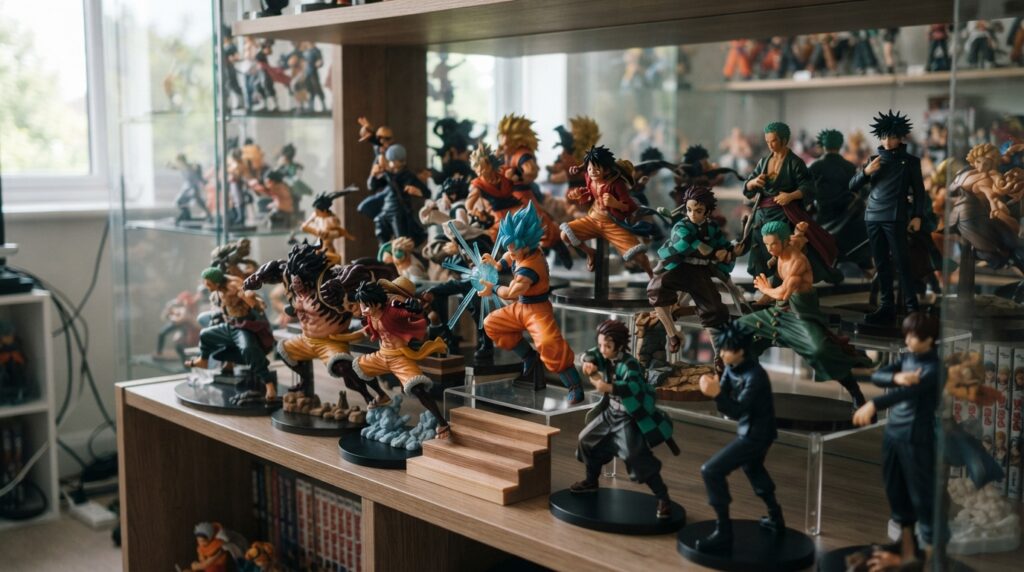
The best Ichiban Kuji figures for display and resale include the 30 cm Porunga Last One, the approximately 30 cm Shenron Special Color Ver., and the Son Goku and Son Gohan two-figure set. Each has a different appeal: Porunga makes a large-scale centerpiece, Shenron offers a recognizable dragon design, and the set pairs two characters. An October 5, 2026 snapshot of active eBay listings estimated Porunga at about $695, Shenron at about $322, and the Goku and Gohan set at about $306. These figures are asking-market signals, not confirmed sale prices, so they help compare interest without showing what a figure will sell for. OtaArchive’s Dragon Ball price guide provides the estimates and listing counts.
A useful shortlist balances sculpt and scene appeal with character significance, prize status, and the current resale market, rather than treating one estimate as a quality score. Last One is a way of winning a prize: Bandai Spirits defines it as the prize awarded when someone draws the final lottery ticket at a store. That status can make a figure worth comparing, but it does not guarantee a particular resale value. Original ticket prices also tell only part of the story. Collectors weighing a display piece against its asking price should check that listings match the exact release and prize. Bandai Spirits explains how Ichiban Kuji prizes work.
Key Takeaways
- Porunga Last One is the scale-led centerpiece at approximately 30 cm tall, with an October 5, 2026 eBay asking-price estimate of about $695 against a ¥680 ticket price, so buyers should confirm shelf space and compare current listings before paying a premium. OtaArchive’s Dragon Ball price guide provides the estimate.
- Shenron Special Color Ver. Last One is another approximately 30 cm display choice, estimated at about $322 from active eBay listings on October 5, 2026, while the Son Goku and Son Gohan E Prize set offers a paired-character display and was estimated at about $306. OtaArchive’s Dragon Ball price guide provides these estimates.
- Active-listing estimates are asking-market snapshots, not confirmed sale prices or guaranteed resale values, and Last One describes a prize awarded to the person who draws the final lottery ticket rather than a guaranteed price premium. BANDAI SPIRITS defines the Last One Prize.
- Before buying, collectors should match the exact release and prize, check listing photos, condition and included pieces, and compare current offers. Mihawk MASTERLISE is a character-specific display option for One Piece collectors; its price needs separate checking. Bandai Spirits’ Mihawk feature identifies it as his first Ichiban Kuji sculpt.
Which Ichiban Kuji Figures Stand Out
Ichiban Kuji releases cover a wide range: Bandai Spirits says the brand develops approximately 250 products across more than 100 intellectual properties each year. That breadth makes a shortlist more useful than a universal quality ranking. Sculpt, display footprint, character significance, prize status, and resale signals matter differently to different collectors. The Bandai Spirits overview describes the range, not a measure of figure quality.
The comparison below pairs listed original ticket prices with estimates from public eBay listings. These are snapshots of asking prices, not confirmed completed sales. Some picks, including Mihawk and Gold Roger, have no resale estimate in this comparison. OtaArchive’s Dragon Ball price guide provides the listing-based estimates.
| Image | Name | Best for | Original ticket price and available resale estimate | Standout feature | Price-check link or prompt |
|---|---|---|---|---|---|
| Figure details | Porunga Last One | A large centerpiece | ¥680; about $695 estimate | Approximately 30 cm tall; its scale needs display space. | View estimate |
| Figure details | Majin Buu MASTERLISE Last One | A character-led display | ¥730; about $353 estimate | Last One MASTERLISE prize; the cited source gives no size detail. | View estimate |
| Figure details | Shenron Special Color Ver. Last One | A recognizable dragon silhouette | ¥790; about $322 estimate | Approximately 30 cm tall; allow room for its sculpt. | View estimate |
| Figure details | Son Goku and Son Gohan E Prize set | A two-character scene | ¥800; about $306 estimate | Two figures in one prize; it takes more display space than a single figure. | View estimate |
| Official feature | Mihawk MASTERLISE, The Trial Beyond | One Piece character collectors | Not supplied; no cited estimate | Mihawk’s first Ichiban Kuji sculpt, in casual clothes with a cape; resale pricing needs separate checking. | Search current listings |
| Official feature | Gold Roger MASTERLISE EXPIECE, Last One Prize | A scene-based display | Not supplied; no cited estimate | Execution-platform detail gives the scene presence; resale pricing needs separate checking. | Search current listings |
The One Piece feature documents Mihawk’s first Ichiban Kuji sculpt, but this comparison provides no ticket price or resale estimate for it. That makes it a display-led comparison rather than a price-ranked pick. Bandai Spirits’ Mihawk feature describes the release.
Porunga Last One Prize
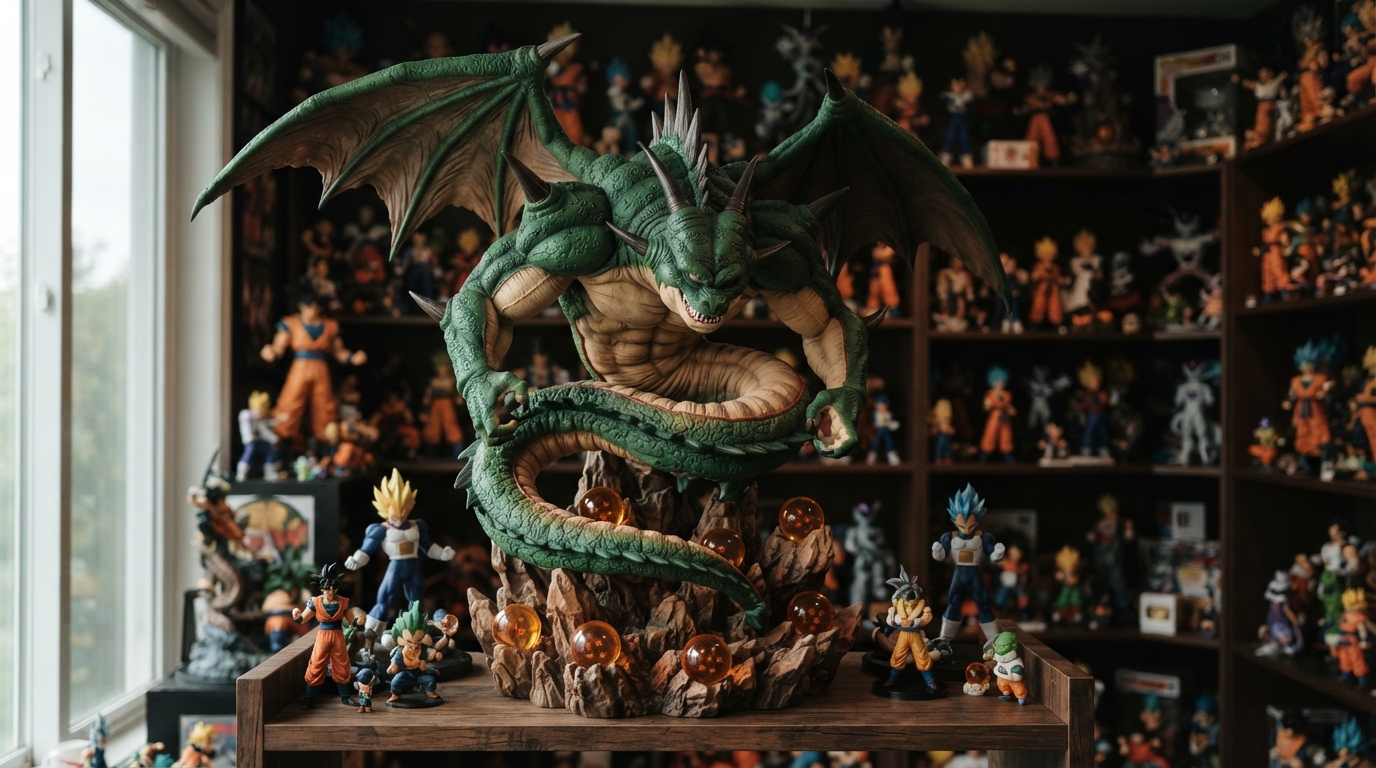
Porunga is the scale-led pick in Dragon Ball VS Omnibus Z: at approximately 30 cm tall, the Last One Prize has enough height to serve as a centerpiece rather than a small accent among other figures. Its documented size and strong shelf presence make it an appealing display piece. The sculpt’s large character form is the visual draw, though collectors should check listing photos to assess the details and condition of the specific figure on offer.
Pros: The approximately 30 cm height is documented, the figure has a strong display presence, and Last One status distinguishes it within the release. Cons: The resale estimate is strikingly high relative to the ¥680 original ticket price listed in the guide, and an estimate drawn from active listings cannot establish what a buyer will actually pay.
OtaArchive’s Porunga listing data puts the figure at about $695, based on 22 eBay listings on October 5, 2026. That number is an asking-market snapshot, not a completed-sale result or a guaranteed selling price. It is useful for comparing current asking prices, but should not be treated as a firm valuation.
The size also comes with a practical trade-off. A figure approximately 30 cm tall needs more vertical room than a compact prize, so buyers should consider whether they can give it a prominent spot before committing to a large collectible. The cited estimate makes the asking-price risk especially important: a high listing price does not prove that the figure will sell for that amount, and the original ticket price is not a reliable guide to a resale transaction.
Porunga is best for a Dragon Ball collector who prioritizes a large centerpiece and is comfortable checking current resale listings before making a decision. The main downside is the combination of a substantial display commitment and a high asking-price estimate that may not reflect what a buyer will actually pay.
Majin Buu MASTERLISE Last One
Majin Buu MASTERLISE Last One from Dragon Ball VS Omnibus ULTRA is a character-first option for a shelf built around familiar Dragon Ball villains. Buu’s identity gives the figure an immediate place in a collection, while its Last One status distinguishes it within the release. The figure is worth considering for its character presence, even when a buyer’s priority is not finding the largest documented prize.
The listing snapshot gives a useful, limited view of resale interest. OtaArchive’s Majin Buu listing lists the original ticket price as ¥730 and estimates the figure at about $353, based on 45 eBay listings on October 5, 2026. The listing count gives collectors a substantial set of asking prices to compare, but the estimate is not a confirmed sale price or proof that buyers paid that amount.
Active listings show what sellers were asking at the time of the snapshot, not the prices at which transactions closed. Prices may differ between listings, and the estimate cannot guarantee what a particular copy will sell for. The cited information also does not specify the figure’s dimensions or included accessories, so the $353 estimate does not establish its physical scale or what comes in the box.
That missing detail matters for display planning. Collectors who choose figures by shelf footprint, accessory options, or poseability do not have enough documented information here to compare those qualities confidently. Rather than assume a particular size, set contents, or articulation, buyers can treat Majin Buu’s character recognition and Last One designation as its clearest supported draws.
Pros: Last One status and a substantial number of listings in the cited snapshot. Cons: The estimate is not a transaction record, and the evidence does not specify size or included accessories.
Verdict: Majin Buu is a candidate for collectors whose priority is displaying a recognizable Dragon Ball villain rather than choosing a figure for its documented scale.
Shenron Special Color Ver.
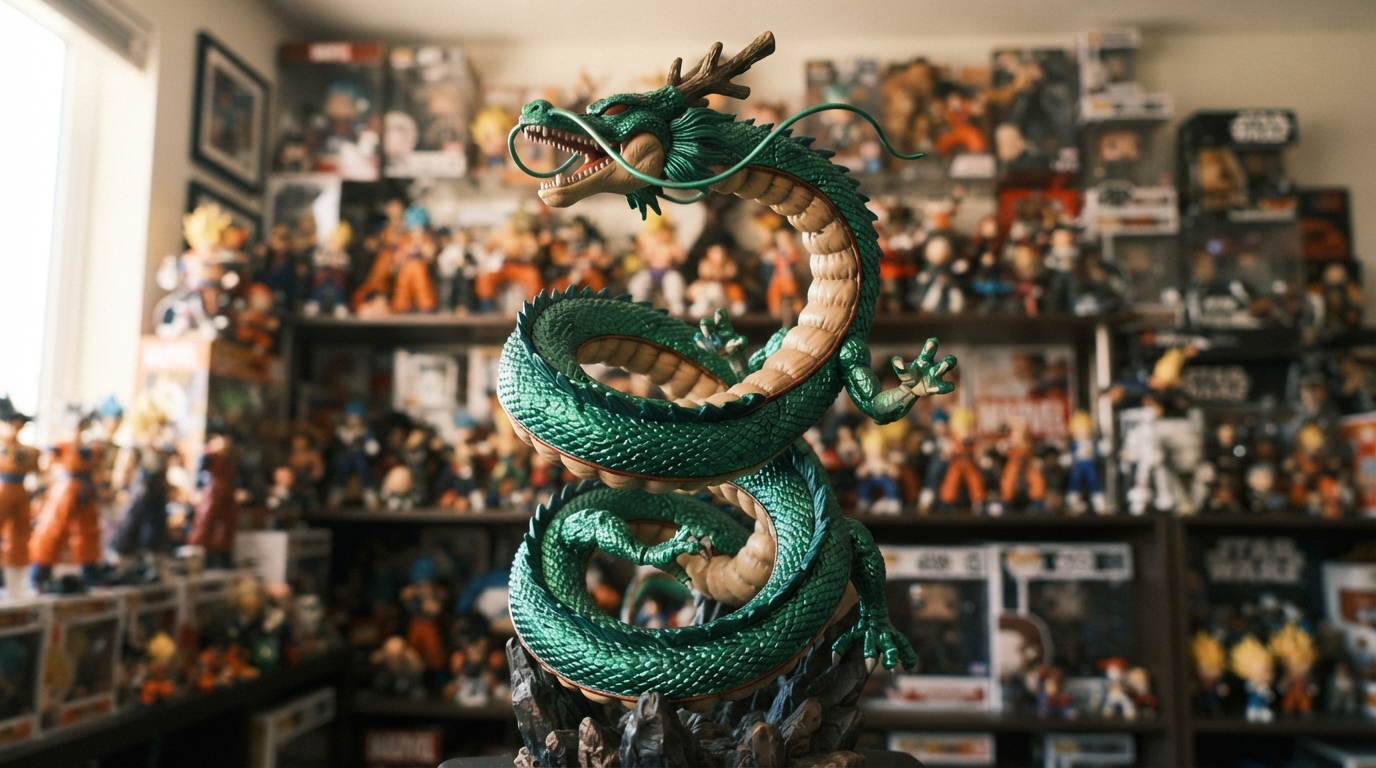
Dragon Ball DAIMA’s Shenron Special Color Ver. Last One is a recognizable dragon display piece at approximately 30 cm. Its listed original ticket price is ¥790, and the Last One designation is a documented point of distinction within the release. The name identifies it as a color variant, which may appeal to collectors who specifically prefer that version, without assuming details about how its colors differ. OtaArchive’s Shenron listing gives the size and ticket price.
OtaArchive estimated Shenron at about $322 from 44 eBay listings on October 5, 2026. That is a public-listing estimate, not a confirmed sale price. Active listings show asking prices, which may differ from current asks or eventual transaction prices. The same listing gives the original ticket price as ¥790, but that price does not establish the figure’s resale value. OtaArchive’s Shenron listing data
The Shenron estimate places it below the approximately $695 estimate for the 30 cm Porunga Last One, based on 22 listings in the same October 5 snapshot. Shenron’s estimate is also lower than Majin Buu’s approximately $353 estimate from 45 listings, while it is higher than the Son Goku and Son Gohan set’s approximately $306 estimate from 40 listings. These comparisons help position Shenron among the featured Dragon Ball picks, but listing counts and asking prices are market signals, not evidence of completed sales. OtaArchive’s Dragon Ball price guide provides the estimates.
Shenron’s clearest display advantage is its combination of a familiar dragon design and documented size. At approximately 30 cm, it has a more substantial presence than a compact accent figure and needs enough vertical display space. Collectors choosing by shelf footprint should compare the actual listing photos and measurements before committing, since the cited information establishes height but not width or depth.
Pros: Approximately 30 cm tall, Last One status, and recognizable Shenron display presence. Cons: The resale estimate may not match current asking prices or eventual transaction prices, and its size calls for a deliberate display spot.
The $322 estimate is a useful point of comparison, not a reason by itself to treat Shenron as a bargain or a guaranteed-value collectible. Its appeal is strongest for buyers who want the color variant and a large dragon presence, rather than those shopping chiefly for the highest resale estimate.
Verdict: Shenron Special Color Ver. is best for buyers who want a large Shenron display piece and prefer a documented listing snapshot to an unsupported rarity claim.
Goku and Gohan Prize Set
The Son Goku and Son Gohan E Prize from Dragon Ball Spectacular Battle is a set-focused alternative to a single-character centerpiece. Its main display advantage is straightforward: one prize brings two familiar characters together, making it a natural fit for collectors who prefer paired-character scenes.
OtaArchive lists the set’s original ticket price as ¥800 and estimates its resale value at about $306 from 40 eBay listings on October 5, 2026. That figure is an asking-market estimate based on listings, not a verified sale or confirmed transaction value. The listing provides a useful snapshot for comparison, but it does not show what buyers actually paid. OtaArchive’s Goku and Gohan listing data
The snapshot puts the set’s estimate below several featured Last One figures: Porunga was estimated at about $695 against a ¥680 ticket price, Majin Buu at about $353 against ¥730, and Shenron at about $322 against ¥790. The set’s ¥800 original price is higher than each of those ticket prices, while its estimated asking value is lower than each of their estimates. These figures compare market listings, not sculpt quality, character appeal, or overall value as a display piece. OtaArchive’s Dragon Ball price guide provides the estimates and ticket prices.
For collectors choosing between a two-character setup and a single large Last One figure, the set offers a different kind of shelf presence. Its appeal is having both Goku and Gohan in one prize, rather than documented size or a claim of greater rarity. The available information does not provide the figures’ dimensions, so it cannot establish how much display space the complete set needs.
Pros: Two-figure set and a cited resale-market snapshot with 40 eBay listings. Cons: The available evidence does not provide dimensions or establish the set’s current transaction value. A listing that shows only one figure, or leaves the included pieces unclear, may not represent the complete E Prize set. Buyers should confirm that both Son Goku and Son Gohan are included before comparing prices.
Verdict: The Son Goku and Son Gohan E Prize is best for collectors who prefer a paired-character display over a single large Last One figure.
Mihawk MASTERLISE From The Trial Beyond
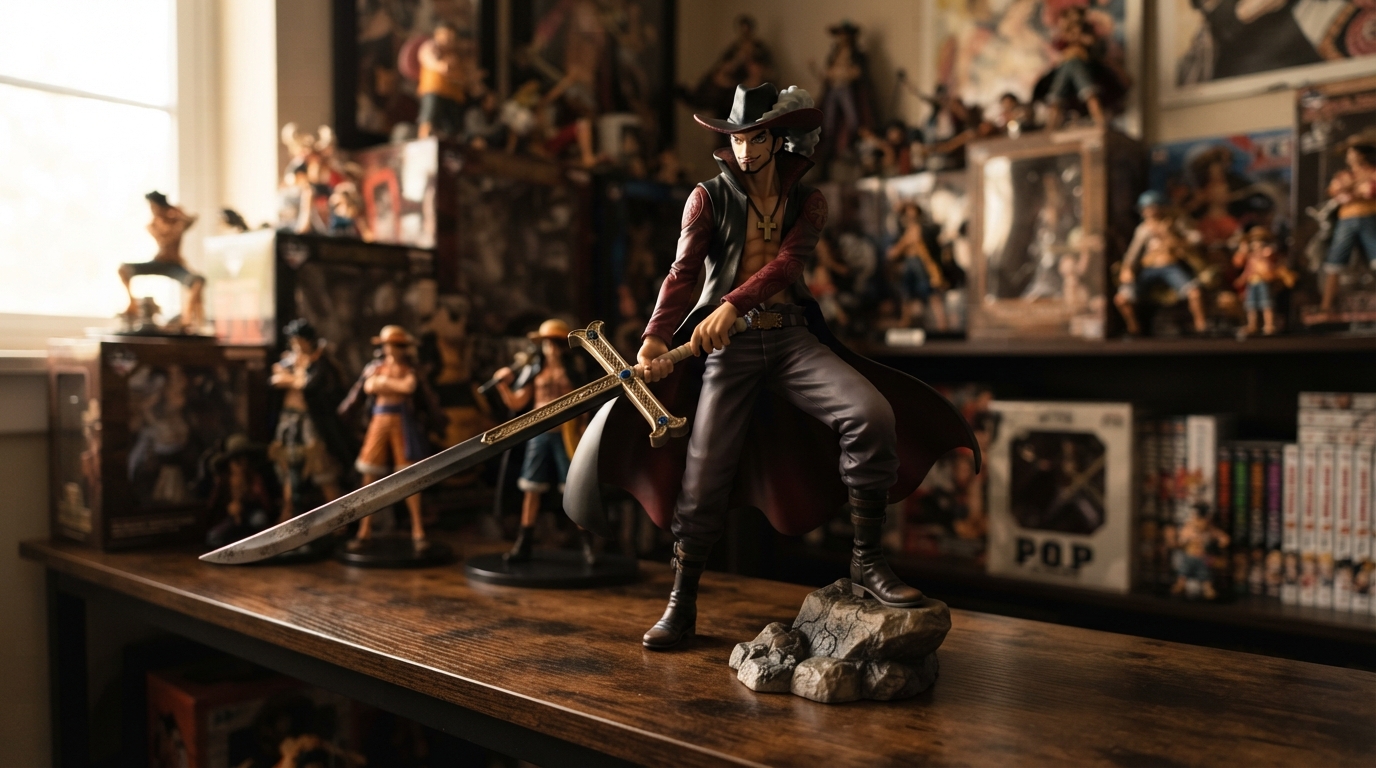
Mihawk MASTERLISE from One Piece: The Trial Beyond stands out for its character significance rather than its resale price. Bandai Spirits identifies it as Mihawk’s first Ichiban Kuji sculpt, giving the release a clear place in a Mihawk-focused collection. For fans comparing prize figures, a character-specific first sculpt can be a more meaningful distinction than simply choosing the largest figure on the shelf. Bandai Spirits’ Mihawk feature describes the release.
The outfit also gives the sculpt a distinct look. Bandai Spirits describes Mihawk in casual clothing with a cape, separating this figure from a standard portrait of the character in familiar formal attire. The documented details are the clothing and cape; the available information does not specify the figure’s dimensions, accessories, or articulation. Bandai Spirits’ Mihawk feature
That makes the figure an appealing display choice for collectors who want Mihawk represented in a particular outfit, rather than a generic character likeness. It is also a sculpt-led pick for a One Piece shelf where character identity and presentation matter more than documented size or a supplied resale estimate. The available evidence gives no market-price estimate for the figure, so assigning one would be guesswork.
Anyone weighing the resale market should compare current listings for the exact MASTERLISE release, paying attention to the figure’s condition and whether the listing clearly identifies The Trial Beyond. Asking prices can differ, and the absence of an estimate here means there is no evidence-based figure to use as a benchmark.
Pros: Documented as Mihawk’s first Ichiban Kuji sculpt, with distinctive casual clothing and a cape. Cons: No resale estimate is cited here, so no market price can be assigned.
Verdict: Best for One Piece fans who value character-specific sculpt choices and want a Mihawk display figure.
Gold Roger MASTERLISE EXPIECE
Gold Roger MASTERLISE EXPIECE from One Piece Roger Pirates: Legendary Pirate is a scene-based display choice, not just a statue defined by its character pose. Bandai Spirits identifies Gold Roger as the Last One Prize and highlights the execution-platform detail, which gives the figure a setting as well as a central character. That built-in context distinguishes it from a standalone portrait or action pose. Bandai Spirits’ Gold Roger feature
An execution platform changes how the display reads. A character-only statue asks the viewer to focus on the figure’s pose, clothing, and likeness; an integrated scene detail gives the viewer a specific story setting. Gold Roger’s platform can make the display feel more like a moment from One Piece than a character arranged on a shelf by himself. Collectors who prefer a quieter, less narrative presentation may find a standalone pose easier to fit into a mixed character lineup.
The platform is not just an extra detail to note in a listing; it is the feature that makes this release a scene piece. Buyers comparing copies should check that listing photos show the execution-platform component and make clear that the item is the Gold Roger MASTERLISE EXPIECE from Roger Pirates: Legendary Pirate. Dimensions are not specified here, so the complete display’s shelf-space needs cannot be determined.
Pros: Documented Last One release and integrated execution-platform scene detail. Cons: No resale estimate is cited here, so there is no supported price benchmark for the figure.
The Last One designation identifies how the prize was obtained, not a guaranteed resale value. Without a cited estimate, a current asking price should be treated as a seller’s price, not proof of what the figure is worth or will sell for. Listings can still be compared, but the comparison should be between the exact release and prize. Buyers should check whether the platform is included, the stated condition, and how clearly the photos show the figure and scene detail.
Verdict: Gold Roger MASTERLISE EXPIECE is best for One Piece collectors who want a story-driven display rather than a standalone character pose. Collectors drawn to the execution-platform scene should compare current listings for the exact Last One release, confirming the included platform and stated condition before weighing asking prices.
How To Judge Resale Prices

Resale comparisons are more useful when the original ticket price, an estimate based on active listings, and completed-sale prices are treated as three different signals. The ticket price records the lottery’s original cost, an active-listing estimate reflects what sellers are asking, and a completed sale shows a transaction price.
OtaArchive’s October 5, 2026 guide covered 261 Dragon Ball prizes across 26 series and estimated prices for 229 prizes using public eBay listings. It is a broad reference set, not completed-sale data, so its estimates are best read as snapshots of asking prices rather than confirmed values. OtaArchive’s Dragon Ball price guide
Last One is a prize-winning mechanism, not a resale tier: BANDAI SPIRITS defines it as the prize obtained by drawing the final lottery ticket at a store. The designation may distinguish a release, but it does not guarantee that buyers will pay more for it. BANDAI SPIRITS’ explanation of the Last One Prize
Use the following checks to compare a figure’s asking price with the right reference points before buying:
- Record the original ticket price separately. Treat that amount as the release’s starting point, not as proof of a figure’s current resale value or a target price that sellers must follow.
- Identify whether a quoted estimate comes from active or completed listings. An estimate drawn from active offers describes seller asking prices; completed sales show prices at which transactions closed. Do not treat the first as evidence of the second.
- Match the exact release and prize designation. Compare the same Ichiban Kuji release and named prize, such as an A Prize or Last One Prize, rather than using another version of the character as a substitute benchmark.
- Check what the listing actually includes. Confirm that the title and photos match the named prize, and verify that a set includes every figure or scene component relevant to that release. A single figure from a two-figure prize is not a like-for-like comparison with the complete set.
- Compare the asking price with current offers. Treat an estimate as a snapshot, then review current listings for the same release and prize. Differences in what is included or how the listing identifies the item can make headline prices misleading.
- Verify release and pre-order status on the current listing. Listings should make clear whether the item is an already released prize or a pre-order, because status affects what the seller is offering. Check the listing’s own details rather than assuming availability or timing from an older guide.
- Build a separate benchmark for One Piece picks without supplied estimates. For Mihawk MASTERLISE from The Trial Beyond or Gold Roger MASTERLISE EXPIECE from Roger Pirates: Legendary Pirate, compare relevant current resale listings for the exact release. Dragon Ball estimates do not provide a sound price benchmark for either One Piece figure.
A price comparison is strongest when the release, prize name, completeness, and asking price all line up. Even then, an asking price remains an offer, not a promise of what the figure will sell for.
Choose By Display Impact and Budget
Porunga is the scale-led centerpiece for collectors with room to give a large figure its own spot. Shenron is a strong large-display alternative for buyers who prefer the dragon’s familiar silhouette, though either choice needs more shelf space than a compact character figure. Between them, the better buy is the one whose current asking price fits the collector’s budget, not simply the one with the larger estimate.
The Son Goku and Son Gohan E Prize is the paired-character choice. It suits a display built around the two characters together, while collectors seeking a single focal figure may prefer Porunga or Shenron. Majin Buu is the character-led pick for buyers whose priority is having the recognizable villain on the shelf, rather than choosing by documented size.
For One Piece collectors, Mihawk MASTERLISE from The Trial Beyond offers a distinctive character choice: Bandai Spirits identifies it as Mihawk’s first Ichiban Kuji sculpt, shown in casual clothing with a cape. The release has no supplied resale estimate, so buyers will need to judge current asking prices against their interest in that version of Mihawk. Bandai Spirits’ Mihawk feature
Gold Roger MASTERLISE EXPIECE suits collectors who want a scene rather than a standalone character display. Its execution-platform detail is the defining draw, but buyers should confirm the platform is included and account for the complete piece when considering display space. Bandai Spirits’ Gold Roger feature
Before a resale purchase, compare the exact release and prize designation, listing photos, stated condition, and included pieces. The strongest choice is the figure whose display appeal and current asking price make sense for that collector, not the one with the biggest estimate.
Set a Display Budget
Collectors choosing a non-character centerpiece can add THE GIGANT NAME Dragon Ball Logo Figure to the comparison. The Dragon Ball ASSEMBLE COLLECTION Son Goku Boyhood Arc Last One prize stands approximately 43 cm tall, with an October 5, 2026 estimate of about $359 from active eBay listings and a listed ticket price of ¥900. That height makes shelf clearance an important consideration; the estimate reflects asking prices, not completed sales. OtaArchive’s listing gives the details.
Before opening resale listings, set a personal spending limit and decide which display feature matters most: a large sculpt, a two-character grouping, or a scene with its own setting. Then compare only listings for the exact prize and release that meet that priority. A lower asking price may be a better fit if it leaves room in the budget, while a higher one needs a specific display reason to justify it.
For Mihawk MASTERLISE or Gold Roger MASTERLISE EXPIECE, use the exact release name when searching listings because the cited evidence provides no resale estimate for either figure. Compare the described condition and included pieces, then judge the asking price against the value of Mihawk’s casual outfit and cape or Gold Roger’s execution platform. If neither feature justifies the listed cost, keep the shortlist open rather than treating Last One status as a reason to stretch the budget.
Frequently Asked Questions
1. How do Ichiban Kuji figures compare with prize figures from other Japanese brands?
Ichiban Kuji figures are lottery prizes from BANDAI SPIRITS, but a fair comparison with other brands depends on the specific release rather than a brand-wide quality ranking. Bandai Spirits’ 2026 Dragon Ball Spectacular Battle lineup, for example, introduced BURSTANT and featured a dynamic Kamehameha pose with clear effect parts, details collectors can compare with figures from other lines. Bandai Spirits’ lineup details
2. Do Ichiban Kuji figures usually include display bases?
Base inclusion should be checked for the exact prize, because the available details for the featured figures do not confirm whether a base is included. Check the release information and listing photos for the specific figure before buying.
3. Are Ichiban Kuji figures suitable for younger collectors?
Suitability depends on the specific figure and the collector’s age, so check the age guidance on the packaging and whether the figure has small or detachable parts. The available details do not give age ratings for the featured prizes, so there is no single age recommendation that applies to all Ichiban Kuji figures.
4. Are Ichiban Kuji prizes rare?
An Ichiban Kuji prize is not automatically rare just because it is a Last One Prize. BANDAI SPIRITS defines Last One as the prize obtained by drawing the final lottery ticket at a store, which describes how it is awarded rather than its production quantity or resale scarcity. BANDAI SPIRITS’ definition of Last One

