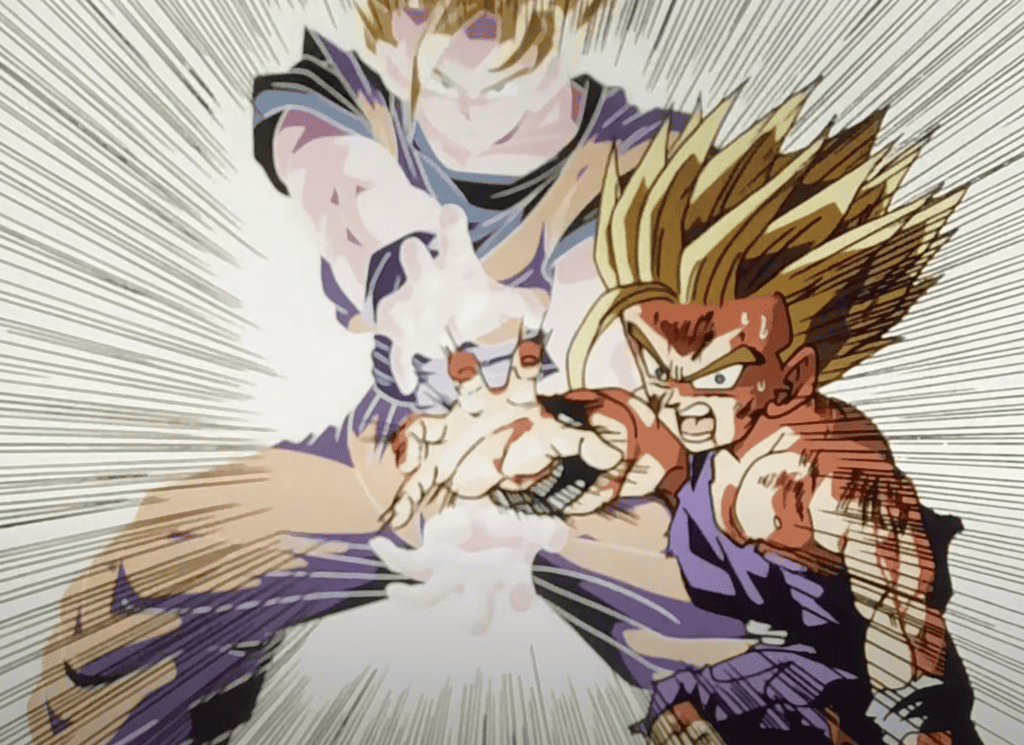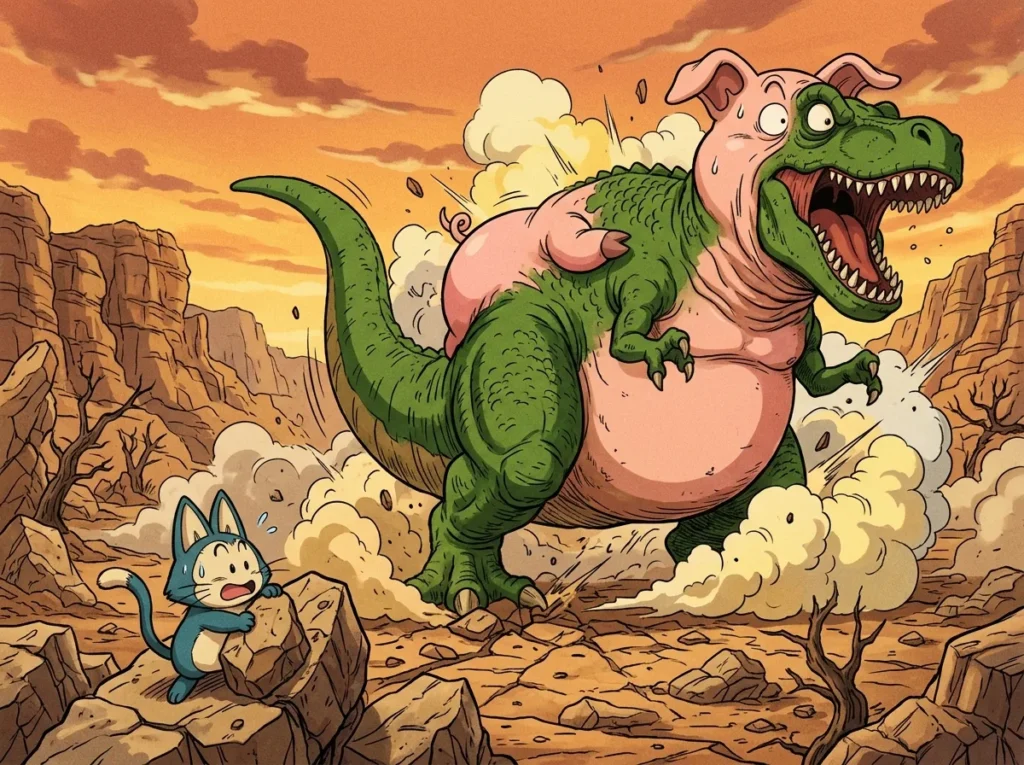
Dragon Ball animal species fall into four main groups: ordinary animals, humanoid animal characters, shapeshifters, and dinosaurs. Many of them follow clear rules, which makes their stories easy to follow. Umigame, a turtle who lives with Kamesennin at Kame House, is a good example of an ordinary animal. After getting lost while searching for mushrooms, he wandered for about a year looking for the ocean. Bandit Bear, a gargantuan ursine humanoid, first appears in Dragon Ball Tale 3, and Oolong can stay transformed for only five minutes at a time.
At the other end of the scale is Bandit Bear, a gargantuan ursine humanoid who first appears in Dragon Ball Tale 3. Shapeshifters come with their own limits. The official Oolong profile says he can stay transformed for five minutes and then needs a one-minute break before changing again. Gohan’s desert dinosaur adds another layer, since it first appears in Dragon Ball Tale 207 and becomes a recurring food source during his training.
Key Takeaways
- The series sorts its animal figures into four groups, each with its own rules.
- Ordinary animals like Umigame, the turtle who lives with Kamesennin at Kame House, behave like real creatures and have no fighting skills or special powers.
- Bandit Bear is a gargantuan ursine humanoid who walks, talks, and acts like a person while keeping his bear features [Dragon Ball Tale 3].
- Oolong can stay transformed for five minutes and then needs a one-minute break before he can change again.
- Gohan’s desert dinosaur first appears in Dragon Ball Tale 207 and becomes a recurring food source during his training [Dragon Ball Tale 207].
Which Animal Species Appear in Dragon Ball?
Dragon Ball features four main kinds of animal-related figures: ordinary animals, humanoid animal characters, shapeshifters, and dinosaurs. The official Dragon Ball site profiles figures from every group, which makes it a reliable starting point for lore fans.
Each group plays a different role in the series. Ordinary animals behave much like real creatures, while humanoid animals walk and talk like people. Shapeshifters blur the line between animal and human, and dinosaurs add a prehistoric touch. Examples from each group include:
- Ordinary animals, like the turtle Umigame
- Humanoid animal characters, like the ursine Bandit Bear
- Shapeshifters, like the pig-visaged Oolong
- Dinosaurs, like the giant desert creature that chases Gohan
Some characters do not fit neatly into one group. Karin is described as a feline hermit and martial artist who lives atop Karin Tower, so he sits between the animal and human categories.
Oolong’s place in the list comes with a memorable backstory. He was expelled from the Southern Shapeshifter School for stealing a female teacher’s underwear, a detail fans love to repeat.
The desert setting of Gohan’s dinosaur shows how far the series ranges beyond its usual cities and forests. The sections ahead look at each group in turn, starting with Umigame’s story.
Who Is Umigame, and Why Does He Wander So Far?
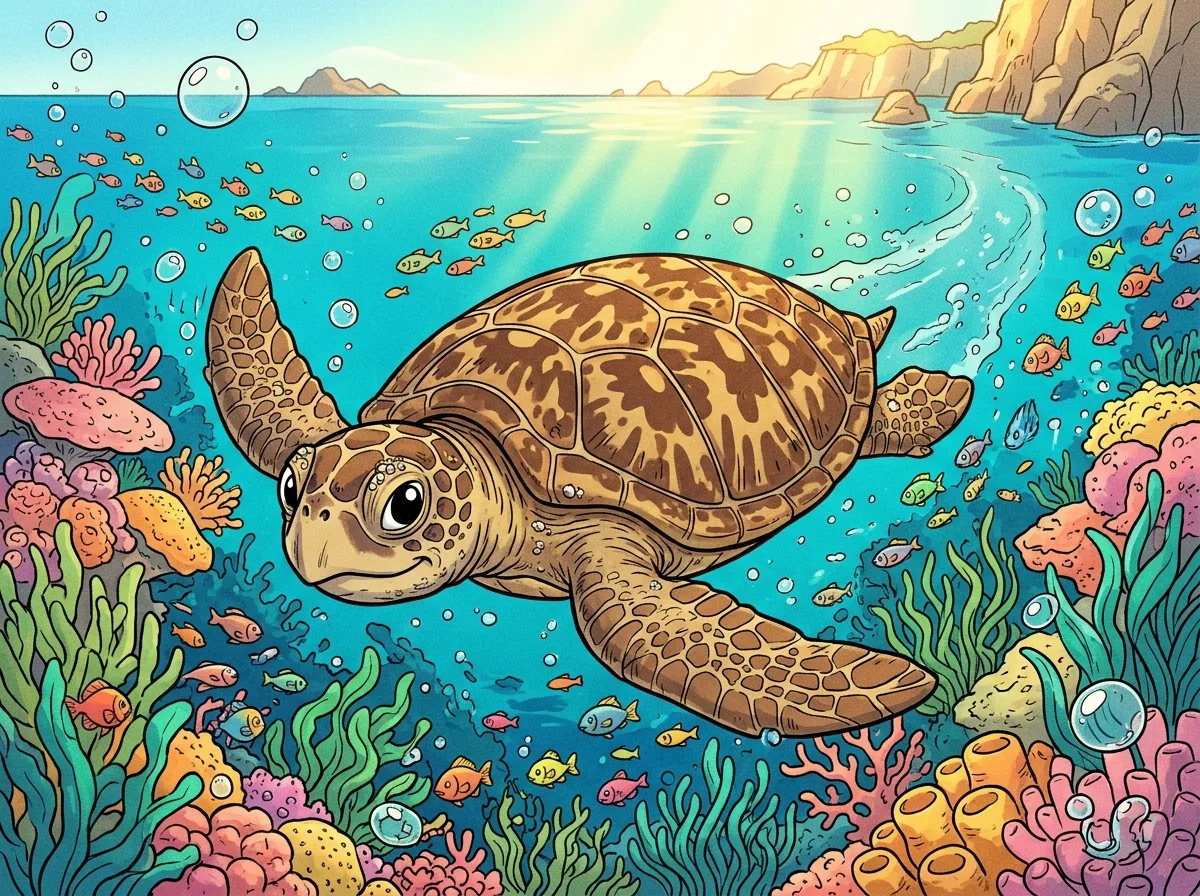
Umigame is a turtle who lives with Kamesennin at Kame House. He wanders so far because he got lost while searching for mushrooms and then set out to find the ocean. That search lasted about a year.
Unlike many characters in the series, Umigame has no fighting skills or special powers. He acts like a real turtle, which makes him the clearest example of an ordinary animal in Dragon Ball. Ordinary animals like him show that the world is full of everyday creatures, not just warriors and wonders.
His simplicity is what makes him useful for readers. He shares a home with Kamesennin, a famous martial arts master, yet the series never asks the turtle to keep up with him. Both live in the same world, and each has a clear place in it.
Turtles also have a link to real science. In a 2023 interview, paleontologist Soki Hattori said that the fossil digs he takes part in can turn up over 2,000 fossils in a summer when non-dinosaur finds, such as turtles, are included. That detail fits a character who is simply a turtle, part of a much older natural world.
What Makes Bandit Bear a Humanoid Animal Character?
Bandit Bear is a humanoid animal character: a gargantuan ursine figure who has a bear’s body but moves, speaks, and acts like a person. The official Dragon Ball profile describes him as a gargantuan ursine humanoid, and he first appears in Dragon Ball Tale 3 [Dragon Ball Tale 3].
In the series, the term humanoid animal describes a creature that walks upright, talks, and behaves like a human while keeping its animal traits. Bandit Bear fits that pattern because his bear features stay visible even as he takes part in the story like any other character.
Plain animals work differently. Umigame, the turtle who lives with Kamesennin at Kame House, acts like a real turtle. He does not walk upright or hold conversations the way Bandit Bear does, and his search for the ocean follows the behavior of an ordinary creature.
The difference is easy to spot once you know what to look for. Ordinary animals behave like their real-world counterparts, while humanoid animals combine animal looks with human habits such as speech, social roles, and personal goals. Keeping that test in mind makes it simpler to sort other characters into the right group.
How Does Oolong’s Shapeshifting Work?
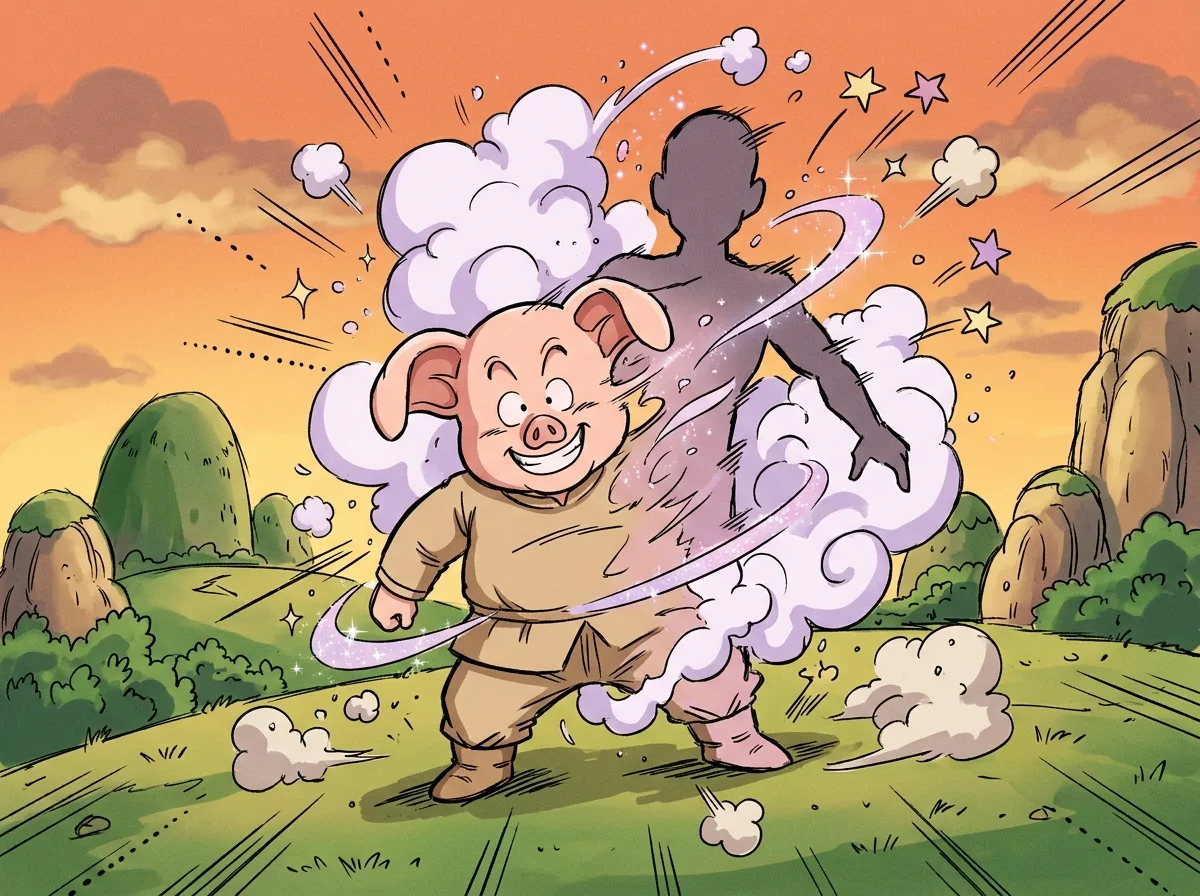
Oolong’s shapeshifting works in short, timed bursts. He can stay transformed for five minutes, and then he needs a one-minute break before he can change again. Those two numbers are the core of his rules.
Oolong is a pig-visaged shapeshifter, so his natural look is a pig’s face, and he can take on other forms. Because each transformation lasts only five minutes, he cannot hold a disguise through a long scene. Once his time runs out, he has to rest for a full minute before he can change again, so a quick switch in the middle of a fight or chase is not something he can do over and over.
His backstory adds another layer. He was expelled from the Southern Shapeshifter School after stealing a female teacher’s underwear, so his talent comes with a reputation for mischief rather than discipline. Fans often treat that story as comedy, but it also explains why he is more of a cheerful troublemaker than a polished master of his craft.
The rules make Oolong easy to follow. Readers can predict when he will be able to transform again and when he will need to stop, and writers can use that minute of rest as a natural pause in the plot. Few animal characters in the series come with limits this clear.
Where Do Karin and the Feline Hermits Fit In?
Karin is a feline hermit and martial artist who lives atop Karin Tower, so he sits between the animal and human groups in the series. He is over 800 years old, and his long solitary life ties him closely to the training world of Dragon Ball.
Karin cultivates Senzu Beans, which can stave off hunger for ten days. Fighters in the series often train far from towns and markets, so a steady supply of food on a remote tower means a student can focus on training instead of searching for meals.
Karin is also a difficult figure to get something from. It took Kamesennin three years to take the Super Holy Water from him, which shows that Karin does not hand over what he guards easily. That patience makes him more than a background figure. He is a test of persistence for anyone who wants what he holds.
His skills and home are tied to survival as much as combat. Readers who want to see how training, food, and fighting connect in the series will find Karin a useful example.
Why Does Gohan’s Desert Dinosaur Matter to His Training?
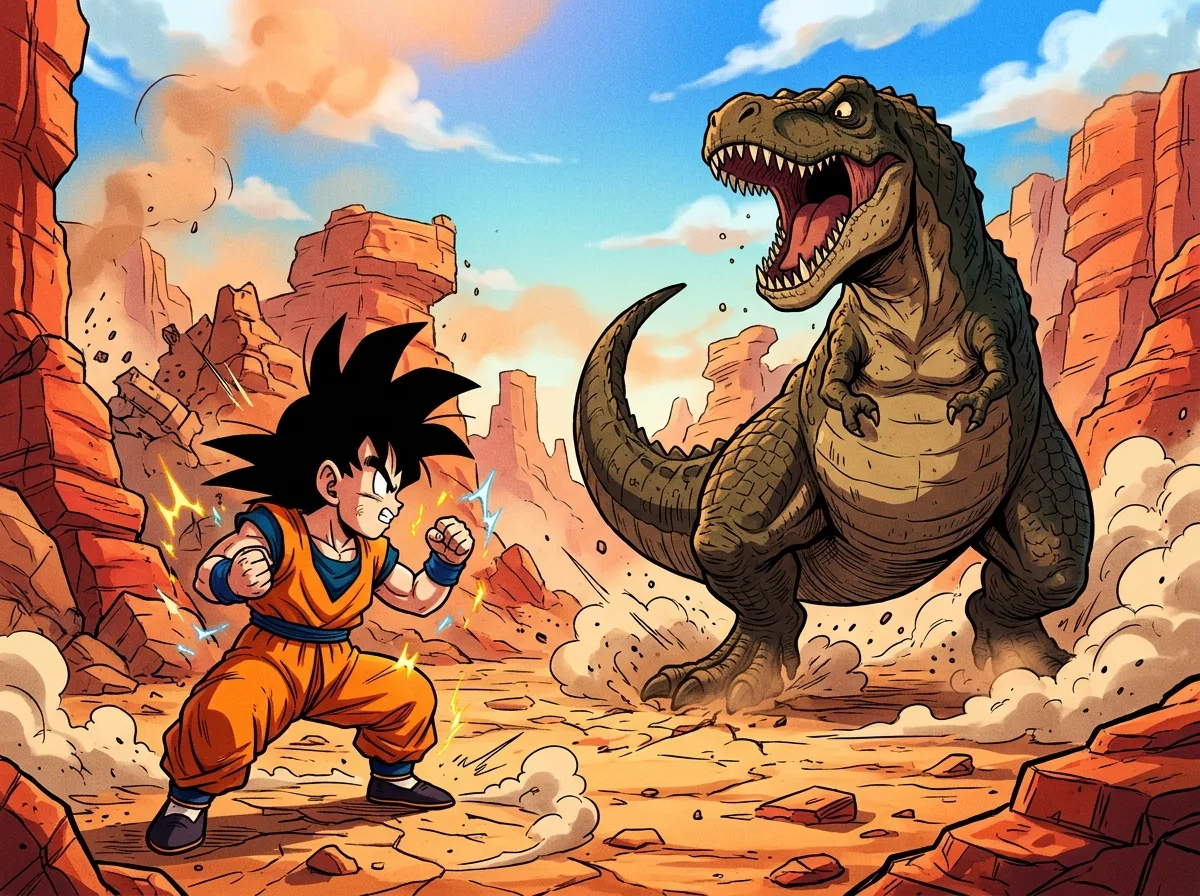
Gohan’s desert dinosaur matters to his training because it is his food supply, which ties survival and practice together. The giant creature lives in a desert region, a harsh setting where meals are hard to come by. It first appears in Dragon Ball Tale 207, where it chases Gohan across the sand. [Dragon Ball Tale 207]
Rather than leaving the creature behind after a fight, Gohan cuts its tail off slice by slice so he can eat it. The official Dragon Ball site profile describes this as a recurring food source, which means the dinosaur returns to the story as a regular meal.
That detail changes how Gohan’s training feels. In a desert with few other options, he cannot stop to search for supplies, so his hunger and his workouts happen in the same place. Every meal depends on dealing with the same dangerous animal, so eating becomes part of the challenge itself.
The arrangement also shows a simple rule of survival in the series. A fighter who lives far from towns has to find food, shelter, and practice space in the same environment. Gohan’s dinosaur gives him all three in one place, which keeps his training grounded in real needs rather than separate exercises.
For readers, the dinosaur is a clear example of how the series uses its setting. The desert is not just a backdrop for fights. It shapes what Gohan eats, how he stays strong, and how long he can keep going, which makes the creature one of the most useful animal figures for understanding his growth.
Are the Series’ Dinosaurs Based on Real Science?
Yes, the desert dinosaur is grounded in real paleontology, though the series takes creative liberties too. In a 2023 interview, paleontologist Soki Hattori classified Gohan’s dinosaur as resembling a theropod. Theropods were a large group of mostly meat-eating dinosaurs that walked on two legs, and they include Tyrannosaurus rex. Their descendants include modern birds, so the bird-like features scientists find in these dinosaurs have a real family connection to the birds we see today.
Hattori also gave a sense of how fast a big theropod could move. He estimated Tyrannosaurus at a speed range of 18 to 40 kilometers per hour, and he compared that pace to a moped. The comparison makes the numbers easy to picture. Even at the top of that range, the animal would be moving at about the speed of a small motor scooter, not like a racing animal.
Hattori’s work also shows how much a single dig can reveal. He said the fossil excavations he takes part in can find more than 2,000 fossils in one summer when non-dinosaur remains, such as turtles, are included. Most people picture dinosaur digs as hunts for giant bones, but many finds are smaller animals that help scientists understand the whole environment.
The series is still fiction, so parts of the desert dinosaur are storytelling choices. In Dragon Ball Tale 207, the creature serves a purpose in Gohan’s survival, which is a narrative choice rather than a scientific one.
Knowing where real science ends and fiction begins helps readers enjoy both. The theropod link, the speed comparison, and the fossil counts give the creature a believable base, while the story adds the drama.
Which New Animal Figures Are Coming to the Collectible Series?
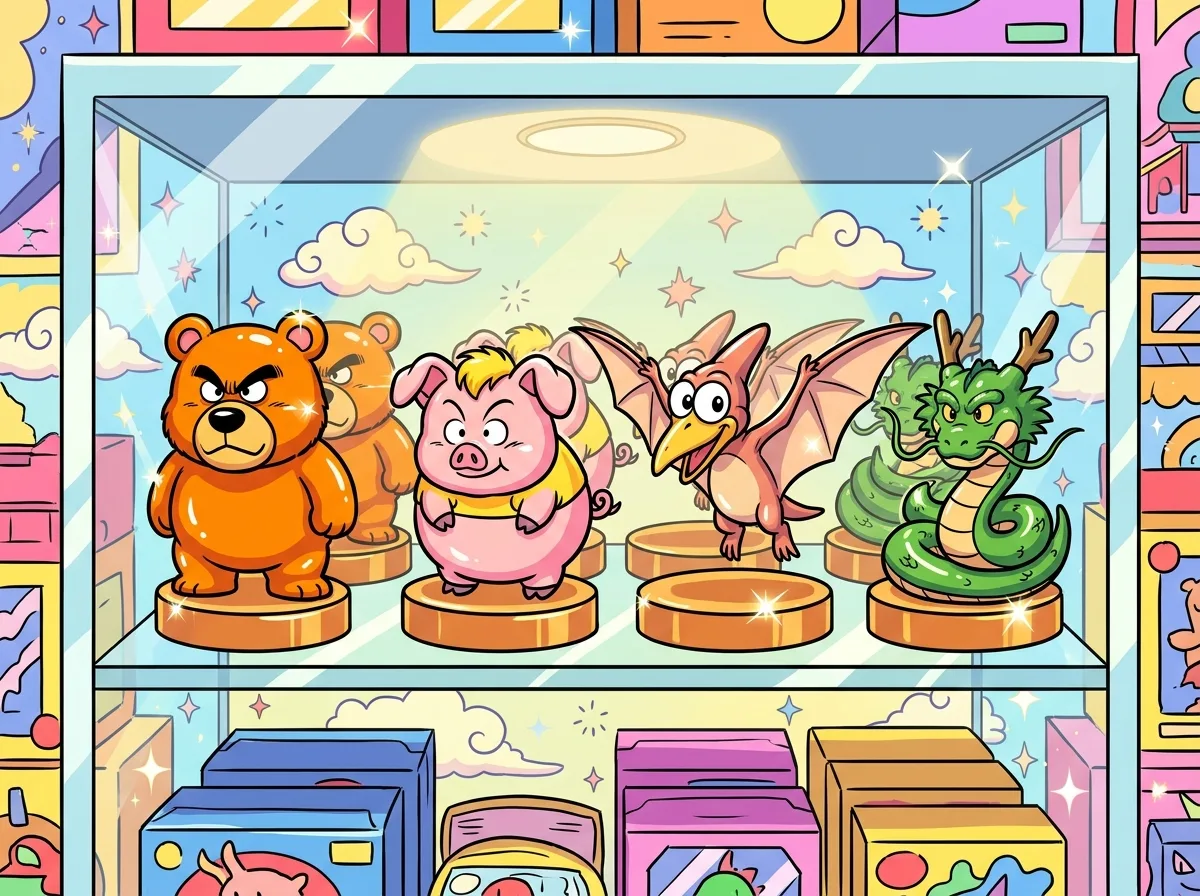
The first announced 2026 release in the World Collectible Figure series includes five characters or creatures: Goku, Bulma, Kamesennin, Turtle, and Pteranodon. The March 2026 announcement on the Dragon Ball official site sets out this opening lineup.
Two of the five picks are animal species. Turtle is a creature rather than a named hero, and Pteranodon is a flying reptile from the age of dinosaurs. Pteranodon is not a true dinosaur, since it belonged to a separate group of flying reptiles, but it is closely related in the public imagination.
Including a turtle and a prehistoric flyer alongside the franchise’s headline fighters shows that animal species remain part of its merchandise. Collectors who buy the figures get creatures on the same shelf as Goku and Bulma. That mix matches how the series treats its animals, giving them a visible place next to the main cast.
Where to Explore Dragon Ball’s Animal Lore Next
If you want to keep exploring, start with Bandit Bear. He first appears in Dragon Ball Tale 3, and reading that early story shows how a gargantuan bear can behave like a person. The official Bandit Bear profile is a short read that confirms his key details before you compare him with other figures.
Next, apply the humanoid test to a character you already know. Ask whether the creature walks upright, speaks, and pursues goals of its own. If it does, it belongs with Bandit Bear. If it only acts like a real animal, it sits with Umigame.
Then take a closer look at Karin. He is over 800 years old, and it took Kamesennin three years to get the Super Holy Water from him. Write down which of his scenes involve food, shelter, and fighting, and see whether those three needs connect the way they do for Gohan’s dinosaur. Pick one character, read the profile, and check whether your sorting still holds.
Frequently Asked Questions
1. How do Karin’s Senzu Beans compare with Gohan’s desert dinosaur as a food source?
Karin’s Senzu Beans can stave off hunger for ten days, so one supply can carry a student through a long stretch of training. Gohan’s desert dinosaur works differently because it is a recurring meal, with its tail cut off slice by slice as he eats. Both solve the same problem of finding food far from towns, but one is a stored supply while the other is a living creature that first chases him across the sand.
2. Why is Oolong grouped as a shapeshifter instead of a humanoid animal?
Oolong is grouped as a shapeshifter because his defining trait is changing form for short periods, not keeping an animal body all the time. His natural look is a pig’s face, and his transformations last five minutes before a one-minute break. Humanoid animals like Bandit Bear stay upright and speak with their animal traits visible at all times, which is why the two groups are kept apart.