
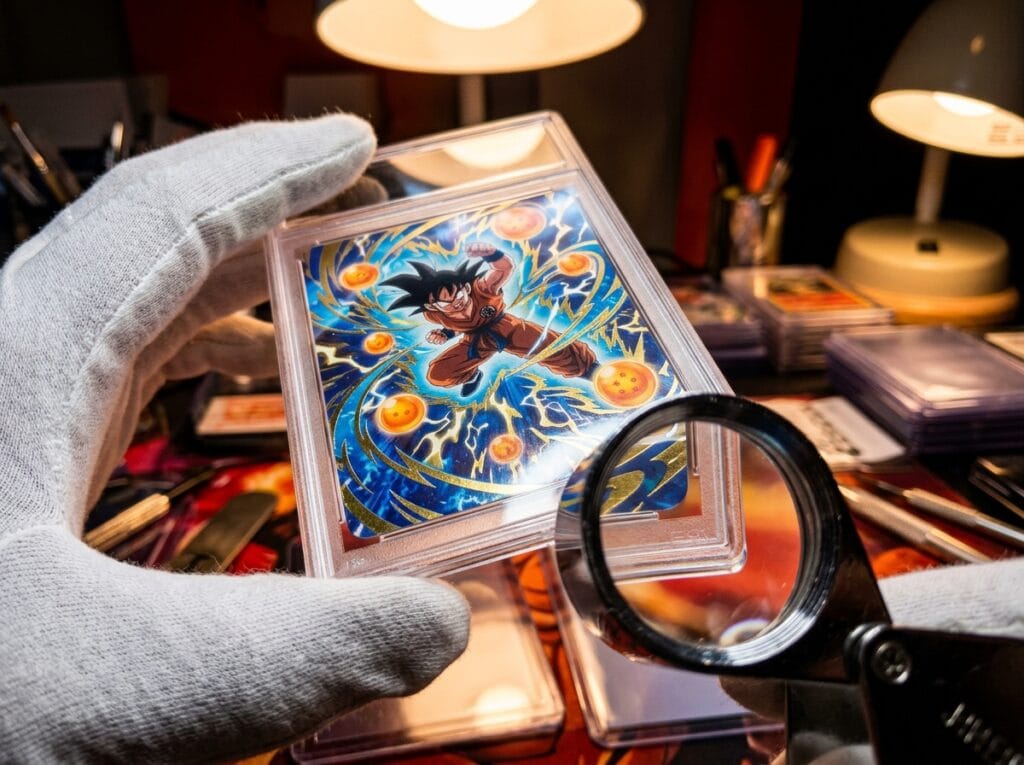
A valuable Dragon Ball card can lose much of its appeal because of a tiny corner flaw, surface scratch, or printing issue. That makes Dragon Ball card grading an important decision for collectors. I see grading as more than placing a card in a protective case. It documents the card’s condition, authenticity, and market appeal. The challenge is deciding when the potential value justifies the cost and submission risk.
Before evaluating a card, I identify whether it belongs to Dragon Ball Super Card Game Masters, Fusion World, or a legacy regional release. Each product can have different card sizes, set lists, rarities, and collector demand. From there, I review the condition, rarity, centering, and recent market activity to decide whether grading makes sense.
Key Takeaways
- Identify the exact game, set, language, card number, rarity, and version before grading, since Masters, Fusion World, and legacy Dragon Ball releases have different checklists, dimensions, standards, and market demand.
- Inspect centering, corners, edges, surface, print quality, whitening, scratches, dents, and alterations under bright light; never clean, press, trim, or otherwise modify a card before submission.
- Grade selectively by comparing realistic graded sale prices with all fees, shipping, insurance, taxes, and the risk of receiving a lower grade. Rare, desirable cards in strong condition are the best candidates, while grading is not guaranteed to increase value.
- Protect graded cards from heat, moisture, sunlight, and case damage, and use accurate labels, certification details, recent sold prices, clear photos, and secure packaging when selling.
Introduction To Dragon Ball Card Grading
Dragon Ball card grading is the process of having a card examined, authenticated, assigned a condition grade, and sealed in protective packaging. I find it useful when I want an objective record of a card’s condition instead of relying only on my own inspection. Grading can also help protect valuable cards from handling, moisture, and other damage. However, a grade does not guarantee a higher selling price. Demand, rarity, character popularity, and market timing also affect value. Before submitting a card, I confirm the exact Dragon Ball card game and set.
That step matters because Dragon Ball Super Card Game Masters and Dragon Ball Super Card Game Fusion World are separate games with different card lists, numbering systems, rarities, and release schedules. Older Dragon Ball Z, Dragon Ball GT, and regional products may also use different checklists, languages, card sizes, and collector markets. Once I confirm the card’s identity, I inspect its centering, corners, edges, print quality, and any signs of alteration or damage. I also compare the card with reliable set information so I can catch identification or authenticity concerns before paying for grading. Submitting the wrong version or an incorrectly identified card can lead to unnecessary costs and unrealistic expectations.
The grading process usually includes submission, authentication, condition review, grading, and encapsulation in a tamper-resistant holder. I handle cards by their edges, use clean sleeves and storage materials, and avoid touching the surface or attempting home repairs before submission. Small flaws such as scratches, whitening, dents, print lines, stains, and off-center borders can affect the final grade, even when a card looks impressive at first glance. I also consider the card’s likely value before grading because fees and shipping may not make sense for a common card with limited demand. Dragon Ball card grading works best when I treat it as a way to document, preserve, and better understand a card, not as a guaranteed investment.
Dragon Ball Card Game Differences

I start every Dragon Ball card grading review by identifying the exact product line because Masters and Fusion World use different set names, numbering systems, rarities, and release schedules. I match any set code or collector number with the correct official checklist instead of judging the card by appearance alone. I also check whether the card is a secret rare, special-art card, promotional release, or another scarce version because collector demand can vary greatly within the same set. Older Dragon Ball Z and GT products require separate research because regional releases may have different languages, numbering, card stock, and market interest.
Card size and language are also important parts of the grading decision. I measure or compare an unfamiliar card with a trusted example from the same product line before placing it in a protective holder because older or regional cards may not use exactly the same dimensions. During inspection, I look for whitening on corners and edges, surface scratches, dents, print lines, poor centering, fading, and signs of moisture or bending under bright, indirect light. I handle the card by its edges, use clean hands, and place it in a soft sleeve and rigid holder. I avoid tight sleeves, loose storage, and any attempt to clean or flatten the card.
Release period and demand help me decide whether professional grading makes sense, but they do not improve a card’s physical condition. A modern Fusion World card may attract attention because of a new competitive release, while an older Masters, Z, or GT card may appeal to collectors because of nostalgia, rarity, or regional scarcity. Common mistakes include submitting the wrong version, confusing parallel rarities, overlooking language differences, and assuming a popular character guarantees a high grade. I compare the card’s likely value with grading and shipping costs, then submit only when accurate identification, strong condition, and collector demand support the decision.
Card Condition And Grading Standards
Before I assess a Dragon Ball card, I confirm the exact game, set, language, and card number because Masters, Fusion World, and older regional products can have different standards and market demand. Centering refers to how evenly the artwork and borders sit within the card. Sharp corners and clean edges show that the card has been handled carefully. Surface issues such as scratches, print lines, stains, dents, and roller marks can lower a grade even when the card looks strong at first glance. Whitening along the edges, small chips, foil defects, and off-center printing also matter, so I inspect both sides under bright, angled light.
Most grading scales place cards on a numerical range, but the highest grades require more than a generally clean appearance. A card around a 9 may have a minor flaw, while a 10 usually requires excellent centering, corners, edges, and surface quality with very few visible defects. A 9.5 is commonly viewed as an elite grade with strong subgrades, whereas a Pristine 10 represents an especially strict top-tier result and may require near-perfect performance across several categories. I treat these labels as useful guides rather than guarantees of value because rarity, character popularity, set demand, and authenticity also affect market appeal.
Careful preparation can prevent small problems from becoming permanent grading deductions. I handle cards by the edges, use clean sleeves and a rigid holder, and avoid pressing, wiping, or altering a card to hide a defect. Before submitting, I check for fingerprints, dust, surface scratches, dents, stains, and corner damage, then compare the card with the published grading standards. I also avoid common mistakes such as grading a common card without checking demand, overlooking a printing defect, or assuming a valuable card will automatically receive a top grade.
Submission Costs And Grading Process

I start Dragon Ball card grading by identifying the exact game, set, card number, language, and rarity because Masters, Fusion World, and older Dragon Ball Z or GT products can have different markets. I then compare recent sold prices for the same card and grade instead of relying on active listings, which may show unrealistic asking prices. Before submitting, I inspect centering, corners, edges, surface, print lines, whitening, scratches, dents, and any signs of trimming or alteration. A rare card with strong demand is usually a better grading candidate than a common card, even when both appear to be in similar condition.
Next, I compare grading services by reviewing their grading fee, turnaround times, accepted card sizes, submission rules, insurance limits, and grading standards. I calculate the likely profit by adding the grading fee, return and outbound shipping, insurance, taxes, payment charges, and any selling fees to the card’s original cost. I also compare that total with the expected value of the card at a realistic grade while allowing for the possibility of receiving a lower grade than expected. This helps me avoid submitting a card simply because its highest possible value looks attractive. The numbers should still work at a more conservative grade.
For shipping, I place the card in a clean sleeve and semi-rigid holder, secure it so it cannot slide, and package it between firm pieces of cardboard inside a sturdy box or mailer. I follow the submission form carefully, photograph the card and package, use tracking, and choose insurance based on the card’s replacement value and the service’s coverage rules. When the slab returns, I check the label, card identity, grade, case condition, and any damage before updating my records and market estimate. A slab does not remove every risk, so I avoid forcing cards into holders, cleaning the surface, or using tight packaging that can cause pressure marks or edge damage.
Protecting And Selling Graded Cards
Protecting a graded Dragon Ball card starts with safe handling of the slab. I hold the case by its edges, keep it away from heat, moisture, direct sunlight, and loose surfaces, and store it upright in a clean protective box. Before listing a card, I check the label, certification number, set, card number, language, and grade to confirm that the slab matches the card. Insurance may be worthwhile for a valuable collection, but I keep purchase records, clear photos, and current market evidence to support its value. I also inspect the slab for cracks or tampering because a damaged case can affect buyer confidence even when the card is genuine.
A strong marketplace listing should identify the exact product, such as Dragon Ball Super Card Game Masters, Fusion World, or a legacy Dragon Ball Z or GT release, along with the set, rarity, condition, grade, and certification details. I use sharp photos of the front, back, label, and case edges, and I describe scratches, chips, or storage wear honestly instead of relying on the grade alone. Realistic pricing comes from recent sales of the same card, set, language, grade, and version, not from asking prices or the raw value multiplied by a fixed amount. When shipping, I place the slab in a sleeve or soft wrap, add rigid protection, use a snug box, and insure the package when appropriate. Poor packaging can turn a successful sale into a costly return.
The biggest mistake in Dragon Ball card grading is assuming that every rare card deserves a premium grade or will recover its grading cost. Demand, character popularity, artwork, print run, and the exact game often matter as much as rarity, so I research the market before submitting low-demand cards. I also examine the raw card under bright light for surface scratches, dents, print lines, whitening, centering problems, and edge damage because a slab cannot hide a disappointing grade from an informed buyer. Authenticity checks are especially important for older, unusual, or high-value cards. I compare the card with reliable checklists and known examples before buying or selling. Grading makes the most sense when the card is desirable, structurally strong, and likely to gain protection or buyer trust that justifies the total cost.
Decide Which Dragon Ball Cards to Grade
Dragon Ball card grading makes the most sense when I consider the card’s desirability, condition, and likely grade together. Before submitting anything, I confirm the exact game and set because Masters, Fusion World, and older regional products can have different card values, checklists, and dimensions. I inspect centering, corners, edges, surface scratches, print lines, and signs of dents or whitening, then compare the card with grading standards to form a realistic expectation. A rare secret rare, special-art card, tournament promo, or popular character card may justify grading more easily than a common card in similar condition.
I also calculate the full cost, including grading, shipping, insurance, and the possibility of delays or return fees. If the card is likely to receive a low grade, those expenses may outweigh any increase in market value, especially when raw copies are already affordable. I avoid cleaning, pressing, trimming, or making other changes that could damage the card or violate grading rules. I use careful handling and sturdy protective packaging during submission. When the card is valuable but grading does not make financial sense, a quality sleeve, semi-rigid holder, and dry, stable storage environment can still provide strong protection.
I treat Dragon Ball card grading as a way to document and protect a card, not as a guaranteed investment. My decision depends on whether the card matters to me, whether its condition supports a worthwhile grade, and whether the total cost fits my collecting goals. A collector focused on long-term preservation may grade a favorite card even without a major profit opportunity, while a seller may need stronger evidence of demand and resale value. By combining research, honest condition checks, realistic cost estimates, and careful storage, I can preserve valuable cards without grading every card in my collection.
Frequently Asked Questions
1. What is Dragon Ball card grading?
Dragon Ball card grading is the process of having a card examined, authenticated, assigned a condition grade, and sealed in protective packaging. I use grading to create an objective record of a card’s condition while helping protect it from handling, moisture, and other damage.
2. Why should I grade a Dragon Ball card?
Grading can improve buyer confidence, document the card’s condition, and make a valuable card easier to store or sell. It does not guarantee a higher price because rarity, character popularity, demand, and market timing also affect value.
3. Which Dragon Ball cards can be submitted for grading?
Most collectible Dragon Ball cards can be considered, including cards from Dragon Ball Super Card Game Masters, Fusion World, and older Dragon Ball Z, Dragon Ball GT, and regional releases. I first confirm the game, set, language, card number, and card size because different products use different checklists and collector markets.
4. What condition issues affect a Dragon Ball card grade?
I check centering, corners, edges, surface quality, print issues, scratches, dents, whitening, stains, and signs of alteration. Even a small corner flaw or surface mark can lower the grade, so I inspect the card under bright, even light before submitting it.
5. How do I know if grading a Dragon Ball card is worth the cost?
I compare the card’s likely value in its current condition with the grading fee, shipping, insurance, and other submission costs. Grading usually makes the most sense when the card is rare, highly sought after, in strong condition, and valuable enough to justify the added expense and submission risk.
6. Should I grade a card from Masters or Fusion World?
I do not judge the card by the game name alone. I compare its rarity, set demand, character popularity, recent sales, and condition while remembering that Masters and Fusion World have different card lists, numbering systems, rarities, and release schedules.
7. How should I prepare a Dragon Ball card for grading?
I handle the card by its edges, inspect both sides, and confirm its identity using reliable set information. I avoid cleaning, pressing, trimming, or making other changes because alterations can damage the card or affect its authenticity review.
8. Does a high grade guarantee that my Dragon Ball card will sell for more?
No. A high grade can increase buyer confidence, but it does not guarantee a specific selling price. The final value still depends on the card’s rarity, demand, character, population of graded copies, condition, and market timing.

