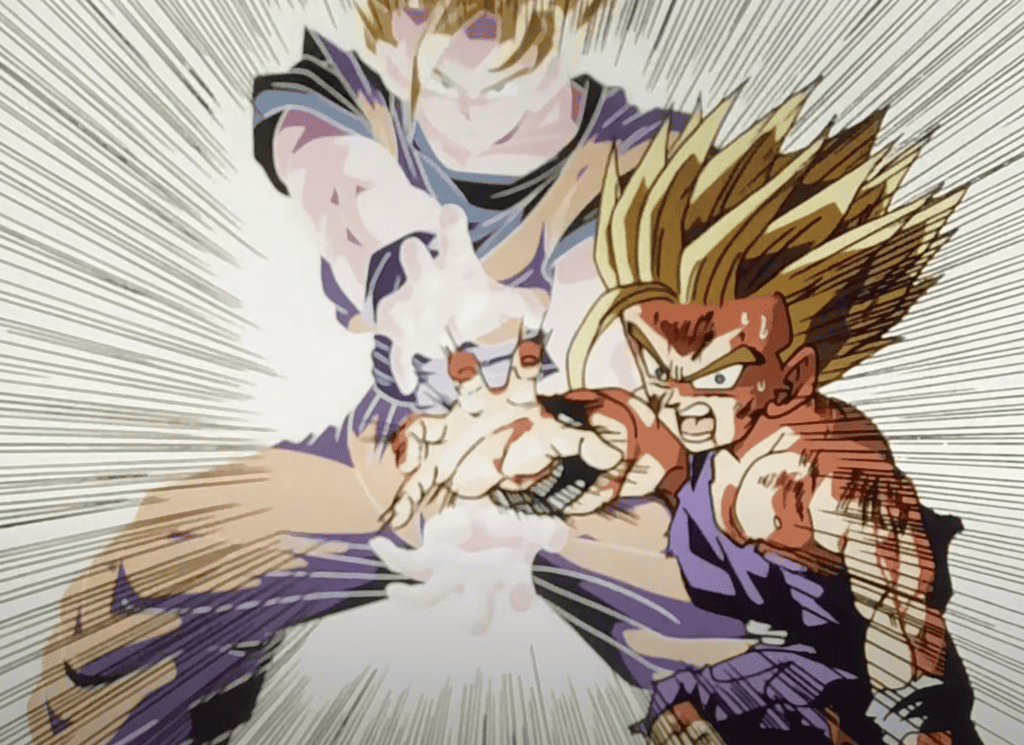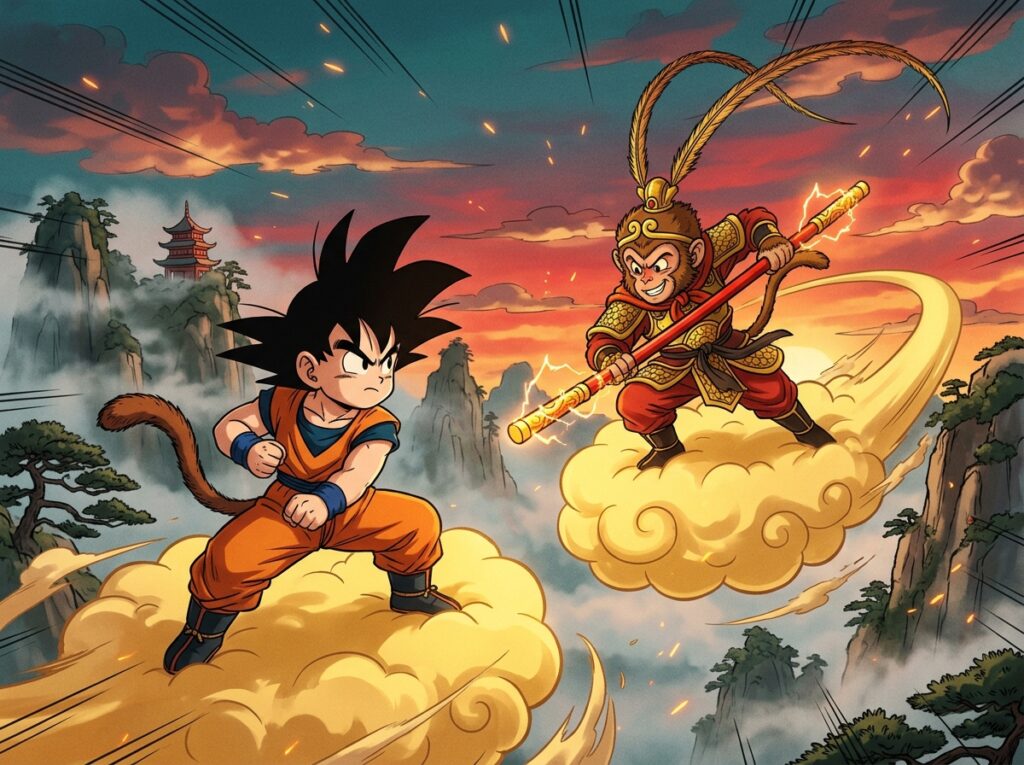
The strongest link between Dragon Ball Chinese mythology and its inspirations is Journey to the West, a 100-chapter novel first published in Nanking in 1592. Written anonymously, it loosely retells the 629 pilgrimage of the monk Tripitaka to India to collect Buddhist scriptures, and a monkey named Sun Wukong steals the show. Goku’s name, tail, and fighting style are closely tied to that character.
Goku’s name is a Japanese reading of Sun Wukong, and his flying cloud and extending power pole echo the Monkey King’s travel and weapon, as one research article on the connection explains. The seven Dragon Balls and the wish-granting dragon Shenlong add a second layer, since Chinese art has long paired dragons with a pearl. Dragon Ball began serialization in Weekly Shonen Jump in 1984, so these links have been part of the series from the start, even if many fans have never looked at where they come from. This article walks through the novel, the characters, the dragon imagery, and the Buddhist and Taoist ideas that shape the world behind it all.
Key Takeaways
- Journey to the West, a 100-chapter novel first published in Nanking in 1592, is the strongest link between Dragon Ball and Chinese mythology.
- Goku’s name is a Japanese reading of Sun Wukong, and Goku’s tail, flying Nimbus, and extending power pole echo the Monkey King’s traits and weapon.
- The seven Dragon Balls and the wish-granting dragon Shenlong, who grants one wish once all seven are gathered, draw on the Chinese tradition of dragons paired with a pearl.
- Buddhism and Taoism give Journey to the West its moral direction and its map of the heavens, so knowing those traditions makes the novel’s structure easier to follow.
- Dragon Ball borrows from Journey to the West loosely rather than copying it scene by scene, and the clearest borrowings appear in the original 1984 manga that began in Weekly Shonen Jump.
Is Dragon Ball Based on Chinese Mythology?
Dragon Ball is not built on Chinese mythology as a whole. Its strongest link is one classic novel, Journey to the West, which the series drew on from the start. Dragon Ball began running in Japan’s Weekly Shonen Jump in 1984, and the connection has shaped the series ever since.
The series does not copy the novel scene by scene. A 2021 scholarly study describes the novel as an inspiration and says the manga sketchily follows its outline. Think of it as borrowed ideas rather than a retelling. The novel’s monk travels with a band of supernatural companions, and Goku sets out in a similar way, teaming up with Bulma to hunt for the Dragon Balls and meeting a string of strange foes along the road.
“Chinese mythology” is handy shorthand, but it misses an important layer. Journey to the West is shaped by Buddhist beliefs about pilgrimage and enlightenment, and it also reflects Taoist ideas and the court of heavenly deities led by the Jade Emperor. Those religious traditions give the novel its moral framing, so knowing them makes the story’s structure easier to follow.
This article focuses on three main links that show up in Dragon Ball:
- Sun Wukong: The Monkey King is the clearest source for Goku’s look, skills, and fighting style.
- The Dragon Balls: The seven orbs and the wish-granting dragon Shenlong draw on a separate tradition of dragons paired with pearls in Chinese art.
- Buddhist and Taoist background: The religious ideas behind the novel shape the world Goku moves through, even when the show never names them directly.
Each link adds context to the characters and creatures fans already know, and seeing where they come from can change how the series reads.
What Is Journey to the West About?
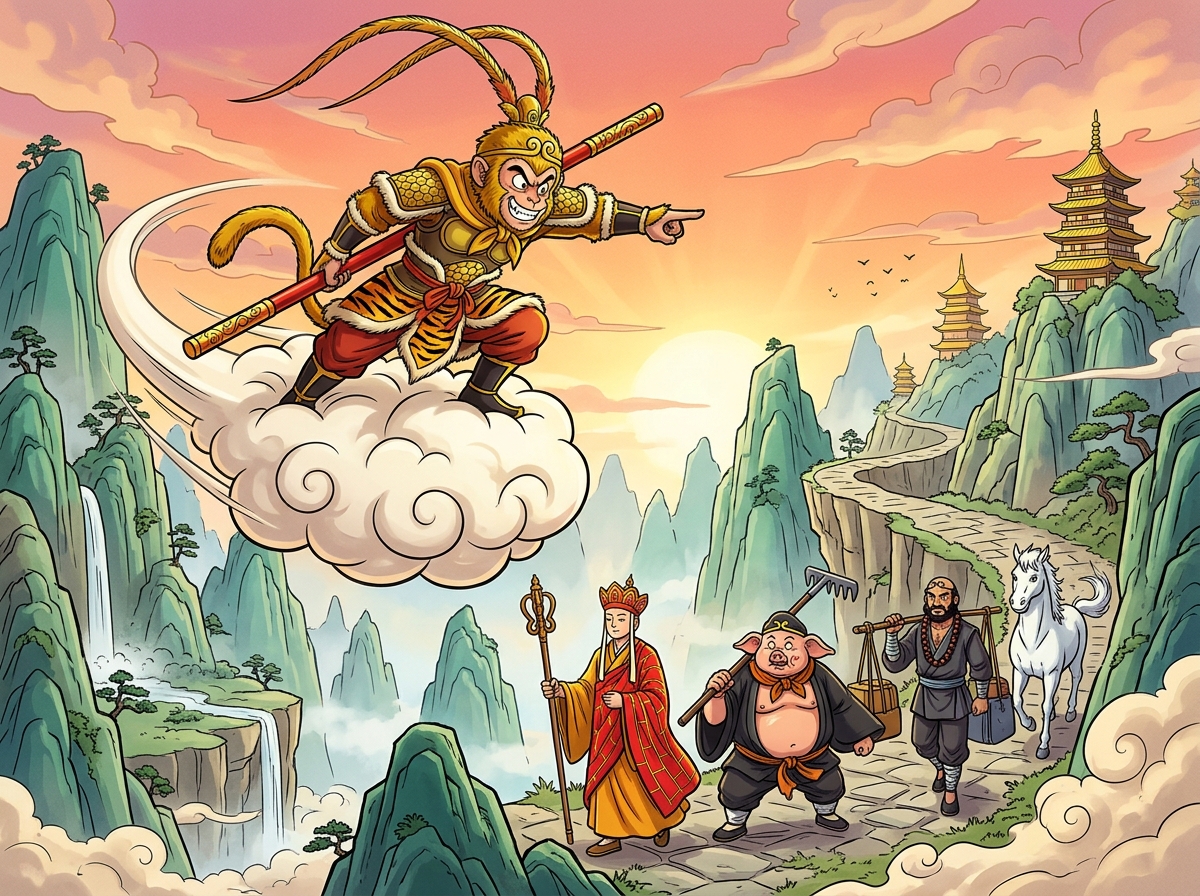
Journey to the West is a long Chinese fantasy novel from the late Ming period, and it is the classic story that Dragon Ball fans most often connect to Goku. The author was never named, so the book appeared without a credited writer. It is divided into 100 chapters, and each one usually brings a new monster, trick, or battle for the travelers to face.
The story is loosely built on real history. A monk named Xuanzang, called Tripitaka in the novel, made a famous journey to India in the seventh century to collect Buddhist scriptures. The novel takes that trip and turns it into a magical adventure, with the monk pushing forward while the world around him fills with demons and gods.
Tripitaka is never alone on the road. He travels with a dragon-horse, a pig, a demon, and a monkey, and each companion has a backstory that explains why they are on the journey. Many of them were once powerful beings in heaven or on earth before they were punished and sent to serve the monk.
The monkey is the one readers remember most. Sun Wukong, the Monkey King, was born from a magic stone and taught himself powerful arts. He causes so much trouble in heaven that he has to be stopped, and his speed is legendary. In one famous scene, he uses his Cloud Somersault to travel 108,000 li in a single leap. By the end of the book, he is rewarded with the title of Victorious Fighting Buddha, a surprising turn for such a rebellious character.
The heavenly side of the story is just as detailed. The novel pictures heaven as a court run by the Jade Emperor, with gods arranged in careful ranks. A 2002 curriculum guide from ERIC’s China: Tradition and Transformation explains that the book reflects how Buddhism and Taoism blended in Ming-period China, which is why the heavens and the monks’ pilgrimage feel so connected.
If you are new to the novel, expect a slower pace than most action stories. Many chapters are self-contained adventures, so you can read a few at a time without losing track. The humor is sharp too, especially in the way Sun Wukong argues with the monk and clashes with the heavenly bureaucrats. Those scenes show where Goku’s playful, stubborn personality may have started.
Where Do Goku’s Monkey Traits Come From?
Goku’s monkey traits come from Sun Wukong, the Monkey King of Journey to the West, and the link starts with his name. Son Goku is the Japanese transliteration of Sun Wukong, meaning a Japanese way of writing the Chinese name, so fans who know the novel can spot the connection before a single fight begins.
The Monkey King’s influence shows up in three clear places. Each one takes a trait, skill, or weapon from the novel and gives it a new look in the manga.
- The monkey tail: Goku’s tail marks him as a monkey-like figure, matching Sun Wukong’s animal nature.
- The flying Nimbus: The golden cloud Goku rides echoes Sun Wukong’s Cloud Somersault, the magical leap that lets him cross the map quickly.
- The extending power pole: Goku’s staff mirrors Sun Wukong’s weapon, a magic iron rod that can change size at his command.
The Cloud Somersault is probably the most important of these links. In the novel, Sun Wukong can travel 108,000 li in a single leap, where li is an old Chinese unit of distance. That kind of speed makes the sky feel like his personal road, and it explains why a cloud is the natural way for a fighter like him to move. Goku’s Nimbus does the same job in the manga, carrying him to distant battles and giving the story a sense of wide-open travel.
The tail is a little different. The novel’s monkey is born from a stone, and he is never described with a tail the way Goku has one. The manga adds it as a visible sign of his monkey roots, a detail that makes his animal side easy to see at a glance. It also connects to the series’ broader use of monkey imagery, which fans often link back to the Monkey King.
The staff deserves a closer look too. Sun Wukong’s rod is a famous weapon in Chinese storytelling, and it can grow to enormous size or shrink small enough to tuck away. Goku’s power pole works in a similar way, stretching and changing as he needs it. The idea of a long, flexible staff as a fighter’s main tool is one of the most direct borrowings in the series.
Keep in mind that the manga adapts the novel loosely rather than copying it scene by scene. Goku borrows the Monkey King’s name, travel, and weapon, but his story follows a different path. Sun Wukong is proud, rebellious, and eager to defy heaven, while Goku is cheerful and focused on training and friendship. Seeing which traits were kept and which were changed is a good way to understand how the series reshaped its source material for a new audience.
Are the Dragon Balls Based on Chinese Dragon Lore?
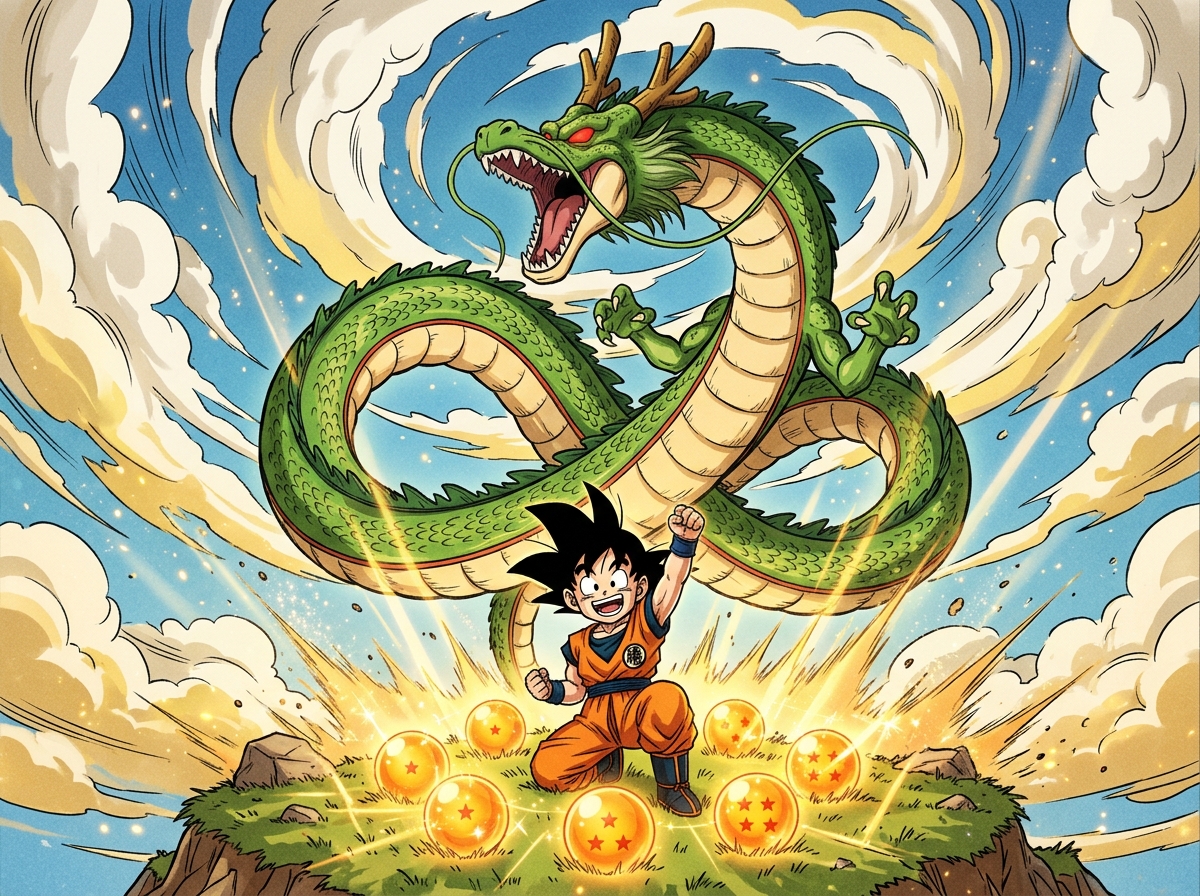
Yes, though the link is different from Goku’s monkey traits. The seven Dragon Balls and the dragon Shenlong draw on a separate tradition in Chinese art, where a dragon is paired with a magic pearl that grants wishes.
The rule in Dragon Ball is simple. Collecting all seven Dragon Balls summons Shenlong, who can grant one wish, as the Embassy of Japan in Luxembourg explains. That single wish is the heart of the setup, and it is what makes the orbs so valuable to the characters who hunt them.
The pearl behind that idea is older than most readers would guess. A 2022 art-history article from National Taiwan University reports that the Chinese dragon-and-pearl motif appeared as late as the sixth century. That is still centuries before Journey to the West reached print in 1592, so the image was already well established when the novel took shape.
The motif itself comes from Buddhism. Its source is the cintamani, sometimes written cintāmaṇi, a jewel from Buddhist tradition that is said to grant whatever its holder wishes. When that jewel entered Chinese art, it was often shown with a dragon nearby, and the pearl gradually became the dragon’s partner. The wish-giving power of a Buddhist jewel was joined to the dragon, a creature already strongly tied to rain, water, and power in Chinese culture.
Seen this way, Shenlong fits neatly into the old pattern. He is a long, serpentine dragon who appears in the sky, and his main job is to deliver a wish once the magic objects are gathered. The Dragon Balls take the place of the single pearl, but the core idea of a dragon connected to a wish-granting treasure is the same. The Dragon Balls are also collected in a set of seven, which means the power comes from bringing separate pieces together rather than from owning one jewel.
The series never names the cintamani or describes its Buddhist roots, so the link is one of shared imagery rather than a stated source. Still, the parallel is strong enough to help readers see why a dragon-and-jewel story feels so familiar to people who know Chinese art.
This dragon link also works separately from the Journey to the West connections covered above. Goku’s name, tail, cloud, and staff trace back to one character in one novel. The Dragon Balls point instead to a long visual tradition that stretches from Buddhist jewels to Chinese dragons. Keeping the two apart makes it easier to see that Dragon Ball pulls from more than one source, and that its wish-granting dragon has roots much older than the manga itself.
What Role Do Buddhism and Taoism Play in the Story?
Buddhism and Taoism give Journey to the West its moral direction and its map of the universe. Knowing both traditions makes it easier to see why the characters act as they do, and why the novel feels more like a spiritual test than a simple action story.
Buddhism shapes the journey itself. Tripitaka’s trip to India is a pilgrimage, and its goal is holy scripture rather than treasure or fame. Each demon he meets tests his patience and faith, and many of the monsters are tempting in ways that feed desire, anger, or pride. Sun Wukong’s arc follows the same logic. His arrogance gets him into serious trouble, and he must be disciplined before he can truly serve the monk. The ending reflects that transformation, since he receives a Buddhist title rather than a worldly reward.
Taoism appears most clearly in the heavens and in the magic. The novel is full of Taoist immortals, sacred peaches of long life, and alchemy. Sun Wukong’s strength comes partly from the peaches and elixirs he steals and consumes, which give him near-immortal power. These details show how Taoist ideas about longevity and transformation shaped the novel’s sense of what supernatural power looks like.
The deity hierarchy explains much of the plot. The Jade Emperor rules a heavenly court where gods are arranged in careful ranks, and every rank comes with its own duties and rules. Sun Wukong’s rebellion makes sense only when you see that structure. When heaven offers him a minor post caring for the imperial horses, he feels insulted and starts a new round of chaos. He is finally stopped by the Buddha, who sits above the Jade Emperor in the novel’s arrangement. Sun Wukong bets that he can leap out of the Buddha’s palm, and he fails. That scene shows how the novel ranks its gods and why no fighter, however strong, can simply outmuscle the whole system.
Dragon Ball borrows some of this framework in its own way. Its afterlife, with King Yemma judging the dead and the long Snake Way leading toward the Other World, reflects Buddhist ideas about judgment and rebirth that reached Japan. The series also keeps a layered power ladder, with beings who rank above ordinary fighters and rules about who can challenge whom. Goku’s world does not copy the Jade Emperor’s court, but it carries a similar sense that power comes with position.
That is why “Chinese mythology” works best as a starting point. Journey to the West is a religious story as much as an adventure, and its monks, gods, and rebel monkey all move inside a Buddhist and Taoist framework. Once readers see that framework, Goku’s world feels richer and more layered than a simple mix of dragons and monkeys.
How Has the Chinese Connection Continued in Dragon Ball’s Later Stories?
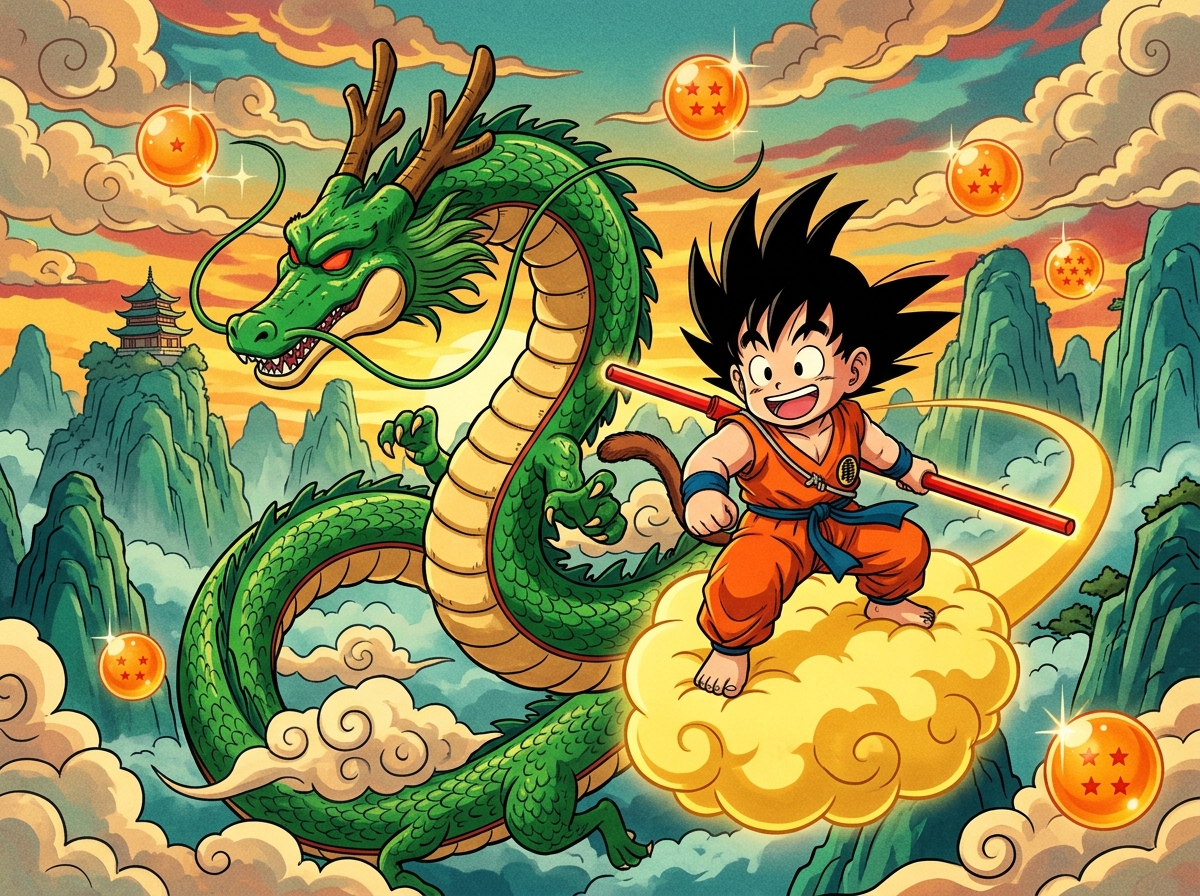
The Chinese connection carries into Dragon Ball’s later stories in a lighter form, and its strongest ties to Journey to the West stay in the original series. The 1984 manga is where Goku’s name, cloud, and staff most clearly echo Sun Wukong, so that is the best place to look for direct borrowings.
The creator, Akira Toriyama, did not stop after the first run. He launched a new series in 2015 after the original’s success, which showed that his storytelling kept growing beyond the early Goku adventures. Each new project brought fresh characters and settings, and those choices often leaned on the world already built rather than returning to the novel’s scenes.
Dragon Ball Super continued that pattern. Its arcs mostly build on rules the series had already set up, such as the power ladder, the tournaments, and the wish-granting Dragon Balls. Those elements still carry a trace of the older dragon-and-pearl imagery, but the Journey to the West echoes are harder to spot because the story is driven by new conflicts instead of the novel’s pilgrimage structure.
The newest announcement continues that story. On January 25, 2026, Toei Animation said Dragon Ball Super: The Galactic Patrol had entered production as a story following the Universe Survival Arc. The title points toward a space-focused adventure, so readers should not assume it will repeat the monkey, cloud, or staff links that define Goku’s early story.
If you want to test for later echoes yourself, keep a short checklist. Look for a staff that changes size, a flying cloud used for travel, a monkey-like fighter, or a wish tied to a set of magic objects. Each one points back to a specific part of the Chinese tradition. When you find one, ask whether it comes from the novel itself or from the series’ own rules, since later arcs often mix both.
Where to Start Exploring the Journey to the West Roots
Start with the first few chapters of Journey to the West. The novel is 100 chapters long, so a short first session keeps the story manageable. Read the opening pages about Sun Wukong’s birth from a magic stone and his early trouble in the heavens. Those pages introduce the traits Goku later borrows, and you will see the Monkey King’s restless energy right away.
Next, look for the Cloud Somersault and the magic staff as you read. Note the scenes where Sun Wukong travels by cloud and where his iron rod changes size. Then keep a simple two-column list. In one column, write what the novel’s monkey does. In the other, write the matching thing Goku does in the 1984 manga.
After that, go back to the early chapters of Dragon Ball and check your list against the scenes. Watch for the golden cloud, the power pole, and the monkey tail. Pay attention to moments where Goku acts playful or stubborn, since those traits point back to the novel’s humor.
Finally, decide how deep you want to go. If the Buddhist and Taoist background interests you most, read the parts about the heavenly court and the Buddha’s final lesson for Sun Wukong. If you prefer the Dragon Ball side, return to the seven-orb wish setup and compare it with the dragon-and-pearl imagery in Chinese art. Either path will make the series feel richer on your next rewatch or reread.
Frequently Asked Questions
1. Are dragons Chinese or Japanese in origin?
Dragons are most closely tied to Chinese culture, where they have appeared in art and stories for thousands of years. Japanese dragons developed under strong Chinese influence and carried over many ideas from the older tradition, including the link to water and rain. So the dragon in Dragon Ball has its roots in China, even though the manga was created in Japan.
2. Why is the dragon a symbol of China?
Chinese culture has long connected dragons with rain, rivers, and seas, which mattered a great deal to farming communities. Dragons also became linked with emperors, who were often described as ruling with the power of the dragon. Over time, that mix of natural power and good fortune made the dragon one of the country’s best-known symbols.
3. What powers do Chinese dragons have compared with Shenron?
Chinese dragons are usually tied to water, rain, and weather, and they are often shown controlling storms and rivers. Shenlong’s main power is different, because he grants one wish once all seven Dragon Balls are gathered. In short, Shenlong is a wish-granting figure, while the Chinese dragon is more of a natural force.
4. Does Dragon Ball take place in China?
No, Dragon Ball is set on a fictional version of Earth rather than in the real country of China. Its towns, mountains, and islands are invented places, not a map of China. The Chinese influence shows up in borrowed ideas, such as the Monkey King and the dragon-and-pearl imagery, rather than in the series’ locations.