
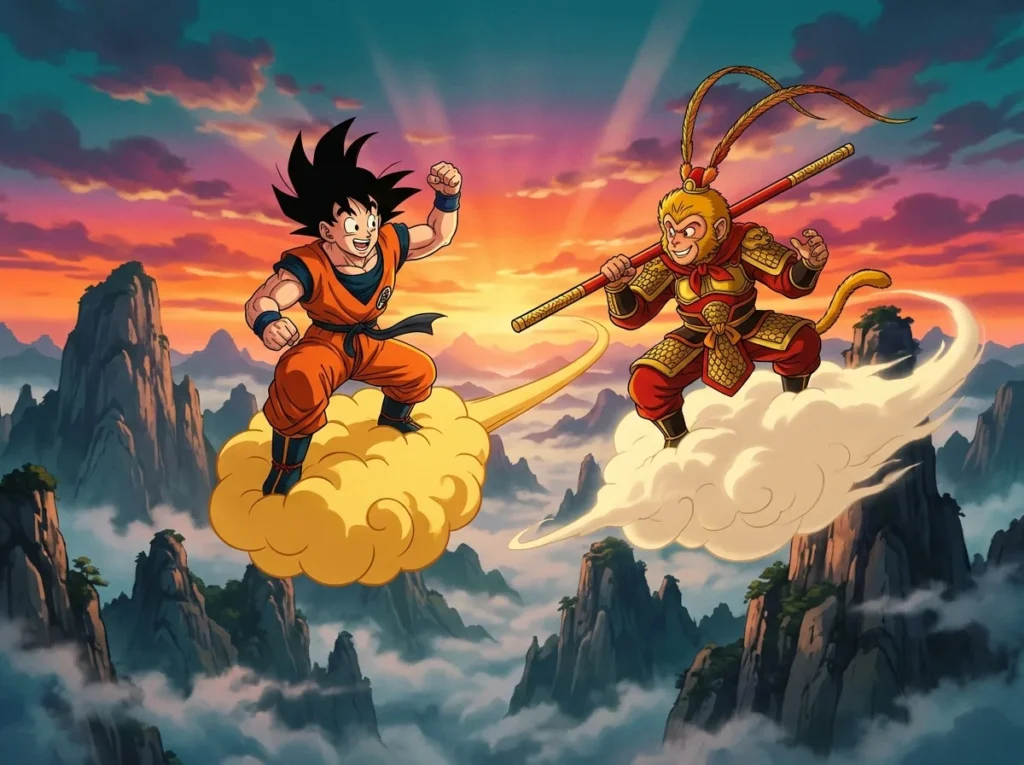
Dragon Ball’s crossover history starts inside its own manga, where Goku meets Arale Norimaki from Dr. Slump in Penguin Village. The first major team-up with another series came with Cross Epoch, a one-shot by Akira Toriyama and Eiichiro Oda that ran in Weekly Shonen Jump on December 25, 2006, pairing Goku with the One Piece cast.
Since then, official collaborations have spread into television, fighting games, and online games. A one-hour special linking Toriko, One Piece, and Dragon Ball Z was scheduled for April 7, 2013, in Japan. Later, Bandai Namco announced the Americas release of Jump Force for February 15, 2019, with a roster of 40 characters fighting in teams of three. Fan-made crossovers form a separate category. They are created by fans, not by the rights holders behind the original series.
Key Takeaways
- Dragon Ball’s first crossover happened inside its own manga, when Goku met Arale Norimaki in Penguin Village, and Akira Toriyama could make that choice alone because he created both Dragon Ball and Dr. Slump.
- Cross Epoch, a one-shot by Akira Toriyama and Eiichiro Oda, ran in Weekly Shonen Jump on December 25, 2006, and it remains the first major team-up between Goku and the One Piece cast.
- Official Dragon Ball crossovers are approved by rights holders such as Toei Animation, Shueisha, or Bandai Namco, so readers should check the credits, copyright line, or official announcement to confirm that a project is authorized.
- Jump Force, whose Americas release was announced for February 15, 2019, gathered a roster of 40 characters from Dragon Ball Z, One Piece, and Naruto who fought in teams of three.
- PUBG Mobile’s standalone Dragon Ball Super Battle Royale mode ran from July 15, 2023, at 02:00 UTC through September 4, 2023, at 23:59 UTC, so players should check each event’s start and end times before planning to join.
When Did Dragon Ball First Meet Another Fictional World?
Dragon Ball’s first crossover happened inside its own manga. In Dragon Ball Tale 81, Goku chases General Blue through Penguin Village and meets Arale Norimaki, the main character of Akira Toriyama’s comedy Dr. Slump. [Dragon Ball Tale 81]
The meeting is brief, but it shows how easily Toriyama could bring a character from one story into another. Because he created both Dragon Ball and Dr. Slump, the encounter was not a team-up between two publishers. One author wrote both worlds, so the choice was his alone.
The link returned much later in anime form. The Dragon Ball Super episode aired in Japan on December 4, 2016, bringing Dr. Slump characters into the series. [Dragon Ball Super episode 69, “Goku vs. Arale! A Ridiculous Battle Will End the Earth?!”]
For fans, that episode turned a single manga appearance into a lasting thread. It showed that Toriyama’s characters could move between print and television while staying in the same creative family. Later crossovers with other companies followed a different path, since they depended on agreements between rights holders.
What Separates an Official Crossover From a Fan-Made One?
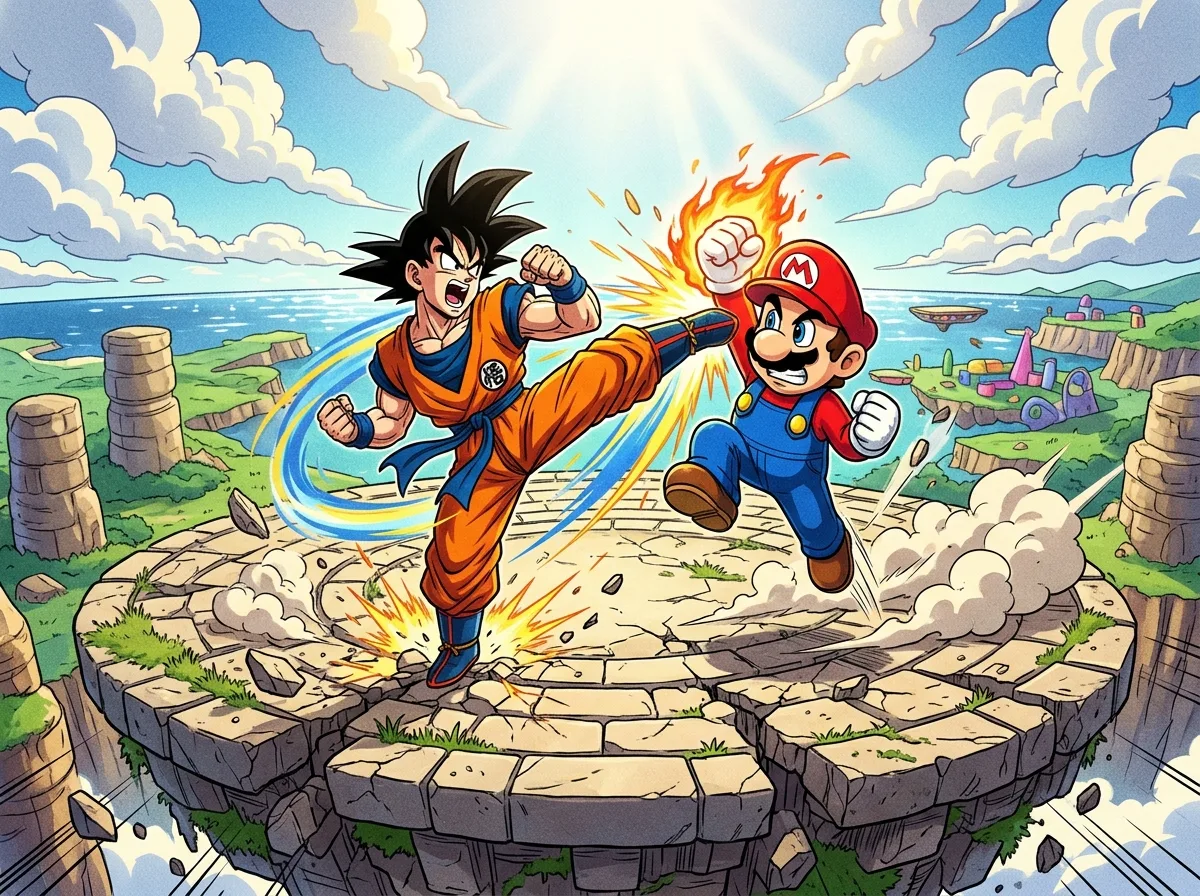
An official crossover is a project approved by the people who own the characters, such as Toei Animation, the studio behind the anime, or Shueisha, the publisher of Weekly Shonen Jump. Game companies can be rights holders too when they license Dragon Ball for their own titles, as Epic Games did for Fortnite. A fan-made crossover is written or drawn by readers without that permission. Stories on fan archives that place Goku beside characters from other series have no official status, even when they look polished.
Official projects do not all share one storyline. Each crossover can have its own continuity, so a character may behave differently, or events may not line up with the main series. The 2013 Toriko and One Piece special was a separate television event, and the Fortnite collaborations ran their own quests and events. Readers should judge each project on its own terms instead of assuming it fits neatly into the timeline of Dragon Ball GT or Dragon Ball Super.
A quick check can settle most questions. Look at the credits, copyright line, or official announcement. If Toei Animation, Shueisha, Bandai Namco, or a named game studio appears next to the Dragon Ball name, the project has a rights-holder connection. If the work appears only on a personal blog, a fan archive, or a forum with no company credit, treat it as fan-made. Official releases also usually name a publisher, a platform, and a release date, which fan works rarely provide.
Which Shonen Jump Crossovers Brought Dragon Ball and One Piece Together?
Cross Epoch and a string of Shonen Jump crossover games first brought Dragon Ball and One Piece together. Akira Toriyama and Eiichiro Oda created the one-shot, which appeared in the 2007 double issue of Weekly Shonen Jump released on December 25, 2006. It was a direct team-up that let Goku share pages with the One Piece cast.
Games followed quickly. Jump Super Stars, released in 2005, placed Dragon Ball and One Piece characters on the same roster, and Battle Stadium D.O.N. followed in 2006. Both let players choose fighters from across the Shonen Jump catalog, so a Saiyan and a Straw Hat pirate could meet in the same match.
Jump Ultimate Stars came out in 2006, and J-Stars Victory Vs. arrived in 2014. Each title kept the same idea of mixing heroes from different manga, but changed the roster and the way characters fought. Readers who want to trace which characters appeared together should check each game’s own roster, since the lineups differed from one release to the next.
Television joined the mix in 2013. Toei Animation scheduled the one-hour Dream 9 Toriko & One Piece & Dragon Ball Z Super Collaboration Special for April 7, 2013, from 9:00 to 10:00 a.m. in Japan, with regional exceptions. The special put the lead characters of each series, Toriko, Luffy, and Goku, into a race called the Tenkaichi Eating Tournament.
These early projects showed that heroes from three different manga could share one stage. Jump Force later took that idea furthest, gathering many of the same franchises into a single fighting game.
How Did Jump Force Bring Dragon Ball Z Into a Fighting Roster?
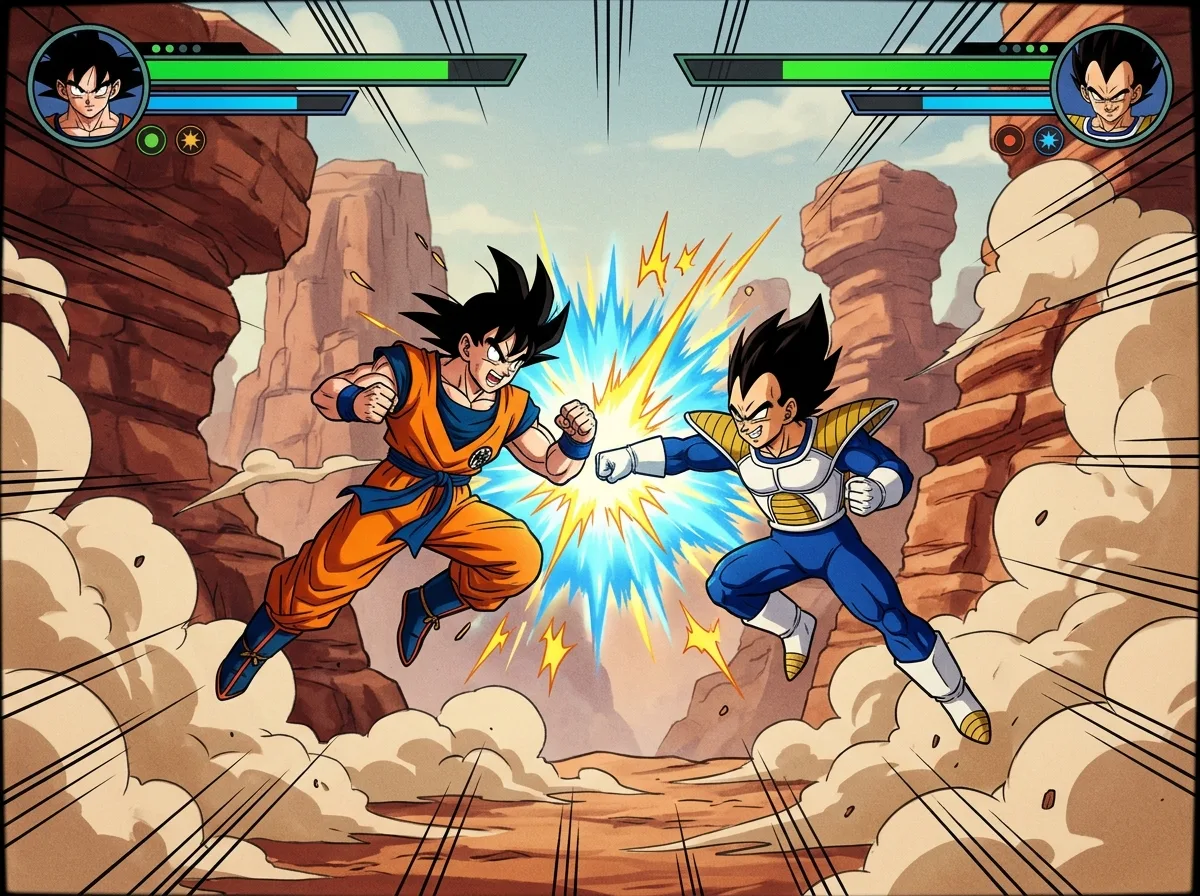
Jump Force brought Dragon Ball Z into a fighting roster by placing its characters on teams with heroes from other Shonen Jump series. Bandai Namco announced the Americas release on February 15, 2019, with a roster of 40 characters. Fighters were grouped into teams of three, so each match could bring several heroes onto the same side.
Dragon Ball Z, One Piece, and Naruto characters all appeared in the game. That mix gathered several franchises in one title instead of only two.
The team setup is also a practical example of how crossover rosters are built. Developers choose characters from each series, then arrange them so every squad has a mix of fighting styles and roles. A Saiyan, a Straw Hat pirate, and a ninja on one team gives players a varied group without letting a single franchise dominate the lineup.
Readers who want to see how this works can compare team makeup across releases. Each game made its own choices, so a character who fights on one squad in one title may be missing from another.
What Happened When Dragon Ball Joined Fortnite, PUBG Mobile, and Other Games?
Dragon Ball joined a run of battle royale, mobile, and sandbox games between 2022 and 2025, and each partnership had its own characters and event schedule. The first was Fortnite, where a Dragon Ball collaboration launched on August 16, 2022, with Son Goku, Vegeta, Bulma, and Beerus.
The Power Unleashed event was split into seven quest sets. Its quests and rewards stayed available until August 30, 2022, at 4 a.m. Eastern Time, so players had a fixed window to finish them.
Fortnite returned on January 31, 2023, with a second Dragon Ball update. The new update added Son Gohan and Piccolo from Dragon Ball Super: Super Hero and brought back the Kamehameha and Nimbus Cloud items.
PUBG Mobile took a different approach. Its standalone Dragon Ball Super Battle Royale mode ran from July 15, 2023, at 02:00 UTC through September 4, 2023, at 23:59 UTC, and it was played on the Sanhok map. Because the mode was separate from the regular game, it had its own start and end dates.
Dragon Ball Z: Dokkan Battle followed with a campaign built around Dragon Ball FighterZ. The FighterZ crossover launched in November 2023 and introduced Android 21 in normal and transformed forms, which shows how a character from a fighting game can carry into a card-based mobile title.
The most recent milestone is the Dragon Ball Z downloadable content for Minecraft. Toei Animation announced the Minecraft DLC on November 4, 2025, for Minecraft: Bedrock Edition. The package includes nearly 20 characters and three ways to play:
- Solo play, for a single player exploring the content alone
- Co-op play, for teammates sharing a session
- 5v5 play, for two teams of five competing against each other
Each of these games used Dragon Ball in its own way, with different characters, modes, and dates. Readers comparing them should check each event’s start and end times, since the windows vary widely from one title to the next.
Where Does Journey to the West Fit Into Dragon Ball’s Story?
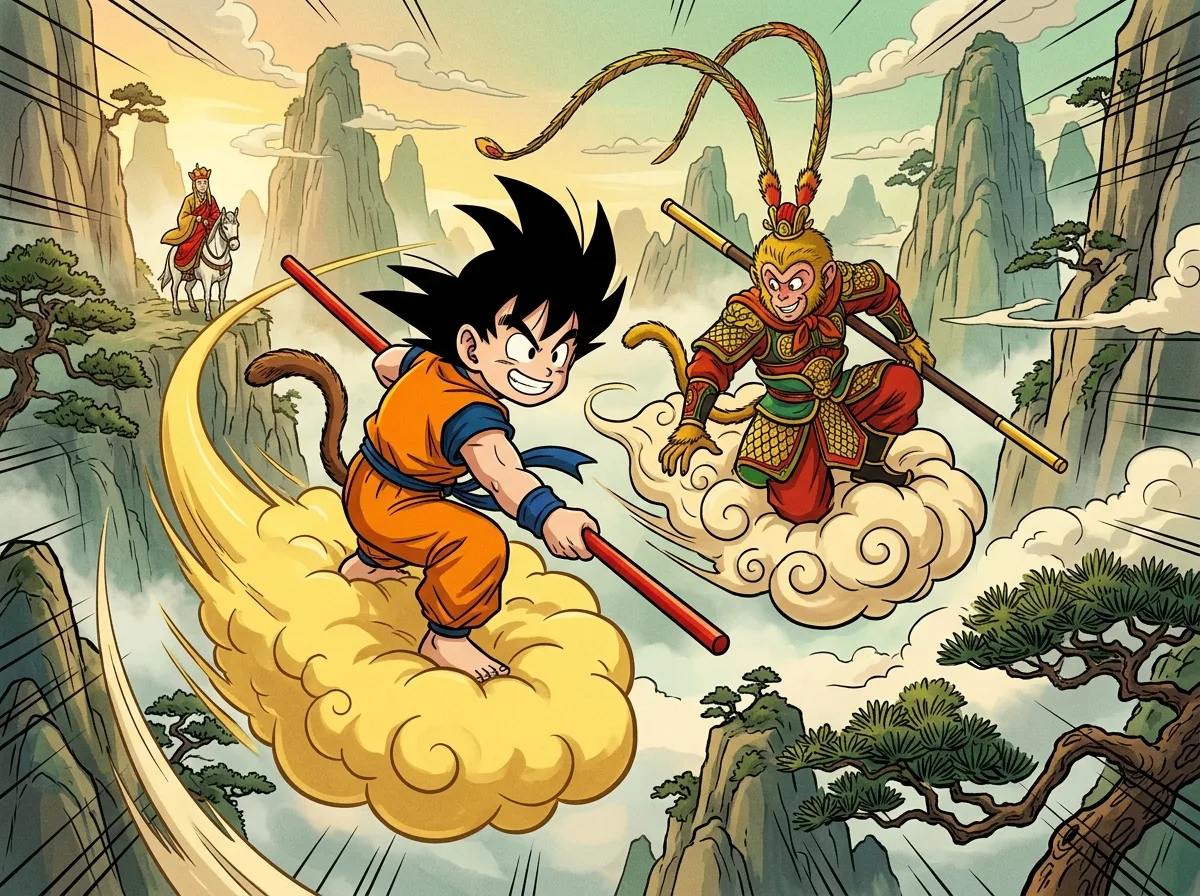
Journey to the West is not a crossover. It is a classic Chinese novel that fans see as a story influence on Dragon Ball, and the links are shared ideas rather than a shared plot. The novel’s hero, Sun Wukong, the Monkey King, is often compared to Son Goku because both are cheerful fighters who love to train, eat heartily, and surprise their enemies.
Fans also point to specific powers. Sun Wukong travels by somersaulting through the clouds, and many readers connect that to Cloud Somersault, the way Goku moves through the sky in Dragon Ball. Others compare Instant Transmission, Goku’s teleporting technique, to the Monkey King’s ability to vanish and reappear far away.
The beast-like form is another common link. Ozaru, the giant monkey form Saiyans take under a full moon, shares a theme with the Monkey King’s transformation into a huge, powerful creature. In both cases, the hero grows stronger by stepping into a wild, animal side of himself.
Dragon Ball’s world also carries Buddhist and Taoist elements, and fans trace many of them back to the classic novel, which blends both traditions. Its heroes train in harsh places, face gods and demons, and deal with destiny. Readers who know the novel often spot those echoes quickly.
Goku’s spiky hair is one of the most debated points. Some fans say its shape resembles the Monkey King’s look, while others treat it as a simple design choice. No single answer has been confirmed, so the question remains open for readers to explore.
Which Journey to the West Characters and Objects Appear in Dragon Ball?
Fans have matched several Journey to the West figures and objects to Dragon Ball, and the strength of each match varies. Most of the links are shared ideas that readers notice, not borrowings that the creators have confirmed.
The clearest comparison is between teachers. In the novel, Subodhi trains Sun Wukong in the arts that make him powerful, and many fans see Master Roshi in that role, since he shapes Goku’s early fighting skills. The parallel is a reader’s interpretation, not a documented source.
Objects draw the most attention. Dragon Balls are often compared to the Cintamani, a wish-granting jewel found in Buddhist and Chinese tradition. Senzu beans get a similar comparison to the pills of immortality linked to Laozi, since both restore strength quickly and both are treated as rare, precious gifts.
Other pairings are looser. Tien Shinhan’s third eye is compared to Erlang Shen, a warrior figure from Chinese myth who carries the same mark. Broly and the Golden Fillet are linked to the gleaming golden weapons of Chinese folklore, where bright metal often signals a dangerous, powerful force.
– Master Roshi and Subodhi: teachers who shape the hero’s skills – Dragon Balls and Cintamani: wish-granting treasures – Senzu beans and Laozi’s pills: restorative gifts – Tien Shinhan and Erlang Shen: a third eye as a warrior mark – Broly and the Golden Fillet: golden imagery tied to raw power
Readers should treat each pairing as a theme shared across stories, not proof that Toriyama drew directly on a particular text.
How Are Dragon Ball Z Fans Shaping Journey to the West Discussions?
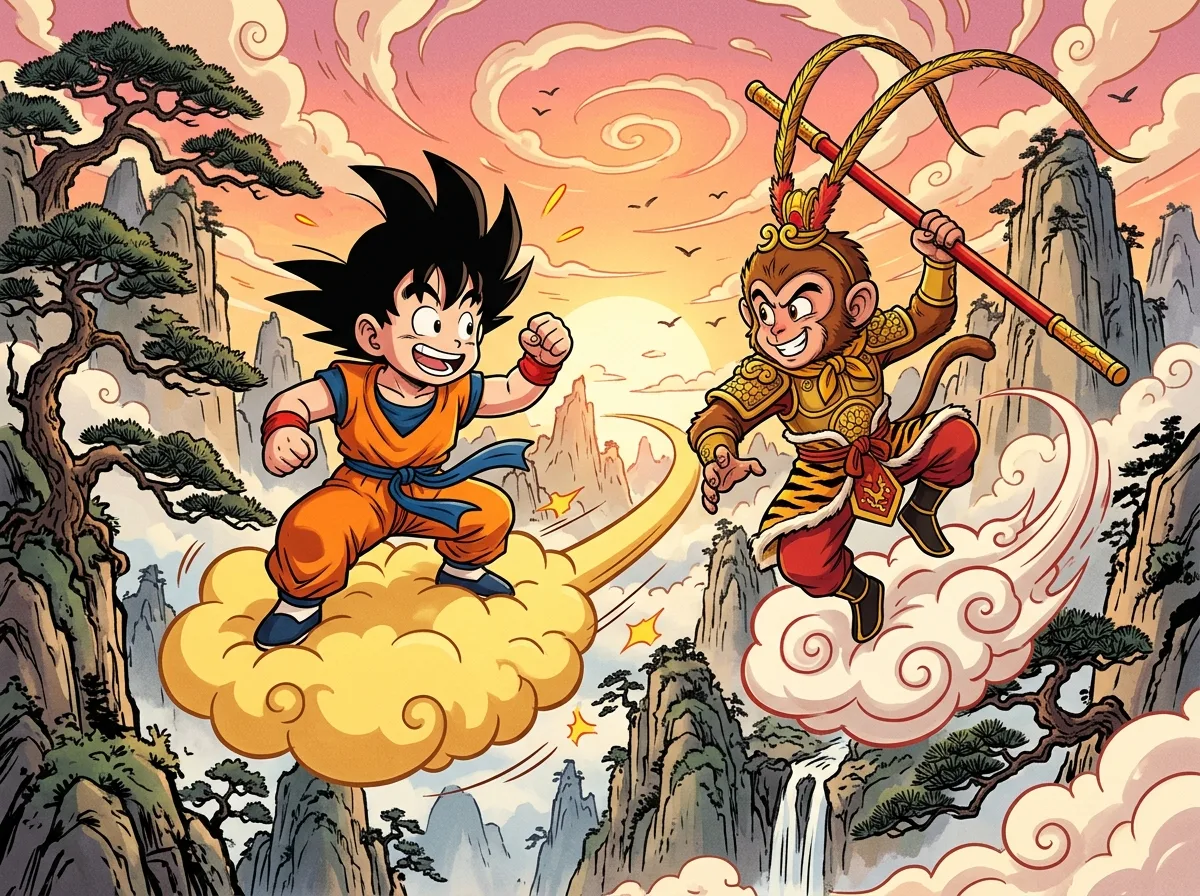
Fans shape Journey to the West discussions by asking “what if” questions that drop Dragon Ball into the classic novel’s world. One Journey to the West research site includes a What If? section that imagines Dragon Balls existing inside the novel’s universe, where a wish-granting treasure would sit among gods, demons, and immortals.
Much of the fan talk links Goku and Sun Wukong, and that conversation often sends new readers to the novel itself. Someone who first enjoyed Goku’s training arcs may pick up the classic to see where the Monkey King’s adventures began. Both heroes are cheerful fighters who love a good meal, so the comparison makes the old story feel fresh.
Readers can use two kinds of sources for two different jobs. Official releases answer factual questions, such as dates, rosters, and credits. Fan archives are better for imagination, such as stories that place Goku beside the Monkey King. Keeping the two apart stops a fan idea from being mistaken for a documented release.
To go further, start with the official releases covered in this article and compare each one against the main Dragon Ball timeline. Note where each project falls in that order and whether it claims a place in the main story or stands apart from it.
Exploring Dragon Ball Crossovers Next
If you’re curious about a specific game, start with its official release page and note the roster, start date, and end date. Those details change from one title to the next, so they are the easiest way to compare projects fairly.
For the bigger picture, build a simple timeline. Start with Arale in Penguin Village, then add Cross Epoch, the 2013 Toriko and One Piece special, Jump Force, and the Fortnite and PUBG Mobile events in the order they arrived. Seeing them side by side shows how the crossovers spread from print to television, fighting games, and online play.
Next, label each entry as official or fan-made. Check the credits and copyright line for Toei Animation, Shueisha, Bandai Namco, or a named game studio. If none appear, treat the work as fan-made, even if it looks professional.
Finally, pick one character you enjoy, such as Vegeta or Arale, and trace where that character appeared. You will likely find that some crossovers featured them prominently while others left them out entirely. That pattern is a useful way to decide which official projects are worth a closer look.
Frequently Asked Questions
1. Is Arale’s Dragon Ball appearance considered canon in the main story?
Arale’s appearance in Dragon Ball Tale 81 is part of the original manga, and Akira Toriyama wrote and drew that chapter himself. Because Toriyama also created Dr. Slump, the meeting happens inside one creative world rather than through a licensing deal. The later Dragon Ball Super episode carried the link into anime, so both appearances are usually treated as part of the wider Dragon Ball story.
2. Did Akira Toriyama and Eiichiro Oda plan Cross Epoch as a series?
Cross Epoch was released as a one-shot, which means it was a single standalone story rather than the start of an ongoing series. It appeared in Weekly Shonen Jump’s double issue released on December 25, 2006, and it pairs Goku with the One Piece cast for that one story. Nothing in its release history points to a planned sequel, so it stands as a complete, self-contained team-up.
3. Which Dragon Ball crossover should a new fan watch or play first?
A new fan who likes short reads should start with Cross Epoch, since it is a single manga one-shot that puts Goku alongside One Piece’s cast. Fans who prefer games can try Jump Force, whose Americas release was announced for February 15, 2019, and which places Dragon Ball Z, One Piece, and Naruto characters on teams of three. Both give a quick feel for how these crossovers work before you move on to longer projects.
4. Where can readers see the Dream 9 special today?
The best place to check current viewing options for the Dream 9 special is Toei Animation’s official website, since the company scheduled the one-hour broadcast. The original air date was April 7, 2013, from 9:00 to 10:00 a.m. in Japan, with regional exceptions. Availability can change over time, so confirm the latest options before you plan to watch.
5. Do the Dragon Ball crossover games from 2005 and 2006 still run online?
Jump Super Stars, released in 2005, and Battle Stadium D.O.N., released in 2006, are older titles, and any online features depend on the publisher keeping their servers running. Check the publisher’s official website or the game’s store page for the current status before planning to play online. If online play has ended, you may still be able to enjoy offline modes on the original hardware, if you have that system.

