
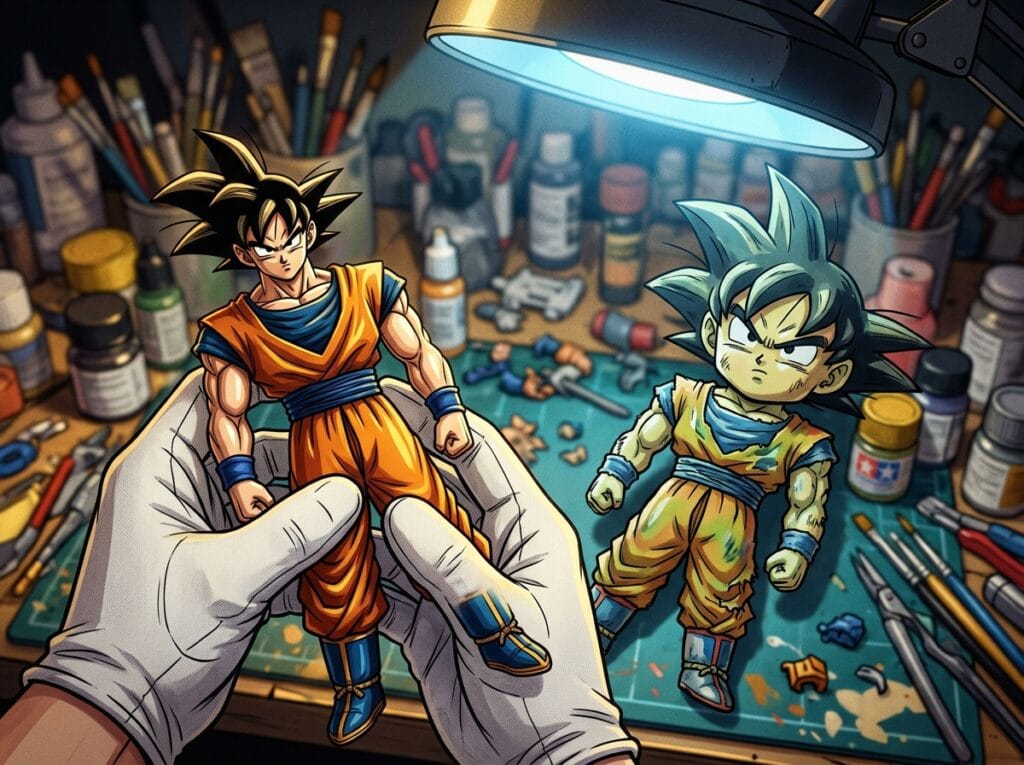
A convincing box and a low price do not prove Dragon Ball figure authenticity. I look at several clues together, including the manufacturer, product number, licensing marks, packaging quality, included parts, seller history, and how the figure compares with official product images. This matters because counterfeit figures can appear across popular Dragon Ball lines and may be difficult to spot at a glance.
The safest approach is to verify information through official sources first, then compare it with trusted collector references and clear marketplace photos. I also treat missing stickers, unusual colors, poor printing, incomplete accessories, and prices that seem too good to be true as warning signs, not automatic proof of a fake.
Key Takeaways
- A convincing box, low price, or authenticity sticker does not prove a Dragon Ball figure is genuine. Verify multiple details together, including the manufacturer, product number, licensing marks, packaging, accessories, figure quality, and official product images.
- Use manufacturer and rights-holder information first, followed by authorized-retailer records and trusted collector references. Compare product numbers, logos, copyright text, barcodes, hologram designs, packaging layouts, and regional markings against the correct release.
- Interpret authenticity stickers and packaging in context: older figures may use earlier hologram designs or lack the current sticker, while packaging can be copied, swapped, or paired with the wrong figure. Missing stickers, poor printing, unusual colors, and mismatched parts are warning signs, not automatic proof of counterfeiting.
- Assess the seller and listing before buying by checking transaction history, clear photos of the actual item, proof of purchase, return protections, and realistic pricing. Several mismatches combined with vague descriptions, copied images, or an unusually low price are strong reasons to avoid the purchase.
Authenticity Stickers
I use the official quality sticker as an important first check when examining newer articulated figure packaging. It may include anti-counterfeit details, such as hologram effects and designs that are difficult to reproduce accurately. However, I never treat one sticker as complete proof of authenticity because counterfeit packaging can copy visible features. I also compare the figure’s product number, licensing marks, box quality, included parts, and official product images.
Date matters when checking the hologram design. Products released before August 2018 may not have the current official quality sticker, so the absence of one does not automatically mean a figure is fake. Older hologram designs were generally used from around 2018 through April 2023, although packaging changes may not match release dates perfectly in every market. I avoid rejecting an older figure simply because its sticker looks different from the latest examples.
From May 2023 onward, a revised anti-counterfeit design began appearing progressively on newer products. I check whether the hologram’s layout, colors, and security details match the period when the figure was made, rather than expecting every box to use the newest version immediately. Finally, I consider the seller’s history, realistic pricing, clear photos, and proof of purchase alongside the packaging evidence. Together, these checks provide a much safer way to judge Dragon Ball figure authenticity than relying on a single sticker.
Packaging Product Numbers and Marks

I compare the box with official manufacturer images before judging Dragon Ball figure authenticity. I look for the correct branding, product number, licensing information, copyright text, and barcode placement. These details should match the character, figure line, release region, and box design shown in reliable official references. Small differences in logo size, text spacing, translations, or label position can be useful warning signs, especially when the seller’s photos show the full package clearly.
Print quality also deserves close attention because genuine packaging usually has sharp images, clean colors, readable text, and precise seams. I check whether regional details, such as language panels, importer labels, safety marks, or release stickers, make sense for where the item was sold. A product number that belongs to a different figure, a barcode printed in an unusual location, or blurry copyright text can suggest a problem, although none of these signs proves a counterfeit by itself. Packaging designs can also change between releases, so I use current official images and compare several examples rather than relying on memory.
A convincing box can still contain a counterfeit figure because packaging may be copied, swapped, or paired with an incorrect item. For that reason, I combine box evidence with the figure’s sculpt, paint, joints, accessories, manufacturer markings, seller history, and price. I also treat missing or suspicious authenticity stickers carefully because sticker styles can vary by product and region, while counterfeiters may copy the stickers themselves. The strongest conclusion comes from several matching details, not from one logo, barcode, or claim that the item is “official.”
Seller History and Price Checks
I treat seller history as a key part of Dragon Ball figure authenticity, not as a minor detail. A seller with a long record of accurate listings, detailed feedback, and clear photos is generally easier to assess than a new account with little information. I also look for a purchase receipt, an authorized-retailer listing, and photos of the actual figure, box, labels, copyright marks, and included parts. A clear return policy gives me added protection if the item does not match the description.
Price can reveal risk, especially when a figure is listed far below the usual value for its release, condition, and rarity. I become cautious when the description is vague, the photos are copied stock images, or the seller avoids showing the bottom of the box and the product number. I also avoid sellers who pressure me to pay outside the marketplace because that can remove useful buyer protections. The phrase “factory original” is not proof by itself, so I look for supporting evidence from the packaging, manufacturing details, and purchase history.
For a stronger check, I compare the listing with official product images and confirm that the manufacturer, product number, licensing marks, colors, sculpt, joints, accessories, and box design all match. Small differences do not automatically prove a counterfeit because packaging can vary by region or production run, but several mismatches deserve caution. I use seller claims and community opinions as supporting clues, while giving more weight to manufacturer information and authorized-retailer records. Combining these checks gives me a much clearer picture than relying on one sticker, one photo, or an unusually convincing description.
Figure Parts, Paint, and Comparisons
I compare a Dragon Ball figure with official product photos before judging its authenticity. I check the face, hair, costume, colors, and overall shape from several angles. A counterfeit may show a mismatched facial expression, soft sculpting, rough paint lines, incorrect skin or clothing colors, or details that look less sharp than the advertised version. I also check trusted collector references because official photos can use special lighting or digitally enhanced images. Product numbers, manufacturer marks, licensing information, and packaging should support what I see on the figure, rather than being treated as proof on their own.
The parts are just as important as the main sculpt, so I confirm that the expected hands, faces, effects, weapons, and alternate parts are included and shaped correctly. Loose joints, poor assembly, gaps, warped pieces, or a stand that differs greatly from official images can be warning signs, especially when several problems appear together. I compare the accessory connection points and stand design closely because copied figures often simplify these areas. A missing item may also result from a seller splitting a set, so I check the listing and packaging before assuming it is counterfeit.
Small production variations do not automatically mean a figure is fake because paint thickness, alignment, joint tightness, and molding can vary between genuine releases. I look for a pattern of differences instead of relying on one imperfect mark, such as slightly uneven paint or a small change in facial printing. When the figure has several mismatched details, an unusually low price, unclear packaging, and no reliable purchase history, I treat it as high risk. This combined comparison is more dependable than trusting a single sticker, seller claim, or visual detail.
Verify Your Dragon Ball Figure Before Buying
The safest approach to Dragon Ball figure authenticity is to check several details together instead of trusting one feature. I compare the manufacturer and product number with official records, then inspect the packaging, licensing marks, authenticity sticker, included parts, and figure details against official product images. Small differences in paint, sculpting, joints, logos, or printed text can matter, but a sticker alone does not prove that a figure is genuine because counterfeit packaging can copy visible security features. I also consider the seller’s history, clear photos, return policy, and price because an unusually cheap listing may signal a problem.
Before buying, I pause and follow the most reliable source order: manufacturer or rights-holder information first, authorized retailer details next, and experienced collector references only as supporting evidence. Marketplace claims and community opinions can help, but I treat them as less reliable when they conflict with official information. If several warning signs appear, such as an incorrect product number, poor packaging, missing parts, unclear licensing, and a price far below normal, I avoid the purchase rather than taking a chance. When a suspicious figure has already been sold to me, I document the listing and packaging, request a refund, and report the listing through the marketplace or relevant rights-holder.
Frequently Asked Questions
1. What is Dragon Ball figure authenticity?
Dragon Ball figure authenticity means confirming that a figure was made and licensed by the official manufacturer. I check several clues together, including the manufacturer, product number, licensing marks, packaging, accessories, seller history, and official product images.
2. Does a convincing box or low price prove a Dragon Ball figure is authentic?
No. Counterfeit figures can have convincing boxes and attractive prices, so I never use either clue as proof by itself. A price that seems too good to be true is a warning sign, especially when other details also look unusual.
3. How useful is an official quality sticker?
An official quality sticker is an important check for many newer articulated figures because it may use hologram effects and other security details. I still compare it with the product number, licensing marks, box quality, included parts, and official images because counterfeit packaging can copy visible sticker features.
4. Can an older articulated figure be authentic without the current authenticity sticker?
Yes. Products released before August 2018 may not have the current official quality sticker, so its absence does not automatically mean the figure is fake. Older hologram designs were generally used from around 2018 through April 2023, while a revised design began appearing progressively from May 2023.
5. What packaging details can reveal a counterfeit Dragon Ball figure?
I look for blurry printing, unusual colors, incorrect logos, poor-quality materials, missing stickers, and product information that does not match official images. These signs do not prove a figure is counterfeit alone, but several problems together deserve careful checking.
6. How can I compare a Dragon Ball figure with an official product?
I compare the figure and box with clear images from the manufacturer or other trusted official sources. I check the sculpt, paint colors, face plates, hands, accessories, packaging layout, product number, and licensing marks for differences.
7. What should I check when buying a Dragon Ball figure from a marketplace seller?
I review the seller’s history, ratings, return policy, and photos of the exact item rather than relying only on stock images. I also ask for clear pictures of the box, authenticity sticker, product number, accessories, and licensing marks before buying.
8. Are missing accessories or unusual colors proof that a Dragon Ball figure is fake?
Not by themselves. Figures can differ because of regional packaging, product versions, or changes between releases, but missing parts and unusual colors are still important warning signs. I compare the item with the correct official release and check several other details before making a decision.

