
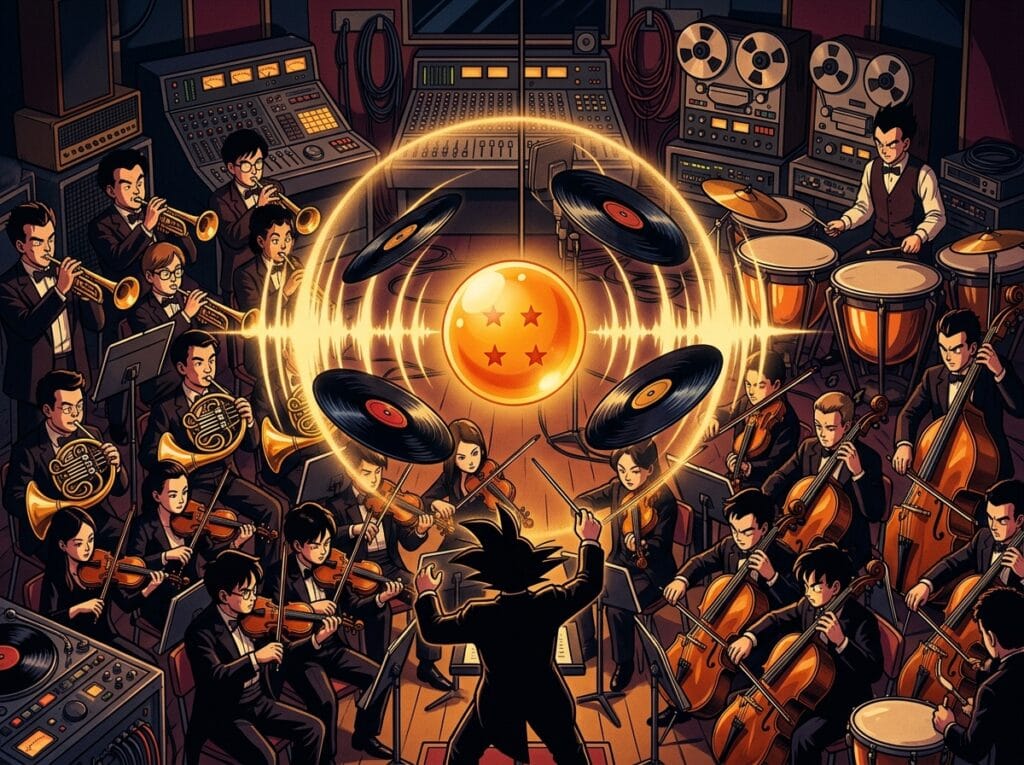
I hear the identity of Dragon Ball in its music as clearly as I hear it in its battles. The series uses suspenseful orchestration, bold martial arts rhythms, jazzy grooves, and unforgettable vocal themes. When I explore Dragon Ball soundtracks, I find a catalog that spans Shunsuke Kikuchi’s defining Japanese scores, theme song collections, films, English dubs, and video games. This range can make it difficult to tell which releases contain background music, songs, or both.
I focus first on the original Japanese anime and film music, including the famous five-CD Great Complete Collection and its 104 tracks. I also place later series and game albums in context. Whether I want the music behind Goku’s earliest adventures, the intensity of Dragon Ball Z, or a specific opening theme, understanding how these releases fit together makes the catalog much easier to explore.
Key Takeaways
- Shunsuke Kikuchi’s scores define the musical identity of the original Dragon Ball and much of Dragon Ball Z, blending orchestral drama, jazz, funk, suspense, and martial arts rhythms to shape both battles and quieter character moments.
- The 1994 five-CD Great Complete Collection is an excellent starting point, containing 104 tracks and nearly six hours of music, but it is not a fully exhaustive archive of every Dragon Ball recording.
- Each era adds a distinct musical direction: Dragon Ball GT emphasizes reflective scoring and memorable vocal themes, Dragon Ball Kai varies by release because of score replacements, and Dragon Ball Super uses Norihito Sumitomo’s modern sound.
- Dragon Ball’s music extends beyond television scores into theme-song collections, films, English dubs, and video games, so listeners should check track listings and editions to find background music, vocal songs, or alternate soundtrack traditions.
Introduction To Dragon Ball Soundtracks
I use “Dragon Ball soundtracks” to describe more than the music heard quietly beneath a scene. The term includes background scores, battle themes, opening and ending songs, character songs, film music, and albums built from those recordings. In the original Japanese anime, Shunsuke Kikuchi’s work is especially important. He blended orchestral drama with jazz, funk, suspense, and martial arts influences. A notable example is the 1994 five-CD Great Complete Collection, which gathered 104 tracks and nearly six hours of music, although it was not a complete archive.
The sound of the series also changed across different eras. The original Dragon Ball and Dragon Ball Z are closely linked to Kikuchi’s bold themes, while Dragon Ball GT introduced a different musical direction and its own memorable songs. Dragon Ball Kai revisited earlier material with an updated presentation and score changes, while Dragon Ball Super brought a modern style through Norihito Sumitomo’s music. The films add another layer by combining new scores with vocal songs that give major battles and emotional scenes a greater sense of scale.
I also look at music beyond the main Japanese television releases. English dubs created alternate soundtrack traditions, sometimes replacing the original score and songs with new music. Video games developed their own battle themes, menu tracks, and character-focused arrangements. Comparing albums, recurring musical ideas, and songs connected to major scenes helps explain why Dragon Ball music remains nostalgic for longtime fans while still welcoming newer viewers. This approach treats the soundtrack as both a collection of recordings and a key part of how each Dragon Ball era feels.
Shunsuke Kikuchi’s Dragon Ball Score

When I listen to the original Dragon Ball and Dragon Ball Z, I hear Shunsuke Kikuchi’s score as a major part of their identity. He combined orchestral writing with jazz, funk, suspense, and martial arts influences, giving each scene its own energy and character. Brass and percussion can make a tournament feel fast and physical, while tense strings and darker harmonies build mystery around a new threat. These recurring musical ideas connect comedy, adventure, training, and dramatic battles across both series. For me, the score can make a familiar scene memorable before the characters even speak.
The 1994 five-CD Great Complete Collection is one of the most useful snapshots of Kikuchi’s Dragon Ball soundtracks. It contains 104 tracks and nearly six hours of music. Its size makes it valuable for nostalgic listeners because it gathers a broad range of background cues from the original anime and Dragon Ball Z in one release. Still, “Great Complete Collection” should not be read as literally complete. The wider catalog also includes theme songs, vocal releases, film music, alternate versions, and material that was not included in this set. I see it as an extensive archive of Kikuchi’s television score rather than the final word on every piece of Dragon Ball music.
GT Kai And Modern Dragon Ball Music
Akihito Tokunaga gave Dragon Ball GT a sound that felt more reflective and modern than the earlier series while still supporting its action, comedy, and dramatic turns. His background score moves between energetic battle music, atmospheric space travel pieces, and emotional themes that suit the search for the Black Star Dragon Balls. GT is also remembered for its vocal themes, especially “DAN DAN 心魅かれてく,” its opening song. I find that the contrast between Tokunaga’s instrumental score and the strong pop songs gives the Dragon Ball GT soundtrack much of its distinct identity.
Dragon Ball Kai has a more complicated soundtrack history because Kenji Yamamoto’s original score was withdrawn after musical similarities to existing works were identified. For later broadcasts and releases, much of that music was replaced, so Kai’s soundtrack varies depending on which version I hear. Norihito Sumitomo later composed new music for Dragon Ball Kai The Final Chapters, blending orchestral action cues with darker dramatic passages and lighter character themes. This history makes Kai especially interesting to me because its music is not only part of the viewing experience. It also reflects how the series changed across different releases.
Themes Films Dubs And Games

Japanese releases established Dragon Ball’s core musical identity through vocal themes, image songs, and background scores. Opening and ending songs often marked changes in tone, while image songs gave characters and ideas their own musical voice. In the original Dragon Ball and Dragon Ball Z, I most strongly associate the dramatic orchestral writing, jazz, funk, suspense, and martial arts motifs with composer Shunsuke Kikuchi. The 1994 Great Complete Collection gathered 104 tracks across five CDs, showing how much music existed beyond the songs heard during regular broadcasts. Theatrical films expanded that catalog with larger scores and memorable theme songs designed to heighten major battles and emotional moments.
Regional releases created a second musical identity for many viewers. Some English dub versions replaced the original Japanese background music, opening songs, or ending presentations, so a scene could feel different even when the animation stayed the same. I see this contrast as a useful way to understand why fans may feel equally attached to different versions of the series. The Japanese music often emphasizes distinctive melodies and vocal performances, while dub-era music can recall the sound of a particular television broadcast or childhood viewing experience. Neither response is unusual because soundtrack memories are closely tied to when and where someone first watched Dragon Ball.
Video game albums carried these musical ideas into menus, battles, character themes, and training stages. The Budokai soundtracks appeal to listeners who enjoy compact fighting game cues, memorable melodies, and arrangements that connect gameplay with the anime’s dramatic style. Dragon Ball FighterZ offers a more modern sound, using energetic rock, electronic textures, and cinematic intensity to match its fast competitive action. I find that this difference helps explain why Budokai can feel nostalgic and arcade-like, while FighterZ may appeal more to listeners seeking a polished contemporary battle score. Together, these releases show that Dragon Ball soundtracks are not one fixed collection. They form a broad catalog shaped by language, format, era, and personal memory.
Memorable Scenes And Musical Motifs
I hear Shunsuke Kikuchi’s influence most clearly in the way recurring themes shape battles and character moments. His orchestral, jazz, funk, and suspense-driven ideas can make a fight feel dangerous, playful, or mysterious before the action even changes. A bold brass phrase may signal martial arts confidence, while tense strings and sharp percussion build pressure during a transformation or sudden attack. Training scenes often use lighter rhythms to show progress, comedy, or stubborn determination, giving the characters room to grow between major conflicts. These patterns are a key reason the classic Dragon Ball soundtracks feel connected across different arcs instead of sounding like unrelated tracks.
The later scores create a different listening experience while still relying on musical memory. Dragon Ball GT often places more emphasis on vocal songs, especially its opening and ending themes, which give the series a reflective and adventurous tone. Dragon Ball Kai updates the sound of the older story with a cleaner, more modern presentation while reminding longtime viewers of familiar dramatic beats and emotional turning points. I also notice how a theme can change meaning over time, becoming a reminder of sacrifice, friendship, or a character’s first major victory instead of remaining only a simple battle cue. That blend of recurring motifs, new vocal styles, and updated arrangements helps the music connect nostalgic fans with viewers discovering the series for the first time.
Conclusion On Dragon Ball Soundtracks

Dragon Ball and Dragon Ball Z are most strongly defined by Shunsuke Kikuchi’s background scores, which combine orchestral drama, jazz, funk, suspense, and martial arts motifs. The original Dragon Ball often sounds playful and adventurous, while Z expands those ideas into heavier themes for battles, sacrifices, and major transformations. A useful starting point for classic score music is the 1994 five-CD Great Complete Collection, which contains 104 tracks and nearly six hours of material, although it is not literally complete. Dragon Ball GT takes a different path with Tokunaga’s score and a more reflective mood, while its vocal themes, including “Dan Dan Kokoro Hikareteku,” give the series a distinct identity. Dragon Ball Kai uses a revised musical approach, with Kenji Yamamoto’s original score later replaced in many releases by Kikuchi’s music, so the exact album or edition matters.
The films broaden the catalog with movie-specific arrangements, ranging from Kikuchi’s early work to Norihito Sumitomo’s modern sound for newer productions. Vocal releases are just as important as instrumental albums because songs such as “Makafushigi Adventure,” “Cha-La Head-Cha-La,” and “We Gotta Power” carry much of the franchise’s nostalgic appeal. English dubs can sound noticeably different because some versions replace the Japanese score with newly written music, creating a separate listening tradition rather than a simple translation of the original soundtrack. Video games add another branch through arranged themes, new battle music, and orchestral or electronic styles that revisit familiar ideas in a more modern form. I recommend choosing Japanese score collections for scene-setting music, theme song or hit song albums for vocals, and game or film albums for polished modern arrangements.
For a newcomer, I would begin with the Great Complete Collection or another well-labeled Kikuchi compilation. Then I would explore the main vocal collections to hear how the opening and ending songs changed across each era. GT is worth adding for its contrasting mood and memorable songs, while Kai is best approached by checking whether a release contains its original score or the later Kikuchi-based music. Film albums are useful when I want focused suites tied to a particular story, especially from the newer movies. Game soundtracks work well after that because they show how Dragon Ball’s musical language can shift from orchestral adventure to energetic electronic and concert-style arrangements. Taken together, these releases show that Dragon Ball soundtracks are not one single catalog. They represent a long musical history shaped by series, films, dubs, games, and changing generations of listeners.
Why Dragon Ball Soundtracks Still Matter
When I look at Dragon Ball soundtracks as a whole, Shunsuke Kikuchi’s music remains the foundation of the original Dragon Ball and Dragon Ball Z. His scores combine orchestral action, jazz, funk, suspense, and martial arts themes to give battles and quieter scenes their distinct energy. The 1994 five-CD Great Complete Collection gathered 104 tracks and nearly six hours of material, although it was not a complete archive. Theme songs and vocal releases also became important parts of the series’ identity, turning opening and ending music into lasting fan favorites.
The later soundtracks expanded that musical world through new series, films, English language releases, and video games, giving each branch its own sound and audience. I think their greatest strength is how clearly the music supports memorable moments, from tense transformations to comedic training scenes and emotional farewells. Even when I do not know a track’s title, I can often recognize its mood immediately. For nostalgic fans and newer viewers alike, Dragon Ball soundtracks show how background music and songs can shape the personality of an entire anime franchise.
Frequently Asked Questions
1. What do Dragon Ball soundtracks include?
Dragon Ball soundtracks include background music, opening and ending themes, character songs, film music, and video game recordings. I also use the term for albums that combine several types of music, so I check each release before buying or streaming it.
2. Who composed the original Dragon Ball music?
Shunsuke Kikuchi composed the main Japanese scores for the original Dragon Ball and much of Dragon Ball Z. His music combines orchestral drama, suspense, jazz, funk, and martial arts rhythms, creating the sound most closely linked with Goku’s early adventures and major battles.
3. What is the Dragon Ball Great Complete Collection?
The Great Complete Collection is a five-CD set released in 1994 with 104 tracks and nearly six hours of music. It is one of the best starting points for listeners who want a broad collection of original Dragon Ball and Dragon Ball Z material, but it is not a completely exhaustive archive.
4. Does the Great Complete Collection contain every Dragon Ball song?
No, the Great Complete Collection does not contain every Dragon Ball recording. It gathers a large selection of background music and songs, but other releases cover additional themes, character songs, film tracks, and alternate versions.
5. How are Dragon Ball soundtrack albums different from theme song collections?
Soundtrack albums often focus on background music used during battles, emotional scenes, and story moments. Theme song collections usually emphasize openings, endings, vocal songs, and character tracks, so I check the track list carefully when I want instrumental score instead of songs.
6. How did the music change between Dragon Ball, Dragon Ball Z, GT, Kai, and Super?
Dragon Ball and Dragon Ball Z are strongly associated with Shunsuke Kikuchi’s dramatic and energetic style. Dragon Ball GT introduced a different musical direction, Dragon Ball Kai updated the presentation of earlier material, and Dragon Ball Super brought a modern score led by Norihito Sumitomo.
7. Are Dragon Ball movie soundtracks included with the television series music?
Some collections include movie themes or selected film tracks, but movie music is often released separately. I recommend looking for an album labeled with the specific film or a movie music collection when I want the score and songs from a particular Dragon Ball movie.
8. Where do Dragon Ball video game soundtracks fit in the catalog?
Video game soundtracks form a separate part of the Dragon Ball music catalog. They may include new arrangements of familiar themes, original game music, or songs created for a specific title, so I do not treat them as replacements for the Japanese anime and film scores.

