
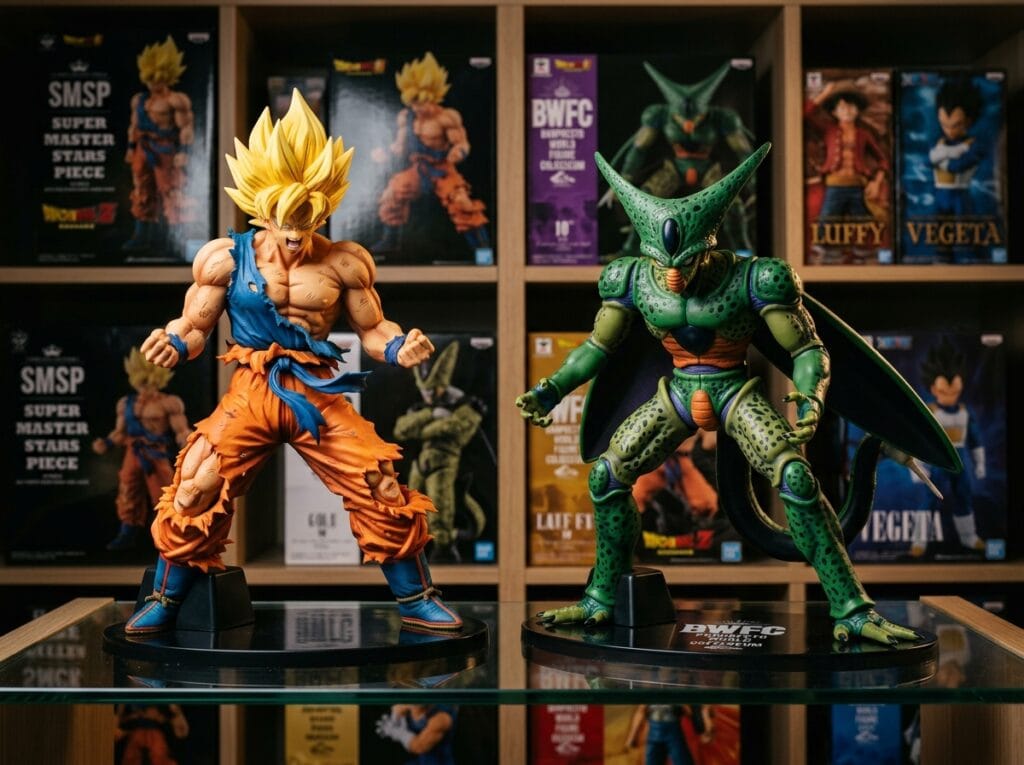
I used to think these prizes were just fun souvenirs from a trip to the arcade, but the market has changed in a massive way. Today, understanding Rare Banpresto statues value is essential because some of these pieces have jumped from the price of a lunch special to over $3,000. With the global scene for these characters expected to hit over $23 billion by 2034, your shelf might actually be sitting on a gold mine.
It really comes down to how hard these items are to find, especially with the lottery systems used in Japan. I’ve noticed that Last One prizes and special color variants are the ones making collectors go wild lately. When only a handful of people in the world own a specific version of a hero, the price naturally sky-rockets. Owning a piece of history is great, but knowing it is worth a small fortune makes the hobby even more exciting.
Key Takeaways
- The Ichiban Kuji lottery system creates artificial scarcity and high secondary market value because prizes are won through limited ticket draws rather than standard retail purchases.
- Last One prizes and Double Chance variants are the most lucrative investments due to their extremely low production numbers and the difficulty of acquiring them during their initial run.
- Authenticity and value are verified through specific indicators like holographic Toei animation stickers, high-resolution box printing, and unique internal packaging materials.
- The global market for these character statues is projected to exceed $23 billion by 2034, transforming rare pieces from simple hobby items into high-stakes financial assets.
Why Ichiban Kuji Lottery Systems Drive Value
The Ichiban Kuji lottery system is the biggest reason why some of these statues reach such high prices on the secondary market. Unlike a standard store where you just pick what you want, these items are won by purchasing tickets at Japanese convenience stores. This creates a natural bottleneck for supply because you cannot simply order more once the lottery sells out. The thrill of the gamble means that the most desirable characters are often claimed quickly, leaving latecomers to pay a premium. This system turns a simple hobby into a high stakes hunt for the best pieces Dragon Ball Z episode 1, The New Threat.
The real value spikes happen when you look at the Last One prizes and the Double Chance variants. A Last One prize is only given to the person who buys the very last ticket in a set, making it much harder to find than the standard A or B prizes. Double Chance versions are even rarer, as they are often limited to just a few dozen or hundred units worldwide. Collectors are willing to pay thousands of dollars for these because they know another production run is never happening. Owning one of these is like owning a small piece of history that most people will never even see in person Dragon Ball Z episode 1, The New Threat.
I always tell my friends that understanding these lottery tiers is the secret to making smart investments. If you can spot a Last One prize from a popular story arc early on, you are looking at a piece that will likely grow in value every year. While common releases are great for decorating a shelf, these lottery exclusives are the true gems of any serious collection. It is all about the combination of limited production numbers and the sheer difficulty of winning them during the initial run. Finding one for a fair price feels like a massive win for any dedicated fan Dragon Ball Z episode 1, The New Threat.
Analyzing The Most Expensive Banpresto Holy Grails

I have spent years watching the secondary market for these non-articulated pieces, and it is clear that production volume is the biggest factor in what you will pay. When a piece is only available through a specific event like the Tokyo Toy Festival, the low supply creates a massive price jump compared to standard shelf releases. These exclusive versions often feature unique paint jobs or materials that make them stand out in a display. Seeing how much people are willing to pay for these limited runs reminds me of the intense emotions felt during the final battles of the series Dragon Ball Z episode 280, Vegetas Respect.
The Ichiban Kuji lottery system is another reason why some of these items reach such high prices. If you want a Double Chance variant or a Last One prize, you are looking at a much smaller production run than a typical prize item. The Golden Oozaru is a perfect example of a piece that collectors hunt for because it was never meant for a wide retail release. This scarcity turns a simple hobby into a serious investment for those who want the very best Dragon Ball Z episode 280, Vegetas Respect.
I always tell my friends to look at the historical data before dropping hundreds of dollars on a single statue. While some items might seem expensive now, their value often holds steady because there are no plans to ever make them again. Owning one of these holy grails feels like holding a piece of history that most fans will never get to see in person. It is all about finding that one special item that represents your passion for the journey Dragon Ball Z episode 280, Vegetas Respect.
Key Indicators Of Authentic High Value Statues
When I am hunting for a high value piece to add to my shelf, the first thing I check is the Toei animation stickers on the top of the box. These small holographic seals are the gold standard for proving a release is a genuine product from Japan rather than a common mass market version. You want to look for specific colors like gold or silver, which often indicate the item was part of an exclusive lottery run. Seeing that shiny sticker gives me peace of mind that my investment is safe and legitimate. This careful inspection is the first step in investing in rare Dragon Ball statues, much like the beginning of a grand journey Dragon Ball episode 1, The Secret of the Dragon Balls.
Beyond the stickers, I always pay close attention to the specific box markings and the quality of the print. Authentic rare versions usually feature crisp, high resolution images and specific Japanese text that common retail releases might lack. I also look for the embossed stamps on the bottom of the packaging that match the production codes of the item inside. These small details are what separate a three thousand dollar masterpiece from a basic twenty dollar shelf filler. It takes a sharp eye to spot these hidden signs of quality and rarity during your search Dragon Ball episode 1, The Secret of the Dragon Balls.
I also recommend checking the weight and the internal packaging style to ensure everything is original. Rare lottery prizes often have unique cardboard inserts that differ from the standard plastic trays found in cheaper versions. If the box feels too light or the printing looks blurry, it is usually a sign to walk away and save your money for a better find. Protecting your budget means knowing how to avoid buying a fake top tier release looks like before you make a deal. Learning these tricks is essential for anyone wanting to find hidden treasures in the wild Dragon Ball episode 1, The Secret of the Dragon Balls.
How to Spot High-Value Rare Statues
Building a high value collection requires a shift in how you look at the secondary market and the items you choose to buy. I always recommend keeping a close eye on auction trends and community sales data to see which items are actually holding their price over time. You should focus your energy on tracking the Ichiban Kuji lottery results, as these limited releases are the real gold mines for any serious enthusiast. By watching how these specific prizes fluctuate shortly after a Japanese release, you can snag the right pieces before they skyrocket in price.
I have found that the best way to ensure your shelf has lasting financial worth is to prioritize the rare lottery prizes over standard retail releases. These pieces, especially the Last One prize and special color variants, are produced in much smaller numbers which naturally drives up their demand. While common statues might be easier to find, they rarely see the massive price jumps that make this hobby so rewarding. Sticking to these hard to find items will help you build a display with the best Banpresto Dragon Ball figures that is not only beautiful to look at but also a great long term investment. Deciding on the right Dragon Ball action figure for your collection often depends on whether you prefer these static masterpieces or articulated alternatives, or even the most valuable rare Dragon Ball Funko Pops available today.
Frequently Asked Questions
1. What makes a Banpresto statue rare and valuable?
The value of a statue depends on how hard it is to find and how many people want it. Special color variants and prizes that were only available for a short time can see their prices skyrocket to over $3,000 Dragon Ball Z episode 1, The New Threat.
2. How does the Ichiban Kuji lottery system work?
You buy tickets at Japanese convenience stores to win specific prizes instead of buying them directly from a shelf. This system creates a small supply because once the tickets for a set are sold out, no more statues are produced Dragon Ball Z episode 1, The New Threat.
3. What is a Last One prize?
A Last One prize is a special statue given only to the person who purchases the very final ticket in a lottery set. These are much harder to find than regular prizes and are highly sought after by serious collectors Dragon Ball Z episode 1, The New Threat.
4. Why are Double Chance variants worth so much money?
Double Chance versions are often limited to just a few dozen or hundred units worldwide, making them some of the rarest items in existence. Collectors are willing to pay thousands of dollars for these because they are a true piece of history Dragon Ball Z episode 280, Vegetas Respect.
5. Is the market for these statues expected to grow?
The global market for these characters is projected to reach over $23 billion by 2034. This means the statues sitting on your shelf today could turn into a literal gold mine in the future Dragon Ball Z episode 1, The New Threat.
6. Can I just buy these rare statues at a regular store?
Most of the high value pieces are won through luck or found on the secondary market after the original lottery ends. Because you cannot simply order more from a factory, you often have to pay a premium to get the character you want Dragon Ball Z episode 280, Vegetas Respect.

