The Milky Way is a massive place, and keeping it safe from planet-level threats takes more than just brute strength. For over 10 million years, an elite group of peacekeepers has been patrolling the stars, but their internal rankings have largely been a mystery until now. Understanding the galactic patrol hierarchy is the best way to see how a relatively small group manages to police an entire universe. It is not just about who can punch the hardest, it is about a structured chain of command that starts with a royal leader and trickles down to specialized field agents.
From the quirky Galactic King sitting at the top to the legendary elites like Merus, every member has a specific role to play in maintaining cosmic order. While the organization might seem small compared to the threats they face, their rigid structure allows them to cover thousands of sectors at once. I have always found it fascinating how such a simple chain of command can handle everything from petty space pirates to ancient wizards. Seeing how these ranks function gives us a much better look at the everyday lives of the heroes working behind the scenes in Universe 7.
Key Takeaways
- The Galactic Patrol maintains cosmic order through a rigid three-tier hierarchy led by the Galactic King, who coordinates operations across millions of stars from a central command hub.
- Elite Patrolmen like Merus are assigned specific sectors—sometimes numbering in the hundreds—to manage high-level threats that exceed the capabilities of standard rank-and-file officers.
- The organization ensures universal safety by remaining flexible enough to deputize external warriors like the Z-Fighters when ancient, god-tier threats overwhelm their previous military structure.
- Operational success over 10 million years is driven by dividing the Milky Way into manageable sectors, allowing a relatively small force to effectively police vast stretches of space.
The Galactic King And Central Command
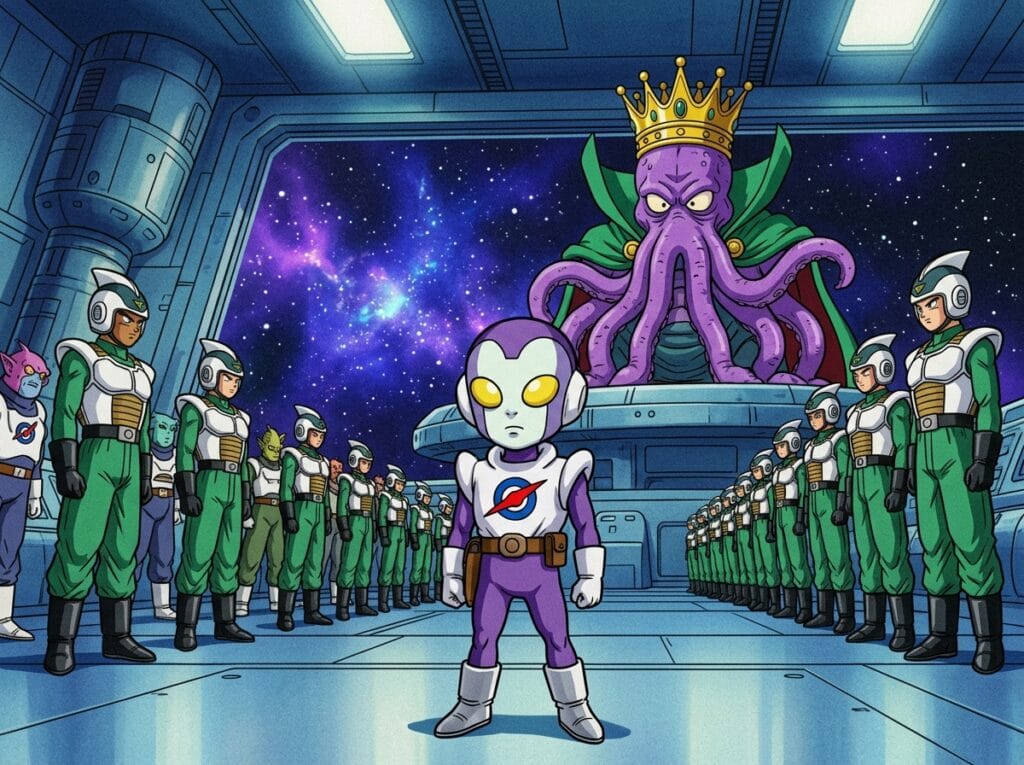
At the very top of the Galactic Patrol sits the Galactic King, a green, octopus-like leader who calls the shots for the entire organization. I find it fascinating that while he might look a bit unassuming, he carries the weight of the entire Milky Way on his shoulders from his massive space station headquarters. He is responsible for coordinating the efforts of all patrolmen and ensuring that dangerous criminals are kept behind bars. This supreme leader manages a complex network of communication to keep tabs on every sector of space Dragon Ball Super manga chapter 2, Goku Goes to King Kais.
The central command center functions as the heart of the organization, acting as a high-tech hub where the King monitors cosmic threats like Moro. I love how the manga shows the scale of this operation, proving that the patrol is much more than just a few guys in suits. From this base, the King can deploy elite officers like Merus or Jaco to handle specific planetary crises as they arise. It is through this strict hierarchy that the King manages to maintain a sense of peace across millions of stars Dragon Ball Super manga chapter 43, Galactic Patrol Prisoner.
While the King oversees the big picture, he relies heavily on his elite members to execute his commands in the field. I think it is cool how the hierarchy allows for high-ranking officers to have a lot of independence while still answering directly to the throne. This structure was especially important during the search for the Dragon Balls and the battle against the planet-eater. The King ensures that every officer knows their rank and their specific sector responsibilities to keep the galaxy running smoothly Dragon Ball Super manga chapter 48, The Proper Wish.
Elite Patrolmen And Sector Assignments

The Galactic Patrol operates on a massive scale, but the real heavy lifting is done by a handful of Elite Patrolmen who oversee vast stretches of space. While standard officers might handle local disputes or minor criminals, elites like Merus are responsible for maintaining peace across specific sectors numbering in the hundreds of different star systems at once. Merus specifically managed 150 sectors, a feat that requires incredible speed and a deep understanding of cosmic law. This hierarchy ensures that the Galactic King can maintain order throughout the Milky Way without needing millions of soldiers. We really get to see how this structure works when the organization scrambles to deal with the threat of Moro in Dragon Ball Super manga chapter 43.
The secret behind an elite officer’s ability to police such a large territory often comes down to their raw power and specialized training. In the case of Merus, his efficiency was so high that he could neutralize dangerous convicts before they even realized he was there. It was later revealed that his superhuman skills actually came from his status as an Angel in training, which gave him a level of mastery far beyond any mortal. This explains why he was the top officer in the organization and why the patrol relied on him for the most dangerous missions. His true nature and the limits of his intervention are key plot points during the struggle against the planet eater in Dragon Ball Super manga chapter 63.
Even without Angel powers, the elite tier of the patrol uses advanced technology and strategic sector assignments to keep the galaxy safe. Each elite officer is assigned a specific number of sectors based on their proven combat ability and track record of successful arrests. By dividing the galaxy into these manageable chunks, the Galactic King ensures that no corner of the universe is left completely unguarded. Understanding the inner workings of the Galactic Patrol organization is what has allowed the organization to survive for over 10 million years despite the constant rise of powerful villains. You can see the full scale of their headquarters and the diversity of their elite ranks when the heroes first arrive at their base in Dragon Ball Super manga chapter 44.
Standard Officers And The Deputized Z-Fighters
The daily life of a standard Galactic Patrolman is usually far less glamorous than you might expect for a space traveler. Officers like Jaco spend most of their time patrolling assigned sectors, monitoring for minor criminal activity, and filing endless reports directly to the Galactic King. While they are equipped with advanced technology and standard-issue blasters, most rank-and-file members lack the raw power to handle universal threats on their own. Their primary goal is to maintain basic order across the Milky Way, often relying on their elite status to intimidate low-level thugs. We see this dynamic clearly when Jaco struggles to manage even the most basic tasks without getting distracted by his own ego or snacks Dragon Ball Super manga chapter 2.
When the ancient wizard Moro escaped from prison, the hierarchy had to adapt by bringing in outside help to save the universe. This led to the temporary deputize external warriors like the Z-Fighters, who were given official Galactic Patrol insignias to act as special agents. Unlike the standard officers, Goku and Vegeta were granted a unique status that allowed them to bypass traditional training and jump straight into high-stakes combat. This expansion of the ranks showed that the organization is willing to be flexible when their elite members like Merus are pushed to their limits. The arrival of these powerful warriors on the battlefield completely changed the tide of the war against the Moro Corps Dragon Ball Super manga chapter 58.
The dynamic between the permanent staff and these temporary recruits created a fascinating shift in how the intergalactic police force operates. While the Z-Fighters focused on the heavy hitting, the standard officers provided essential logistical support and backup during the chaotic planetary invasions. This hierarchy allowed the organization to function as a cohesive unit, blending the tactical knowledge of the patrolmen with the overwhelming strength of the Saiyans. It was a rare moment where we saw the Galactic King delegate authority to outsiders for the greater good of the galaxy. This collaboration proved that even a rigid military structure needs the help of heroes to survive a cosmic crisis Dragon Ball Super manga chapter 60.
The Galactic Patrol’s Order and Scale
The Galactic Patrol hierarchy does a fantastic job of making the Dragon Ball universe feel grounded and incredibly vast. By establishing a clear chain of command from the Galactic King down to standard patrolmen, the series gives us a sense of scale that goes far beyond just Earth or Namek. It is fascinating to see how a group of relatively regular fighters manages to maintain order across millions of planets while powerful threats are always lurking in the shadows. This structure helps bridge the gap between the everyday citizens of the galaxy and the god-tier warriors like Goku and Vegeta.
Looking back at the Moro arc, the importance of this organized force becomes even more apparent. Seeing elite members like Merus handle massive sectors shows us that there is a whole world of heroes working behind the scenes to keep the peace. Even though our main characters often have to step in for the biggest threats, the patrol keeps the world feeling organized and lived-in. I love how this system adds layers to the lore, making Universe 7 feel like a real place with its own rules, history, and protectors. You can even use a Galactic Patrol Rank Calculator to see where you would fit into this massive cosmic organization.
Frequently Asked Questions
1. Who is the leader of the Galactic Patrol?
The Galactic King is the supreme leader who oversees the entire organization from his massive space station. He uses his position to coordinate patrolmen across the Milky Way and monitor serious threats like Moro Dragon Ball Super manga chapter 2.
2. How long has the Galactic Patrol been protecting the universe?
This elite group of peacekeepers has been patrolling the stars for over 10 million years. Their long history and rigid structure allow them to maintain cosmic order across thousands of different sectors Dragon Ball Super manga chapter 43.
3. Who are the most powerful members of the patrol?
Elite agents like Merus represent the highest level of field agents within the organization. These legendary individuals handle the most dangerous criminals that standard patrolmen cannot manage on their own Dragon Ball Super manga chapter 42.
4. How does the Galactic Patrol manage such a large area?
The organization uses a structured chain of command that divides the universe into specific sectors for individual agents. This system allows a relatively small group to police the entire Milky Way effectively Dragon Ball Super manga chapter 2.
5. What kind of threats does the hierarchy handle?
The chain of command is designed to deal with everything from petty space pirates to ancient, world-ending wizards. Central command monitors these threats and dispatches the appropriate rank of officer to handle the situation Dragon Ball Super manga chapter 43.
6. Where is the Galactic Patrol headquartered?
The headquarters is located on a massive space station where the Galactic King resides. This high-tech hub serves as the heart of all communications and operations for the entire patrol Dragon Ball Super manga chapter 2.