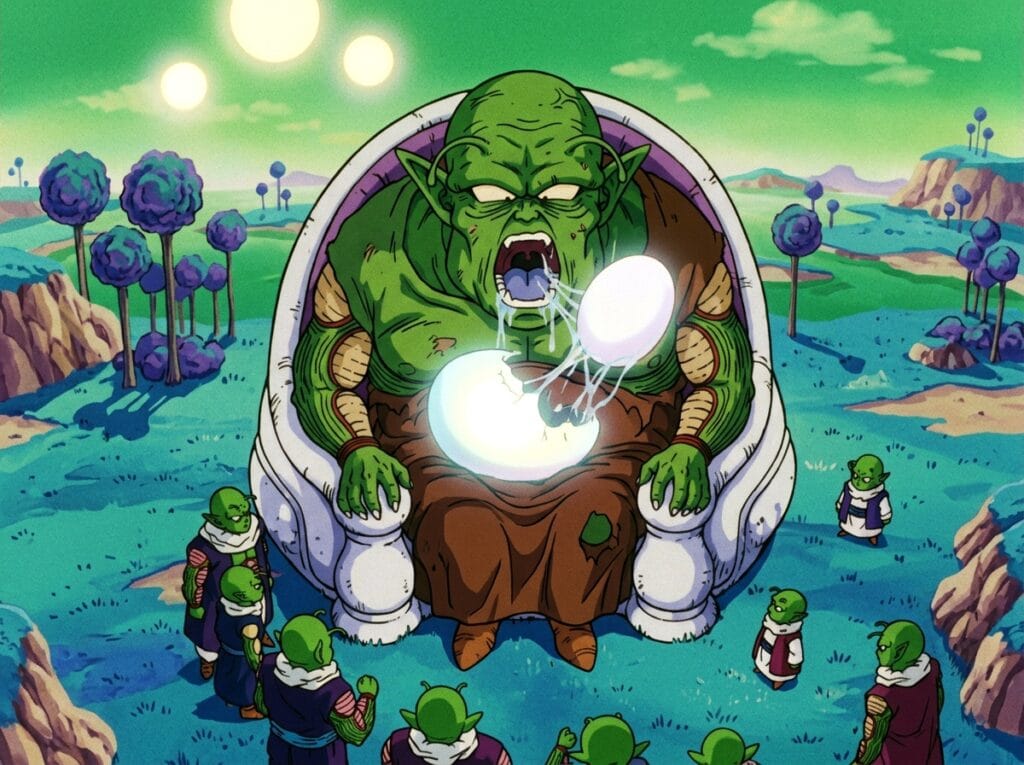
When I first saw King Piccolo spit out an egg, I realized the Namekian life cycle was unlike anything else in the universe. These fascinating beings live for hundreds of years and survive almost entirely on water, skipping the need for food altogether. While they were once feared as demons, we now know they are a sophisticated alien race with a biology that is as efficient as it is strange Dragon Ball Z episode 54, Guru’s Gift.
The way they grow their population is truly unique because a single parent can produce an entire village through asexual reproduction. Since they can control the traits of their children during the birthing process, every new generation is perfectly designed for its role in society. Understanding how they go from a small egg to a powerful warrior helps us appreciate just how resilient the people of Namek really are Dragon Ball Z episode 280, Vegeta’s Respect.
Key Takeaways
- Namekians are a mono-gendered race that reproduces asexually by gestating and orally birthing eggs, allowing a single individual to repopulate an entire civilization.
- Parents can biologically manipulate the physical traits, abilities, and specialized roles of their offspring during the birthing process while passing down their own memories and essence.
- The Namekian diet consists almost entirely of water, utilizing chlorophyll-rich skin to photosynthesize energy and survive without the need for solid food.
- Namekian physiology allows for both accelerated physical maturity in just a few years and extreme longevity, with individuals capable of living for over five centuries.
Asexual Reproduction And Oral Egg Birthing
One of the most fascinating things about Namekian biology is that they don’t need a partner to expand their family. Since the entire race is a mono-gendered race, they reproduce asexually through a unique process involving oral egg birthing. An adult Namekian, usually from the Dragon Clan, will gestate an egg inside their body and then literally spit it out through their mouth. This allows a single individual to restart an entire population if necessary, which is exactly how Grand Elder Guru repopulated Planet Namek after a climate shift nearly wiped them out Dragon Ball Z episode 54, Guru’s Gift.
What makes this process even cooler is that the parent can actually influence the physical traits and abilities of their child during the birthing process. When King Piccolo was trying to take over Earth, he birthed various offspring that looked more like monsters or gargoyles than standard Namekians to serve specific roles. He could choose to give them wings or specialized fighting shapes depending on what he needed for his army Dragon Ball episode 106, Terrible Tambourine. This level of genetic control shows that Namekian birth is as much about strategy as it is about biology Dragon Ball episode 102, Friends or Foes?.
Even though the parent can choose the child’s initial form, the offspring still possesses its own consciousness and will. We see this most clearly with Piccolo Junior, who was birthed as a reincarnation of his father but eventually grew into his own person with a different moral compass. The parent passes down their memories and essence through the egg, ensuring that their legacy continues even if the parent passes away Dragon Ball episode 123, Lost and Found. This cycle of passing down knowledge and power makes the Namekian race incredibly resilient throughout the series Dragon Ball Z episode 280, Vegeta’s Respect.
Namekian Sustenance And Water Based Survival

I’ve always found it fascinating how Namekians can survive on a diet that would be impossible for humans or Saiyans. Their unique biology allows them to grow and thrive almost entirely on water, which is a major part of their life cycle from the moment they hatch. This ability is possible because of their green, chlorophyll-rich skin that acts much like a plant, allowing them to photosynthesize energy from sunlight. They rarely ever need to eat solid food, and their bodies are designed to process liquids with incredible efficiency Dragon Ball Z episode 47, Nameks Defense.
Because they don’t have to worry about hunting or farming for food, Namekians can spend most of their long lives focusing on meditation or protecting their villages. This water-based survival is likely why their home planet is covered in vast oceans and lush, blue greenery that provides plenty of hydration. Even as they age and grow into their massive adult forms, a simple glass of water is usually enough to keep their strength up for days. It really highlights how different their alien physiology is compared to the rest of the fighters we see in the series Dragon Ball Z episode 47, Nameks Defense.
Accelerated Growth And Extreme Longevity
One of the most fascinating things I have noticed about Namekian biology is how they can manipulate their growth speed based on the needs of their environment. While we usually see them age at a relatively steady pace, a Namekian can reach full physical maturity in just a few short years if the situation is dire. We see a perfect example of this with Piccolo Junior, who grew from a tiny hatchling to a full-grown warrior in only three years to compete in the World Martial Arts Tournament. This rapid development ensures that the race can produce capable defenders or workers almost instantly when their population is threatened Dragon Ball episode 123, Lost and Found.
On the flip side of their quick growth, Namekians are blessed with incredible lifespans that allow them to live for many centuries. The Grand Elder Guru is the best example of this longevity, as he lived for over five hundred years and was the sole survivor of a massive climate shift on his home planet. Because he lived so long, he was able to single-handedly repopulate the entire world by birthing over a hundred children from his own body. His role as the father of the modern Namekian race shows just how vital their long lives are for the survival of their culture and species Dragon Ball Z episode 54, Guru’s Gift.
This unique combination of fast maturity and slow aging makes the Namekian life cycle one of the most resilient in the entire universe. Since they only need water to survive and can reproduce asexually, a single individual has the potential to rebuild an entire civilization over several centuries. I find it amazing that their bodies are designed to adapt so perfectly to both immediate threats and long-term recovery efforts. Their biological makeup ensures that as long as one Namekian remains, the legacy of their people can always continue through the ages Dragon Ball Z episode 75, Nameks Defense.
The Selfless Journey of Namekian Reproduction
Ultimately, the Namekian life cycle is a beautiful testament to the resilience and selflessness of this unique alien race. By reproducing asexually and birthing their young through eggs, they ensure the survival of their culture without the need for complex societal structures. I find it incredible that a single parent can pass down specific traits and memories, essentially dedicating their entire biological existence to the betterment of the next generation. This selfless approach to life allows their people to thrive even in the harshest conditions, proving they are much more than just powerful warriors Dragon Ball Z episode 280, Vegeta’s Respect.
Their ability to survive on nothing but water and live for hundreds of years shows a deep connection to the environment that few other races share. From their humble beginnings as the misunderstood Mazoku to their evolution of Piccolo to his established place as wise protectors of the universe, Namekians have always put the needs of their planet and kin first. I believe their biological simplicity is actually their greatest strength, as it removes the greed and conflict often found in other species. It is clear to me that the Namekian culture explained in the series is one of the most harmonious and enduring paths in the entire series Dragon Ball Z episode 280, Vegeta’s Respect.
Frequently Asked Questions
1. How do Namekians reproduce without a partner?
Namekians are a mono-gendered race that uses asexual reproduction to have children. An adult gestates an egg inside their body and then births it by spitting it out through their mouth Dragon Ball Z episode 54, Guru’s Gift.
2. Can Namekians choose what their children look like?
Yes, the parent has the amazing ability to influence the physical traits and abilities of their offspring during the birthing process. King Piccolo used this power to create children with wings or monster-like shapes to serve as his soldiers Dragon Ball episode 106, Terrible Tambourine.
3. What do Namekians eat to stay alive?
Namekians have incredibly efficient bodies and actually survive almost entirely on water. They do not need to eat solid food like humans do to maintain their energy or health Dragon Ball Z episode 54, Guru’s Gift.
4. How long can a Namekian live?
These resilient beings have very long lifespans and can live for hundreds of years. The Grand Elder Guru lived for centuries and was responsible for rebuilding their entire population after a disaster Dragon Ball Z episode 54, Guru’s Gift.
5. Is it possible for one Namekian to start an entire village?
Since they reproduce asexually, a single individual can indeed repopulate an entire area on their own. This is exactly how the Grand Elder Guru saved their race after a massive climate shift Dragon Ball Z episode 54, Guru’s Gift.
6. Why did some of King Piccolo’s children look so different?
King Piccolo birthed offspring that looked like gargoyles because he specifically designed them for combat and specialized roles. He used his genetic control to give them unique shapes and powers that standard Namekians do not usually have Dragon Ball episode 106, Terrible Tambourine.