
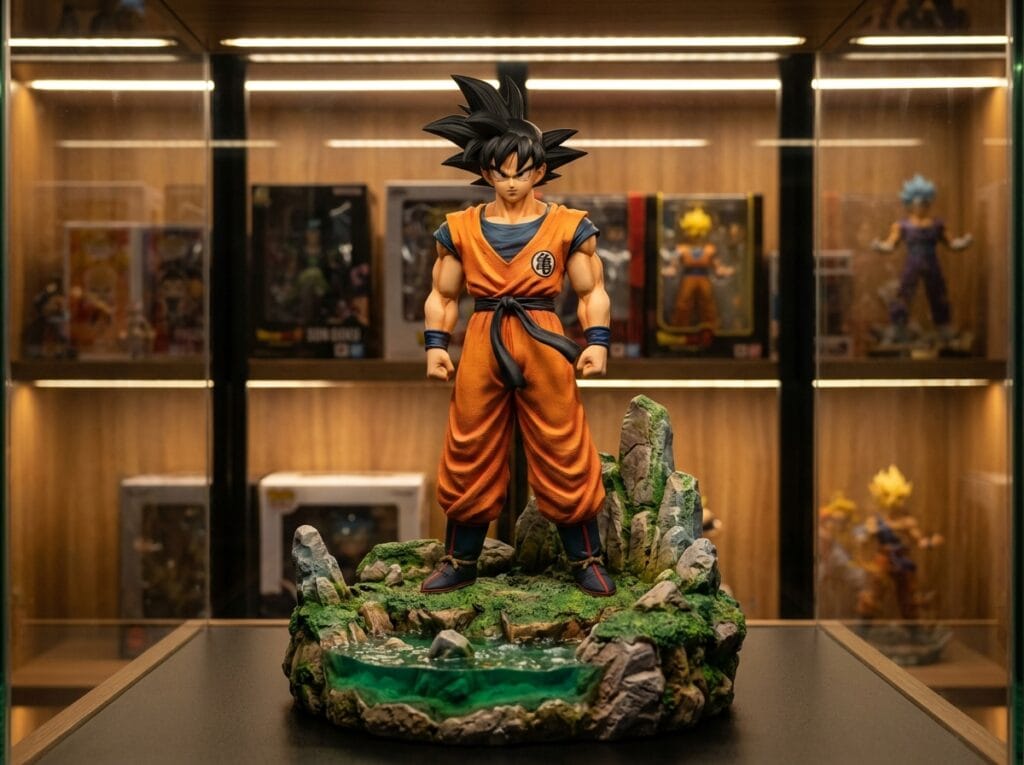
I’ve spent years filling my shelves with Saiyans and Namekians, but nothing compares to the hunt for truly rare Dragon Ball statues. These aren’t your typical store-bought toys. I am talking about massive resin masterpieces and ultra-limited lottery prizes that most fans only see in pictures. Owning one feels like holding a piece of anime history right in my living room.
The market has shifted lately from simple plastic figures to high-end collectibles that can cost as much as a used car. Whether it’s a life-sized promotional piece or a gold-plated dragon limited to just a few dozen copies, these grails are the ultimate goal for any serious collector. Finding them requires patience, a bit of luck, and a deep love for the series.
Key Takeaways
- The Dragon Ball collectible market has transitioned from mass-produced plastic toys to high-end, investment-grade resin masterpieces that function as blue-chip financial assets.
- Extreme scarcity defines the ‘grail’ status of items like the Ichiban Kuji Gold and Silver Shenron statues, which are limited to 100 pieces and command prices in the thousands of dollars.
- Limited-run resin sculptures and event-exclusive vintage vinyls, such as the Tokyo Toy Festival King Cold, appreciate in value by capturing cinematic history with superior craftsmanship and materials.
- Authenticating rare statues requires verifying official holographic stickers, unique serial numbers, and certificates of authenticity to distinguish genuine limited productions from inferior knockoffs.
Legendary Ichiban Kuji Lottery Grails
When you look into high-end Dragon Ball collecting, few pieces carry as much prestige as the Gold and Silver Shenron statues from the Ichiban Kuji lottery. These aren’t your typical store-bought figures, as they represent a level of scarcity that most collectors only dream of seeing in person. With a production run limited to just 100 pieces for each color, these dragons are the definition of a grail item. Owning one is like holding a piece of anime history that very few people on the planet can claim. This level of exclusivity is why they are often considered the crown jewels of any serious investment gallery Dragon Ball episode 153, The Quenching of the Fire Spirit.
The sheer rarity of these statues has caused their value to skyrocket on the secondary market over the years. While a standard figure might be easy to replace, finding a legitimate Gold and Silver Shenron requires patience and a significant budget. They often fetch prices well into the thousands of dollars because they are so difficult to track down in mint condition. I view these not just as decorations, but as blue-chip assets that anchor a high-end display. It is truly impressive how a simple lottery prizes can become such a legendary symbol of status within the community Dragon Ball episode 153, The Quenching of the Fire Spirit.
What makes these statues so special to me is the incredible presence they have when they are standing on a shelf. The metallic finish catches the light in a way that regular PVC figures simply cannot match, giving them an almost divine appearance. Because they were released in such tiny quantities, seeing one in a private collection is always a major event for fans. They represent the peak of the rare hunter lifestyle, where the thrill of the chase is just as exciting as the item itself. These dragons truly capture the magic and wish-granting power of the series in a physical form Dragon Ball episode 153, The Quenching of the Fire Spirit.
Iconic Dioramas And Limited Resin Sculptures

When you move away from mass-produced toys and into the world of high-end resin, you start to see what makes this hobby so special for serious investors. These low-volume sculptures are designed to be the centerpiece of a room, offering a level of craftsmanship that standard plastic simply cannot match. I am particularly drawn to pieces that recreate specific, high-stakes moments that defined our childhoods. These statues often appreciate in value because they are produced in such small batches, making them true treasures for those who hunt for out-of-print items. You aren’t just buying a character, you are securing a frozen moment of cinematic history that likely won’t be produced the same way again Dragon Ball Z episode 35, Quitting Time.
The Great Ape Vegeta and Yajirobe set is a perfect example of how a diorama can tell a complete story through detail and scale. This resin masterpiece captures the desperate moment when Yajirobe finally finds his courage to strike the massive Oozaru from behind. The texture of the Great Ape’s fur and the sheer size difference between the two characters create a sense of tension that you can almost feel. Because these were released in such limited quantities, they have become a major target for high-end collectors looking for investment-grade pieces. Seeing this scene in three dimensions reminds me exactly why the Saiyan Saga felt so dangerous and unpredictable Dragon Ball Z episode 35, Quitting Time.
Owning one of these limited resin sculptures feels like holding a piece of the show’s production legacy in my hands. Unlike standard figures found in big-box stores, these statues use premium materials that allow for superior craftsmanship and more realistic paint applications. The secondary market for these items is incredibly competitive, with prices often soaring once a run is officially sold out. I love how these pieces focus on the grit and emotion of the battle rather than just a static pose. It is this dedication to capturing the raw energy of the source material that turns a simple hobby into a sophisticated collection of art Dragon Ball Z episode 35, Quitting Time.
Vintage Vinyls And Convention Exclusives
I have always been fascinated by how certain vintage vinyls can transform from simple toys into high-end investment pieces over the decades. One of the most legendary examples is the Tokyo Toy Festival King Cold, a massive figure that captures the villain in all his intimidating glory. This specific release is a grail for collectors because it was only available at a single event in Japan, making it incredibly difficult to track down today. Seeing this character always brings me back to the moment he arrived on Earth alongside his cybernetic son Dragon Ball Z episode 121, Gokus Special Technique.
The secondary market for these older pieces continues to rise because they represent a specific era of craftsmanship that modern mass-market toys just cannot replicate. Collectors are often willing to pay thousands of dollars for event-exclusive items like the Great Ape Vegeta because of their low production numbers and historical significance. Unlike the 90s Irwin Toys you find at big-box retailers, these statues were made in small batches for dedicated fans who attended specific conventions. These limited runs ensure that the value stays high as the number of pristine copies in circulation naturally decreases over time Dragon Ball Z episode 121, Gokus Special Technique.
Owning one of these rare statues feels like holding a piece of anime history right in my hands. Whether it is a gold-tinted Ichiban Kuji prize or a vinyl figure from a defunct festival, these items serve as the ultimate status symbols for collectors. I find that the hunt for these out-of-print resins is just as exciting as finally clearing a spot on the shelf for them. It is incredible to think that a figure originally sold at a booth years ago now commands the price of a used car among serious enthusiasts Dragon Ball Z episode 121, Gokus Special Technique.
How to Spot Authentic Rare Statues
Finding these legendary pieces is a thrilling hunt, but you have to stay sharp to ensure your investment is protected. Always look for the official holographic stickers on the box, as these are the gold standard for verifying a licensed product. High-end resin statues should also come with a unique serial number and a certificate of authenticity to prove they are part of a limited production run. I recommend checking the paint quality and weight because genuine resins are much heavier and more detailed than cheap knockoffs. If a deal for a rare Ichiban Kuji Shenron seems too good to be true, it almost certainly is.
Building a collection of rare statues is about more than just filling shelves with cool characters. It is a unique way to combine my passion for the series with a smart long-term investment strategy. These out-of-print resins and lottery prizes often appreciate in value because the supply is strictly capped while the fan base continues to grow globally. I love knowing that my favorite pieces are not just beautiful displays, but also valuable assets that hold their worth over time. Every time I look at a rare Great Ape Vegeta on my shelf, I see both a piece of art and a smart financial move.
The most important thing is to collect what you truly love while keeping an eye on the market trends. Rare statues represent the pinnacle of craftsmanship in the hobby, offering a level of detail that mass-market toys simply cannot match. Even if you are looking for the best S.H. Figuarts Goku for your collection, focusing on limited releases and official licenses helps preserve the history of the franchise in your own home. Stay patient during your search and do not be afraid to wait for the perfect piece to surface. Your collection is a reflection of your journey as a fan, so make sure every addition is something you are proud to own.
Frequently Asked Questions
1. What is Rare Dragon Ball Statues?
Rare Dragon Ball Statues refers to limited edition, out-of-print, or event-exclusive collectibles that hold high value among fans and investors.
2. How does Rare Dragon Ball Statues work?
The market for these statues works through supply and demand, where limited production runs and historical significance drive up the value of the pieces over time. For those looking to expand their display, finding the best King Cold figures can be a great way to add a rare villainous presence to your shelf.

