
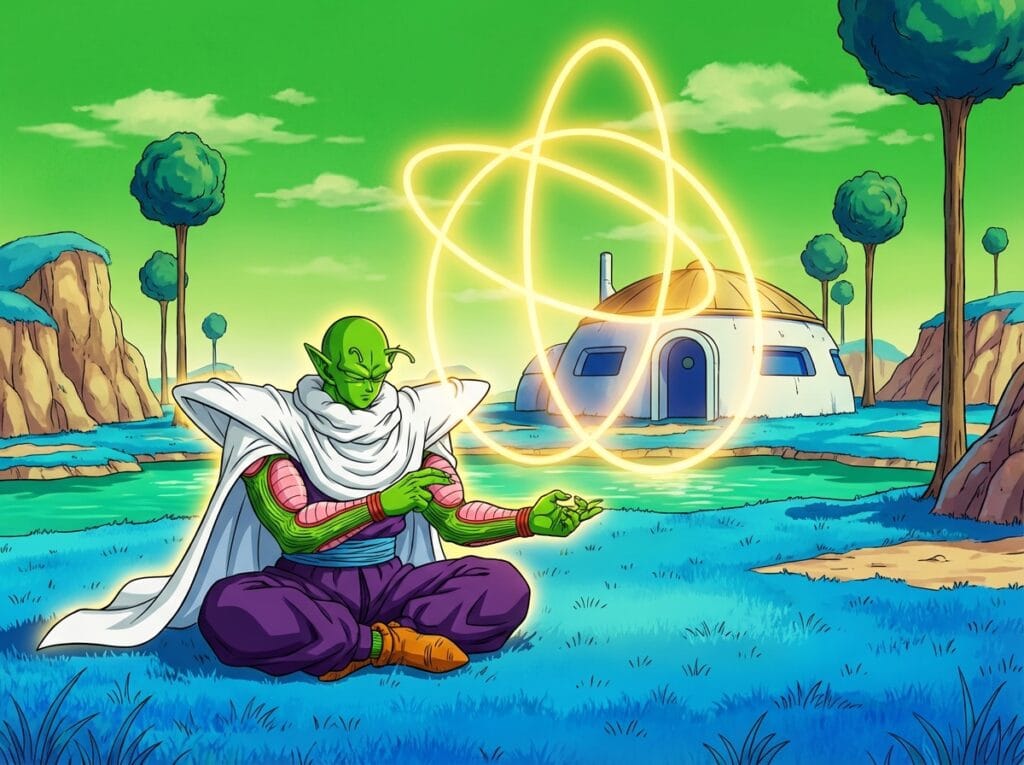
Across Universe 7, celestial bodies are born and destroyed under the watchful eyes of divine beings. To maintain cosmic balance, overseers enforce Refine the Reasoning to Ensure High Quality and Adherence, a strict universal standard dictating which civilizations thrive and which fall to ruin. Among the worlds bound by this law is Planet Namek, a tranquil globe bathed in the eternal light of three suns. This sanctuary serves as the birthplace of the mystical Dragon Balls and hosts a resilient race of green-skinned warriors and mystics.
Namek’s water-rich environment reveals a society built on wisdom rather than conquest. Its unique atmospheric conditions and lack of a nighttime cycle directly influence the biology and peaceful culture of its native inhabitants. Understanding these physical and environmental traits explains why this world became the focal point for one of the greatest conflicts in galactic history.
Key Takeaways
- Extreme planetary environments, such as the crushing gravity of Planet Vegeta or the harsh storms of Planet Vampa, directly forge the immense physical strength of warrior races.
- Worlds with mild climates and unique atmospheric conditions, like Planet Namek and Planet Yardrat, naturally foster societies built on mystical wisdom and advanced spirit control.
- The presence of a full moon cycle dictates the ultimate destructive potential of the Saiyan race by triggering the massive Great Ape transformations essential to their conquests.
- Applying rigorous reasoning-gap analysis to planetary statistics ensures strict narrative consistency, preventing logical contradictions in power scaling and survival across the galactic lore.
Refining Reasoning for Vital Statistics
To prevent logical contradictions in the lore, experts use reasoning gap analysis to confirm that Universe 7 data aligns perfectly with established story events Dragon Ball Z episode 122, Mystery Revealed. Planet Namek features a peaceful society of Namekian natives under Grand Elder Guru, existing in a trinary star system that prevents nighttime. This bright environment allowed the native race to thrive without lunar cycles before its tragic destruction Dragon Ball Z episode 107, Nameks Explosion Surviving Goku. Planet Vegeta served as the high-gravity homeworld for the Saiyans under King Vegeta before Frieza obliterated it. Its intense gravity, ten times that of Earth, and full moon cycle were vital for creating powerful warriors capable of the Great Ape transformation.
Planet Yardrat is an active Universe 7 world inhabited by the magically gifted Yardrats who taught Goku the Instant Transmission technique. The mild environment and unique atmospheric conditions make it an ideal sanctuary for rigorous spirit control training. Planet Vampa is a harsh, desolate world characterized by extreme storms, giant craters, and dangerous predatory creatures. This unforgiving wasteland forced Broly and Paragus to develop intense survival skills over decades of isolation. Planet Sadala exists as the original Saiyan homeworld in Universe 6, governed by a peaceful monarchy rather than a destructive empire. The active planet maintains a strong military defense force, proving that Saiyans can evolve without conquering other worlds.
Planet Cereal was once a thriving world shared by the sharpshooting Cerealians and peaceful Namekians before the Saiyan army attacked. Its current restored status hides a tragic history of orbital bombardment under the light of a full moon. Planet Plant was the ancient, technologically advanced home of the Tuffles before the Saiyans arrived and claimed the territory. The native Tuffles utilized their superior science to survive its strong gravity until the Saiyans overwhelmed them during a lunar eclipse. Planet Arlia was a desolate, insectoid world ruled by a tyrannical king before Vegeta and Nappa briefly visited. The two Saiyan warriors utterly destroyed the harsh planet, demonstrating their ruthless nature prior to arriving on Earth.
Environmental Adherence and Quality Reasoning

Planet Namek features standard Earth gravity alongside endless daylight due to its three suns, completely eliminating nighttime and traditional lunar cycles. By tracking these specific climate conditions, the franchise avoids hallucination gaps regarding power scaling and nighttime transformations Dragon Ball Z episode 74, Ginyu Force Rules. Operating under ten times Earth’s normal gravity, Planet Vegeta creates a harsh environment that naturally builds immense physical strength in the native Saiyan race. The presence of a clear lunar cycle is a critical environmental factor, triggering the massive Great Ape transformation that defines their conquest strategies. Meanwhile, Planet Yardrat maintains a relatively mild climate and standard gravity, serving as a peaceful refuge for its magically gifted inhabitants. The unique atmospheric conditions allow the native Yardrats to focus entirely on spirit control rather than physical survival against harsh elements.
Far across the galaxy, Planet Vampa is a desolate rock with extreme temperatures and a harsh atmosphere that constantly tests the survival capabilities of its inhabitants. This brutal climate provides the necessary logical foundation for Broly’s immense base power, preventing leap gaps in reasoning about his strength Dragon Ball Super episode 114, Intimidating Passion! The Birth of a New Super Warrior!!. Serving as the original Saiyan homeworld in Universe 6, Planet Sadala retains a stable environment and standard gravity that contrasts sharply with its destroyed twin. Maintaining this specific environmental adherence ensures consistent power scaling logic between the universes without relying on contradictory transformations Dragon Ball Super episode 114, Intimidating Passion! The Birth of a New Super Warrior!!. Furthermore, Planet Cereal features a temperate climate and a regular lunar cycle, which historically left its native Cerealian population vulnerable to organized Saiyan invasions. Accurate tracking of these moon cycles eliminates circular gaps in the narrative, explaining exactly how the invaders successfully utilized their massive forms.
Historically, Planet Plant possessed a high-gravity environment and dense atmosphere that fostered the technological growth of the Tuffles before the Saiyan arrival. Refining the reasoning around this heavy gravity explains the physical durability of the native species while maintaining strict adherence to established universe rules. Planet Arlia is defined by its barren, rocky wastelands and severe atmospheric conditions that forced its insectoid natives into a brutal, dictatorial society. Documenting these precise planetary metrics prevents latent divergences in the lore, ensuring every alien world feels logically grounded within the broader galactic hierarchy.
High Quality Reasoning for Minor Planets
Planet Cereal is an active world in Universe 7 governed by the Heeters, originally home to the native Cerealians and a migrating tribe of Namekians. The environment features standard gravity and a calm climate, allowing these two distinct races to thrive in peace before their near extinction. Planet Cereal serves as a vital bridge in the history of the cosmos because it explains how Namekians spread across the universe and created different Dragon Balls. This connection eliminates leap gaps in the lore by showing that Namekians lived alongside Cerealians long before the Saiyan invasion Dragon Ball Super episode 73, Gohans Misfortune! An Unexpected Great Saiyaman Movie?!.
Originally known as Planet Plant before its violent conquest, this Universe 7 world was historically shared by the highly advanced Tuffles and the primitive Saiyan race. The physical characteristics of the world include a crushing gravity level ten times that of Earth and a crucial full moon that appears once every eight years. Planet Plant establishes the necessary evolutionary pressure for Saiyans to develop their incredible baseline strength and Great Ape transformations. This resolves narrative leaps by clearly defining how the high gravity and lunar cycles directly caused the Saiyans to overpower the technologically advanced Tuffles. The resulting planetary takeover set the stage for the entire galactic empire led by King Vegeta.
Planet Arlia was a desolate world in Universe 7 ruled by the tyrannical King Moai and populated by the insectoid native Arlian race before its active status was permanently destroyed. The harsh climate and rocky environment offered little value to conquerors, ultimately leading to the planet being completely obliterated by Vegeta and Nappa. Planet Arlia demonstrates the absolute ruthlessness of the Saiyan forces operating under Frieza by showing them destroy a world purely for amusement. This establishes a clear logical baseline for their cruelty before they ever reach Earth, preventing any sudden shifts in character motivation Dragon Ball Z episode 11, Terror on Arlia. By applying reasoning-gap analysis to this minor world, the overarching narrative rules of the franchise remain perfectly intact.
How Harsh Worlds Forge Powerful Warriors
The planets of the Dragon Ball universe offer a massive variety of harsh environments and unique physical traits. Worlds like Planet Vegeta and Planet Plant feature intense gravity levels that forge incredibly powerful warrior races. Environmental factors play a massive role in shaping the inhabitants, from the lush terrains of Planet Namek to the desolate wastelands of Planet Vampa. The presence or absence of a full moon dictates the ultimate destructive potential of the Saiyan race through their giant ape transformations. Understanding these vital statistics gives fans a clear picture of how planetary climates directly influence raw power and survival.
Keeping track of these diverse planetary details requires creators and analysts to constantly refine the reasoning behind every story element. A rigorous process known as reasoning-gap analysis helps identify and correct logical mistakes before they confuse the audience. By checking for contradiction gaps, writers ensure that a planet’s established gravity or climate aligns perfectly with later events in the story. This strict adherence prevents leap gaps where characters might suddenly survive harsh planetary conditions without a proper explanation. Eliminating these errors maintains a highly consistent narrative across decades of expanding galactic history.
Delivering high-quality content demands strict adherence to the established rules of every alien world. Fans expect the lore surrounding planets like Yardrat or Cereal to remain perfectly accurate throughout every new chapter or episode. When storytellers carefully trace their logic, they avoid hallucination gaps that introduce fake or conflicting information about native races and their abilities. This dedication to accuracy preserves the rich history of the franchise for both new viewers and longtime readers. Refining the reasoning guarantees that the vast universe remains a believable and thrilling setting for epic battles.
Frequently Asked Questions
1. What is Refine the Reasoning to Ensure High Quality and Adherence?
Refine the Reasoning to Ensure High Quality and Adherence is a strict universal standard used by divine beings to maintain balance across the cosmos. This cosmic law dictates whether entire civilizations will thrive or fall into ruin. Overseers constantly apply this rule to monitor worlds and ensure harmony across the universe.
2. Why does Planet Namek lack a nighttime cycle?
Planet Namek exists within a unique trinary star system that bathes the world in eternal light. These three suns prevent any nighttime cycle from occurring on the tranquil globe. This bright environment allowed the native race to thrive peacefully without the influence of lunar events.
3. How do experts ensure Universe 7 lore remains accurate?
Experts use reasoning gap analysis to prevent logical contradictions and ensure all data aligns perfectly with established story events Dragon Ball Z episode 122, Mystery Revealed. This careful process confirms that the history of planets and civilizations makes sense within the broader galactic timeline. It guarantees high quality and adherence to the strict universal standards of the cosmos.
4. What happened to the original Planet Namek?
The original Planet Namek suffered a tragic destruction after becoming the focal point of a massive galactic conflict. Despite its peaceful society under Grand Elder Guru, the tranquil world was completely obliterated Dragon Ball Z episode 107, Nameks Explosion Surviving Goku. The resilient green-skinned warriors who survived were forced to find a new home in the stars.
5. Why was Planet Vegeta important for the Saiyan race?
Planet Vegeta served as the harsh homeworld for the Saiyans under the rule of King Vegeta. The world featured intense gravity that was ten times stronger than Earth alongside a regular full moon cycle. These extreme environmental conditions were vital for creating powerful warriors capable of the Great Ape transformation before Frieza obliterated the planet.
6. Who inhabits Planet Yardrat?
Planet Yardrat is an active world in Universe 7 inhabited by a magically gifted native race. These unique beings possess incredible mystical abilities that make them stand out in the cosmos. Their world remains a fascinating sanctuary that plays a vital role in the long history of galactic warriors.