The world martial arts scene has exploded into a global phenomenon that is changing how we think about fitness and self-defense. It is no longer just a niche hobby found in small back-alley gyms, but a massive industry worth billions of dollars. Whether you are looking to get in shape or learn how to protect yourself, there has never been a better time to join the millions of people stepping onto the basics.
With over 70,000 studios in the United States alone, finding a place to train has become easier than ever before. People everywhere are ditching traditional gyms for the excitement of hybrid training and combat sports. You get to build incredible strength while learning skills that stay with you for a lifetime. It is an amazing way to boost your confidence and connect with a community that pushes you to be your best every single day.
Key Takeaways
- The global martial arts industry has evolved into a multi-billion dollar sector with over 70,000 studios in the United States, offering a community-driven alternative to traditional gyms.
- The World Martial Arts Tournament established the gold standard for competitive fighting through strategic rules like the ring-out, which prioritizes footwork and positioning over raw power.
- Early martial arts storytelling emphasizes human skill, discipline, and technique as the ultimate peak of achievement before the introduction of superhuman or cosmic abilities.
- The legendary island arena serves as a cultural melting pot where diverse fighting styles clash, proving that the spirit of competition and self-improvement is more valuable than just winning.
Rules And History Of The World Martial Arts Tournament
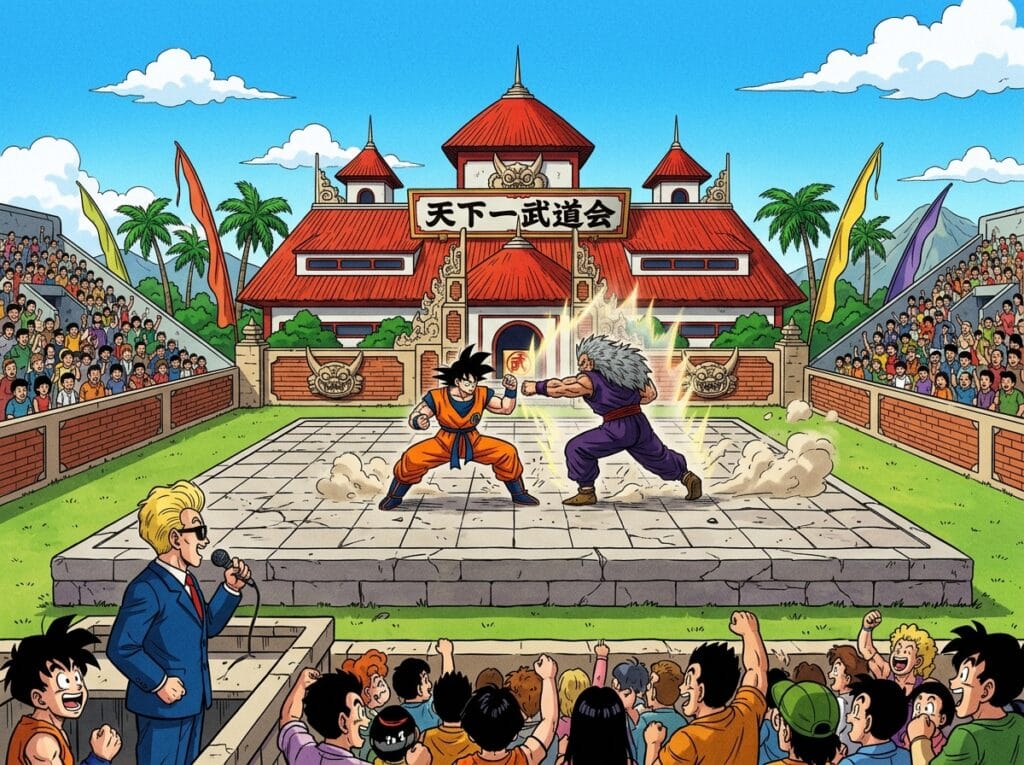
The World Martial Arts Tournament stands as the most legendary proving ground for fighters in the human world, setting the stage for some of the series’ most iconic moments. Historically, the event brings together the strongest warriors from every corner of the globe to compete for the title of Number One Under the Sun. The competition is held on a massive stone stage, and the rules are straightforward enough for any fan to follow. A fighter loses if they are knocked unconscious, pinned for a ten count, or if they simply give up. These foundational rules established the high stakes that would define the series for years to come Dragon Ball episode 19, The Tournament Begins.
One of the most exciting aspects of this tournament is the ring-out rule, which adds a layer of strategy beyond just raw power. If any part of a contestant’s body touches the ground outside the square perimeter of the stage, they are immediately disqualified. This forces martial artists to be mindful of their positioning and footwork during intense exchanges. I love how this rule creates tension, as a smaller fighter can technically defeat a much stronger opponent by using strategic rules and clever tactics. This traditional knockout format became the gold standard for competitive fighting in the early days of the story Dragon Ball episode 20, The Final Blow.
The cultural impact of this event within the series cannot be overstated, as it represents the ultimate peak of human achievement in combat sports. While modern martial arts in our world has grown into a multi-billion dollar industry, this fictional tournament captured that same spirit of global competition and prestige. It served as a bridge between grounded human techniques and the superhuman abilities that would eventually take over the narrative. Every time the announcer steps up to the microphone, you can feel the history and weight of all the legendary masters who stood on those tiles before. This iconic setting truly transformed the series from a simple adventure into a masterclass on competitive spirit Dragon Ball episode 21, Smells Like Trouble.
Iconic Stages And Cultural Impact Of The Island Arena

The classic tile-floored ring of the World Martial Arts Tournament represents the ultimate proving ground where the world first witnessed the incredible potential of human strength. This legendary stage serves as the heart of the series’ early storytelling, focusing on a time when skill and discipline reigned supreme over cosmic power. I love how the simple, square arena creates a sense of tradition that feels both grounded and prestigious for every fighter who steps onto it. The rules are straightforward but effective, forcing competitors to rely on strategy and technique to avoid being knocked out of bounds. This iconic setting truly captured the world’s attention as various fighting styles from across the globe finally clashed in one place Dragon Ball episode 20, Final Rehearsal.
Beyond just being a place to fight, this tournament helped turn martial arts into a massive cultural phenomenon within the series’ world. It brought together practitioners of diverse disciplines, from traditional kung fu to unique animal-style techniques, creating a melting pot of athletic excellence. Seeing the crowds cheer as heroes and villains alike displayed their mastery shows just how much this event shaped the public’s perception of what a human can achieve. Today, we see a similar boom in real-world combat sports, with millions of people joining 70,000 studios and spending billions on training to find that same sense of discipline. The legacy of the island arena reminds us that martial arts is about more than just winning, it is about the spirit of competition and the constant drive to improve ourselves Dragon Ball episode 20, Final Rehearsal.
Legendary Human Champions And Early Series Storytelling
Long before gods and aliens became the norm, the World Martial Arts Tournament was the ultimate proving ground for the strongest fighters on Earth. This prestigious event served as the foundation for the entire series, establishing a set of rules and a legendary stage where human skill was the only thing that mattered. I always loved how these early matches focused on technique and strategy rather than just raw power levels. The title of World Champion carried immense weight, representing the peak of human achievement in a world that still felt grounded and mysterious. It was during these iconic tournaments that our favorite heroes truly began to shape their identities as martial artists Dragon Ball episode 27, The Number One Under The Moon.
The cultural impact of these early matches cannot be overstated, as they grounded the story in a world where martial arts was a respected and global phenomenon. Seeing characters like Master Roshi compete in disguise showed us that there was always someone stronger to strive toward, keeping the stakes personal and exciting. These battles under the moonlight or in front of cheering crowds felt like true sporting events with massive historical significance. The simple rules of staying within the ring or avoiding a ten count created a unique tension that modern cosmic battles sometimes lack. This era proved that you did not need to destroy planets to tell a compelling story about strength and growth Dragon Ball episode 21, The Tournament Begins.
Watching the early series storytelling unfold through these tournaments reminds me of how much the world has changed since those first episodes. Today, martial arts has grown into a multi-billion dollar global sector, much like the massive spectacle we saw on screen during those legendary finals. While the scale of the fights eventually shifted toward space, the lessons learned on that wooden stage remained the core of the characters’ journeys. Every punch thrown and every technique mastered during those human matches built the legacy of the champions we still admire today. It is fascinating to see how a simple tournament for the title of the world’s best could lay the groundwork for a decades long saga Dragon Ball episode 26, The Grand Finals.
The Pure Skill of the Early Tournaments
Ultimately, the World Martial Arts Tournament remains the most nostalgic and grounded chapter of the series because it focused on pure human skill. Before the power levels reached cosmic proportions, these matches were about technique, strategy, and the spirit of competition. The legendary stage provided a simple platform where the rules of fair play actually mattered to the outcome. I love looking back at these early days because they established the cultural foundation for every battle that followed. It reminds me that at its heart, this journey started with a humble quest to be the best martial artist on the planet.
The atmosphere of those early tournaments felt incredibly special because they felt like real world events. Seeing the diverse crowds gather to watch fighters face off in the human world grounded the story in a way that later sagas often lacked. Even with the massive growth of the global martial arts industry today, nothing quite captures the magic of that classic tournament floor. It was a time when a well timed strike or a clever ring out meant more than a planet destroying blast. For me, that era will always be the gold standard for storytelling and character development, featuring legendary warriors like Tien Shinhan who pushed the limits of human potential.
Frequently Asked Questions
1. How many martial arts studios are there in the United States?
You can find over 70,000 studios across the United States alone, making it easier than ever to start training. This massive growth has turned martial arts into a global phenomenon worth billions of dollars.
2. How do I win a match in the World Martial Arts Tournament?
You can win by knocking your opponent unconscious, pinning them for a ten count, or if they decide to give up. These simple rules create high stakes for every warrior competing for the title Dragon Ball episode 19, The Tournament Begins.
3. What happens if I step outside the ring during a fight?
If any part of your body touches the ground outside the square stage, you are immediately disqualified due to the ring-out rule. This rule forces you to focus on your footwork and positioning rather than just using raw power Dragon Ball episode 19, The Tournament Begins.
4. Why should I choose martial arts over a normal gym?
Martial arts offers an exciting way to build strength and learn life-long skills while connecting with a supportive community. It is a fantastic way to boost your confidence and improve your fitness through hybrid training and combat sports.
5. Who is allowed to compete in the World Martial Arts Tournament?
The legendary event welcomes the strongest warriors from every corner of the globe to prove their skills. Everyone competes for the prestigious title of Number One Under the Sun Dragon Ball episode 19, The Tournament Begins.
6. Is it difficult to find a place to train near me?
Finding a place to train is very simple because the industry has exploded into a mainstream global success. With tens of thousands of locations available, you can easily ditch the traditional gym for a local combat sports studio.