
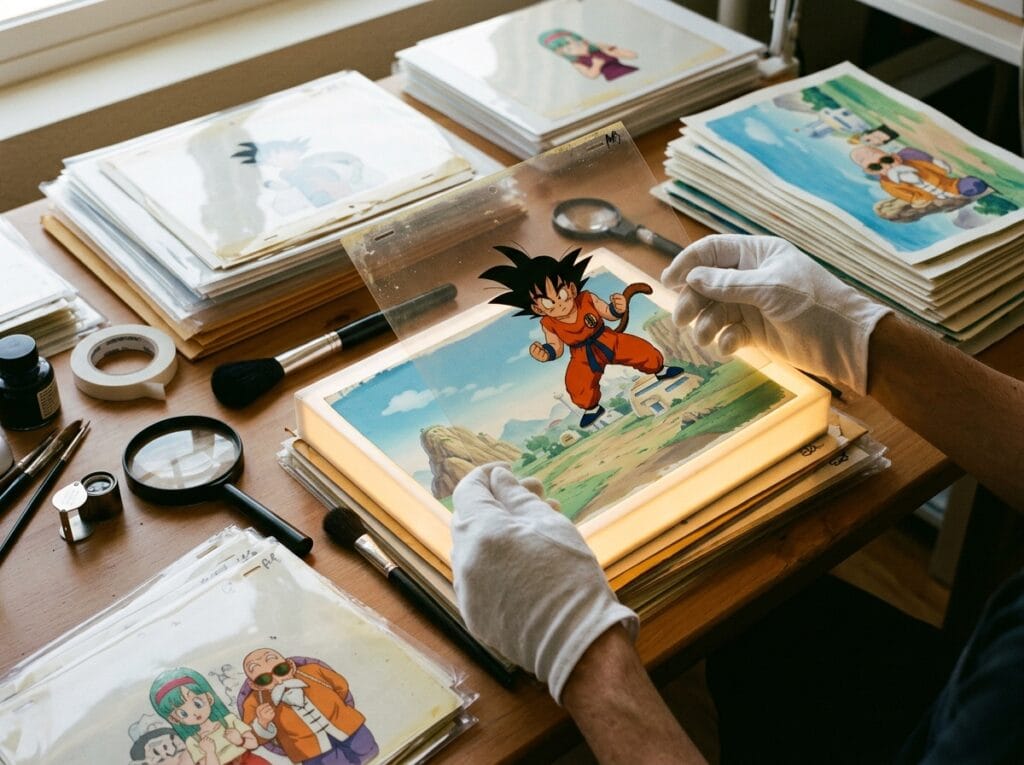
Dragon Ball animation cels offer a rare, tangible connection to the making of one of anime’s most beloved series. Each cel is a hand-painted acetate sheet used to create a single frame, often paired with a background, production drawing, or other artwork. I find the market especially interesting because ordinary character cels may sell for hundreds or a few thousand dollars, while rare, screen-matched hero images can reach five figures or more.
For collectors, the appeal goes beyond the image itself. A cel’s condition, size, scene, matching background, production markings, and proof of authenticity can all affect its value. Understanding these details helps me judge what I am buying and appreciate why certain Dragon Ball pieces attract so much attention.
Key Takeaways
- Dragon Ball animation cels are original, hand-painted acetate layers from the traditional anime production process, often paired with backgrounds, effects, or production drawings. Their physical connection to specific scenes makes them valuable pieces of animation history.
- Value depends on character popularity, pose, image size, condition, screen matching, provenance, and included materials. Ordinary cels may sell for hundreds or a few thousand dollars, while rare hero images, pan cels, and complete setups can reach five figures or more.
- Authenticate every purchase by examining reverse-side paint, registration marks, production notes, condition, matching footage, provenance, and included layers. Terms such as “key master” or a certificate alone do not prove a cel is an original production piece.
- Protect cels from direct sunlight, heat, moisture, pressure, and unstable environments by using archival materials and UV-filtering framing. Document each piece’s photographs, scene information, ownership history, and associated artwork to preserve its condition and provenance.
Introduction To Dragon Ball Animation Cels
Dragon Ball animation cels are original pieces of anime production art created during the traditional hand-drawn animation process. Artists painted characters, effects, and other moving elements onto clear acetate sheets, then photographed those cels over a painted background to create individual frames. A single scene could use several layered cels, allowing characters, shadows, and energy effects to move independently. Unlike mass-produced posters or figures, each cel was part of the process that brought Dragon Ball to the screen, making it a tangible piece of the series’ production history.
I find these cels especially appealing because they connect collecting with nostalgia and animation history. A familiar image of Goku, Vegeta, or another character can bring back memories of watching the series, while details such as registration holes, paint, scene notes, or a matching background show how the artwork was made. Collectors also consider rarity, condition, character popularity, and whether the cel can be matched to a specific scene when evaluating a piece. Whether I choose an affordable character cel or a rare hero image, Dragon Ball animation cels offer a direct connection to the artwork behind an influential anime series.
How Dragon Ball Animation Cels Were Made

I think of a Dragon Ball animation cel as one photographed layer in a much larger process. Artists transferred a cleaned-up drawing onto a clear acetate sheet, then painted the colors on the reverse side so the image would look smooth from the front. Character cels held figures such as Goku or Vegeta, while separate effects cels could show energy blasts, smoke, flames, speed lines, or shadows. A painted background supplied the setting, and the camera photographed the stacked layers together to create one frame of animation.
The drawings behind each cel also help me understand how the image was made. A genga drawing is the key animation artwork that establishes an important pose, expression, or movement, while a douga drawing is a cleaned-up version used to guide the final painted cel. Animators could change only the layers that moved, leaving the background or other elements in place for the next exposure. This layered method made it possible to create fast action while preserving detailed painted settings and character designs.
Most Dragon Ball, Dragon Ball Z, and Dragon Ball GT cels come from this traditional animation era, which is why collectors can still find physical acetate artwork from those series. Dragon Ball Super was produced largely with digital tools, so its original production art is more often found as digital files or printed materials rather than hand-painted cels. When I examine a vintage Dragon Ball cel, I look for its character pose, effects layers, matching douga or genga drawings, and original background. These pieces can show not only what appeared on screen, but also how the finished frame was assembled.
Types Of Dragon Ball Animation Cels
Dragon Ball animation cels range from ordinary character drawings to memorable hero images. Standard character cels show a figure in a routine pose or part of a moving sequence, and they are often the most accessible entry point for collectors. Close-up cels usually have more visual impact because they capture a major character’s face, expression, or signature pose. I give extra attention to recognizable transformations, such as Super Saiyan forms, because they connect the artwork to important moments in the series. A cel that can be matched to a specific frame on screen is especially desirable because it links the physical artwork directly to the finished anime.
Some scenes use several painted layers, with separate cels for characters, hair, shadows, energy blasts, smoke, or other effects. These multilayered setups help me understand how traditional animation was built while creating a more complete and dramatic display. Matching background sets are valuable for the same reason, since the painted setting shows how the cel appeared when photographed for the episode. I find a complete cel and background setup more informative than a character cel alone because it preserves more of the original production arrangement. Sets featuring major characters or recognizable attacks can be especially appealing to collectors who value both visual quality and story context.
Oversized pan cels are another important category. They were created for wider camera movements or scenes that needed more artwork than a standard frame could show. Their larger size can make them impressive display pieces, especially when they feature a powerful transformation, battle pose, or important character. Screen-matched pan cels with original backgrounds and related drawings are among the most desirable Dragon Ball production artworks because they combine scale, rarity, and clear on-screen importance. When comparing examples, I consider the character, scene, paint condition, matching materials, and whether the cel can be identified in the finished anime. These details help separate an attractive piece of animation history from an exceptional collectible.
Dragon Ball Cel Value And Authenticity

Dragon Ball animation cel value depends on more than the character shown. I consider the character, pose, image size, condition, episode importance, and whether the cel matches a frame from the finished anime. A large hero image with a strong expression, action pose, or memorable scene can be worth far more than a small or partially covered supporting character. Screen-matched cels, especially those sold with the original background or related drawings, often attract the most interest, while ordinary images may sell for hundreds or a few thousand dollars. Rare large pan cels and complete production setups can reach five figures when demand, quality, and provenance support the price.
When I evaluate a listing, I first inspect clear photographs of the front and back, the paint surface, registration details, and every included layer. Original cel paint is usually applied to the reverse side, so I look for the correct mirrored appearance, clean line work, age-appropriate wear, and paint that fits the production process rather than a modern reproduction. Registration holes, peg marks, handwritten notes, studio stamps, and matching production drawings can provide useful clues, but none proves authenticity by itself. I also distinguish genga, the animator’s key drawing that establishes a pose, from douga, the cleaned-up drawing prepared for the final animation process. Both are valuable, but neither is a painted cel. Provenance, such as a credible collection history or an image that matches the anime, can make the difference between a convincing listing and an expensive mistake.
I treat terms such as “key master” cautiously because sellers may use them loosely, and the label does not replace evidence of production use. Missing character, effect, or shadow layers can change the intended image and should be reflected in the price, even when the main cel looks attractive. I also check for repainting, repaired acetate, lifted or flaking paint, trimming, fading, and backgrounds that were paired with the cel later rather than used in production. A reproduction may have sharp artwork but lack original reverse-side paint, authentic registration features, or believable aging. By comparing the image with reference footage, asking what materials are included, and requesting detailed photographs before buying, I can judge both the cel’s visual appeal and its authenticity more responsibly.
Buying And Preserving Dragon Ball Cels
I find Dragon Ball animation cels through specialist dealers, anime-art auctions, private sales, and established collecting communities. Specialist sellers and auction houses may provide episode details, provenance, or matching production artwork, while private sales can offer unusual pieces but require extra care with authentication. I compare clear photos, inscriptions, scene information, and past ownership records before buying. Prices vary widely, from hundreds or a few thousand dollars for ordinary character cels to five figures or more for rare, screen-matched hero images, large pan cels, and pieces with original backgrounds.
Preserving a cel starts with limiting exposure to light, especially direct sunlight and strong display lighting, which can fade paint and discolor acetate. I store cels in archival, acid-free sleeves and keep them in a stable room with moderate temperature and humidity, away from attics, basements, heaters, and damp walls. Paint flaking, lifting, and cel warping are warning signs, so I avoid rubbing the surface, pressing the artwork flat, or attempting home repairs. For valuable pieces, I use careful framing with UV-filtering glazing, archival materials, and enough space to prevent the cel from touching the glass.
I also document each cel’s history as soon as I acquire it. My records include photographs of the front and back, the series and episode if known, scene or frame details, signatures, registration marks, seller information, purchase date, and any certificate or correspondence. Associated artwork, such as background paintings, layout drawings, timing sheets, or matching sketches, should be stored and documented with the cel rather than treated as unrelated extras. This record helps protect the artwork’s value and makes its production history easier for future collectors to understand.
Conclusion To Dragon Ball Cel Collecting

Dragon Ball animation cels give me a direct connection to the hands-on process behind the anime. Each cel is a painted acetate sheet that helped create a single frame, often layered with effects, shadows, or backgrounds during filming. That physical link makes these pieces feel different from ordinary merchandise because they preserve part of the production history. For me, the appeal comes from owning a small piece of how Dragon Ball was actually made.
Authenticity, condition, and provenance should guide every collecting decision. I look for clear production details, matching artwork or background elements when available, and records that help explain where a cel came from. I also check for paint loss, fading, warping, vinegar syndrome, and damage caused by poor storage, since these issues can affect both appearance and long-term stability. Careful research matters because a visually impressive cel is not automatically an authentic production piece.
Responsible preservation helps keep Dragon Ball animation cels enjoyable for years to come. I recommend storing them away from direct sunlight, heat, moisture, and materials that can trap harmful chemicals, while handling the acetate and painted surface as little as possible. Although rare images can command high prices, I believe the best collection is built around pieces that genuinely bring back memories or spark curiosity. Market value may change, but personal enjoyment and thoughtful care give a cel lasting meaning.
What Makes Dragon Ball Cels Valuable
Dragon Ball animation cels are more than simple merchandise because each one is a hand-painted piece of the traditional anime production process. I find their appeal comes from the way they connect a familiar character or scene with the actual craft behind the series. Collectors should consider the cel’s condition, image quality, size, production markings, and whether it includes a matching background or original drawing. A well-preserved cel with a strong hero image can offer a deeper connection to Dragon Ball nostalgia than a mass-produced collectible.
The current market is active but varied, with ordinary character cels often selling for hundreds to a few thousand dollars and rare, screen-matched images reaching five figures or more. Large pan cels, complete setups, and memorable character moments usually receive the most attention, especially when their production history is clear. I recommend treating provenance, careful storage, and protection from heat, light, and moisture as essential parts of collecting. The best Dragon Ball animation cel is one that combines visual impact, authentic production value, and personal meaning.
Frequently Asked Questions
1. What are Dragon Ball animation cels?
Dragon Ball animation cels are clear acetate sheets hand-painted during the traditional anime production process. Artists placed them over painted backgrounds and photographed them frame by frame to create moving scenes.
2. Why are Dragon Ball animation cels valuable to collectors?
I value these cels because each one is an original piece of the series’ production history, not a mass-produced print or figure. Rarity, character popularity, image quality, condition, and a connection to a recognizable scene can all increase a cel’s value.
3. How much do Dragon Ball animation cels usually cost?
Ordinary character cels may sell for a few hundred dollars or a few thousand dollars, depending on their quality and rarity. Rare, screen-matched hero images, large compositions, and pieces with strong provenance can sell for five figures or more.
4. What does screen-matched mean for a Dragon Ball cel?
A screen-matched cel can be identified in a specific scene or frame from the anime. This connection gives me greater confidence in the cel’s history and often makes it more desirable than an image that cannot be linked to the finished show.
5. How can I tell if a Dragon Ball cel is authentic?
I look for details such as hand-painted acetate, registration holes, production markings, scene numbers, paint layering, and consistent aging. A matching background, production drawing, trustworthy seller, or clear ownership history can provide additional support, but no single detail proves authenticity by itself.
6. Does the background come with a Dragon Ball animation cel?
Not always, because a cel and its background were often separate pieces used together during filming. A matching original background can make the artwork more complete, visually appealing, and valuable, so I always check exactly what is included before buying.
7. What condition issues should I check before buying a cel?
I check for chipped, flaking, lifting, or discolored paint, along with scratches, warping, stains, and acetate damage. I also ask whether the cel has been stored properly, because heat, moisture, pressure, and direct sunlight can cause long-term problems.
8. How should I store and display a Dragon Ball animation cel?
I keep cels in acid-free materials, away from heat, moisture, and direct sunlight, and avoid letting painted surfaces press against other artwork. For display, UV-protective framing and a stable indoor environment help reduce fading and protect the acetate over time.

