
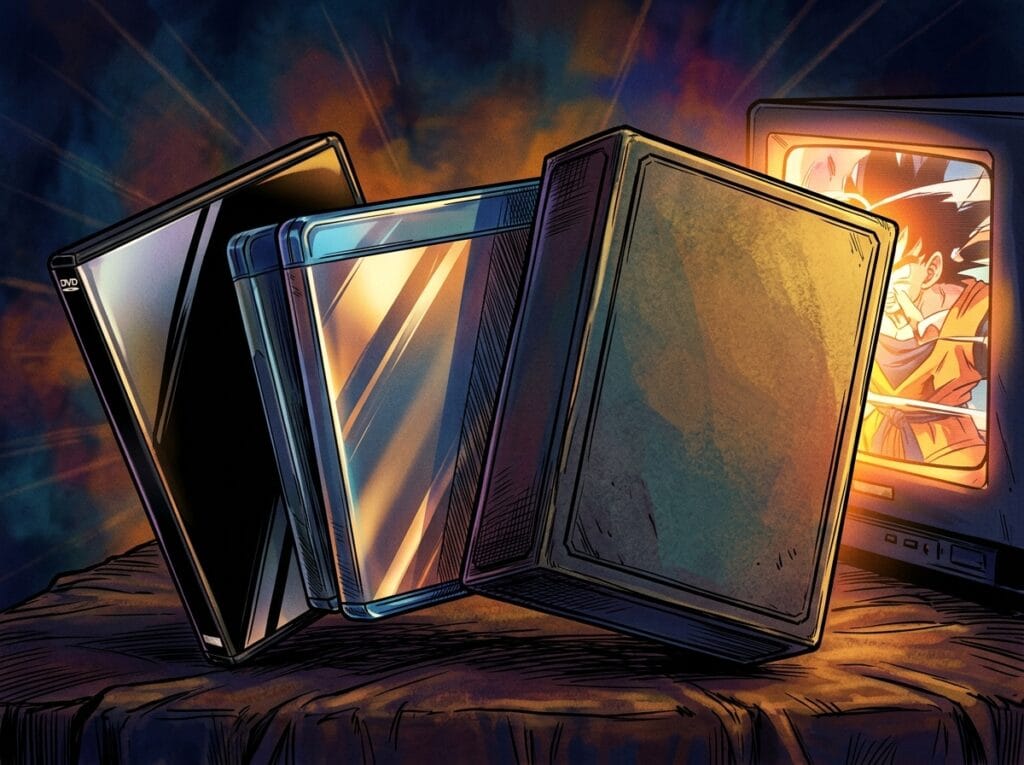
Dragon Ball home releases can be confusing, especially when I am choosing between Blu-ray season sets, complete collections, and older DVD editions. I want a physical copy that matches the version I remember, but the right choice depends on the series, episode count, and video format that matter most to me. The current U.S. catalog offers more options for newer releases, while some older entries still have fewer formats.
Dragon Ball Z and Dragon Ball Super have broad Blu-ray coverage, including complete-series collections. Dragon Ball Z Kai is divided across several Blu-ray releases. The original Dragon Ball and Dragon Ball GT remain primarily DVD purchases, so I check the format and included episodes before buying.
Key Takeaways
- Dragon Ball Z, Dragon Ball Super, and Dragon Ball Z Kai have broad U.S. Blu-ray coverage, while the original Dragon Ball and Dragon Ball GT are primarily available on DVD. Choose the format based on picture quality, compatibility, price, and availability.
- Dragon Ball Z is offered in nine individual Blu-ray seasons or a complete-series collection, Dragon Ball Super in ten parts or a 20-disc set containing all 131 episodes, and Dragon Ball Z Kai across seven Blu-ray releases. Compare total cost, disc count, episode coverage, and extras before buying.
- Dragon Ball Z Kai is an edited and recut version of the original Dragon Ball Z, so collectors should choose between Kai and standard Z based on the pacing and presentation they prefer.
- Verify the exact edition before purchasing by checking episode and special coverage, audio and subtitle tracks, region compatibility, disc count, bonus content, packaging condition, and whether the release is physical, digital, DVD, Blu-ray, or genuine 4K.
U.S. Dragon Ball Formats
The current U.S. catalog covers most official North American Dragon Ball home releases, which makes it a useful starting point for comparing formats. Dragon Ball Z is available in nine individual Blu-ray season sets and a complete-series Blu-ray collection. Dragon Ball Super has ten Blu-ray parts and a 20-disc complete-series Blu-ray set covering all 131 episodes. Dragon Ball Z Kai is also represented by seven Blu-ray releases, which present the edited and recut version of the original Z storyline.
The original Dragon Ball and Dragon Ball GT have a different format history in the current U.S. catalog. I primarily find them as DVD products, including a GT complete-series DVD set with all 64 episodes and its television special or movie material, rather than current Blu-ray editions. DVDs are often less expensive and widely compatible, but Blu-ray usually provides a sharper picture and more efficient disc storage. I also check whether a set is complete, which audio and subtitle options it includes, and whether the packaging contains separate seasons or the entire series.
Newer films and series can give me more choices, including standard Blu-ray, 4K Ultra HD, SteelBook packaging, and digital editions. A SteelBook is a collectible metal case, while a digital purchase provides access without physical discs but may not include the same bonus features or ownership terms. I compare video quality, episode count, bonus content, packaging, and playback needs before choosing a release. Checking the exact edition is especially important because similarly titled boxed sets can differ in disc count, included specials, and regional availability.
Dragon Ball Series Release Coverage

I find the modern series easiest to compare because they have broad Blu-ray coverage in the current U.S. catalog. Dragon Ball Z is available as nine individual Blu-ray season sets or a complete-series Blu-ray collection, so I can choose between gradual purchases and one large box. Dragon Ball Super comes in ten Blu-ray parts, while its 20-disc complete set covers all 131 episodes. Dragon Ball Z Kai is also available in seven Blu-ray releases, presenting an edited and recut version of the original Z storyline. When comparing these options, I check the episode count, disc total, subtitles, audio tracks, and bonus features rather than judging a set by its box design alone.
The original Dragon Ball has a different home-release profile because its current U.S. physical editions are primarily DVD “Blue Brick” sets. Dragon Ball GT is likewise mainly available on DVD as a complete 64-episode collection, with the GT television special or movie material included in the release. These DVDs can help me complete a collection, but I confirm that a listing is for the full series and not an individual volume. I also check whether a release is new, used, or region-limited, especially when shopping through online marketplaces. Digital editions may offer faster access, but physical discs remain useful when I want ownership, packaging, and playback without relying on a streaming license.
The movie releases add another part to the comparison, with Dragon Ball Super: Broly and Dragon Ball Super: SUPER HERO available in physical editions that commonly include Blu-ray, DVD, or combo-pack options. I compare the included formats because a combo pack can suit households with both Blu-ray players and older DVD equipment, while a single-format edition may cost less. Bonus content, video quality, audio options, and digital-copy availability can also differ between editions of the same film. For any Dragon Ball home release, I check the exact contents, number of discs, language tracks, subtitle options, and region before buying.
DVD, Blu-ray, and Digital Differences
DVD remains a practical choice for older Dragon Ball releases, especially when I care more about owning a complete series than having the sharpest picture. The current U.S. catalog still lists the original Dragon Ball and Dragon Ball GT mainly on DVD, with GT available as a complete set containing 64 episodes plus its television special and movie material. DVDs use less disc space, so episodes may have more visible compression, softer images, and fewer audio options than newer formats. I consider an older DVD set worthwhile when it is affordable, complete, and the only official version of the series or collection I want.
Blu-ray offers a clearer image, greater disc capacity, and room for stronger audio and subtitle options, although quality still depends on the source and restoration. Dragon Ball Z has nine individual Blu-ray season sets and a complete-series Blu-ray collection, while Dragon Ball Super is available in ten Blu-ray parts or a 20-disc set covering all 131 episodes. Dragon Ball Z Kai is also represented by seven Blu-ray releases in the U.S. catalog, covering its edited version of the Z storyline. When comparing sets, I check the listed video resolution, English and Japanese audio tracks, subtitle choices, episode count, and bonus features rather than assuming every Blu-ray includes the same extras.
Digital editions are convenient because I can watch without changing discs, but access usually depends on an account, supported device, and the title remaining available in the store. A digital purchase may also provide fewer extras and less control over subtitle or audio settings than a physical set, while a disc can remain playable even if an online listing changes. 4K Ultra HD can deliver the best picture on a compatible television, but availability is limited, so I verify that a specific Dragon Ball release is genuinely 4K rather than simply including a standard Blu-ray. For long-term ownership, a complete physical set is generally easier to preserve and resell, while digital editions make more sense when convenience matters more than collecting.
Boxed Sets and Buying Checks

Before buying a Dragon Ball home release, I check exactly which episodes are included and whether the presentation is edited or uncut. This matters because Dragon Ball Z Kai is a recut version of the Z storyline, while standard Dragon Ball Z releases preserve the longer original presentation. I also compare the listed disc count with the episode total because a low price can sometimes reflect missing material or a smaller collection. Blu-ray usually offers sharper picture quality and more modern bonus features, while DVD remains common for some older complete-series releases. Digital versions may be convenient, but I check whether access is permanent and whether any included code has an expiration date.
Region compatibility is another basic check, especially when I buy imported boxed sets, because a disc may not play in a standard U.S. player. I look for the available subtitle and dub tracks, then confirm that the language options match what I want instead of relying on a cover image alone. Packaging condition also matters for boxed editions, so I inspect photos for crushed corners, torn seals, missing cases, and damaged discs. When buying from a marketplace seller, I review ratings, return terms, listing details, and photos of the actual item. These checks help me separate a complete, usable release from a set that only appears affordable at first glance.
Individual season sets usually cost less upfront and let me collect a series gradually, while complete collections often provide better shelf appeal and a simple way to build a full library. For example, the current U.S. catalog includes nine individual Blu-ray season sets for Dragon Ball Z, a complete-series Blu-ray collection, ten Blu-ray parts for Dragon Ball Super, and a 20-disc collection covering all 131 episodes. Dragon Ball GT is currently represented mainly by a DVD complete series with 64 episodes and related television special or movie material, while Dragon Ball Z Kai is spread across seven Blu-ray releases. I compare the total price, storage space, episode coverage, and format before choosing between separate seasons and one large box.
Choose the Best Dragon Ball Home Releases
For DVD-focused collectors, the original Dragon Ball and Dragon Ball GT remain practical choices because current U.S. physical releases are mainly DVD sets. I would choose Blu-ray for Dragon Ball Z, Dragon Ball Super, and Dragon Ball Z Kai if picture quality, sturdier packaging, and fewer discs matter more than matching an older collection. Dragon Ball Z is available in individual season sets or a complete-series collection, while Dragon Ball Super comes in separate parts or a 20-disc set covering all 131 episodes. Blu-ray is also the better fit for viewers building a collection of the feature films when a Blu-ray edition is available. Digital versions can save shelf space, but boxed sets are usually more appealing when I want physical ownership and included extras.
Before buying any Dragon Ball home release, I check the exact edition instead of relying only on the title or cover image. The same series may appear as a season set, complete collection, re-release, or limited package, and these versions can differ in episode count, video format, language tracks, subtitles, and bonus features. I also verify whether a set contains the complete story, television specials, or film material, especially with Dragon Ball GT, whose current U.S. DVD collection includes 64 episodes and related special content. Comparing the disc count, region information, packaging details, and seller description helps prevent surprises. DVD suits collectors of the original series and GT, Blu-ray best serves viewers seeking higher-quality versions of Z, Super, Kai, and the films, while digital works well for convenient access.
Frequently Asked Questions
1. Which Dragon Ball series are available on Blu-ray in the U.S.?
Dragon Ball Z, Dragon Ball Super, and Dragon Ball Z Kai have broad Blu-ray coverage in the U.S. Dragon Ball Z is available in nine individual season sets and a complete-series collection, while Dragon Ball Super has ten parts and a 20-disc set with all 131 episodes. Dragon Ball Z Kai is available across seven Blu-ray releases.
2. Is the complete Dragon Ball Z Blu-ray collection better than buying the individual seasons?
I recommend the complete collection if I want the entire series in one purchase and do not need separate season packaging. The individual Blu-ray seasons are a better fit if I prefer smaller purchases, want to replace one specific season, or like organizing the series in separate sections. I compare the total price, disc count, and included extras before choosing.
3. How many episodes are included in the Dragon Ball Super complete Blu-ray set?
The Dragon Ball Super complete-series Blu-ray set includes all 131 episodes across 20 discs. It is the most convenient option for watching the full series without buying ten separate parts. I still check the listing for its audio, subtitle, and packaging details before ordering.
4. Is Dragon Ball Z Kai the same as the original Dragon Ball Z?
Dragon Ball Z Kai is a recut and edited version of the original Dragon Ball Z storyline. It generally offers a more streamlined viewing experience, while the original series includes its own pacing, presentation, and filler material. I recommend choosing Kai if I want the edited version, or the standard Z sets if I want the version I originally watched.
5. Can I buy the original Dragon Ball and Dragon Ball GT on Blu-ray?
In the current U.S. catalog, the original Dragon Ball and Dragon Ball GT are primarily available on DVD rather than current Blu-ray editions. Dragon Ball GT has a complete-series DVD set with all 64 episodes and additional television special or movie material. I verify the exact contents of any listing because editions and packaging can vary.
6. What should I check before buying a Dragon Ball DVD or Blu-ray set?
I check whether the release includes the complete series or only selected seasons, parts, or episodes. I also review the audio languages, subtitle options, disc count, region compatibility, picture format, and included extras. These details help me avoid buying a set that does not match the version I remember.
7. Are Dragon Ball DVDs still worth buying when Blu-ray sets are available?
DVDs are still a practical choice because they usually cost less and work with more older players. Blu-ray normally provides a sharper picture and stores more content on fewer discs, but it requires a compatible Blu-ray player. For Dragon Ball and Dragon Ball GT, DVD may also be the main official U.S. format currently available.

