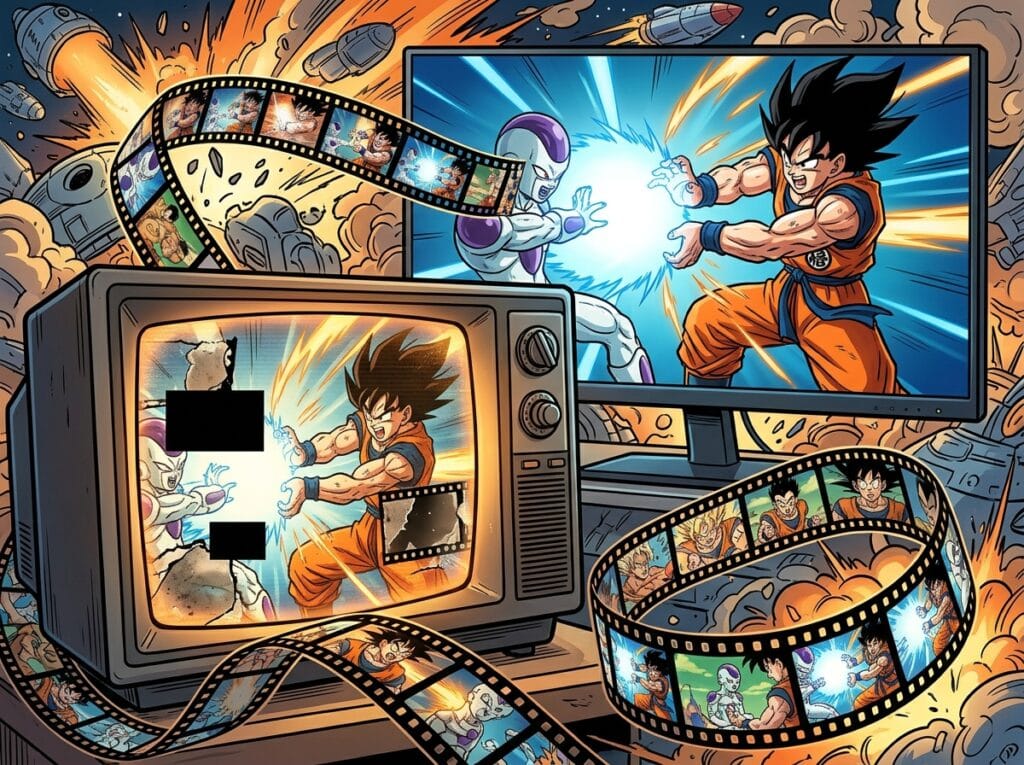
Dragon Ball censorship history is more complicated than a list of deleted scenes. I’ve found that changes varied by country, broadcaster, age rating, and release format, creating different versions of the same story. Blood, nudity, sexual humor, profanity, alcohol, and references to death were among the most common targets.
The biggest changes appeared in the United States during the 1990s, when Dragon Ball and Dragon Ball Z were adapted for children’s television. Looking at these edits helps explain why some viewers remember a lighter version of the series, while others remember its darker humor and violence.
Key Takeaways
- Dragon Ball censorship varied by country, broadcaster, age rating, language track, and release format, so there was never one universal version of the series.
- U.S. children’s television broadcasts in the 1990s commonly removed blood, nudity, sexual humor, profanity, alcohol, smoking, and direct references to death or Hell. Early Dragon Ball Z syndication also compressed 67 Japanese episodes into 53 English-dubbed episodes, changing the story’s pacing and tone.
- Dialogue rewrites were as influential as visual cuts: softened references to killing, renamed afterlife concepts such as “HFIL,” and altered character motivations changed how viewers interpreted serious scenes.
- Later home-video releases, revised dubs, and less-edited manga editions restored some original footage and wording, making direct comparisons possible and explaining why fans remember different versions of Dragon Ball.
Japanese Broadcast Standards
The Japanese broadcast version is an important starting point for understanding Dragon Ball censorship history because it was shaped by local television rules and audience expectations before international dubbing began. I see the original series as a product of family-oriented programming, where intense fights, blood, sexual jokes, and occasional nudity could appear, but still had to fit the scheduled time slot. Early Dragon Ball used more suggestive humor and revealing scenes than many later international broadcasts, especially in its comedy involving Master Roshi and Bulma. However, Japanese television was not completely free of restrictions. Producers could shorten, soften, or rework material when a scene seemed unsuitable for broadcast.
Scheduling also influenced the series in less obvious ways. Dragon Ball and Dragon Ball Z were released weekly, so recaps, repeated footage, preview segments, and anime-original scenes helped the production keep pace with the manga and fill a regular television slot. Broadcast timing and the expected family audience affected how violence, death, smoking, and sexual humor were presented, even when the same story remained available in manga or later home-video editions. Some differences outside the United States came from reruns, compilations, remasters, or revised television cuts rather than from one official censorship policy. For that reason, I treat the Japanese releases as several related versions, not a single untouched master that every later region simply edited down.
U.S. Television Edits

In the 1990s, I saw U.S. television releases reshape Dragon Ball and Dragon Ball Z to meet children’s programming standards. Broadcasters and distributors commonly removed blood, visible injuries, nudity, sexual humor, profanity, alcohol, and cigarette use. References to death and Hell were also softened or rewritten, with characters sometimes described as being sent to another place instead. These changes did not create one universal cut because edits could differ between syndicated broadcasts, cable airings, and later home-video releases.
Syndication schedules also changed the structure of the early English-language Dragon Ball Z broadcast. To fit stricter time limits and reduce the number of episodes needed for distribution, the first 67 Japanese episodes were compressed into 53 English-dubbed episodes. Scenes were shortened or removed, and some dialogue was rewritten to avoid direct references to death, violence, or religious ideas about the afterlife. I find this period especially important because the edits affected not only what viewers saw, but also the pacing and tone of the story.
The result was a version that many young U.S. viewers remember as part of their childhood, even though it differed noticeably from the Japanese broadcast. Some scenes lost visual details, such as blood or revealing artwork, while others changed the meaning of jokes and character situations through new dialogue. Later releases restored or preserved more of the original material, giving fans a clearer view of how regional standards shaped the series. Comparing these versions shows why “Dragon Ball censorship” is best understood as a history of different edits rather than a single censored version.
Dubbed Dialogue Changes
English dialogue changes played a major role in Dragon Ball censorship history because they could reshape a scene without removing its animation. In early English broadcasts, threats were sometimes softened into phrases such as “send you to the next dimension” instead of direct references to killing or death. Terms connected to the afterlife also changed, with Hell renamed “HFIL,” or “Home for Infinite Losers,” in some versions. These choices made violent scenes sound less severe, but they could also weaken the danger, grief, or moral weight behind a character’s actions.
I also find that rewritten motivations changed how viewers understood key characters. Early scripts could make villains sound more boastful, heroes more childish, or serious conversations more comedic than they were in the Japanese version. Some dialogue was adjusted to avoid references to alcohol, sex, religion, or harsh language, while other lines were expanded to explain ideas that the original left understated. These are examples of script adaptation, meaning the words and meaning changed even when the scene itself remained on screen.
That distinction matters because visual censorship involved different choices, such as cutting blood, covering nudity, trimming violent shots, or removing entire moments. A broadcast might keep a character’s attack but change the dialogue, shorten the impact, and remove visible injuries at the same time. Later home-video releases and revised dubs restored some wording and scenes, allowing audiences to compare how regional releases shaped the story. For many fans, remembering these unusual phrases and altered lines is part of the nostalgia, but it also shows why there was never just one universal Dragon Ball version.
Manga and Home Video Releases

Early English manga releases in the 2000s show how Dragon Ball changed when it moved into a different market. Some early printings edited or obscured nudity and softened sexual humor after complaints from readers and parents. These changes affected jokes and character moments that were part of the original tone, especially in the early Dragon Ball stories. Over time, less-edited editions became available with older age labels, giving readers versions that stayed closer to the source material. I see this shift as a reminder that manga edits were often tied to publishing standards rather than changes made by the original creators.
The anime followed a similar pattern, with broadcast versions changing or removing blood, nudity, profanity, references to death, and other material aimed at older viewers. Television cuts sometimes altered dialogue or trimmed scenes to meet children’s programming rules, which could make certain story moments feel less serious or confusing. Later home-video releases restored some of that material and offered fans versions closer to the original Japanese broadcasts. These releases also made regional differences easier to notice because viewers could compare the edited television cut with a longer and less restricted edition. For many fans, that contrast made home video an important part of Dragon Ball censorship history.
How Dragon Ball Censorship Changed Over Time
Dragon Ball censorship history shows that the series was not changed by one global policy. I see each version as a product of its time, shaped by local standards, television broadcasters, age ratings, and the format used for release. In the United States, early children’s broadcasts often removed or softened blood, nudity, sexual humor, profanity, smoking, alcohol, and references to death or the afterlife. Other regions made different choices, while home-video releases and later broadcasts sometimes restored material that earlier television versions had cut. This explains why two fans can remember the same story differently while both memories remain accurate.
Comparing these versions also helps me separate the original Japanese series from the edits that shaped its international reputation. Removed scenes could change a joke, soften a character’s behavior, or make dangerous events seem less serious, while revised dialogue sometimes changed how characters and themes were understood. Looking at broadcast cuts beside later uncut releases, manga printings, and original-language versions reveals both what was removed and why those decisions were made. For longtime fans, that comparison brings back the nostalgia of discovering Dragon Ball while also showing how culture and distribution influenced its journey around the world.
Frequently Asked Questions
1. What is Dragon Ball censorship history?
Dragon Ball censorship history covers the changes made to the anime and manga in different countries, broadcasts, age ratings, and release formats. Common edits involved blood, nudity, sexual humor, profanity, alcohol, smoking, and references to death. This means viewers could watch different versions of the same story.
2. Why was Dragon Ball censored in the United States?
The biggest changes happened during the 1990s, when Dragon Ball and Dragon Ball Z were adapted for children’s television. Broadcasters and distributors often softened violence, removed sexual jokes, edited nudity, changed dialogue, and reduced references to death or alcohol. These decisions were shaped by television standards, advertiser concerns, and the age rating targeted by each release.
3. Was the original Japanese version of Dragon Ball completely uncensored?
No. The Japanese broadcast version included more blood, sexual humor, and revealing scenes than many international broadcasts, but it still followed local television rules and the expectations of its time slot. Producers could shorten, soften, or rework material when a scene seemed unsuitable for broadcast, while manga and later home-video releases could preserve different content.
4. What types of scenes were most often censored in Dragon Ball?
Blood and graphic injuries were among the most common edits, especially during major fights. Broadcasters also targeted nudity, sexual jokes involving characters such as Master Roshi and Bulma, profanity, smoking, alcohol, and direct references to death. Some scenes were cut completely, while others were changed through altered dialogue, cropping, pauses, or replacement footage.
5. Why do some fans remember Dragon Ball as more violent or adult than others?
Fans often watched different versions based on their country, broadcaster, language track, age rating, and release format. A television version might remove blood or sexual humor, while a home-video edition, manga volume, or Japanese release could keep more of the original material. Scheduling also mattered because family-oriented time slots encouraged softer presentations.
6. Did censorship change the story of Dragon Ball?
Censorship usually did not remove the main plot, but it could change how scenes felt and how characters were understood. Altered dialogue might make a death sound less serious, while cuts to violence or sexual humor could make the series seem lighter and more suitable for children. In some releases, missing footage and changed explanations also made individual scenes less clear.
7. Were Dragon Ball manga releases censored in the same way as the anime?
No. Manga, television broadcasts, and home-video releases were handled under different rules, so they did not always contain the same edits. Manga editions could preserve material that television removed, while translated or localized print releases might still adjust artwork, dialogue, or culturally sensitive jokes.
8. How can I find the least censored version of Dragon Ball?
Look for releases that identify the original Japanese broadcast, uncut footage, or restored scenes, and check whether the release includes both Japanese and translated audio. Home-video editions are often less edited than syndicated television versions, but the exact content depends on the country and distributor. Comparing subtitles, dialogue, and episode runtimes can help reveal which version you have.

