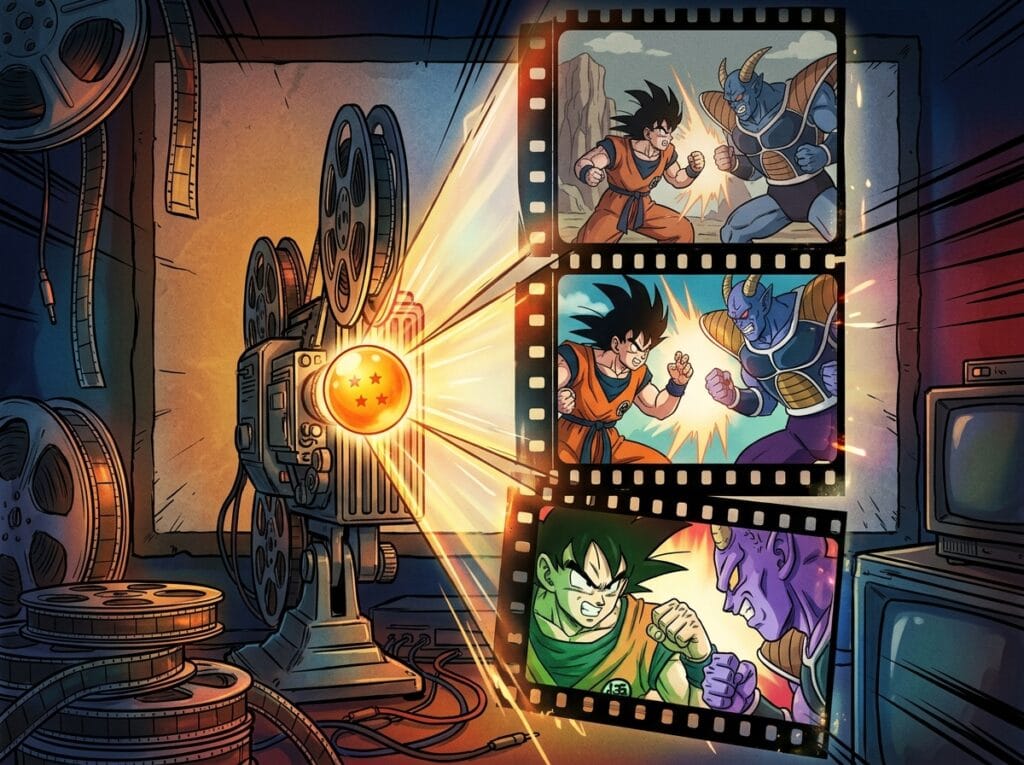
When I look at Dragon Ball localization changes, I find far more than different names or translated lines. Early English releases reshaped violence, nudity, humor, music, character voices, and even episode structure to fit children’s television. The original U.S. Dragon Ball Z broadcast dub compressed 67 Japanese episodes into 53 English episodes, giving many viewers a version that felt noticeably different.
These choices also varied by region, so fans in Latin America, Spain, France, Germany, and other markets often encountered different names, edits, voices, and release practices. Understanding those differences helps explain why the same characters and techniques can sound unfamiliar, and why some scenes, jokes, or story details may seem to be missing.
Key Takeaways
- Early U.S. Dragon Ball Z broadcasts made major structural changes by compressing 67 Japanese episodes into 53 English episodes, altering pacing, episode boundaries, and story transitions.
- Children’s television standards led to edits or rewrites involving violence, blood, nudity, sexual humor, alcohol, religious references, and death, often changing the tone of serious scenes.
- Localization changed more than visuals: character and technique names, dialogue, humor, music, voice performances, and character motivations varied across releases and could reshape how viewers understood the series.
- Dragon Ball has no single worldwide localized version; regional releases and later revisions such as uncut editions and Dragon Ball Z Kai reflect different cultural standards, translation choices, and production goals.
U.S. Dub Episode Compression
The original U.S. broadcast dub compressed 67 Japanese Dragon Ball Z episodes into 53 English broadcast episodes, removing 14 installments from the package. I see this as a structural change, not just a translation difference, because scenes from separate Japanese episodes could be combined into one English episode. Editors also trimmed recaps, repeated footage, opening and ending material, and scenes that slowed the syndicated broadcast format. This made some fights feel faster while making other story transitions seem abrupt or harder to follow. The shortened version changed both the pacing and the way the story was divided for viewers.
Compression was only one part of the early localization process. Because the show was prepared for children’s syndicated television, the broadcast version also reduced or altered blood, violence, nudity, sexual humor, alcohol, and some religious references. English dialogue was sometimes rewritten to explain a scene more directly, soften its tone, or replace a joke or cultural reference that might not work for the target audience. Character and technique names could change as well, such as Piccolo’s Makankosappo becoming the Special Beam Cannon. These choices made the English release feel different even when the basic plot remained intact.
Later uncut English releases should not be treated as the same version as the original 53-episode broadcast package. They generally restored omitted footage and returned the story to the original Japanese episode structure, although their scripts, voice performances, music, and terminology could still differ from the Japanese release. Dragon Ball Z Kai was a separate re-edit based more closely on the manga, with new production and localization choices rather than a simple restoration of the old broadcast dub. When I compare these versions, I look at episode boundaries as well as dialogue, censorship, names, and music. That distinction helps explain why two English releases can tell the same story while having noticeably different pacing and tone.
Censorship and Broadcast Edits

American children’s television shaped many of the earliest English-language Dragon Ball localization changes. I find that broadcasters often trimmed blood, shortened fights, removed shots of nudity, and altered sexual jokes that were considered unsuitable for younger viewers. Alcohol was sometimes presented as a harmless substitute, while lines about death, killing, or serious injury were softened or rewritten. These changes could make a dangerous scene sound like a temporary setback, even when the original dialogue was much more direct.
The edits also affected religious and afterlife references, with some English versions replacing words such as “Hell” with playful alternatives like “HFIL.” Visual censorship could hide the original meaning through cropping, blurring, cuts, or rearranged footage, while rewritten dialogue changed how characters’ motives and relationships came across. I also consider these choices alongside renamed techniques, altered jokes, and different character names, because localization was not limited to removing images. In some cases, the broadcast version preserved the basic story while changing its tone from darker or more suggestive to lighter and more comedic.
These edits were not identical across every release or country. The first American broadcast versions were shaped by syndicated children’s television standards, while Latin American, European, and Asian releases followed their own translators, broadcasters, and cultural expectations. Even later English releases restored some footage or used dialogue closer to the Japanese script, so viewers may encounter several different versions of the same scene. I use those distinctions to explain why two fans can remember the same Dragon Ball moment differently without either version being entirely wrong.
Renamed Characters and Techniques
Names and techniques are among the clearest Dragon Ball localization changes because they affect nearly every scene. Early English releases used terms such as “Next Dimension” or “Other World” for the afterlife, while “HFIL,” short for “Home For Infinite Losers,” replaced direct references to Hell for broadcast audiences. Attack names also shifted, with Kamehameha generally retained, but Makankosappo becoming Special Beam Cannon, Kienzan becoming Destructo Disc, and Genki-dama becoming Spirit Bomb. These choices made the dialogue easier for English-speaking viewers to follow, but they could also remove wordplay or cultural meaning from the original terms.
Character descriptions changed along with the vocabulary. Early scripts often presented Goku as a more familiar heroic figure who fought mainly to protect Earth, even though the Japanese dialogue shows him as an unusually innocent, competitive person who seeks strong opponents and adventure. Lines were sometimes added to explain his feelings, strengthen dramatic moments, or make a character sound more traditionally noble than in the source material. I find this especially noticeable when Goku’s personal excitement about a battle is softened into a simple concern for justice. The result is not a different character in every scene, but it can change how viewers understand his goals and personality.
Later English releases generally moved closer to the Japanese dialogue, restoring more original motivations and using translations that better reflect the source terms. That does not mean every renamed technique disappeared, since familiar names such as Spirit Bomb and Destructo Disc remained part of the series’ established English vocabulary. Localization still involves choices about jokes, idioms, timing, and what a target audience will understand without extra explanation. Comparing versions therefore reveals more than small name changes, because terminology can shape the tone of a scene and the way an entire character is understood.
Regional Releases and Later Revisions

Dragon Ball localization changes are easiest to see in the early United States releases, which were shaped for children’s syndicated television. The first English broadcast of Dragon Ball Z compressed 67 Japanese episodes into 53 English broadcast episodes, while edits softened violence, nudity, sexual humor, alcohol, and religious references. Dialogue also changed, sometimes turning serious scenes into simpler lessons or replacing cultural references with jokes that made more sense to American viewers. Music was another major difference, since early broadcasts often used a new English-language score instead of the original Japanese soundtrack. I treat these changes as part of the release history, not as a single permanent version of the series.
Other regions created their own traditions rather than simply copying the U.S. dub. Latin American releases generally built a widely shared Spanish vocabulary, while Spain sometimes used different character and technique names, including alternate names for Mr. Satan. French and German broadcasts also developed distinctive translations, pronunciations, edits, and voice casts that can make familiar scenes sound noticeably different. In the Middle East and Southeast Asia, broadcasters and distributors adapted dialogue, violence, humor, and cultural references to local standards, often producing versions that varied between countries. These differences explain why a character’s name, attack call, or joke may change even when viewers are watching the same Japanese story.
Later releases helped bring many versions closer to the original, although they did not make every regional edition identical. Dragon Ball Z Kai used a revised script and a shorter episode structure that generally followed the Japanese dialogue more closely, while later home-video editions could restore footage, update translations, and offer the original music or a new dub score. Newer subtitles and dubs also tend to preserve names, wordplay, honorifics, and cultural references that earlier television adaptations simplified or replaced. I still check the specific release when comparing dialogue, because music, voice casting, censorship, and names can differ between broadcast, home-video, and streaming versions. That release-by-release approach makes it easier to understand why fans remember different lines, songs, and character names.
How Localization Changed Dragon Ball
Dragon Ball localization changes shaped how many viewers first understood the series. Early English broadcasts often treated the anime as children’s syndicated television, so violence, blood, nudity, sexual humor, alcohol, and religious references were edited or softened. The first U.S. broadcast dub also compressed 67 Japanese episodes into 53 English episodes, changing the pace and removing some original material. These choices were not limited to censorship, because music, voice casting, dialogue, and episode structure also influenced the tone of each release.
Terminology created another major difference between versions. Character names, attack names, jokes, and cultural references could be translated closely, adapted for local audiences, or replaced with wording that fit a broadcaster’s standards. Those choices affected character interpretation, too, since a serious line, a playful joke, or a more aggressive performance could make the same character seem different. Releases in Latin America, Spain, France, Germany, the Middle East, Southeast Asia, and other regions developed their own patterns, so there is no single worldwide localization history.
When I compare Dragon Ball localization changes, I find it more useful to view each dub or broadcast version as a product of its target market, era, and release standards. A version shaped for edited children’s television should not be treated as a complete representation of the Japanese series, just as a later, less edited release should not erase the viewing experience created by an earlier one. Looking at names, dialogue, censorship, music, and performances together explains why fans can remember the same story in noticeably different ways. Recognizing that context makes those differences easier to understand without declaring one release the only correct version.
Frequently Asked Questions
1. What were the biggest Dragon Ball localization changes in the early U.S. dub?
The early U.S. broadcast version changed more than translated dialogue. It edited violence, blood, nudity, sexual humor, alcohol, music, character voices, technique names, and some cultural or religious references to fit children’s television.
2. Why does the original U.S. Dragon Ball Z dub have fewer episodes?
The original U.S. broadcast dub compressed 67 Japanese Dragon Ball Z episodes into 53 English broadcast episodes. Editors combined material from different episodes and cut recaps, repeated footage, opening and ending segments, and scenes that did not fit the syndicated format.
3. How did episode compression affect the story?
Compression made some battles move faster, but it also created abrupt transitions and made certain story details harder to follow. Scenes that originally had room to develop could be shortened or placed beside material from another episode, changing the story’s pacing and structure.
4. Why were violence and nudity changed in Dragon Ball localization?
Early English releases were prepared for children’s syndicated television, where broadcasters had stricter standards for blood, injuries, nudity, and sexual humor. Scenes could be trimmed, softened, covered, or rewritten so the broadcast would be easier to air for a younger audience.
5. Were Dragon Ball character and attack names changed during localization?
Yes, names could change because translators and distributors chose different English spellings, pronunciations, or familiar alternatives. Character voices and attack names also varied by release, which is why the same character or technique may sound different across dubs and regions.
6. Did every country receive the same Dragon Ball localization?
No, localization choices varied by region. Latin American, Spanish, French, German, and other releases often had their own translated names, edits, voice casts, music choices, and release practices, so fans in different countries could experience noticeably different versions.
7. Why does the Dragon Ball dub sometimes use different music or dialogue from the Japanese version?
Music and dialogue were often changed to match the goals of a local broadcast or distributor. English dialogue could explain scenes more directly, soften a joke, replace a cultural reference, or fit edited footage, while new music or sound choices helped create a version aimed at that market.
8. Which Dragon Ball version should I watch if I want the most complete story?
I recommend an uncut release with the original episode structure when you want the closest experience to the Japanese broadcast. A complete version preserves scenes, pacing, music, and dialogue that early syndicated broadcasts changed, while edited dubs can still be enjoyable if you prefer their voices or presentation.

