
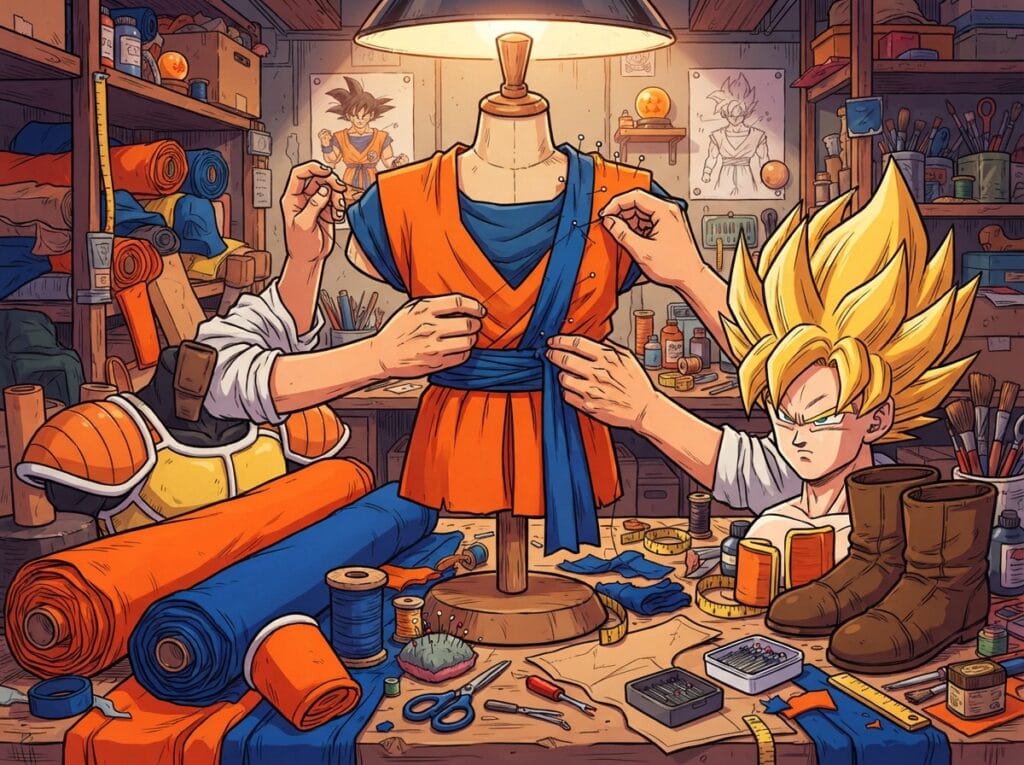
Dragon Ball cosplay materials depend on the character and costume part. Shaped armor can use hard sponge covered with vinyl leather, while a suit needs fabric that allows movement. The supply list changes with the design because armor and garments have different needs. The official Vegeta armor recreation is one example, pairing shaped armor with a thick jersey inner suit.
The team spent 160 hours making the armor, according to the Dragon Ball Official Site. This project offers a useful reference for materials and effort, not a required recipe for every cosplay.
Key Takeaways
- Dragon Ball cosplay materials should match each costume part: use hard sponge or EVA foam for shaped armor, vinyl leather for its covering, and flexible fabric for garments.
- A Saiyan suit should allow movement and provide a comfortable fit, opacity, and stretch; test a fabric sample by bending, reaching, and crouching before cutting.
- Home cosplay projects are easier to manage in stages, starting with one recognizable piece; the official Vegeta armor took 160 hours, according to the Dragon Ball Official Site, but that is not a standard time estimate for every costume.
- U.S. textile flammability rules can apply to finished costumes, and the CPSC considers Class 3 textiles dangerously flammable and prohibited for clothing use, according to its 16 CFR Part 1610 guidance.
What Materials Work Best for Dragon Ball Cosplay?
The best Dragon Ball cosplay materials depend on the character and costume part. Shaped armor can use hard sponge or EVA foam, suits need fabric suited to movement, and gloves and outer coverings call for materials that match the design. We can use the official Vegeta armor recreation as a reference, not a required recipe.
The Dragon Ball Official Site reported that its team drafted custom patterns using illustrations and designs from the original series. The makers shaped parts with hard sponge and other materials, then covered them with vinyl leather for a distinct finish. EVA foam is another option for shaped pieces, though each build can use a different combination of materials. The Dragon Ball Official Site’s Vegeta armor account describes the custom patterns and construction.
For garments, the official recreation used a thick jersey inner suit chosen to allow agile movement. The team also made leather gloves from a pattern cut and sewn from multiple pieces, showing that smaller parts may need their own materials and construction methods. The armor alone took 160 hours to create, so a detailed recreation can be a substantial project. Read the official recreation details for more about the suit, gloves, and project time.
Match Materials to Armor and Costume Parts

Treat a costume as a set of parts, not one project made from a single material. Armor panels need to hold their shape, so EVA foam or hard sponge can work well, with vinyl leather as an outer covering. Belts, boots, gloves, and garments each have different purposes, so plan each component separately instead of assuming the armor material will suit the whole outfit.
Flexible fabrics work better for garments that need to move with the wearer, while stiffer materials suit shaped armor. The official Vegeta recreation shows how a smaller component can need its own construction method. Its leather gloves were cut from a pattern and sewn from multiple pieces, as described by the Dragon Ball Official Site.
Let the character design guide the finish and construction of each part. One cosplay might pair covered foam armor with a fabric suit and separately made gloves, boots, and belt. Another version of the same character can use different materials. No single supply list is the only correct choice.
How Do You Choose Fabric for a Saiyan Suit?
Choose fabric for a Saiyan suit by matching its stretch, comfort, opacity, and fit to the character’s design and how you plan to wear and construct it.
For a close-fitting suit, prioritize comfortable stretch. Check opacity under the costume’s expected lighting and consider whether you’ll wear it over another layer. Test a sample before cutting by bending, reaching, and crouching. Then check for pulling seams or see-through areas.
The official Vegeta inner suit balanced a substantial look with agility. Its custom pattern used thick jersey fabric selected to allow agile movement, according to the Dragon Ball Official Site. Panel placement and seam design can also affect fit and mobility.
Let the character’s silhouette and close-fitting details guide your fabric choice, and consider the construction method too. A one-piece suit, a suit made from panels, or a layered build may need different levels of stretch and different fabric weights. Choose material for the costume’s construction, not appearance alone.
Can You Make Dragon Ball Cosplay at Home?

Yes, you can make Dragon Ball cosplay at home by building the costume in stages and matching materials to each part. Start with a recognizable, manageable piece, then add shaped or detailed parts as your time and skills allow.
- Choose a character and list the costume’s main parts, such as a suit, armor, gloves, or belt.
- Pick one simpler piece that clearly identifies the character as your starting point.
- Decide which parts need structure, using EVA foam or hard sponge for shaped armor and flexible fabric for garments.
- Make patterns for the planned pieces and test their size and shape before cutting the final materials.
- Build the base garment and check its fit and movement before finishing armor panels or smaller details.
- Add shaped parts and details in stages, adjusting the plan to fit your available time and skill.
Project time depends on the design and construction method. The team behind the official Vegeta armor recreation spent 160 hours on it, but that documented project is not a standard time estimate for every cosplay. Costs also depend on material type, the amount needed, and construction complexity. A simple fabric build and a layered armor costume can require very different supplies.
What Should You Know About Costume Safety?
U.S. clothing-textile flammability rules can apply to costumes, but they do not require every handmade costume to use one particular material. The U.S. Consumer Product Safety Commission (CPSC) says 16 CFR Part 1610 applies to textile fabric or related material ready for use in wearing apparel, including finished costumes. The CPSC groups textiles into three flammability classes. Class 3 textiles are considered dangerously flammable and prohibited for clothing use, according to the CPSC’s 16 CFR Part 1610 guidance. This product-safety requirement applies to covered textiles. It does not recommend a specific fabric or construction material for every Dragon Ball cosplay. Costume designs and material choices can vary, and the standard does not set one universal recipe for handmade costumes.
Start With One Signature Costume Piece
Choose the piece that would still identify the character if the rest of the outfit were plain. For a Vegeta cosplay, mark one armor panel as the first build. For a fabric-focused character, choose one distinctive garment section instead of planning the full suit. Use the official Vegeta armor recreation as a visual reference, then create your own version rather than copying the full project.
On a single page, record the piece’s outline, colors, surface finish, edge details, and attachment points. Add measurements that affect fit and list materials for that piece alone. Separate must-have details from optional decoration so your first supply list covers the recognizable shape before small accents. Note where the piece bends against clothing and which edges need support. Set the stopping point at one finished, wearable piece before expanding the project.
Frequently Asked Questions
1. How can I make a simple Dragon Ball wig or hairstyle?
Start with a wig in the character’s main hair color, then shape it into a few recognizable spikes. Arrange the wig before trimming, and use styling products made for wigs to hold its shape.
2. What tools do I need to shape EVA foam for cosplay?
Gather a sharp craft knife, a cutting mat, a ruler, and a heat gun. Use the knife and ruler to cut clean shapes, then apply heat carefully to form curves.
3. How should I store a costume with foam armor?
Store foam armor clean, dry, and supported so the pieces do not get crushed or bent out of shape. Keep it away from high heat, and store the garment separately if hanging it would pull on the armor.
4. Where can I buy cosplay materials?
Look for garment fabric and basic craft supplies at local fabric or craft stores, and check cosplay-focused retailers for materials such as EVA foam. Cosplay-focused retailers is one retailer that lists EVA foam sheets. Available products can vary.

