
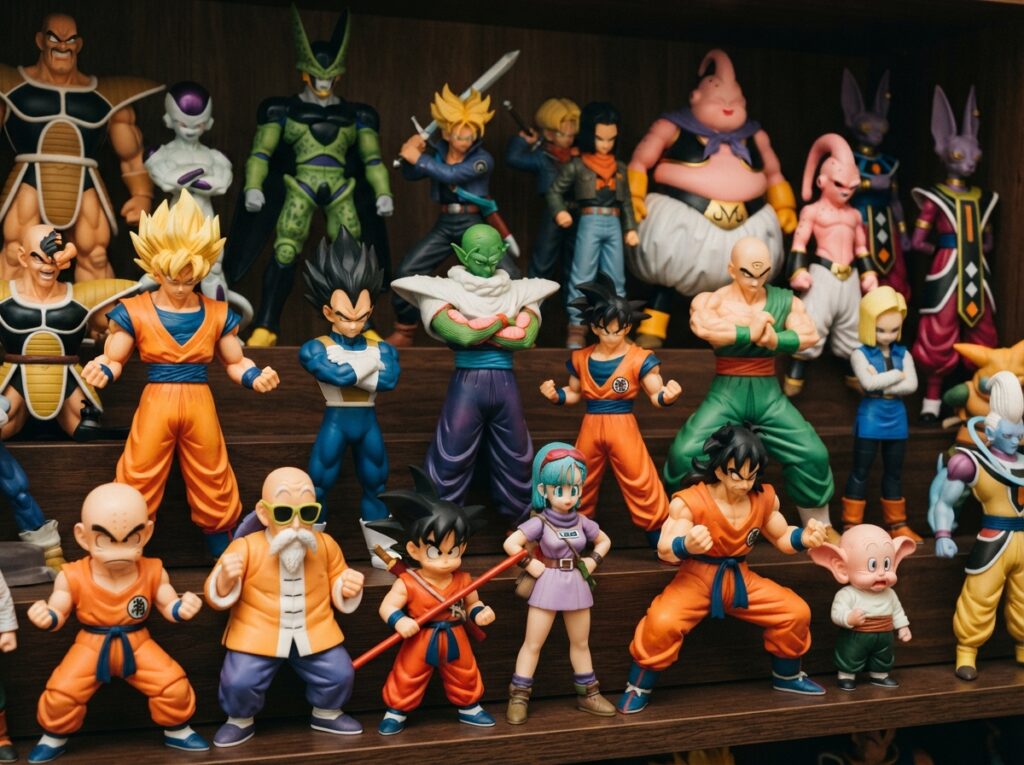
Dragon Ball figures vary in size by product line and format. Product listings may give a height in inches or centimeters, while some statues use fractional scale labels such as 1/4. There is no single size for every figure. For a clear reference point, an HG Dragon Ball capsule figure is approximately 10 centimeters tall, according to the official Dragon Ball announcement.
A line name or scale label alone does not tell you how much room a figure needs. Bandai’s announced Colossal Warriors Super Saiyan Blue Goku stands 16 inches tall, which is a useful contrast to the compact capsule figure. At Saiyan Warrior, we start by comparing stated dimensions to help plan a display, then use scale labels as supporting context. Bandai’s announcement gives the figure’s height.
Key Takeaways
- We recommend comparing the stated height, width, and depth for each specific Dragon Ball figure, because a line name or scale label alone does not show how much shelf space the figure needs.
- A 1/4- or 1/6-scale label describes a ratio, not an exact size; for example, the 1/4 Kid Buu statue measures 41 × 33 × 33 centimeters, while the 1/6 version measures 27 × 23 × 23 centimeters.
- Dragon Ball figure sizes in the examples range from the HG Dragon Ball capsule figure at approximately 10 centimeters tall to Colossal Warriors Super Saiyan Blue Goku at 16 inches.
- Before choosing a display spot, we suggest measuring its clear height, usable width, and depth, comparing those limits with the product listing, and treating unlisted dimensions as unknown.
What Does Dragon Ball Figure Scale Mean?
Dragon Ball figures use different size details, including stated heights and fractional scale labels. No single size applies to every line. A height measurement tells you how tall a specific figure is. A scale label describes its proportions relative to a reference size, so the two terms describe size in different ways.
In plain language, a 1/4-scale figure represents a subject at one-quarter of the reference dimensions, while a 1/6-scale figure represents it at one-sixth. The fraction does not tell you the figure’s exact height by itself. You also need to know the reference dimensions. Product listings may give dimensions separately, so check those details when comparing figures.
Ratio notation also appears in technical drawings. ISO’s description of ISO 5455:1979 explains scales used for technical drawings. The standard provides context for understanding ratios, but it does not set sizing rules for collectible figures.
Published heights give you a direct measurement to compare across lines. Bandai described Dragon Stars figures as 6.5 inches tall. The Dragon Stars announcement gives the stated size.
Before choosing figures for a display, compare each product’s stated height and any listed width and depth. These measurements give you a more practical idea of the space a figure may need than its line name or scale label alone.
How Do Dragon Ball Figure Sizes Compare?
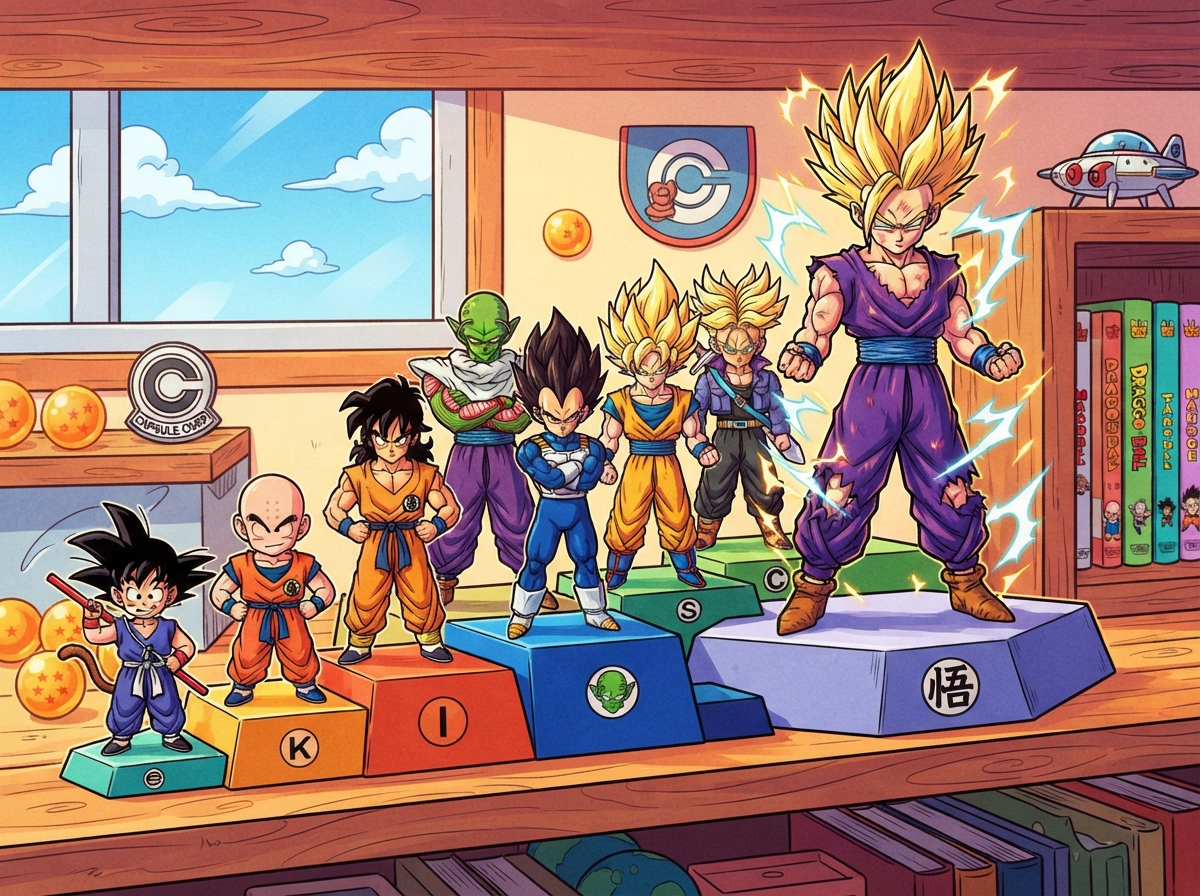
The examples below range from roughly 10 centimeters to 16 inches, with several sizes in between. Read from smallest to largest, they show how much sizes can vary across capsule figures, action figures, and larger display pieces.
The HG Dragon Ball 01 GOKU EDITION capsule figure is approximately 10 centimeters tall, making it a compact reference point. The official HG Dragon Ball announcement gives the figure’s approximate height.
The Dragon Ball Flash Super Saiyan 2 Goku is 4 inches tall, close in size to the 10-centimeter HG example. These measurements put both figures near the small end of this comparison, even though they are different product formats. Bandai’s announcement lists the Dragon Ball Flash figure’s height.
The S.H.Figuarts Son Goku measures approximately 145 millimeters. The TAMASHII NATIONS listing gives its approximate height.
Dragon Stars Super Hero figures are listed at 6.5 inches tall, placing them above the smaller examples in this comparison. This measurement applies to the announced figures. It does not guarantee that every Dragon Stars release has the same height. The Dragon Stars announcement gives the stated size.
The Ichiban Kuji Last One Prize Porunga is 30 centimeters tall, making it larger than the capsule and action-figure examples. The official Dragon Ball site lists Porunga’s height.
At the largest end of this comparison, Colossal Warriors Super Saiyan Blue Goku stands 16 inches tall. Together, these examples span roughly 10 centimeters to 16 inches, but a line name does not guarantee that all products have the same measurements. Bandai’s announcement states the Colossal Warriors figure’s height.
What Does 1/4 Or 1/6 Scale Mean?
A 1/4- or 1/6-scale label is a ratio, not a measurement in inches or centimeters. It describes how a figure’s dimensions relate to a reference size, so the label alone cannot tell you the finished statue’s height or width. Products with different scale labels may also have different physical dimensions, which is why you should check each listing.
The Civilization Studio Kid Buu resin statue’s 1/4 version measures 41 × 33 × 33 centimeters, while its 1/6 version measures 27 × 23 × 23 centimeters. These dimensions let you compare height, footprint, and depth rather than relying on the scale label alone.
Ratio notation also appears in technical drawings, but it does not create a universal sizing rule for collectibles. ISO 5455:1979 covers scales in technical drawings. It provides context for reading ratio notation, not a standard that determines the size of every 1/4- or 1/6-scale figure.
Why Can Same-Character Figures Differ?
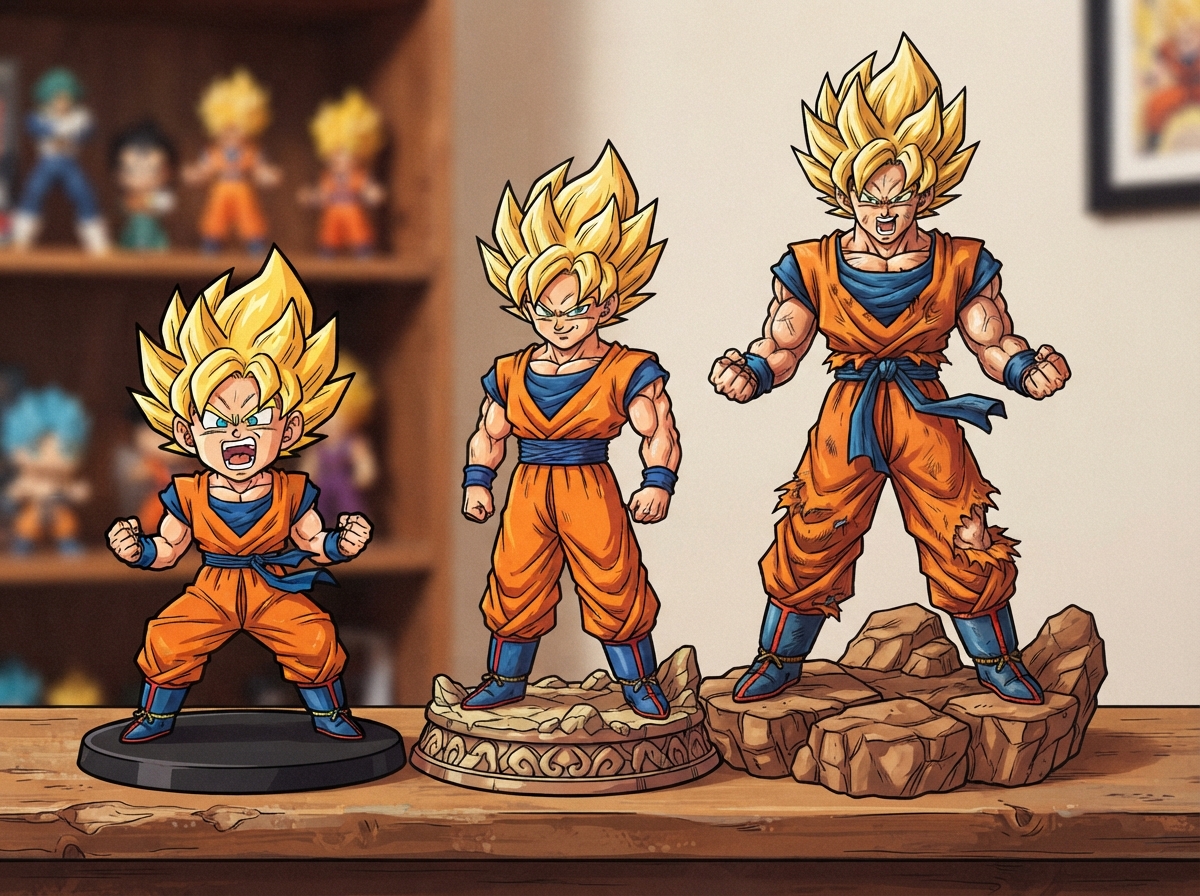
Two figures depicting Goku can take up very different amounts of space because their formats and designs differ. A scale label alone does not determine a figure’s finished size.
The Dragon Ball Flash Super Saiyan 2 Goku is 4 inches tall, making it a compact reference point in this comparison. This measurement describes a different product format from the capsule figures. Bandai’s announcement lists the Dragon Ball Flash figure’s height.
A S.H.Figuarts Son Goku release measures approximately 145 millimeters. The TAMASHII NATIONS listing gives its approximate height.
Product listings may state a figure’s height, give several dimensions, or use a fractional scale label such as 1/4 or 1/6. Each detail answers a different question: height gives one measurement, multiple dimensions describe more of the figure’s size, and a scale label expresses a ratio. None guarantees that figures from separate product lines will match.
A figure’s pose, base, and overall design can also affect how much display space it needs. A wide stance or large base may require more shelf space than its height alone suggests. When a listing gives height, width, and depth, check all three measurements to get a clearer idea of the space the figure may occupy.
How Should You Compare Figures Before Displaying Them?
To compare Dragon Ball figures, start with each product’s stated height. Then check its listed width and depth, convert measurements to one unit, and use all the available dimensions to plan shelf space. Follow the same steps for every product so you compare the figures themselves, not their packaging or line names.
- Start with the height on the product page. It gives you the figure’s stated vertical measurement.
- Check the width and depth if the product page provides them, especially if the figure has a base or a wide pose.
- Convert measurements to the same unit before comparing figures. Do not estimate dimensions that the product page does not list.
- Use the Kid Buu resin statue dimensions to see why height alone is not enough. The 1/4 version measures 41 × 33 × 33 centimeters, while the 1/6 version measures 27 × 23 × 23 centimeters. Comparing all three dimensions gives you a clearer picture of their size than comparing height alone.
- Compare the measurements for each specific product instead of assuming that the same scale label, character, or line guarantees a match. A 1/4- or 1/6-scale label does not tell you the product’s full shelf footprint.
Which Dragon Ball Figure Size Fits Your Display?
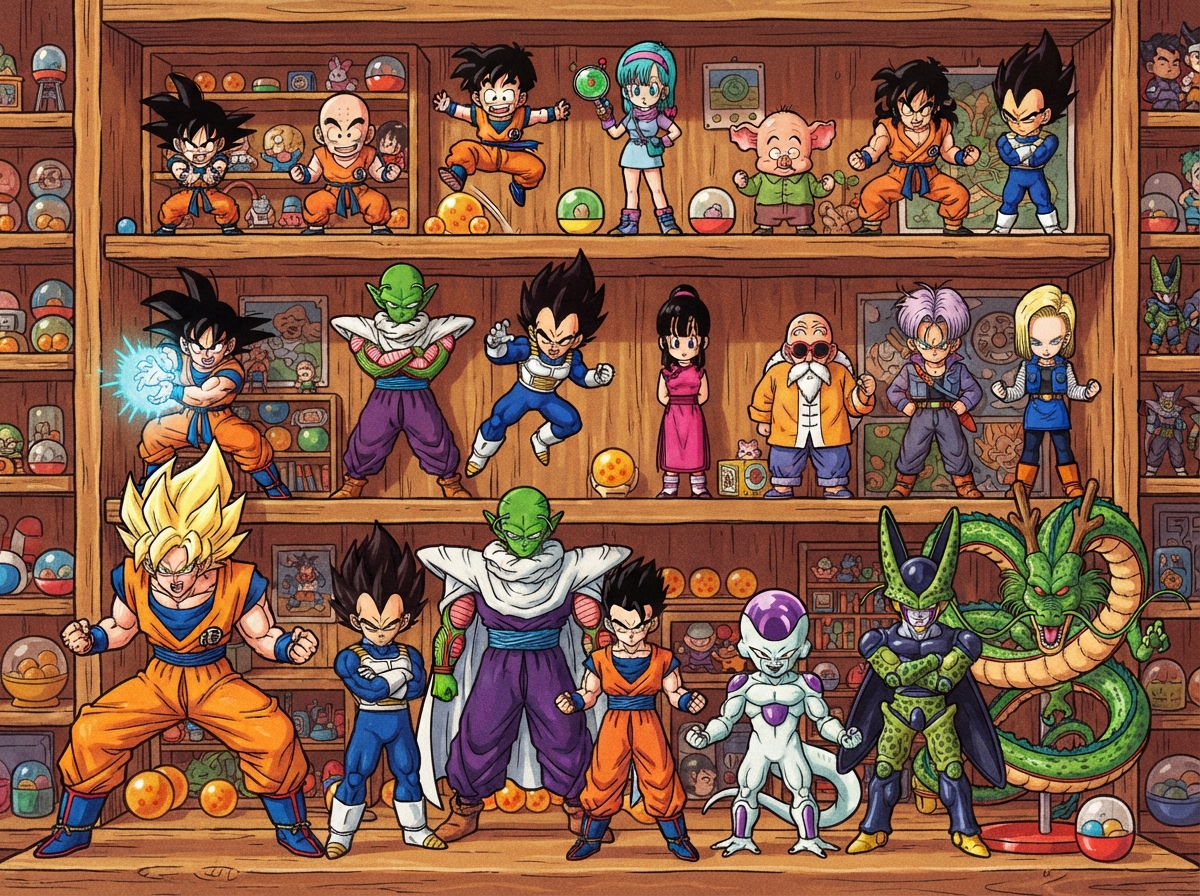
The right Dragon Ball figure size for your display is one whose listed dimensions fit the available space, including any limits on height, width, and depth.
Compact capsule figures need less vertical space than the larger examples in this comparison. The HG Dragon Ball 01 GOKU EDITION figure is approximately 10 centimeters tall, according to the official Dragon Ball announcement. Use that height to check whether the figure will fit beneath a shelf.
Articulated figures have different space needs. A S.H.Figuarts Son Goku listing gives an approximate height of 145 millimeters. Poses or accessories can also affect an articulated figure’s footprint. The TAMASHII NATIONS listing provides the figure’s stated height.
The 1/4-scale Civilization Studio Kid Buu statue measures 41 × 33 × 33 centimeters, so its width and depth matter when planning shelf space, as well as its height. The 1/6-scale version measures 27 × 23 × 23 centimeters.
Scale labels offer useful context, but listed dimensions are a better way to compare products from different lines. A stated height may be enough for a simple height check, while a statue’s full dimensions help you assess its shelf footprint.
Compare the figure’s height with the available vertical clearance, then check its width and depth against the display surface. The right comparison depends on your available space and the dimensions listed for the specific figure.
Check The Dimensions Before You Choose
Before choosing a figure for a specific shelf, measure the clear height of the space and the usable width and depth of the surface. Write down all three limits in the same unit, such as centimeters, so you can compare them directly with product dimensions.
Next, open the page for the exact figure and note its stated height, width, and depth. Check whether the measurements include a base, and allow for any pose or accessory that may extend beyond the figure’s main body. If a listing gives only the height, mark the width and depth as unknown rather than assuming the figure will fit a narrow shelf.
If you are considering Dragon Ball DAIMA Dragon Stars Goku (Mini), Vegeta (Mini), or Nyoibo, do not treat “Mini” as a measurement. Find the specific product listing and check its dimensions before choosing a display spot. Bandai’s announcement identifies the figures but does not give their height in the information cited here. If a figure’s dimensions exceed a shelf limit, compare another product or choose a different display space.

