
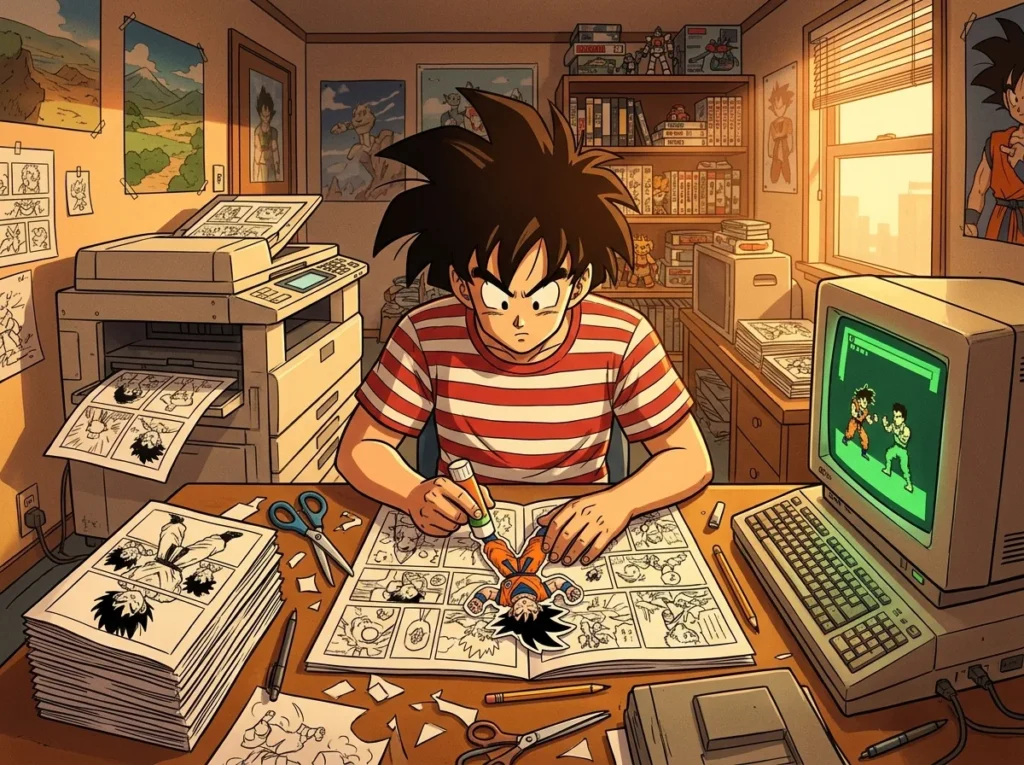
Dragon Ball fan zine history begins in Spain in the early 1990s, when the anime’s 1992 arrival inspired fans to make their own self-published booklets. Nuria Teuler and Alex Samaranch founded the Club de Fans de Akira Toriyama de Cataluña, and Dragon Ball Magazine appeared as an early nonprofit zine in 1993.
By 1997, a catalogue for the third Salón del Manga de Barcelona listed 36 specialized fanzines active in Spain. Those early zines gave fans a place to discuss the series, critique translations, and share fan translations long before the internet became common.
Key Takeaways
- U.S. fair use has no fixed page count, so Dragon Ball fan zines must pass a four-factor test case by case.
- New creators should start a Dragon Ball fan zine with original characters, printing a small first run before anything bigger.
- Spanish fans used 1990s zines to demand more faithful translations of Dragon Ball, pushing back against Westernized character names.
- DBZine 2024 shows that a Dragon Ball fan zine can be a 32-page digital PDF offered on a name-your-price basis starting at $0.
What Is a Dragon Ball Fan Zine?
A Dragon Ball fan zine is a small booklet that fans make themselves to share their own art, writing, and ideas about the series. The Library of Congress describes zines as do-it-yourself publications, usually made on paper and copied on a photocopier or printer. They are generally self-published, self-created, self-distributed, and non-commercial, so they are not meant to be a business.
Fans often trade zines with each other, hand them out at meetups, or give them away for free. Some creators sell them for a few dollars to cover printing costs, according to the Library of Congress zine-making resource, which notes that zines are often traded or given away.
Defining the format strictly is hard. The Library of Congress notes that zines resist a strict definition, so there is no single look or size they must follow. One zine might be a few hand-drawn pages stapled together, while another might be a longer printed booklet packed with comics and reviews. That freedom is a big part of why fan zines vary so much in style and content.
Where Did Dragon Ball Fan Zines Begin?
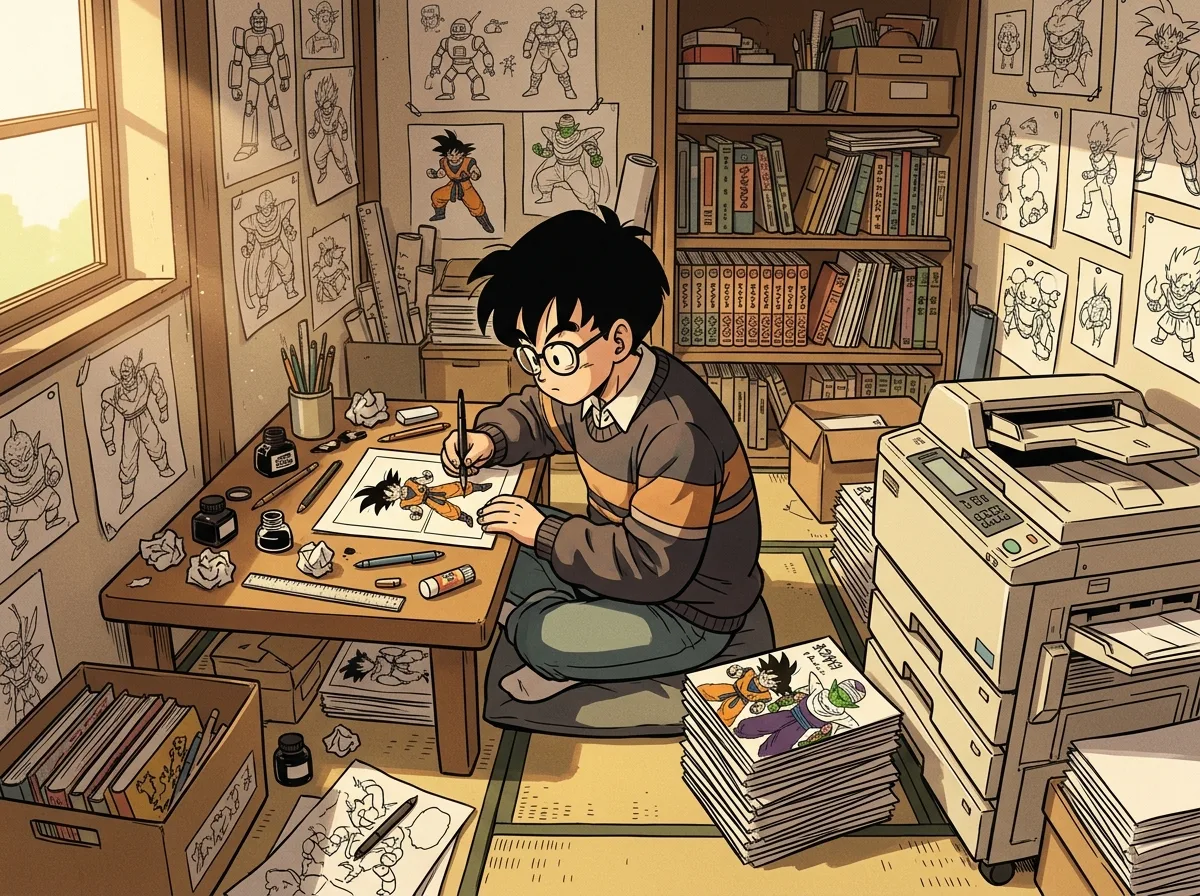
Dragon Ball fan zines first took shape in Spain, where the anime’s 1992 arrival got fans excited enough to start their own groups. Soon after, Nuria Teuler and Alex Samaranch founded the Club de Fans de Akira Toriyama de Cataluña, a gathering place for people who wanted to talk about the series and its creator.
Fans also wanted more manga and anime coverage than the market offered. Dragon Ball Magazine, which appeared in 1993, was one of Spain’s early nonprofit zines. It filled a gap in specialized manga and anime publishing at a time when internet use was not yet widespread, so readers could follow the series in a printed booklet they could hold, mark up, and pass to a friend.
Tsuzu is another early example. Its first run is dated to 1993, and it was a nonprofit fanzine that read from right to left, the way Japanese manga is traditionally read. Tsuzu was later renamed Tsuzuki, and it became the precursor to Neko, which was published from May 1994 to 2000.
Why Did Fans Push for Better Translations?
Fans pushed for better translations because official releases often left them unhappy, and zines gave them a printed place to say so. The Spanish zines Tsuzu, Dragon Ball Magazine, LCM, and Yamatai wrote about fans’ frustration with poor translations. Readers also complained about reversed page layouts, which flipped the art and made manga feel wrong, and about Westernized character names, which swapped the original names for ones that sounded more familiar to Spanish readers. A 2026 study of Spanish otaku fanzines describes these zines as a space where fans could argue for the series as they knew it.
Zine makers did more than complain. They printed fan translations of stories and wrote reviews of works that had not yet been published in Spain, so readers could learn about new chapters and ideas long before they reached a local shop. That gave fans a voice and showed publishers what their readers cared about.
Fans in English-speaking markets followed a similar pattern when they disliked edited English releases. They organized online, shared their criticism, and signed petitions asking companies to listen. The tools were different from a photocopied booklet, but the goal was the same: to make fan opinions too loud to ignore.
How Many Fan Zines Circulated in the 1990s?
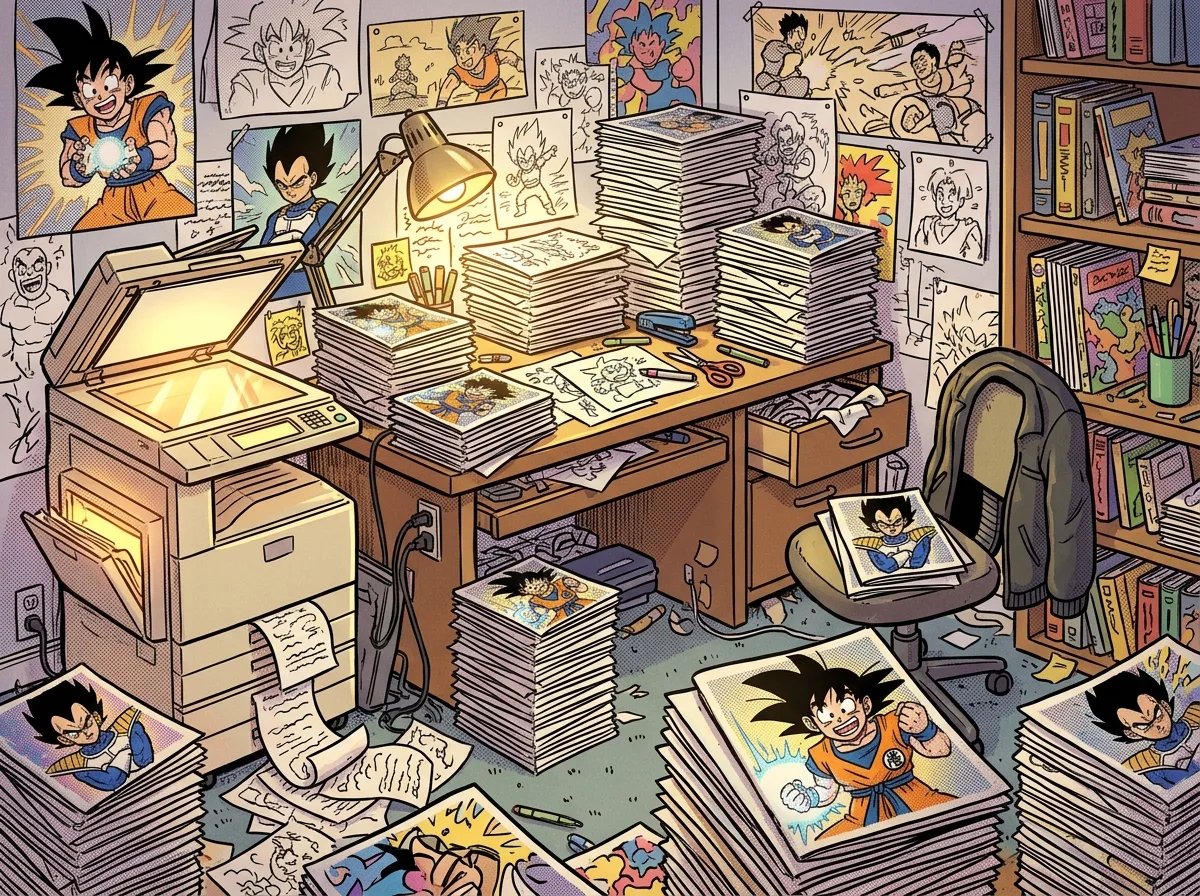
By 1997, Spain had dozens of fan zines. A catalogue for the third Salón del Manga de Barcelona listed 36 specialized fanzines active in Spain. That list was not exhaustive, so the true number was likely higher.
Conventions were one of the main places where these booklets changed hands. A fan could browse a table, pick up a new issue, and meet the people who made it. Those meetings often led to a trade, a club invitation, or a name to look up later.
Early online discussion worked in a similar way, but it reached people who could not attend a convention. Fans who had never met could still exchange ideas and point each other toward zines. Before the internet spread widely, face-to-face meetings and early online talk together helped zine makers find readers and helped readers find each other.
From Photocopies to Websites and Digital PDFs
Zines did not disappear when the internet arrived. Fans moved their writing and art onto websites and forums, where anyone with a connection could read them without paying for printing. Saiyan Warrior is one example of that shift. The site was founded in 1997 by Zack and relaunched in 2016, and it describes itself as one of the oldest Dragon Ball fan sites still around.
Digital zines took the format a step further. The digital Dragon Ball Zine is offered on a name-your-price basis starting at CAD$0. It holds 166 pages of submissions received before September 15, 2013, including work that also appeared in its print edition.
Later projects followed the same model. DBZine 2024 was released for Saiyan Day 2024 as a 32-page digital PDF. It features illustrations and comics by UK artists, and it is also name-your-price, starting at $0, through its online download page.
Printed fanzines never fully gave way, either. Genkida’Mag Volume 1, released in August 2020, is a full-color A4 French-language fanzine with 152 pages. Of those pages, 90 are fan manga.
Can Fan Zines Legally Share Dragon Ball Art?
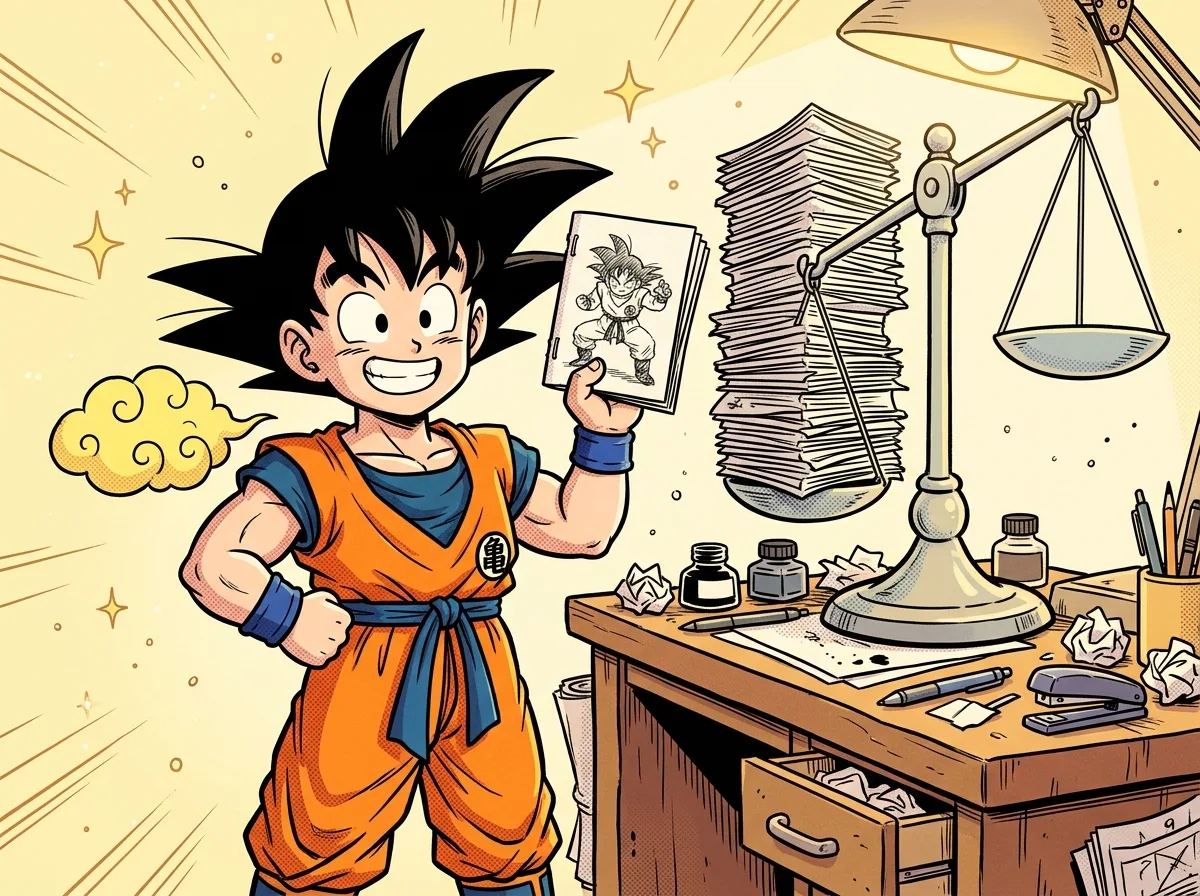
No, not automatically. For U.S. creators, being fan-made or non-commercial does not settle whether a zine can use Dragon Ball art. Fair use under Section 107 of the U.S. Copyright Act is judged case by case, and courts weigh four factors:
- The purpose and character of the use
- The nature of the copyrighted work
- The amount used
- The effect on the market or value of the original work
Many fans expect a simple rule, such as a set number of pages or a small share of a chapter. U.S. fair use law has no fixed number of words, pages, copies, or percentage that can be used without permission. Noncommercial use does not automatically qualify either, so a free zine still has to pass the same four-factor test. A short original comic set in the Dragon Ball world raises different questions than a zine that reprints whole pages of an official series.
Exploring Dragon Ball Fan Zines Today
If you want to see this history firsthand, start with a convention. Look for a fan zine table, flip through a few booklets, and ask the makers how they printed them and what they wanted to say. Many creators trade their zines or sell them for a few dollars to cover printing, so you can often take one home for a small amount.
If you want to make your own, begin with original work. A short comic with new characters set in the Dragon Ball world raises far fewer questions than a booklet of pages copied from an official volume. Print a small first run and hand copies out to friends or fellow fans before you think about anything bigger.
Pay attention to how you use existing art, too. Keep a simple record of which images you drew yourself and which you borrowed, and check the four fair use factors before you reprint anything official. The Library of Congress has also run a zine-making workshop every year at its National Book Festival since 2017, so there is plenty of practical help for first-time creators.
Frequently Asked Questions
1. Are original 1990s Dragon Ball fan zines still easy to find?
Original 1990s copies are scarce because most were printed in small runs and passed between friends at meetups and conventions. Collectors who kept issues from that era, along with fan-run trading groups, are the most common sources today. Paper ages quickly, so a surviving copy may show fading, yellowing, or rusted staples.
2. How do collectors judge the value of old Dragon Ball fan zines?
Collectors usually start with rarity, which depends on how many copies were likely made and how many have survived. Condition comes next, so clean pages, intact staples, and no water damage make an issue more appealing. A complete run from one zine is often worth more to a buyer than a single loose issue.
3. Did Dragon Ball fan zines ever get support from official publishers?
Fan zines were independent projects, so publishers did not typically sponsor, print, or fund them. Any influence flowed mostly from readers to publishers, as fans voiced what they wanted through their own printed pages. Formal partnerships between zine makers and official companies were rare.
4. What paper size works best for a first home-printed fan zine?
Half-letter pages folded from a standard sheet are a simple choice for a first issue. Printing on both sides and folding the sheets in order keeps the page count easy to manage. Stapling along the fold creates a sturdy booklet that is easy to hand out.

