
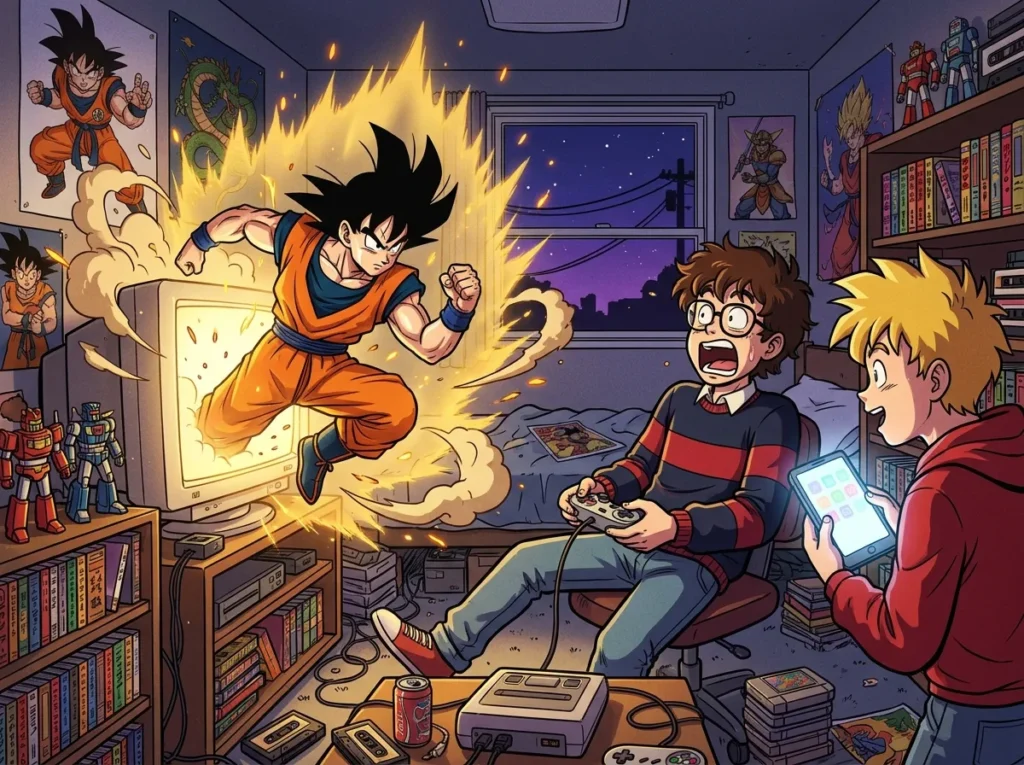
Dragon Ball online fandom began in the early web era, when independent fansites, fan-run forums, and fansub sites shared the series long before official streaming existed. The original manga started in Weekly Shonen Jump on November 20, 1984, and in 2000 and 2001, the fansite Planet Namek drew about 30,000 hits per day. Fans swapped episode notes, artwork, and theories in small corners of the web that felt personal and hands-on.
Those early communities mattered because they helped fans find one another. Discussion boards, fan fiction, and fan art gave people with shared interests a place to gather, and many of the habits that still shape fandom today started there. The path from those early fansites to video platforms and social media changed how fans talk, create, and celebrate, and it is worth tracing step by step.
Key Takeaways
- Dragon Ball fandom grew on the early web through independent fansites, fan-run forums, and fansub sites, which helped fans find others with shared interests long before official streaming existed.
- Dragon Ball fan conversation moved from small personal fansites and message boards to wikis and large social communities, and the r/dbz subreddit had about 2.3 million subscribers in a September 2026 snapshot.
- Toei Animation says it does not support unauthorized long-form or full-video uploads of its intellectual property to YouTube or other sites, and such videos may be blocked or deleted.
- Fans should label unconfirmed ideas as fan theories, because Akira Toriyama’s statements and official material carry the most weight when settling questions about the series.
- Newcomers who want to join the fandom should pick a community that fits their style, such as Reddit for quick reactions or forums for long discussions, and read a trusted fan wiki before joining debates.
Where Did Dragon Ball Fandom Begin Online?
Dragon Ball fandom began online in the early days of the web, when fans built independent fansites, fan-run forums, and fansub sites to share and discuss the series. Official streaming did not exist yet, so these fan-made spaces were where most people went to find episodes, pictures, and other fans.
The manga had already been running for many years by then, which gave fans plenty to talk about. Readers could compare the early adventures of Goku with the later battles, argue over which saga was strongest, and piece together details the books did not explain.
Big sites got most of the attention, but smaller personal sites also built real audiences. A retrospective published by another fan site recalls that one author’s personal site drew about 6,000 visits a day and peaked at 10,000, a reminder that a single fan with a homepage could reach thousands of people.
Forums were the other main meeting place. Members opened threads on episode notes, theories about power levels, and new artwork, and each board developed its own regulars and running jokes. Fansub sites added another layer by sharing translated episodes that many viewers could not watch anywhere else.
Researchers have looked closely at how fans used these early spaces. A 2021 University of North Texas thesis describes fan participation through discussion boards, cosplay, fan fiction, fan art, and fan videos. It also notes that fans used the internet to find others with shared interests.
That search for common ground shaped the culture that followed. A fan who loved a particular character could find a forum full of people who felt the same way, and a writer could post a story and get feedback within days. Those habits of sharing, critiquing, and creating together became the foundation for the communities that came later.
Did Dragon Ball Fan Sites Decline After the Early Years?
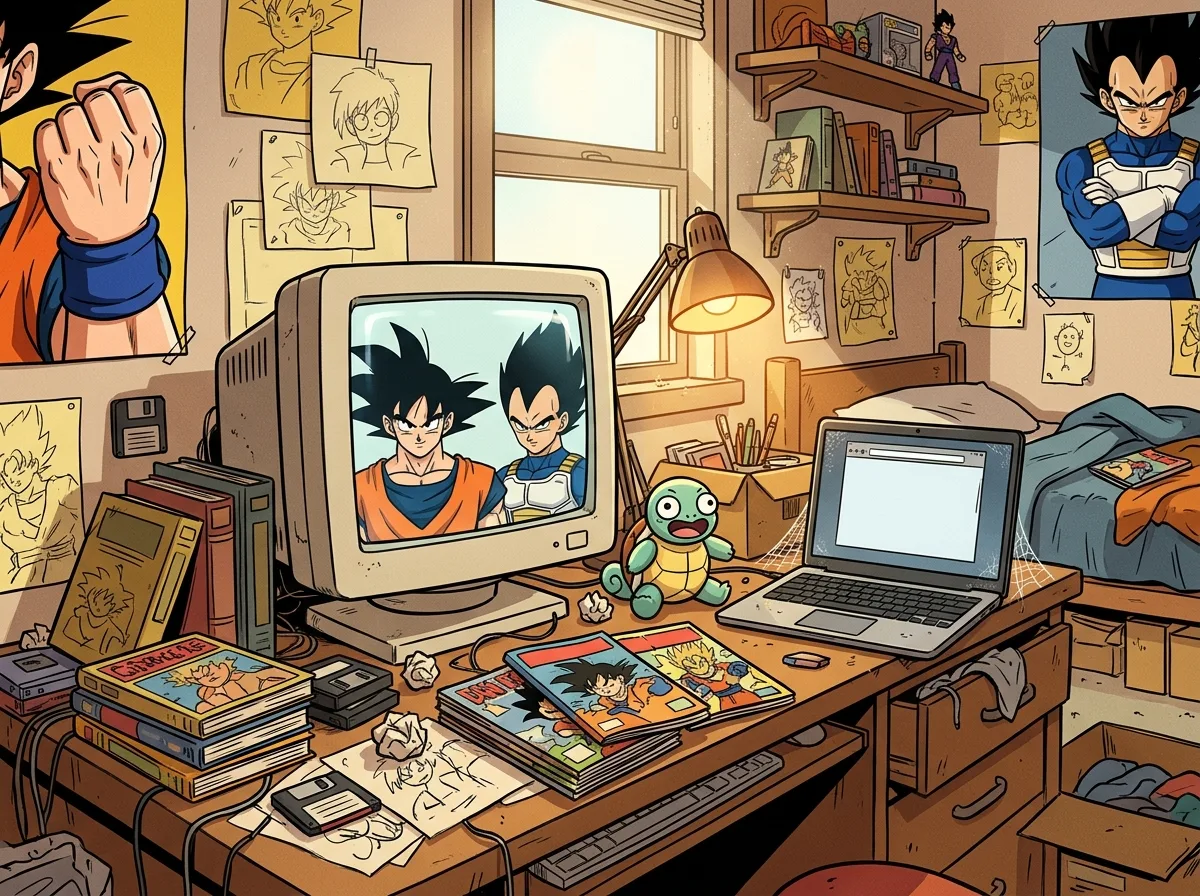
By 2003, the U.S. Dragon Ball Z web fandom had noticeably quieted. Many fansub and full-episode sites closed around the time DVD releases arrived and the U.S. television run ended. Fans who had depended on those sites for episodes had fewer reasons to keep visiting them.
The slowdown was not the end of the story, though. A 2018 forum post recalled the years from 2000 to 2008 as the high point for old-style Dragon Ball fansites. The poster also described a perceived move afterward toward media-focused sites and wikis, where information was organized rather than personally curated.
Wikis and organized databases took over much of the work fansites had done. Instead of searching through scattered homepages for an episode list or a character’s history, readers could find names, saga summaries, and release details in one place. Accuracy improved as many editors checked each other’s entries.
Discussion, however, did not stay in one place. Conversation that once lived on small message boards and personal pages moved toward larger communities, where a single post could reach many more readers. Debates about the strongest fighters or the best saga now happened across crowded threads instead of quiet boards with a few familiar regulars.
For fans, this split meant new habits. Someone looking for facts could open a wiki, while someone looking for conversation could join a busy community. A newcomer who once had to dig through a dozen homepages could now trace a character’s full history in an afternoon, and that convenience changed what it meant to be part of the fandom.
Where Do Fans Talk About Dragon Ball Today?
Many Dragon Ball fans now gather in large social communities, especially on Reddit, while forums still host the longer and more detailed discussions. The main Dragon Ball subreddit, r/dbz, dates to 2011 and had about 2.3 million subscribers in a September 2026 snapshot. It sees roughly 1,365 posts per month, so new questions, theories, and artwork appear almost constantly.
Social platforms are built for speed. A fan can share a reaction to a new episode, a funny clip, or a surprising plot twist and get replies within minutes. Short posts, memes, and quick votes suit people who want to share a feeling right away.
Forums work differently. A thread can stay open for years, so a member might post a detailed breakdown of a fight scene and return later to find new replies. That slower pace lets people build careful arguments that would get buried on a fast-moving feed.
Grief showed how quickly these spaces respond. When Akira Toriyama died on March 1, 2024, at age 68, the Associated Press reported that fans’ messages of grief and condolence filled social media after the news was announced. Long-time readers who grew up with the manga posted alongside newcomers who had discovered the series through the anime. The flood of messages turned a personal loss into a shared experience.
Celebration moves through the same channels. Anniversaries and major announcements bring waves of posts in which fans share old memories, favorite panels, and photos of their collections. Because one post can reach a large community in hours, a moment of sadness or excitement can be felt by thousands of people at once.
How Did Fan Videos and Abridged Series Change Online?
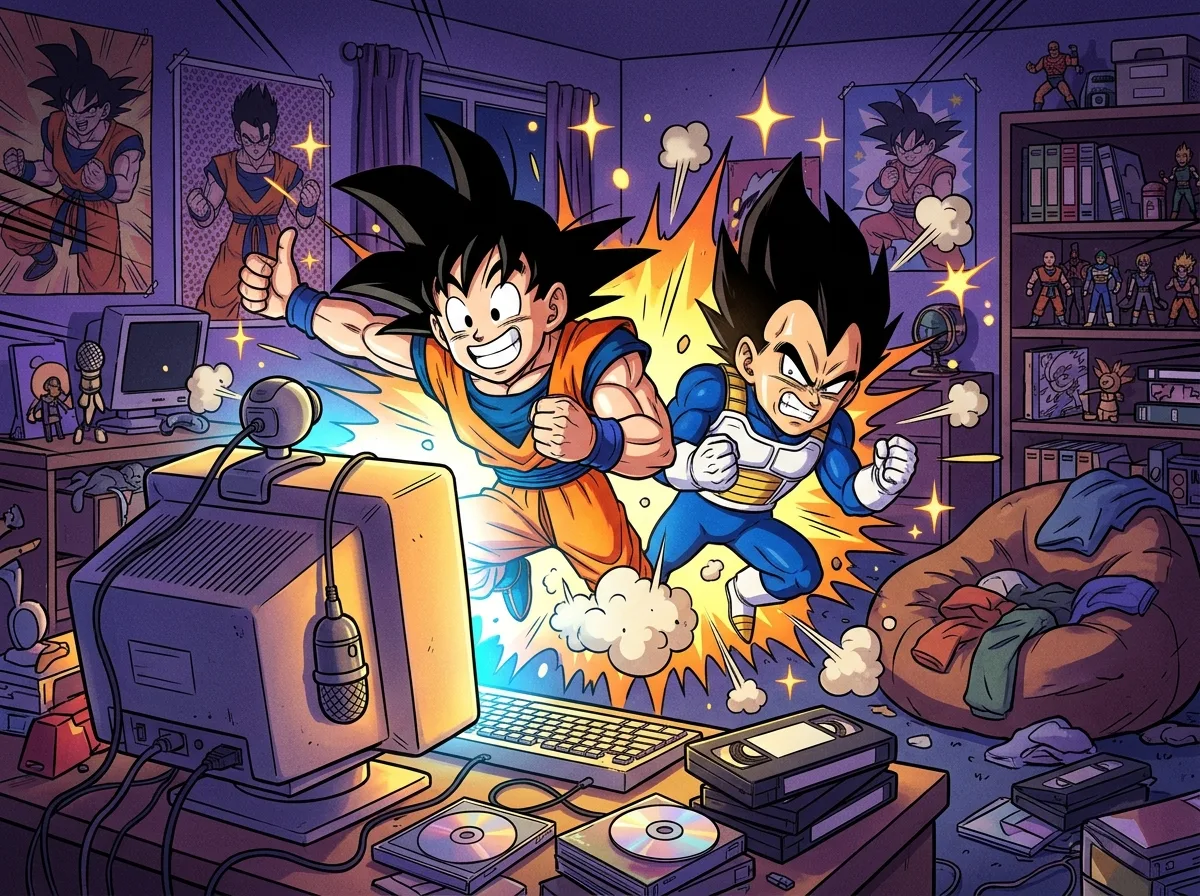
Fan videos moved onto video platforms as parody creators looked for audiences beyond small fansites, and copyright rules quickly began shaping what they could post. Video-sharing sites let fans upload sketches, edits, and comedy retellings that anyone could watch with a click. Abridged series, which trim episodes down and add new jokes, became some of the best-known fan productions on these sites.
The team behind Dragon Ball Z Abridged, TeamFourStar, shows how legal questions can change a project. In a February 2020 post on Patreon, the group explained that it had decided in October 2019 to stop using original Dragon Ball footage. It also said it would not continue the Buu Saga in its original abridged style, citing creative reasons and copyright uncertainty.
Copyright rules are often less intimidating than fans expect. Permission or a license is one way to stay lawful, but it is not needed for every use. The limits on copyright are set out in sections 107 through 122 of the Copyright Act, and the U.S. Copyright Office explains these rules in its Circular 16A.
The studio’s position is more direct. Toei Animation’s U.S. FAQ says the company does not support unauthorized long-form or full-video uploads of its intellectual property to YouTube or other sites. It warns that such videos may be blocked or deleted, so a fan who posts a full episode risks losing the video.
For fans and creators, the practical lesson is simple. Parodies that rely on full episodes face the most risk of removal, which is one reason many creators have leaned toward original animation, writing, and art. The shift keeps the humor alive while reducing the chance that a hard-earned video disappears overnight.
What Kinds of Fan Creativity Grew Over Time?
Fan creativity grew from simple sketches and short stories into a wide mix of fiction, timelines, translations, and long debates about the series’ history. Fan art and fan fiction were there from the start, and writers quickly developed favorite ways to stretch the story.
Fan fiction often relies on a few familiar tropes. Alternate timelines ask what would have happened if a major battle had gone differently or a character had made another choice. Missing-years stories fill the gaps between major arcs, using the stretch of Goku’s life between his early adventures and his later battles to show training, travel, and new friendships.
Fans have also built their own timelines. Because the manga and anime sometimes skip time or give vague dates, fans have lined up events, character ages, and tournaments to see how everything fits together. Some of the most useful work came from fans who translated Japanese guidebooks and interviews, which gave English readers details that were otherwise hard to reach.
Those translations often sparked lasting arguments. Official material leaves some back-history details open, such as the full origins of certain techniques or the early history of the Saiyan people, so fans debate them using their own reasoning. These debates are lively, but they can blur the line between what fans imagine and what has been confirmed.
Toriyama led the creative direction of the series, so his statements carry the most weight. Good fan discussion keeps theories labeled as theories and sets them apart from what the creator actually confirmed. When a detail has not come from Toriyama or official material, calling it a fan idea keeps the community’s creativity fun without presenting guesses as canon.
How Do Fans React When New Dragon Ball Series Arrive?
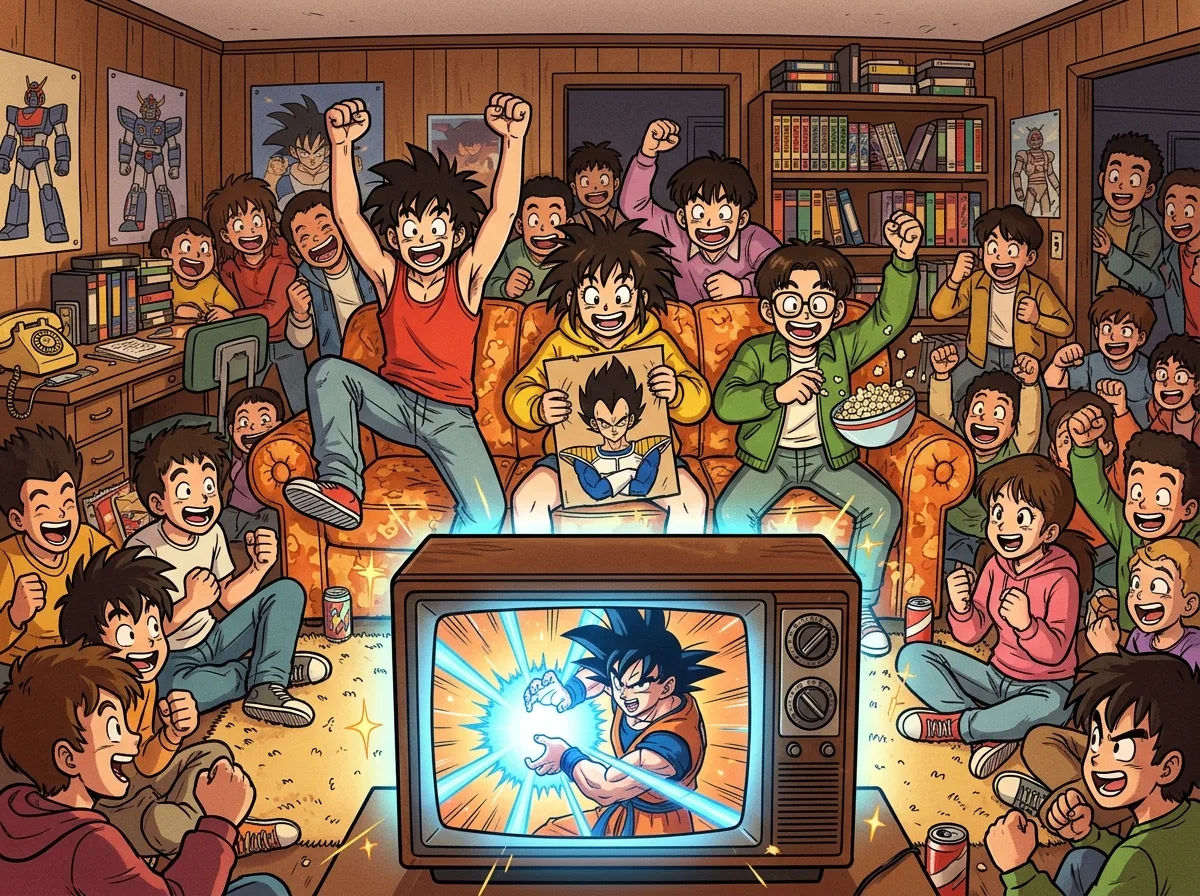
Fans usually react to a new Dragon Ball series in waves, with excitement building from the first announcement and peaking when episodes finally air. Toei Animation announced Dragon Ball DAIMA at New York Comic Con from October 12 to 15, 2023. The studio described it as a series for the franchise’s 40th anniversary and promised a worldwide release starting in fall 2024. Fans spent the months in between guessing at the story and sharing every new image they could find.
When the show began airing in Japan on October 11, 2024, at 11:40 p.m. Japan Standard Time, first reactions appeared almost immediately. Viewers in other time zones posted their thoughts at different hours, so one episode could stay in the conversation for days. That spread in timing shows how global streaming has changed the experience, since fans no longer need to wait for a local broadcast to join in.
Live events work the same way. For the January 25, 2026 Dragon Ball Genkidamatsuri, Toei streamed every event stage live on its official YouTube channel, which let fans around the world watch the same moments together. Chat threads and social posts filled up as each stage began.
New releases also bring back older debates. Whenever fresh content arrives, fans revisit earlier series, and Dragon Ball GT is a frequent target. Some fans say its tone drifts too far from the original, while others defend it as a part of the franchise worth remembering. These arguments often appear in the same threads that celebrate a new show, so a premiere becomes a chance to revisit the whole franchise.
Finding Your Corner of the Fandom
Start with the way you like to take part. If you enjoy quick reactions, memes, and new artwork, a large social community will keep you busy with fresh posts every day. If you prefer long, careful arguments, look for a forum where threads stay open for years and members reply to each other’s detailed posts.
Then pick one character or one saga and go deep. Reading a character biography on a trusted fan wiki before you join a debate helps you separate confirmed details from fan theories, which makes your posts easier for others to trust. If a battle takes place on a world the anime never fully explains, the planet guides can give you the background you need.
If you want to jump in right away, try the Saiyan Age Calculator on this site and share your result in a community that enjoys trivia. A simple question, such as how old you would be if you lived on Planet Vegeta, can start a friendly thread in minutes.
When you are ready to make something yourself, keep it original. Sketches, short edits, and your own fan art give you room to play with the characters without relying on full episodes. The character and planet articles on this site are a good place to find ideas for your first project.
Frequently Asked Questions
1. How many Dragon Ball fans are there?
No one has an official count of the worldwide Dragon Ball fandom. The numbers that exist come from individual sites and communities, such as the r/dbz subreddit, which had about 2.3 million subscribers in a September 2026 snapshot. Those figures show the size of one community, not the total number of fans around the world.
2. How do fan translations of guidebooks differ from official releases?
Fan translations are unofficial versions made by fans who read Japanese, so their wording and level of detail can differ from official English releases. They are often the only way English readers can reach certain background details, but they can also contain errors or personal interpretations. Fans who share them usually label anything that has not been confirmed as a fan idea.
3. How do moderators keep fan forums and subreddits on topic?
Moderators set posting rules, remove off-topic or hostile posts, and ask members to mark spoilers. Many communities also pin guidelines so newcomers know what is expected before they post. Reporting a problem post to the moderators is usually the fastest way to get it handled.
4. Are fan-made Dragon Ball videos ever allowed to stay online?
Fan-made videos can stay online, but full-episode uploads are the most likely to be blocked or deleted. Toei Animation says it does not support unauthorized long-form or full-video uploads to YouTube or other sites, and it warns that such videos may be blocked or deleted. Original sketches, edits, and parodies that do not rely on full episodes face less risk.
5. Is Dragon Ball GT fan made?
No, Dragon Ball GT is an official series produced by Toei Animation, not a fan project. It continues the story after Dragon Ball Z, which is why fans still argue over whether its tone matches the original series.

