
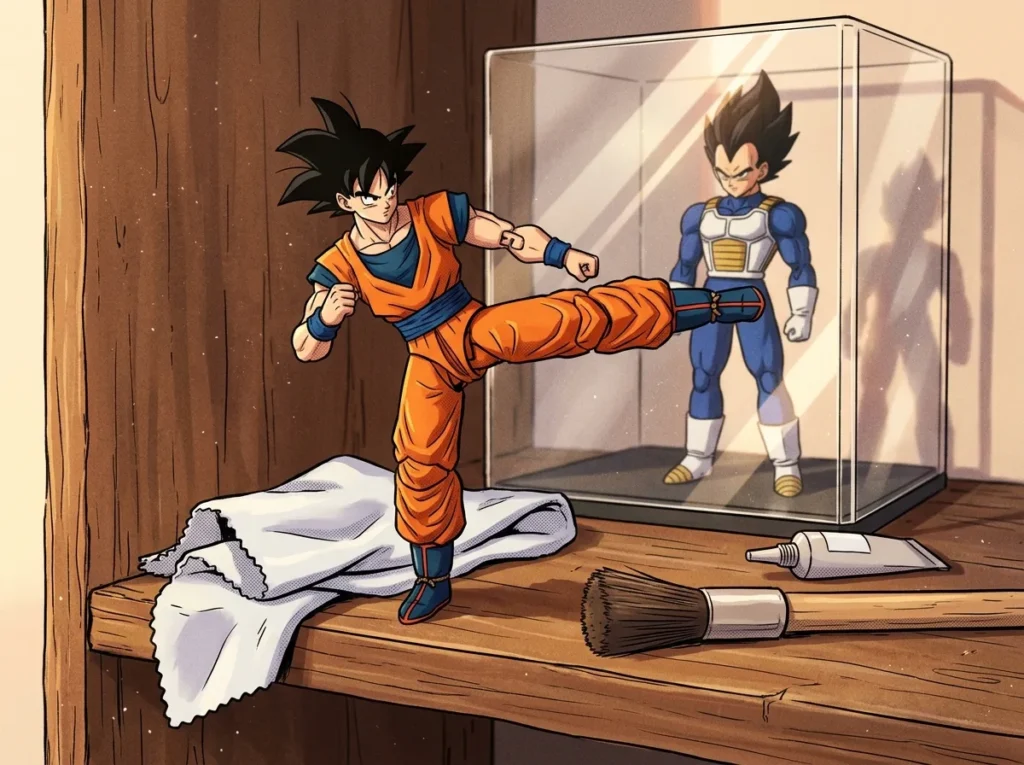
The 2025 S.H.Figuarts BROLY -40th Anniversary Reissue Edition manual from TAMASHII WEB warns against using excessive force when bending, pulling, or attaching movable parts. In practice, that means supporting the figure from below, never gripping protruding parts like arms or hair, and never forcing a joint past the point where it moves easily.
Storage matters too. Plastic objects should be kept below 68°F at a stable temperature. Conservation guidance from the Museums Association suggests checking plastic collections at least once a year.
Key Takeaways
- Read the instruction manual that came with your Dragon Ball figure first, because the 2025 S.H.Figuarts BROLY -40th Anniversary Reissue Edition manual warns against using excessive force when bending, pulling, or attaching movable parts.
- Support Dragon Ball figures from below, never grip protruding parts like arms or hair, and never force a joint past the point where it moves easily.
- Keep plastic Dragon Ball figures below 68°F at a stable temperature, and let a cold figure reach room temperature in its box before you move its joints.
- Clean Dragon Ball figure joints with dry dust removal first, because dry rubbing can cause at least 10 times more scratching than cleaning with moisture from agents that do not damage plastic.
- Check your Dragon Ball figures for cracks, crazing, color changes, and loose or stiff joints at least once a year, and more often if you pose them regularly.
How Do You Care for Dragon Ball Figure Joints?
Caring for Dragon Ball figure joints means reading the manual first, moving joints gently, and supporting the body instead of gripping parts that stick out. Every figure is built differently, so the instructions packed with it are your most reliable guide.
Joint care is mostly about prevention. The Canadian Conservation Institute lists physical stress among the main forces that damage plastic objects. That makes everyday habits the most important ones: slow movements, steady support, and no sudden tugs on arms, legs, or heads.
Materials and design also matter. The Super Saiyan Vegeta S.H.Figuarts, released in Japan on April 25, 2026, is made of PVC and ABS and uses a patent-pending Dynamic-Movable Shoulder System. A newer figure like this can have joints that work differently from older ones in your collection, so check the manual before trying a movement you are unsure about.
The sections below cover posing, temperature, display, cleaning, and regular checks, so you can build a routine that fits your collection.
Why Do Figure Joints Get Loose or Stiff?
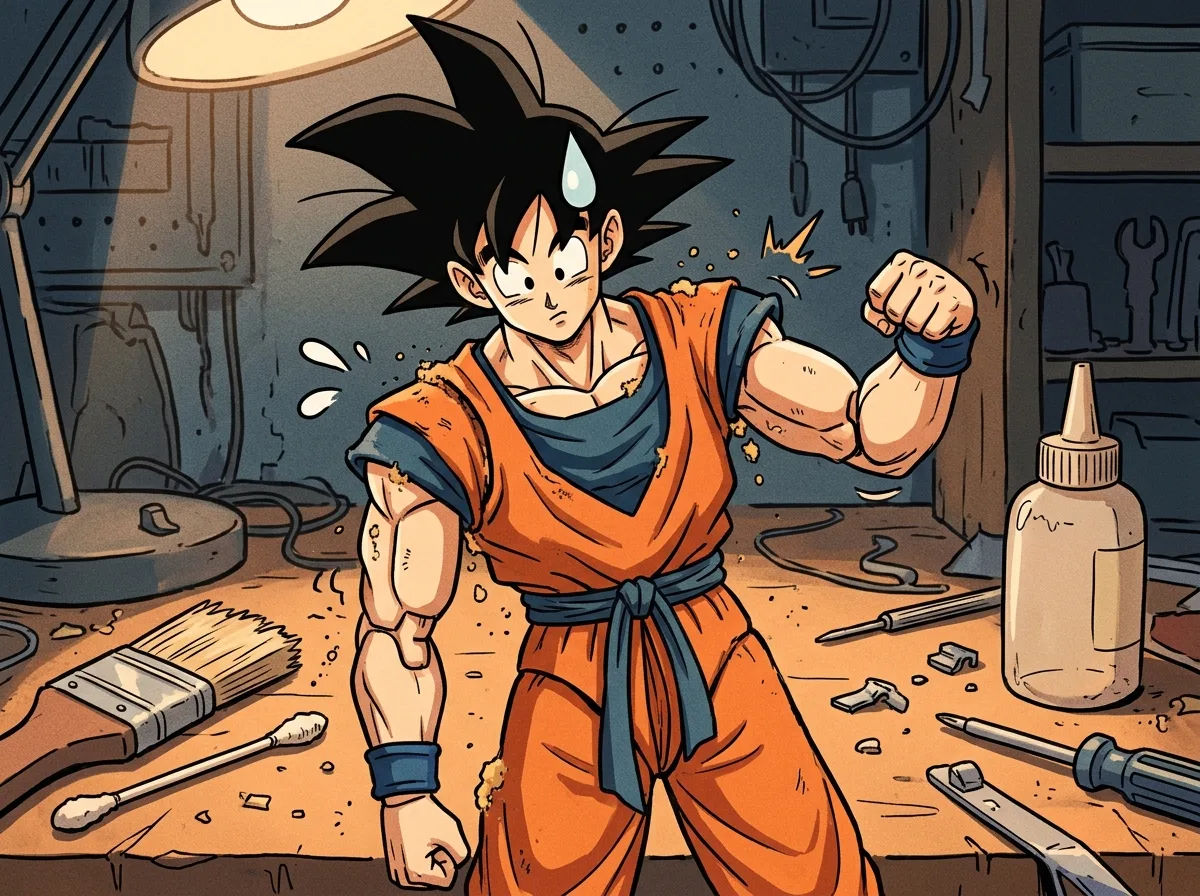
Figure joints get loose or stiff mainly because of physical stress, the force that builds up when a joint is bent, twisted, or pulled again and again. Plastic tires from repeated force much like a paper clip weakens each time you bend it back and forth.
Forcing a pose through the same tight range is one of the most common causes. If you always push an elbow to its farthest point or bend a knee past where it moves easily, the same small area of plastic takes the same strain over and over. Over time, that area can wear, and the joint may feel loose. Changing poses now and then spreads the work across the whole joint instead of concentrating it in one spot.
Some Dragon Ball figures, such as the Super Saiyan Vegeta S.H.Figuarts, are made from PVC and ABS plastics. Both are common materials for action figures, and both respond to handling in the same basic way. Slow, steady movement is easy on them, while quick tugs and heavy pressure add stress. That is why gentle handling matters even for figures that look sturdy on a shelf.
Newer designs can also work differently from older ones. The Super Saiyan Vegeta S.H.Figuarts, released in Japan on April 25, 2026, uses a patent-pending Dynamic-Movable Shoulder System from Bandai Spirits. A shoulder built that way may need different handling than the arms on an older figure. Check the manual for shoulder-specific steps before you move it, and do not assume one figure’s joints behave like another’s.
How Should You Pose a Figure Without Stressing Its Joints?
To pose a Dragon Ball figure without stressing its joints, work on a clean, stable surface, support the body from below, and move one joint at a time, stopping as soon as you feel resistance. These habits prevent most of the strain that builds up during display and photo sessions.
Follow these steps in order each time you change a pose.
- Choose a flat, stable, clean surface, and avoid plastic furniture, sofas, sheets, and tile, since the Broly manual warns that resin surfaces can cause color migration.
- Place one hand under the base or torso so the figure rests on your palm.
- Use your other hand to steady the body, never lifting the figure by its arms, hair, or weapons.
- Pick one joint to move, such as an elbow, knee, or shoulder.
- Move that joint slowly in the direction the manual shows.
- Stop as soon as you feel resistance, and do not force the joint further.
- Stop before the pose reaches the joint’s natural limit, even if a more dramatic angle looks better.
- Repeat the process for the next joint, changing only one joint at a time.
- If the figure will stay posed for a long time, return it to a neutral stance so the joints are not held under constant tension.
Dynamic poses are tempting, especially for photos, but an extreme angle is rarely worth a strained joint. Many collectors keep a few favorite poses for display and switch between them over time, which spreads the work across the whole joint instead of wearing down one spot.
Does Temperature Affect Figure Joints?
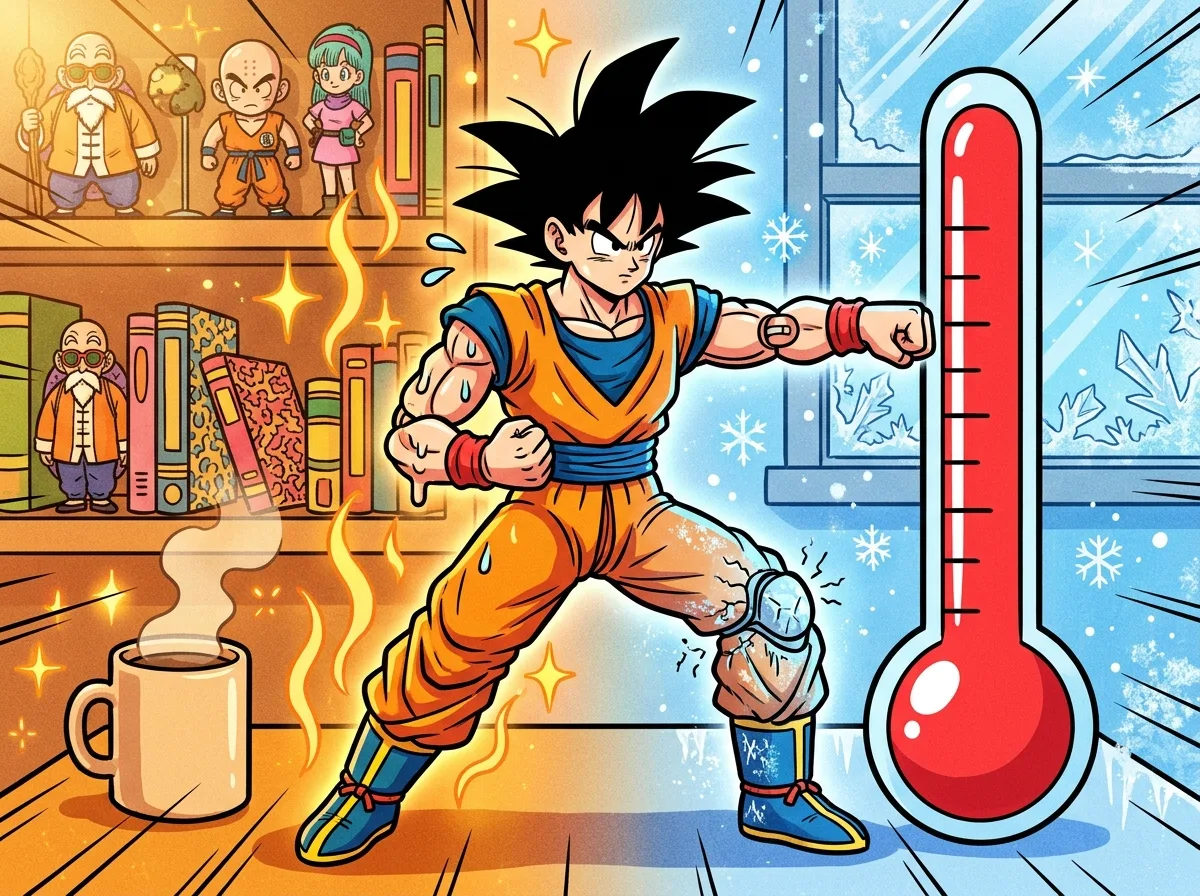
Yes. Cold makes plastic more brittle, and swings in heat and humidity can wear it down over time, so temperature is a real part of joint care. Avoid bending a joint right after a figure has been in a cold place.
If a figure has been in an unheated garage, a cold car, or a chilly delivery van, let it warm up before you touch the joints. Leave it in its box or container until it reaches room temperature, then handle it. Moving a cold figure straight into warm air can also cause condensation, which is tiny droplets of moisture forming on the surface.
Stable storage matters just as much as the temperature itself. The National Park Service advises storing plastic objects below 68°F at a stable temperature, and it notes that the right humidity level depends on the type of plastic. A figure made of one plastic may need different conditions than a figure made of another.
For general practice, about 20°C with 30 to 50 percent relative humidity is considered good for most plastics. A simple hygrometer, a small device that shows how much moisture is in the air, can help you check your room.
Keep figures away from radiators, heaters, sunny windows, and damp basements. A shelf in a room where the temperature stays steady day and night is usually a better home than a spot that heats up in the afternoon and cools off at night.
Where Should You Display Figures to Protect Them?
Keep Dragon Ball figures on a stable shelf or in a case away from direct sunlight, heat, and surfaces that can leave marks. Light and contact are the two display risks that are easiest to control.
Light adds up over the years, even when a figure looks fine day to day. For plastics on display, general good practice is roughly 50 to 150 lux, depending on the object. Lux measures how bright light is on a surface. A spot that gets strong sun through a window can be far brighter than that, so choose a shelf where the light is soft and steady.
Think about what the base rests on, not just the shelf itself. Some resin surfaces can transfer color to figures, and the Broly manual warns about the same risk with plastic surfaces. Before you set a figure down, check the base, mat, or cloth underneath it. A glass or wooden shelf is a simpler choice than a resin one.
A few habits make display safer:
- Choose a glass or wooden shelf over a resin one.
- Keep figures out of direct sun, even for part of the day.
- Stay clear of lamps, heaters, and electronics that give off heat.
- Leave some space between the figure and the front of a display case.
When you rotate figures around a shelf, look at the spot each one leaves behind. If the base has picked up any color, move the figure to a clean surface and check it again before the next display session.
What Is the Safest Way to Clean Figure Joints?
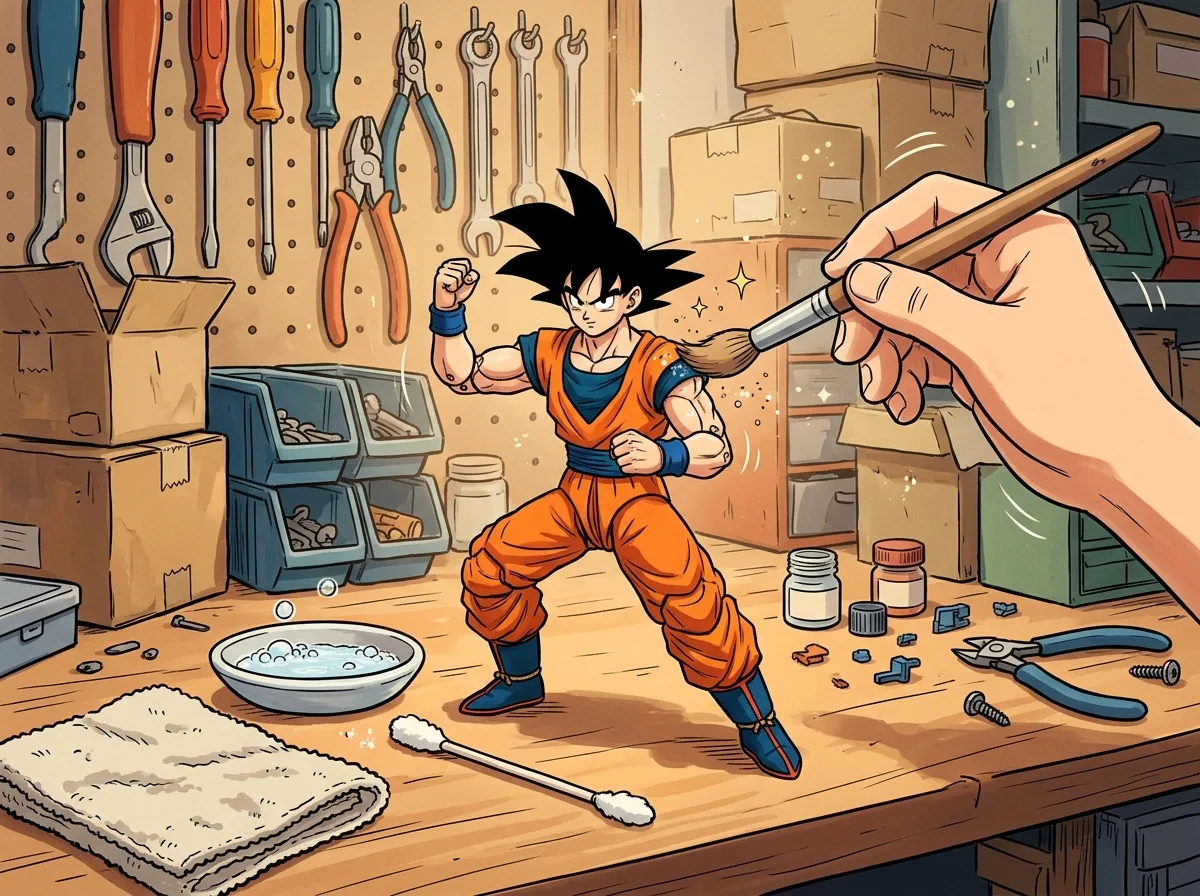
The safest way to clean figure joints is to start dry, then add a little moisture only where dust will not come off. Loose dust in the gaps around a joint usually lifts away with a soft, dry brush, such as a clean makeup brush, or a dry cloth. Keep the figure supported from below while you work.
Dry rubbing is the habit to avoid. A 2012 plastics-cleaning study by Balcar and colleagues found that dry rubbing caused at least 10 times more scratching than the same cleaning materials used with moisture from agents that do not damage plastic. A dry cloth pressed hard into a joint may look clean afterward, but it can leave fine scratches behind.
When dust is stuck, lightly dampen a soft cloth and wipe the area gently. Follow it with a dry cloth so no moisture stays in the joint. Never soak a figure or let water sit in its gaps.
Before you use any cleaning agent, read the manual that came with your figure. It is the most reliable guide to what is safe for that specific piece, and a product that suits one figure may not suit another.
While you clean, look closely at the joints and painted areas. Check for cracks, and for crazing, which is a web of tiny lines in the surface. If you find one, stop cleaning that spot and avoid moving that joint more than you need to.
How Often Should You Check Your Figures?
Check your Dragon Ball figures at least once a year, and do it more often if you pose them regularly or keep them near windows or in cold rooms. Conservation guidance for plastic collections recommends a yearly check, which makes it a sensible starting point for figures too. No universal joint maintenance schedule exists, so treat that yearly check as a minimum.
Each check is quick. Look over every figure for cracks and for crazing near joints and painted areas. Watch for color changes on the body or base, then move each joint slowly through its normal range and notice whether it feels looser or stiffer than before.
- Cracks or crazing near joints or painted areas
- Color changes on the body, joints, or base
- A joint that feels looser or stiffer than it did before
Move any figure that shows these signs to its own spot, away from the rest of your display, and avoid posing it until you have read its manual. Figures kept in cold storage need at least one check a year of their own, so a figure in a cold garage should be looked over at least that often.
These are conservation guidelines written for museum collections, not a universal household standard. A figure you pose every week for photos will need closer attention than one that sits untouched in a sealed case, so adjust the schedule to how often you handle yours.
What Should You Do If a Joint Breaks?
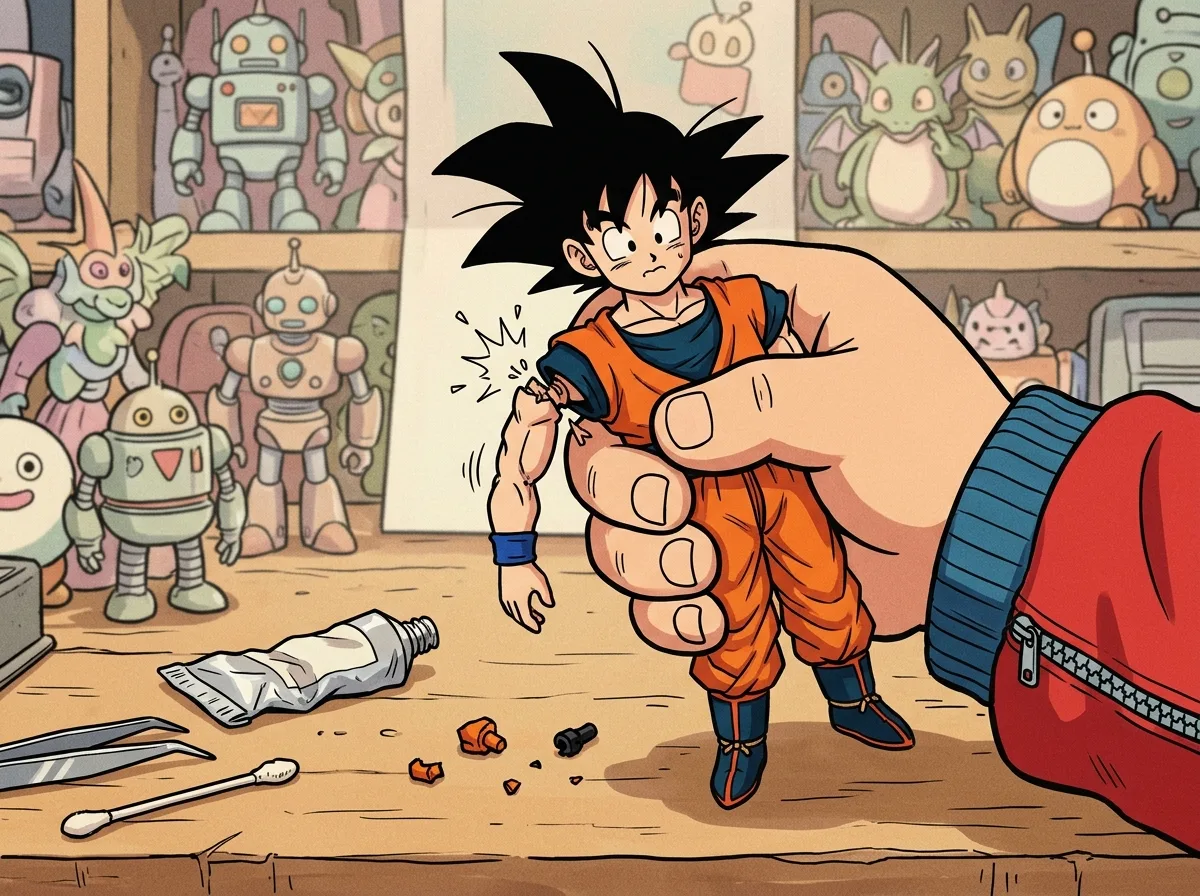
If a joint breaks, stop using force right away, keep the figure supported from below, and check its manual before deciding on a next step. Pushing or pulling a damaged joint can turn a small crack into a bigger problem, so set the figure on a clean, stable surface and leave the limb where it is.
Next, look up the manual. Product instruction manuals are posted online for figures released from April 2022 onward, and you can find them in the product manual library. Figures released earlier may have manuals available through BANDAI SPIRITS customer support.
If the figure arrived damaged, act quickly. Bandai Namco’s U.S. defective-replacement page says a replacement request can be submitted if fewer than 90 days have passed since receipt or delivery, subject to the conditions listed on that page. Keep the box, packaging, and proof of delivery until you know the outcome.
Start With Your Figure’s Manual Today
Start today by finding the instruction manual for your figure. If it came in the box, move it somewhere you will remember, such as a folder beside your display shelf. If it is missing, check the release date. Figures released from April 2022 onward have manuals posted online, while older ones may need to be requested from BANDAI SPIRITS customer support.
Before you touch any joint, read the section on movement. Look for notes on which direction each joint bends, which parts are safe to hold, and which surfaces to avoid. Copy the three most important points onto a sticky note and keep it near the figure.
Next, set a yearly reminder on your calendar for the check described above. Give each figure its own line on a short list. Your newest figures deserve extra attention, since a shoulder system like the Dynamic-Movable Shoulder System may need steps that differ from those of your older figures.
Finally, choose one figure and try a single gentle pose using the steps from the posing section. Stop at the first sign of resistance. If the joint still moves easily afterward, repeat the same routine with the next figure on your shelf.
Frequently Asked Questions
1. Does the shoulder system on the 2026 Super Saiyan Vegeta change how I should pose it?
Yes, it can. The Super Saiyan Vegeta S.H.Figuarts, released in Japan on April 25, 2026, uses a patent-pending Dynamic-Movable Shoulder System that may work differently from the arms on older figures. Check the manual for shoulder-specific steps before you move the arms, and move the shoulder only in the direction the manual shows.
2. How long should a cold-stored figure sit before I pose it?
There is no set number of hours, so the safe rule is to wait until the figure reaches room temperature. Keep it in its box or container while it warms up so the change happens gradually. Once it matches the room, you can handle the joints and start posing.
3. What should I do if a joint feels gritty after cleaning?
Stop moving the joint right away and let the figure dry completely if any moisture was used. Gently remove loose debris with a soft, dry brush, and avoid rubbing hard with a dry cloth, since that can leave fine scratches. If the grit remains, check the figure’s manual before trying any other cleaning step.
4. How can I tell if a crack near a joint is serious?
Any crack or crazing near a joint deserves attention, because stress can make a small crack grow. Look for a web of fine lines in the plastic or paint around the joint, and avoid moving that joint more than you need to. If the crack is spreading or the joint has started to loosen, stop posing the figure and check its manual for next steps.
5. What should I do about a loose joint on an S.H.Figuarts figure?
Start by checking the manual that came with the figure, since it is the most reliable guide for that specific joint. Loose joints usually come from repeated force on the same small area, so changing poses and moving joints slowly can help prevent further wear. If a joint keeps feeling loose, avoid forcing it and contact BANDAI SPIRITS customer support for guidance.

