
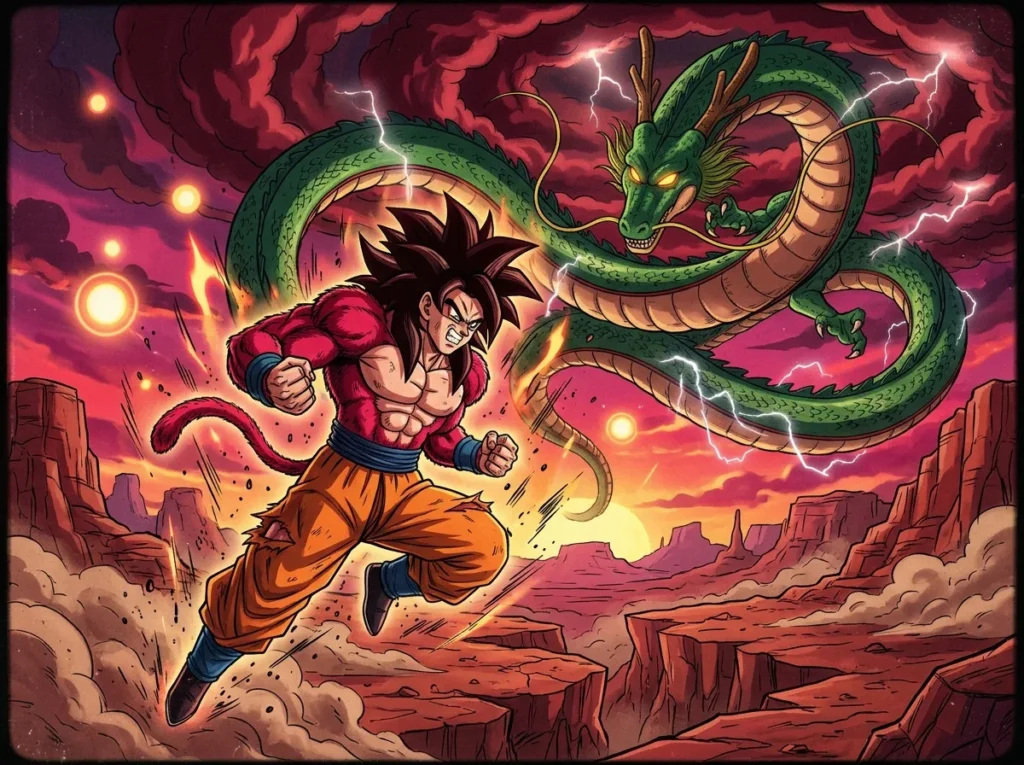
Dragon Ball GT is a 64-episode anime series from Toei Animation. It began airing in Japan in 1996 and continues Goku’s story after Dragon Ball Z. According to Toei Animation’s catalog, each episode runs about 26 minutes, and the Japanese broadcast ended on November 19, 1997. The premise is simple but unusual: Goku is turned into a child, and he, Pan, and Trunks must find the scattered Dragon Balls within one year or Earth will disappear.
Saiyan Warrior is a Dragon Ball fan site covering the Dragon Ball, Dragon Ball Z, Dragon Ball GT, and Dragon Ball Super series across both manga and animation. In the sections below, we walk through GT’s main story arcs, explain where it fits in a viewing plan, and help you decide whether it belongs on your list.
Key Takeaways
- Anime fans should watch GT straight after Dragon Ball Z to follow the anime’s version of Goku’s story.
- GT is best treated as a separate story from Akira Toriyama’s original manga.
- The Baby arc is the longest stage of Dragon Ball GT, covering episodes 17 through 40.
- Watching the first 16 episodes of GT is a simple test for whether the show suits you.
What Is Dragon Ball GT and When Did It Air?
The series aired in Japan from February 7, 1996, to November 19, 1997. The Toei Animation lineup page lists it under that full run, so you can check the start and end dates yourself.
GT picks up after Dragon Ball Z and follows Goku into a new adventure. Think of it as a direct sequel rather than a side story. Z ends with Goku’s fights against the strongest villains of its era, and GT begins with a very different situation for him.
The official Dragon Ball history records the broadcast as starting in 1996. That date places GT after Z in the franchise’s timeline, which is why many fans count it as the next step in the story.
Hulu, a streaming service, describes GT as one season of 64 episodes. It also explains that the series is an anime continuation created by Toei, not an adaptation of Akira Toriyama’s original manga. That difference matters because GT’s story does not come from the printed pages Toriyama drew, so it can feel like a separate branch of the franchise.
If you are new to the show, the key points are simple. It is a single season, it was made for television, and it was built to carry Goku’s story forward after Z. Knowing these basics will help you see why GT feels so different from the series that came before it.
What Happens in the Dragon Ball GT Story?
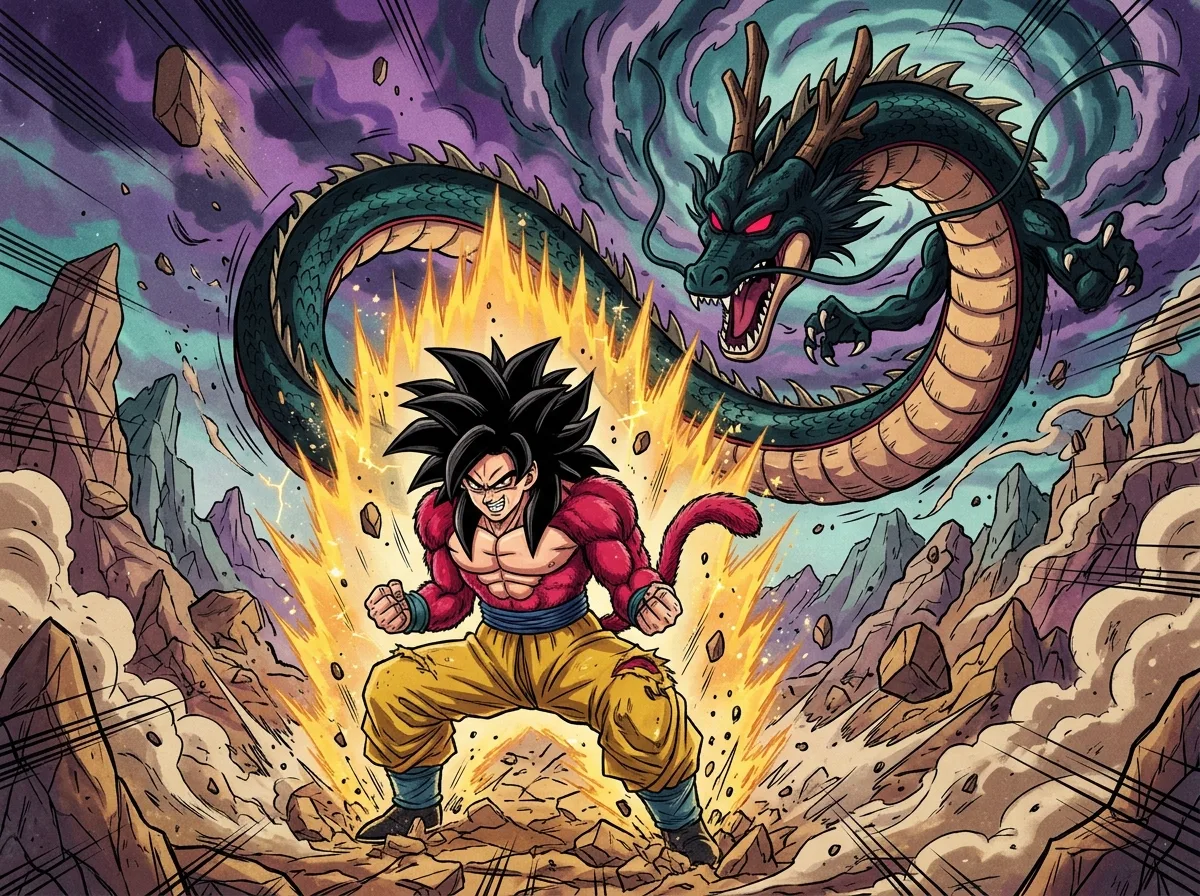
In Dragon Ball GT, Goku is turned into a child. He sets out with his granddaughter Pan and Trunks to track down the Dragon Balls that have scattered across the universe. Goku can’t rely on the power he had in Z, so the group has to think their way through each problem and lean on one another.
The deadline drives the whole story. The Dragon Balls must be gathered within one year, or Earth will disappear. That limit gives the search a steady sense of urgency, because the trio can’t afford to wander aimlessly. Every planet they visit is one more step toward the wish that could save their home.
Because the search covers the entire universe, the story moves far beyond Earth. Viewers see new worlds, new allies, and new threats. This gives GT a travel-style feel that differs from the tournament and battle structure of Dragon Ball Z.
Hulu lists GT as one season with 64 episodes, and that length fits the premise well. The one-year search stretches across the full run, so the series has room to explore each stop on the journey instead of rushing toward a single showdown.
As you watch, keep the one-year clock in mind. It explains why the characters move quickly, why some detours feel urgent, and why the story keeps returning to the Dragon Balls. The next section breaks the search into its major stages so you can follow how the journey unfolds.
Dragon Ball GT Story Arcs at a Glance
Dragon Ball GT is easier to follow when you split it into four stages. Fans commonly group the episodes into arcs, and each arc’s episode range shows where the story shifts. A fan episode guide is a handy reference for checking the numbers as you watch.
- Black Star Dragon Balls (episodes 1–16): The search begins, and Goku, Pan, and Trunks hunt for the first Dragon Balls while adjusting to Goku’s new child form. [Dragon Ball GT episodes 1–16]
- Baby (episodes 17–40): The longest stage of the series, in which a threat called Baby takes over other fighters’ bodies. The heroes must battle an enemy that can hide inside someone they know. [Dragon Ball GT episodes 17–40]
- Super 17 (episodes 41–47): A shorter stage built around a group of powerful androids, which turns the fights into tests of strategy against foes that never tire. [Dragon Ball GT episodes 41–47]
- Shadow Dragons (episodes 48–64): The final stage, where the dragons summoned by the Dragon Balls return in dark, monstrous forms and the story builds to its last battles. [Dragon Ball GT episodes 48–64]
The shift between arcs is mostly about the enemy. The Black Star stage focuses on travel and discovery, while the Baby stage turns that journey into a hunt for a hidden foe. Super 17 changes the pace with a smaller, sharper set of battles, and Shadow Dragons ties the earlier threads together around the dragons themselves.
The arcs also differ in length. The Baby arc covers 24 episodes, more than any other stage, which gives its story room to develop. The Shadow Dragons arc covers 17 episodes, and the Black Star Dragon Balls arc covers 16. Super 17 is the shortest at seven episodes, so it moves quickly from one encounter to the next.
Knowing these stage breaks helps you pace your viewing. You can see when the story is about searching and when it becomes about fighting, which makes it easier to decide how many episodes to watch in one sitting.
Is Dragon Ball GT Canon?
GT is best treated as a separate story from the manga. It is an anime continuation made by Toei Animation, not an adaptation of Akira Toriyama’s original manga, so its plot does not follow the printed pages. Fans use the word “canon” to mean the official version of the story, and GT’s answer depends on which version you follow.
The manga is the source that Toriyama wrote and drew. The anime is a version of that story that Toei’s staff later extended. Once the anime moved past what the manga covered, GT was built as new television storytelling. That is why many fans see it as a side branch, even though it picks up Goku’s life right after Dragon Ball Z.
Hulu’s viewing guide labels GT optional for viewers following the manga storyline. It suggests moving from Dragon Ball Z or Z Kai to GT if you want the anime’s continuation. It also says that viewers who prefer the original manga can skip GT and move on to Dragon Ball Super.
What does that mean in practice? If you read the manga and want to stay close to its storyline, you can leave GT out and continue with Dragon Ball Super, which the guide recommends for that audience. If you enjoy the anime and want to see every adventure Goku has on screen, GT is the natural next step after Z.
Neither choice is wrong. Many viewers watch GT for its adventure, its new villains, and its one-year race against the clock, then decide for themselves whether those events feel like part of Goku’s story. Knowing that GT stands apart from the manga lets you make that call with a clear head.
Where Dragon Ball GT Fits in a Watch Order
Most viewers choose their watch order by asking one question: do you want the anime’s version of Goku’s story, or the manga’s? Your answer decides whether GT belongs in your plan.
If you follow the anime, Hulu’s viewing guide recommends moving from Dragon Ball Z or Z Kai into GT. On that path, GT works as the bridge between Z’s final battles and the one-year search for the Dragon Balls. Here is how to follow it:
1. Finish Dragon Ball Z, or Dragon Ball Z Kai if you prefer that version. 2. Start GT at episode 1, where the premise opens with Goku already turned into a child. [Dragon Ball GT episode 1] 3. Keep watching through episode 64 to reach the Shadow Dragons finale. [Dragon Ball GT episode 64]
Manga readers take a different route. Dragon Ball GT is not required for them, so the guide suggests going from Z straight to Dragon Ball Super. That keeps the story closer to the pages Akira Toriyama drew.
Here is how the two paths compare:
- Anime path: Dragon Ball Z, then GT, then the search for the Dragon Balls across the universe.
- Manga path: Dragon Ball Z, then straight to Dragon Ball Super, with GT left out.
GT is the bridge only on the anime path. If you choose the manga route, you can skip its 64 episodes without missing a step in the manga’s storyline. If you choose the anime route, GT is the one stop you should not skip, since its arcs carry the story from start to finish.
Why Do Fans Criticize Dragon Ball GT?
Most criticism of Dragon Ball GT comes down to three complaints: the story strays from the manga, the child-Goku premise changes the show’s mood, and the series can feel cut off from the main storyline. None of these complaints is new, and each has a clear cause.
The biggest issue is the manga. Fans who grew up with Akira Toriyama’s pages expect each new arc to build on what came before. GT’s plot does not follow those pages, so many viewers see its twists as detours rather than the next chapter of a story they already know.
The tone is the second concern. Shrinking Goku into a child changes the feel of the show. The battles that defined Z, with grown warriors trading powerful blows, give way to a lighter, more playful adventure. Some fans enjoy that change, while others miss the intensity that made Z feel epic.
A third complaint is that GT feels separate from the core story. Because it sits outside the manga, many viewers treat it as a side branch. The hunt for the Dragon Balls can feel like its own adventure instead of a direct continuation of Z’s battles.
Opinions on GT vary widely. Crunchyroll marked the 30th anniversary of the 1996 premiere with a retrospective published on February 7, 2026, and that milestone has encouraged many fans to revisit the show. Many now see GT as a nostalgic piece, a snapshot of late-1990s anime that is worth watching for its own charms rather than as the final word on Goku’s journey.
Where Can You Watch Dragon Ball GT Today?
The series is available on Crunchyroll, Hulu, and through DVD listings on Amazon. Streaming and physical discs work differently, so the right choice depends on whether you want to watch on demand or keep the series on your shelf.
For most viewers, streaming is the simplest route. Hulu carries GT, and its plans start at around $12.49 per month as a general figure. Crunchyroll also offers the series, which makes it a natural fit if you already follow anime there.
Streaming catalogs change over time, and titles can move on or off a platform without much notice. Before you subscribe, check the service directly to confirm that GT is still listed and that the plan you need includes it.
- Crunchyroll, which focuses on anime and suits viewers who already watch there
- Hulu, which lists GT alongside its other titles and offers paid monthly plans
- Amazon DVD listings, which let you buy physical sets to own
DVD sets are the better choice for collectors who want to keep the series permanently. Owning the discs means you can rewatch any arc, such as the Baby stage, whenever you like, without relying on a streaming catalog. When you compare listings on Amazon, check that the set includes the full run of 64 episodes so you know you are getting the complete series.
Deciding If Dragon Ball GT Belongs on Your List
Start by choosing your path. If you want the anime’s version of Goku’s story, plan to watch GT right after Dragon Ball Z and keep going until episode 64. If you read the manga and want to stay close to its storyline, skip GT and move on to Dragon Ball Super.
If you are still unsure, try a small test. Watch the first 16 episodes of GT, which make up the Black Star Dragon Balls stage. [Dragon Ball GT episodes 1–16] Pay attention to whether the one-year search, the new planets, and the child-Goku tone keep you interested. If they do, continue into the Baby stage. If they don’t, you can stop there without missing anything from the manga.
Collectors should decide before buying. If you want to own the show, check that any DVD set lists the full 64 episodes before you order it. If you only want to watch, pick the streaming service that fits your budget and confirm GT is still in its catalog.
For more background on where GT fits within the larger franchise, read our Dragon Ball lore and history coverage. It places GT alongside the manga, Dragon Ball Z, and Dragon Ball Super so you can see the whole timeline at once.
Frequently Asked Questions
1. What does GT stand for in Dragon Ball GT?
GT is commonly understood to stand for “Grand Tour,” a nod to the series’ journey across the entire universe. The name fits the show’s travel-style search for the Dragon Balls, which takes Goku, Pan, and Trunks far beyond Earth. Fans use the letters as shorthand for the series, so you will see “DBGT” in many discussions.
2. Is Dragon Ball GT better than Dragon Ball Super?
Dragon Ball GT and Dragon Ball Super are different kinds of stories, so neither one is better for every viewer. GT suits anime fans who want a playful, travel-focused adventure with new villains. Dragon Ball Super suits readers who want Goku’s story to stay closer to Akira Toriyama’s manga.

