I’ve been a massive Dragon Ball fan my whole life, but I’ll be the first to admit that Dragon Ball GT always felt a bit off. It’s the one part of the main story that I rarely go back to, and it’s not because I hate it. The series introduced some incredible ideas, with Super Saiyan 4 standing out as one of the coolest transformations in the entire franchise. The problem was, for every cool concept, the show stumbled in its execution and never reached the legendary status of Dragon Ball Z.
Many of my frustrations with the series stem from how it handled its own potential. The story had pacing issues that made some arcs feel like a slog while others rushed past major events, and it consistently sidelined fan-favorite characters for a much smaller cast. Even its most creative villains, like the Shadow Dragons, felt underdeveloped and didn’t have the impact they should have. I want to break down what I see as the biggest issues that held the series back.
Key Takeaways
Dragon Ball GT is criticized for having great ideas, such as Super Saiyan 4, but suffering from poor execution that failed to realize its potential.
The series had severe pacing problems, with a slow, low-stakes beginning that dragged on, followed by major events that were rushed and lacked tension.
A major flaw was sidelining most of the fan-favorite Z-Fighters like Vegeta and Piccolo, focusing almost exclusively on Goku and undermining their character development.
The concept of the Shadow Dragons was brilliant, but it was poorly executed with underdeveloped, goofy villains that weakened the story’s potential impact.
Turning Goku back into a child was a significant misstep, as it felt like a regression of his character and created narrative inconsistencies.
Despite its many flaws, the series is praised for some memorable highlights, particularly the popular design of Super Saiyan 4 and its emotional final episode.
The Story Felt Super Rushed
One of my biggest gripes with GT is how the pacing was all over the place. The first part of the series, the Black Star Dragon Ball hunt, felt incredibly slow and dragged on for way too long. It was a huge shift from the high-stakes action of the Buu Saga, and the low-threat, adventure-of-the-week format didn’t hold my attention. For nearly twenty episodes, it felt like the story was spinning its wheels before anything important happened. This slow burn made it hard to get invested in the new adventure.
The lack of urgency in these early episodes was palpable. We went from fighting for the survival of the universe against Kid Buu to watching Pan, Trunks, and a de-aged Goku deal with goofy villains like the Para Para Brothers. While some fans appreciate the attempt to return to the whimsical roots of the original Dragon Ball, the transition was far too jarring for those who had grown accustomed to the high-octane drama of the Z era. It felt like the writers were trying to capture lightning in a bottle twice but forgot that the audience had grown up alongside the characters.
Then, the show suddenly slams the accelerator down and huge events happen too quickly. A perfect example is when Baby arrives on Earth and manages to take over almost the entire planet and every Z-Fighter in a couple of episodes. It felt like one moment everything was fine, and the next, Goku was the only one left standing (Dragon Ball GT episode 28, A Worldwide Problem). This rapid takeover didn’t give the threat enough time to build, robbing it of the tension we felt during Frieza’s reign of terror or the slow dread of Cell’s arrival. By the time the stakes were finally high, the series had already lost a large chunk of its viewers due to the initial boredom.
The Aesthetic and Visual Identity
Another issue that often goes unmentioned is the general aesthetic of the series. While the animation quality was often high, the color palette and art direction felt muted compared to the vibrant energy of Dragon Ball Z. There was a certain grit and sharpness to the Buu Saga that seemed to be replaced by softer edges and a darker, almost somber filter in GT. This visual shift made the world feel less inviting, contributing to that sense of the show being a bit off.
The character designs for new villains also lacked the iconic simplicity found in Akira Toriyama’s original work. Many of the enemies encountered during the space travel arc looked like generic sci-fi creatures rather than the unique, memorable martial artists or monsters we expected. Even the main antagonist, Baby, went through several transformations that felt cluttered. While Super Saiyan 4 was a masterclass in design, it often felt like it belonged in a much better-looking show than the one it was actually in.
Great Ideas, But The Follow-Through Was Lacking

I think Dragon Ball GT is a perfect example of having brilliant ideas with terrible execution. Take the Shadow Dragons saga, for example. It had an amazing premise. The concept that every wish made on the Dragon Balls created negative energy that would one day unleash evil dragons is genius. It adds real consequences to the one thing our heroes have always relied on to fix everything. This idea fundamentally changes how we view the entire history of the series and had the potential to be the most compelling arc in the entire franchise.
Unfortunately, the follow-through wasn’t there for most of the arc. Instead of seven terrifying threats, we got a bunch of goofy, one-off villains who were defeated in ridiculous ways. For example, the Two-Star Dragon was a pollution-based dragon who was beaten simply by being knocked into clean water, which felt more like a cartoon villain than a serious threat (Dragon Ball GT episode 48). Out of the seven dragons, only a couple, like Nuova and Syn Shenron, felt dangerous. This weakened the fantastic core idea and made most of the fights feel like filler.
This problem also highlights how the series sidelined most of the Z-Fighters. Most of the Shadow Dragon fights were handled exclusively by Goku and Pan, which was a huge missed opportunity. Imagine how cool it would have been to see Vegeta confront a dragon born from his wish to be brought back to life, or Piccolo facing one born from his own revival. Instead, the rest of the cast was mostly ignored, leaving the burden of a potentially epic storyline on a couple of characters. The series introduced a concept with deep ties to every character’s history but failed to involve them in a meaningful way. This lack of ensemble participation made the world feel empty, as if the only person capable of doing anything was Goku, which contradicted the teamwork that often defined the best parts of the previous series.
Where Did All The Z-Fighters Go?
One of my biggest frustrations with GT was how it sidelined almost everyone who wasn’t Goku. After Dragon Ball Z gave so many characters moments to shine, it was a huge letdown to see the cast shrink so dramatically. Powerful and beloved fighters like Gohan and Goten were pushed completely into the background, rarely getting involved in any meaningful way. It felt like all their growth and power from the previous series was forgotten, which made the world feel so much smaller.
Gohan, in particular, was a shadow of his former self. After the buildup of his Potential Unleashed form in the Buu Saga, seeing him strictly as a scholar who barely remembered how to fight was a bitter pill for fans to swallow. Even when the Earth was in peril, Gohan felt like an afterthought. Goten and Trunks, who had shown so much promise as the next generation of protectors, were relegated to minor supporting roles or comic relief. The dynamic of the Z-Fighters as a cohesive unit was completely dismantled in favor of the Goku and Pan show.
Vegeta’s treatment was particularly disappointing, as his incredible character arc was mostly ignored. Throughout Z, we watched him grow from a ruthless villain into a complex rival and family man who finally respected Goku. GT tossed most of that aside, leaving him on the sidelines until the final arc against Omega Shenron. While seeing him achieve Super Saiyan 4 was cool, it felt unearned because he was absent for so much of the story. The moment lacked the emotional weight of his journey in the previous series. Even his new look, complete with a leather vest and a mustache that was eventually shaved off, felt like the creators didn’t quite know what to do with the Prince of all Saiyans.
Piccolo’s storyline also came to an unsatisfying conclusion, which was a huge disservice to his character. He was a critical mentor and strategist in Z, but in GT, he was given very little to do. His one major moment was sacrificing himself to permanently destroy the Black Star Dragon Balls, which felt more like an easy way to write him out of the show than a meaningful end (Dragon Ball GT episode 40, “Piccolo’s Decision”). This decision to stay behind on an exploding Earth felt hollow and was a sad, forgettable exit for a fan favorite. It didn’t feel like a heroic sacrifice as much as it felt like the writers checking a box to get him off the screen.
The Missed Opportunity of Pan
Pan was a character with immense potential. As the granddaughter of Goku and the daughter of Gohan, she carried a legendary lineage. In the final episodes of Z, she was shown as a prodigy with incredible natural strength. However, in GT, her character was often reduced to a damsel in distress or a source of constant frustration for the other characters. Her constant yelling and inability to transform into a Super Saiyan felt like a massive oversight. Given that Goten and Trunks achieved the form as toddlers, it made no narrative sense for Pan to remain in her base form throughout the entire series. Had she been allowed to grow and reach new heights of power, she could have been the bridge between the old generation and the new, but instead, she remained a stagnant plot device.
Kid Goku Just Didn’t Feel Right

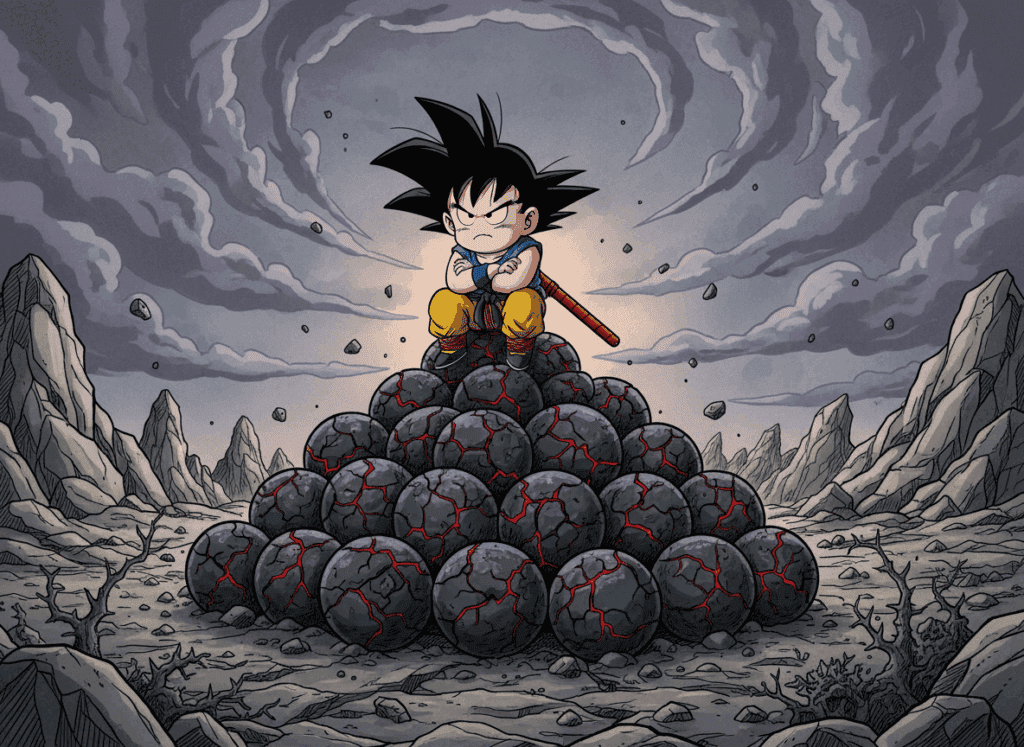
One of the biggest missteps in Dragon Ball GT was the decision to turn Goku back into a child. After watching him grow from a boy into a powerful adult, a husband, a father, and even a grandfather, this change felt like a huge step backward. All the maturity and character development he gained throughout Dragon Ball Z seemed to vanish overnight. It was jarring to see this legendary hero, who had faced universe-ending threats, suddenly de-aged and stripped of his adult presence. This decision fundamentally undermined the journey we had been on with him for years.
This creative choice also created some bizarre problems for the story. Having a child as the main protagonist made it difficult to take the show’s more serious moments to heart, as it often felt tonally out of place. It also led to weird and inconsistent plot holes, like how Goku suddenly couldn’t use his Instant Transmission technique unless he was in his Super Saiyan 4 form (Dragon Ball GT episode 43, “The Revival of Cell and Frieza”). Rules like this felt completely arbitrary and served only to weaken a character who was supposed to be the universe’s greatest protector. It was a confusing nerf that didn’t make any sense.
Furthermore, the physical limitations placed on Kid Goku felt forced. In the past, Goku’s strength was a result of his training and his spirit, not just his physical age. By forcing him back into a child’s body, the writers essentially reset his power levels in a way that felt artificial. It stripped away the gravitas he had earned during his battles with Frieza, Cell, and Buu. Every time he struggled against a minor opponent because his “body couldn’t handle the power,” it felt like a slap in the face to the fans who had spent years watching him overcome those very obstacles.
Conclusion
Despite all the issues I’ve pointed out, I don’t think Dragon Ball GT is a complete disaster. The show had some cool moments that are worth remembering. For instance, the design for Super Saiyan 4 is still one of the most unique and beloved forms in the entire franchise. It tapped into the primal, Oozaru roots of the Saiyan race in a way that felt fresh and visually striking. Plus, the final episode delivered a surprisingly emotional and fitting farewell to Goku that left a lasting impact on many of us. These bright spots show there was potential there, even if it wasn’t always realized.
Dragon Ball GT holds a strange place in the hearts of many fans, often seen as the black sheep of the Dragon Ball family. It’s the series that took big swings but didn’t always connect, leading to a lot of the criticism we’ve talked about. Even with its flaws, I believe it’s still a fun piece of the franchise’s history to look back on, especially when you consider the rise of the Saiyans and how their past influenced the villains of this era. It gave us a different take on the world we love, and for that alone, it’s worth remembering, even if it was a bumpy ride. It serves as a reminder that even a series with legendary DNA can struggle if it loses sight of the characters and pacing that made it great in the first place.
Frequently Asked Questions
1. Why do people say Dragon Ball GT had pacing issues?
The pacing was all over the place. I felt the first arc, the Black Star Dragon Ball hunt, dragged on for almost twenty episodes with very low stakes. Then, later on, huge events like Baby taking over the entire planet happened way too fast, in just a couple of episodes. This lack of balance made the show feel both tedious and rushed at the same time.
2. Does the author just hate everything about Dragon Ball GT?
Not at all! I don’t hate the series. I praise some of its ideas and call Super Saiyan 4 ‘one of the coolest transformations in the entire franchise.’ My main frustration is that the show had brilliant concepts but didn’t execute them very well. There is a lot to enjoy if you can look past the structural flaws.
3. What was the problem with the beginning of GT?
For me, the beginning of GT was a slog. It shifted from the high-stakes action of Dragon Ball Z to a slow, low-threat, ‘adventure-of-the-week’ style. After the intensity of the Buu Saga, it was hard to get invested in that. The stakes felt too small, and the humor didn’t always land for an audience that had grown used to planetary threats.
4. Were there any other issues with GT besides the story’s pacing?
Yes, a few big ones. I talk about how the series sidelined most of the Z-Fighters, shrinking the cast down. I also felt that its most creative villains, like the Shadow Dragons, were underdeveloped and didn’t have the impact they could have. Additionally, the de-aging of Goku and the inconsistent application of his powers were major points of contention.
5. Was Super Saiyan 4 considered a bad part of GT?
Definitely not! I think Super Saiyan 4 is a major highlight. I call it an ‘incredible idea’ and one of the best-designed transformations in all of Dragon Ball, even though I have issues with the show itself. It remains an iconic part of the franchise’s visual history and is still widely celebrated in games and merchandise.
6. How was the tone of early GT different from Dragon Ball Z?
The tone shifted completely. Dragon Ball Z ended with the high-stakes, intense action of the Buu Saga. GT’s first arc was a much lighter, slower-paced space adventure. For fans used to Z’s formula, that change felt jarring and less engaging. If you want to see how this compares to his other forms, you can check out every single Goku transformation across the different series. This tonal shift is often cited as the primary reason why many fans dropped the show early on.

