
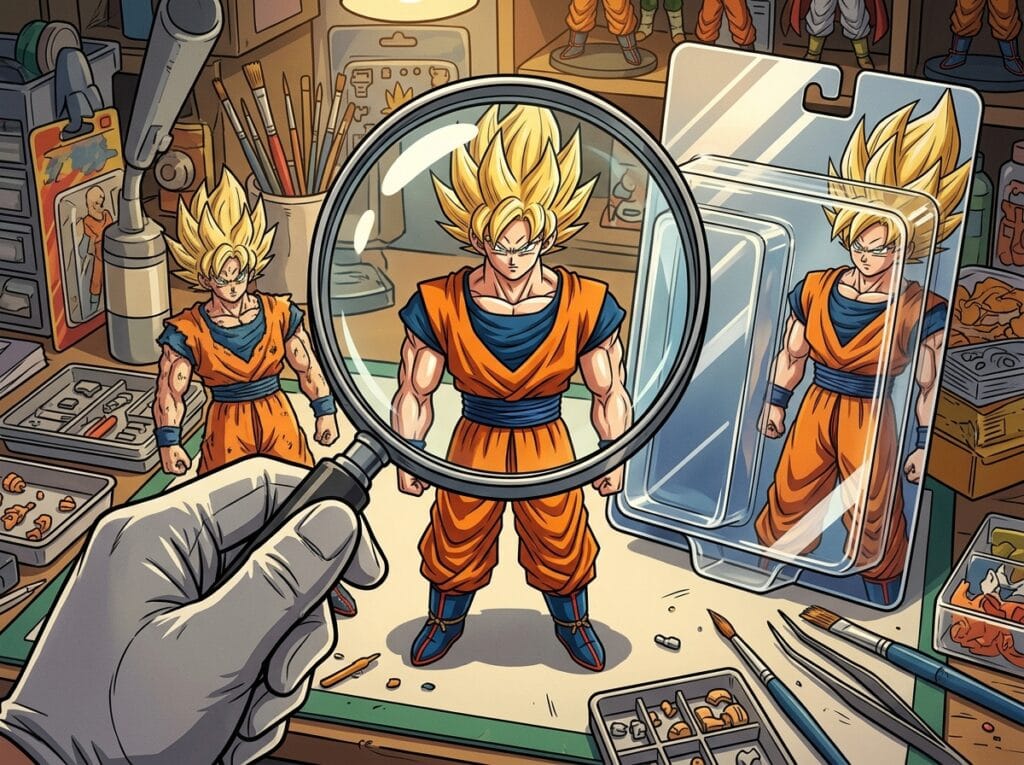
A rare figure, card, or clothing item can look perfect and still be counterfeit, which makes Dragon Ball merchandise authenticity harder to judge by a logo or hologram alone. I consider the manufacturer, exact release, packaging, seller, and provenance together because no single system covers every item or market. These checks can help me avoid misleading listings and make more confident purchases.
Different languages, safety labels, and country-of-origin markings do not automatically mean a product is fake. Genuine merchandise may be made for another region and later imported. I also separate official licensed products from fan-made items and unauthorized copies because each category has different value and expectations. My goal is to compare several details that support the same conclusion instead of relying on one quick clue.
Key Takeaways
- Authenticate Dragon Ball merchandise by evaluating the manufacturer, exact release, licensing marks, packaging, product quality, seller, and provenance together; no single logo, hologram, label, or visual clue proves authenticity.
- Different languages, safety markings, country-of-origin labels, and distributor details may reflect legitimate regional releases or imports and do not automatically indicate a counterfeit.
- Distinguish official licensed products from fan-made items and unauthorized copies, since their licensing status, value, and buyer expectations differ.
- Treat unusually low prices, stock photos, vague descriptions, poor printing or construction, missing details, and seller pressure as warning signs; request clear photos, verify the release, preserve transaction records, and use buyer protection when needed.
Introduction To Dragon Ball Merchandise Authenticity
Authenticating Dragon Ball merchandise can be difficult because official products come from different rights holders, manufacturers, licensees, and regional distributors. I may find genuine items made for Japan, North America, Europe, or another market, and each version can have different packaging, language, safety information, and distributor details. An imported product is not automatically counterfeit simply because its box is unfamiliar or its text is not in English. At the same time, counterfeiters often copy popular logos and packaging, so appearance alone is not enough.
I look at several details together instead of trusting one feature. The manufacturer, copyright and licensing marks, product number, packaging quality, print accuracy, materials, paint, and included accessories should all match the expected release. A hologram, logo, or country-of-origin label can support an authenticity check, but none of these proves that an item is genuine on its own. Missing information, spelling errors, blurry artwork, poor construction, or a product that differs from official photographs can be warning signs, although minor packaging differences may reflect a regional release.
The seller and the product’s history also matter when I evaluate a listing. I compare clear photos with reliable records of the exact figure, card, model kit, clothing item, or collectible, and I check whether the seller explains where it came from. Unusually low prices, stock photos only, vague descriptions, and pressure to pay quickly deserve extra caution. When details remain uncertain, I prefer a listing with verifiable provenance, accurate release information, and a return policy instead of relying on a single visual mark.
Official Dragon Ball Manufacturers And Licenses

There is no single authentication system covering every Dragon Ball product, so I look at the company connected to the item instead of trusting one logo or hologram. Official merchandise may identify a documented manufacturer, rights holder, licensee, or regional distributor on the box, label, or product page. The exact wording matters because these parties may appear in different places. I also compare the product name, character artwork, release line, item number, and packaging design with reliable records for that specific release. A genuine regional import can have Japanese or other local-language packaging, different safety marks, and a foreign distributor without being counterfeit.
I separate official products from custom items because custom work can be clearly described without being licensed merchandise. Custom figures, repainted collectibles, and fan-made clothing should not claim to be factory-produced or officially approved when they are not. Counterfeit products often use blurry artwork, incorrect fonts, missing copyright statements, weak printing, poor paint application, or a product number that does not match the item. These clues are useful, but none proves authenticity alone because packaging can be copied and genuine products can have minor manufacturing flaws. I treat unusually low prices, stock photos only, vague company details, and pressure to buy quickly as reasons to investigate further.
Before purchasing, I check the full listing and ask whether the seller can show clear photos of the box, manufacturer markings, license information, item number, and any regional distributor details. I then compare those details with the documented release, including its character, scale, series name, color scheme, and original packaging. A seller who explains that an item is imported, used, opened, or custom-made is easier to evaluate than one who uses broad claims such as “rare official” without evidence. I keep the receipt, listing, and photos because provenance can help if the product later turns out to be misrepresented. This combined check of the manufacturer, release, packaging, seller, and purchase history is safer than relying on a single mark.
Dragon Ball Packaging And Product Quality Clues
I start by checking the packaging for clear spelling, sharp printing, consistent colors, and accurate Dragon Ball character artwork. Blurry images, uneven logos, strange fonts, missing copyright statements, or text that looks machine-translated can be warning signs, especially when several problems appear together. I also compare the barcode, product number, manufacturer details, copyright information, and required safety marks with reliable images of the exact release. A missing hologram or a different country-of-origin label does not prove a product is fake because packaging can vary by market. Japanese releases, imported items, and products made for other regions may use different languages, seals, warnings, and distributor information while still being genuine.
The item itself should match the quality shown in official product photos and detailed seller images. I look for clean sculpting, balanced proportions, smooth paint, firm joints, suitable materials, and accessories that fit the character and release description. Rough seams, warped parts, strong chemical odors, thin plastic, careless paint marks, or missing hands, stands, cards, or other included pieces can suggest a counterfeit or a damaged item. I also inspect factory seals and protective packaging, but I treat them as clues rather than absolute proof because seals can be replaced or changed between production runs. When possible, I compare the packaging and contents with the exact product code, release version, and photos from a trustworthy source.
Finally, I review the listing as a whole instead of trusting one logo or feature. I check whether the seller provides clear photos of the front, back, barcode, seals, and figure, then compare those details with the stated manufacturer, release date, and product description. A price far below the usual range, stock photos only, vague answers, or a mismatch between the box and its contents deserves extra caution. I keep records of the listing and ask for additional photos before buying because authenticity depends on the manufacturer, exact release, packaging, seller, and purchase history together.
Seller Listings And Merchandise Provenance

I start by evaluating the seller before studying the product itself. I check how long the account has been active, whether it has a consistent purchase history, and whether its reviews describe the exact item being offered. I compare the listing’s product name and release number with trusted catalog records because vague titles or missing release details make it difficult to identify what should be in the box. Listing photos should show the front, back, sides, barcode, licensing marks, manufacturer information, and any included accessories instead of relying on one cropped image. A price far below the usual market range or claims of unlimited stock for a scarce release are warning signs, although neither proves an item is counterfeit on its own.
Packaging clues are useful when they match the specific release, but they should not be treated as automatic proof of authenticity. I look for clear printing, correct character names, consistent logos, clean seals, accurate safety information, and details that match the product’s region and manufacturer. I also remember that genuine imported merchandise may use different languages or labels. I read the return policy carefully to confirm that I can inspect the item and request a refund if the product differs from the listing. Before buying, I save screenshots of the description and photos so I have a record of the seller’s claims.
The safest judgment comes from checking the exact release, packaging, manufacturer, seller, and provenance together. Provenance can include a dated receipt, an original retailer record, import documentation, or a clear chain of ownership, while an unexplained story or stock photo provides little support. I treat reviews as evidence rather than a guarantee, giving more weight to detailed comments with photographs and less weight to repeated one-line praise. A hologram, logo, country-of-origin label, or convincing box can be copied, so the complete history and consistency of the listing matter more than any single visual feature.
Responding To Suspected Dragon Ball Counterfeits
When I suspect a Dragon Ball item may be counterfeit, I compare the exact product with manufacturer records and official rights-holder or distributor resources. I look for a matching product name, release number, character design, packaging layout, licensing statement, and manufacturer mark instead of trusting one hologram or logo. Genuine imported merchandise may have different languages, safety labels, or regional packaging, so those differences alone do not prove an item is fake. I also compare the seller’s photos with reliable product images and check whether the listed release actually exists.
A request for clearer photos can reveal problems that a small listing image hides. I ask to see every side of the box, the barcode or product code, copyright and licensing text, seals, paint details, and any included paperwork. Blurry printing, misspelled words, uneven paint, poor molding, missing marks, or a price far below comparable listings can be warning signs, but none should be treated as final proof by itself. Until I can verify the item and its source, I avoid risky payment methods, off-platform transactions, wire transfers, and requests for gift cards or other payments that are difficult to reverse.
I save the listing URL, seller profile, photos, description, messages, receipt, and payment details before reporting anything. If the evidence remains concerning, I contact the marketplace through its official reporting process and ask about cancellation, buyer protection, or a return. I may also report suspected infringement to the relevant rights holder or authorized distributor, especially when the listing uses copied branding or appears to sell many questionable items. When money has already changed hands, I promptly contact my payment provider, explain the problem clearly, and provide the documentation I collected.
How to Confirm Dragon Ball Merchandise Authenticity
The safest way I evaluate Dragon Ball merchandise authenticity is to treat several details as one complete set. I check the manufacturer or documented licensee, identify the exact release, and compare its packaging, markings, design, and product photos with reliable reference images. I also review the seller’s history, listing details, return policy, and provenance, meaning where the item came from and how it reached the seller. A genuine imported product may have different language, safety information, or regional packaging, so those differences alone do not prove that it is counterfeit. When these details agree, I have much stronger evidence than I would from any single label.
I never treat a hologram, logo, low price, or country-of-origin label as automatic proof of authenticity. Counterfeiters can copy visible marks, use convincing packaging, or make claims that sound official, while an unusually low price may signal missing information rather than a bargain. If the release cannot be matched to a known product, the seller avoids questions, or the photos show inconsistent fonts and printing, I pause before buying. Careful research takes more time, but it is safer than relying on one attractive clue. By checking the manufacturer, exact release, packaging, seller, and provenance together, I can make a more informed decision and reduce the risk of purchasing a counterfeit.
Frequently Asked Questions
1. What is the best way to check Dragon Ball merchandise authenticity?
I compare several details at the same time, including the manufacturer, exact release, product number, licensing marks, packaging, materials, paint, and included accessories. I also check the seller and the item’s provenance because no single logo, hologram, or label can prove that a product is genuine.
2. Does unfamiliar packaging mean Dragon Ball merchandise is fake?
No. Genuine merchandise may have been made for Japan, North America, Europe, or another market. Different languages, safety labels, distributor details, and country-of-origin markings can be normal when an item was imported.
3. Can a hologram or official Dragon Ball logo prove authenticity?
A hologram or logo can support an authenticity check, but it does not prove an item is genuine by itself. Counterfeit products often copy familiar logos and security features, so I also compare the packaging quality, print accuracy, manufacturer information, and expected release details.
4. How can I tell whether a Dragon Ball figure is counterfeit?
I compare the figure with reliable images and details from the exact release, including its sculpt, paint, materials, joints, accessories, box, manufacturer, and product number. Spelling errors, blurry printing, poor construction, incorrect colors, missing parts, or details that do not match the release are strong warning signs.
5. How do I check if Dragon Ball cards or clothing are authentic?
For cards, I inspect the print quality, text, borders, colors, finish, card number, set details, and overall construction against a trusted example. For clothing, I check the tags, licensing information, print or embroidery quality, materials, stitching, and whether the design matches a known official release.
6. Are fan-made Dragon Ball products the same as official merchandise?
No. Fan-made items, official licensed products, and unauthorized copies are separate categories. I identify the category before judging value because a fan-made item may be creative and collectible, but it does not have the same licensing status or expectations as official merchandise.
7. What seller details should I review before buying Dragon Ball merchandise?
I review the seller’s history, photos, description, return policy, and answers to questions about the item’s source. I treat unusually low prices, vague descriptions, stock photos only, missing product information, and refusal to provide clear photos or provenance as reasons to slow down or avoid the purchase.

