
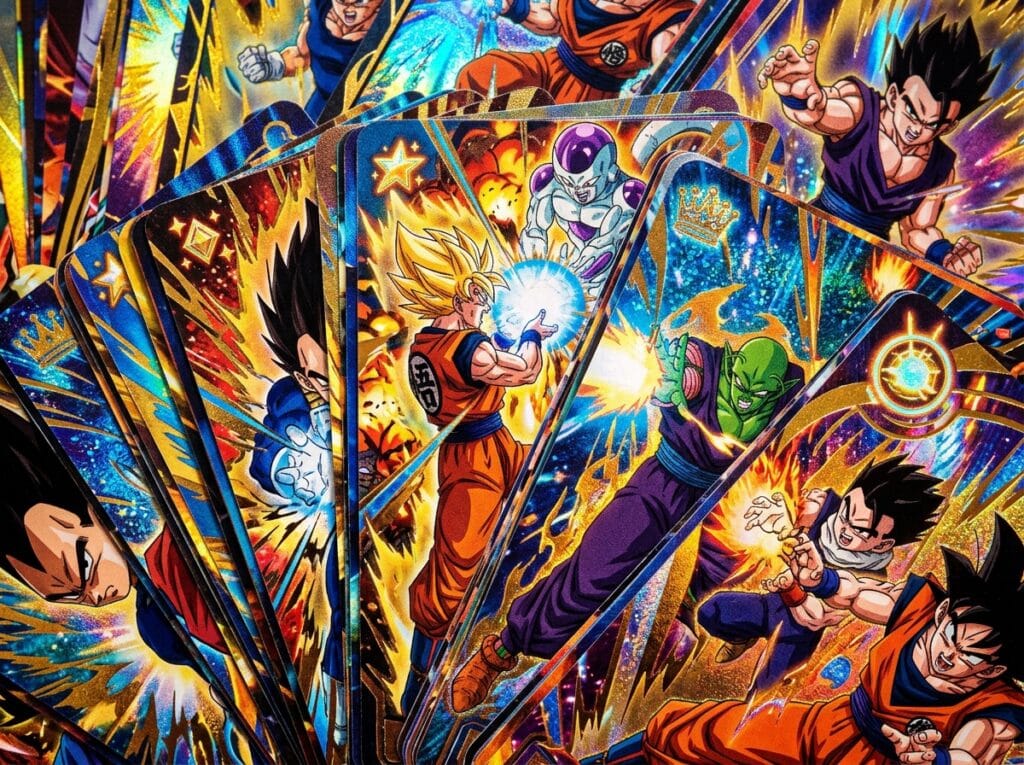
Dragon Ball card rarities can be confusing, especially when the same labels appear across different games. I first separate Fusion World from MASTERS because their rarity systems, pull rates, and card values are different. This simple distinction makes it much easier to understand what each card code means.
From Leaders and Commons to higher rarities such as Super Rares and Secret Rares, each tier tells me about a card’s place in a set, but not its exact market value. I’ll explain the rarity ladders in plain language, define common abbreviations, and show how to judge scarcity without assuming every “rare” card is equally difficult to find.
Key Takeaways
- Always identify whether a card belongs to Fusion World or MASTERS before interpreting its rarity, pull rate, or value; matching labels such as SR and SCR are not directly comparable between the two games.
- Use the card’s game, set code, card number, rarity symbol, and official database listing to confirm its exact identity and release.
- Treat alternate-art, foil, promotional, reprint, stamped, and other premium versions as distinct printings, since they can differ significantly in scarcity and collector demand.
- Rarity is only a starting point for valuation; artwork, character popularity, condition, print run, product configuration, demand, and recent completed sales determine a card’s actual market value.
Introduction To Dragon Ball Card Rarities
“Dragon Ball cards” can refer to more than one trading-card game, so I first identify the product before comparing rarity symbols or prices. The two active games are DRAGON BALL SUPER CARD GAME Fusion World and DRAGON BALL SUPER CARD GAME MASTERS. Fusion World is the newer, streamlined game with physical and digital versions, while MASTERS is the older, more complex game that continues to receive new products. Because each game has its own card database and rarity structure, a Secret Rare from one game is not automatically equal in scarcity or value to a Secret Rare from the other.
Fusion World generally organizes cards with codes such as L for Leader, C for Common, UC for Uncommon, and higher rarity levels for more limited cards. MASTERS uses its own set structure, symbols, and print treatments, including regular cards, special designs, alternate-art cards, and premium versions. Even cards with similar names or characters may come from different games, sets, releases, or language editions. I always check the game logo, set code, card number, and rarity mark before deciding what a card is or how rare it may be.
Rarity is an important starting point, but it does not determine a card’s value by itself. Print differences, reprints, artwork, condition, character demand, and the size of a particular release can all affect collector interest. For example, two cards with the same rarity code may have very different market values if one is an alternate-art version or comes from a more limited product. Identifying the correct game and exact printing first makes later research about rarity, collecting, and card values much more reliable.
Fusion World Rarity Symbols

Fusion World uses a simple rarity code system that helps me identify a card’s role and relative print rarity at a glance. L means Leader, the card that determines a deck’s Leader and color. C means Common, UC means Uncommon, and R means Rare. Each step generally represents a more limited pull than the previous one. SR stands for Super Rare, while SCR means Secret Rare. These are among the higher-rarity cards found in standard sets. PR means Promotional, covering cards distributed through special products, events, campaigns, or other releases rather than regular booster sets.
I always check the rarity symbol printed on the card, then compare it with the entry in the Fusion World card database. The database can confirm the card’s set, card number, version, and listed rarity, which is especially useful when similar artwork or reprinted cards appear in different products. A promotional version can have a different code or card number from a regular-set version, even when the character and effect look familiar. I also keep Fusion World and the older Dragon Ball Super Card Game MASTERS system separate because matching labels such as “Super Rare” or “Secret Rare” do not automatically indicate the same scarcity or market value. For collecting, I use the card database as my main reference before comparing print differences, condition, or prices.
Masters Rarity Levels
The MASTERS rarity ladder uses labels such as C for Common, UC for Uncommon, R for Rare, SR for Super Rare, SPR for Special Rare, and SCR for Secret Rare. Some products also include special categories, including GDR for God Rare, along with promotional and expansion cards that do not fit neatly into the main ladder. I use these codes as a starting point, not as a complete measure of a card’s scarcity. A popular character, strong artwork, tournament history, or limited printing can make a lower-rarity card more desirable than a less popular high-rarity card.
MASTERS sets are also organized around different product types, release eras, and print treatments. A card may appear as a standard version, foil version, or special parallel with alternate artwork, a stamped design, or another visual change. Reprints and anniversary products can affect how many copies collectors find, even when the card keeps the same name and rarity code. For that reason, I check the card number, set code, finish, and artwork before treating two versions as the same collectible.
Pull expectations in MASTERS depend on the individual set and product configuration, so I do not use one booster box as a universal guide. Secret Rares and God Rares are generally chase cards, but their availability can vary between releases. SPR cards may also have different roles in different products. I do not compare an MASTERS SCR directly with a Fusion World SCR because matching labels do not guarantee matching print runs, odds, demand, or market value. Reading the full set information alongside the rarity symbol gives me a clearer picture of what a card represents.
Alternate Art And Print Variants

I separate a card’s standard rarity from its artwork and printing details. A Common, Uncommon, Rare, or Secret Rare can have a regular version and a more visually distinctive alternate-art version, depending on the product. Alternate art changes the illustration or design, while a super alternate art usually adds a more elaborate presentation and stronger collector demand. Foil cards use a reflective finish, but foil alone does not always mean the card has a higher standard rarity. I always check the card number, set symbol, and card database before comparing two cards that appear similar.
Promotional cards are distributed through events, products, campaigns, or other special releases instead of a normal booster slot. Reprints use an existing card in a later product or printing. Small changes to the set code, finish, copyright line, or artwork can help identify them. Special-printed cards may include stamped designs, event marks, textured finishes, or other treatments that distinguish them from the regular version. These differences can increase collectible appeal even when the card’s game text and standard rarity stay the same. In practice, the release method and print details often matter as much as the rarity label.
I also keep Fusion World and MASTERS listings separate because their rarity systems are not interchangeable. A Secret Rare in one game may have a different print run, design treatment, and collector market from a Secret Rare in the other. When I compare versions, I look at the game, set, card number, rarity code, artwork, finish, and whether the card is a promo or reprint. This approach prevents me from assuming that the brightest or most decorated card is automatically the rarest. It also gives me a clear way to record cards and research their values later.
Using Rarity To Organize Collections
I start by separating Dragon Ball SUPER CARD GAME Fusion World from DRAGON BALL SUPER CARD GAME MASTERS because their set codes and rarity systems are different. In Fusion World, a code such as FB01-001 identifies the set and card number, while the rarity mark appears separately on the card and in the card database. Common codes include L for Leader, C for Common, and UC for Uncommon, with higher rarity categories listed for each product. In MASTERS, set prefixes and rarity marks follow their own structure, so I never compare a Fusion World Secret Rare directly with a MASTERS Secret Rare. This simple product check prevents many sorting and valuation mistakes.
When I organize a collection, I record the set code, card number, card name, rarity, and any visible print variation. The card number helps me find missing cards, while the set code tells me which release the card belongs to, such as a numbered booster set or a special expansion. I also look for differences such as foil treatment, alternate artwork, promotional markings, or versions listed separately in the card database. If a card appears in more than one printing, I treat each version as its own entry instead of assuming the copies are identical. A checklist or spreadsheet makes it easier to mark cards as owned, missing, traded, or awaiting verification.
Rarity is useful for organizing cards, but I use it as a starting point rather than a final value judgment. A card with a high rarity mark may have a large print run, limited demand, or many available copies. A lower-rarity card can be harder to find because of its release, artwork, or popularity. I compare the exact product, set number, card version, condition, and current sales evidence before estimating what a card may be worth. Card listings can confirm a card’s identity and rarity, but they do not guarantee a market price. This approach helps me build a complete collection without assuming that the rarest label is automatically the most expensive card.
Conclusion To Dragon Ball Card Rarities

Dragon Ball card rarities make the most sense when I first identify which game the card belongs to. Fusion World and MASTERS use separate rarity systems, so a Secret Rare from one game should not automatically be compared with a Secret Rare from the other. Fusion World uses codes such as L, C, and UC, while MASTERS has its own set structure and rarity labels. I always check the card’s set name, card number, and database listing before judging how rare it is.
Card variants are just as important as the printed rarity symbol. A standard version, foil version, alternate-art card, special reprint, or promotional release may share a similar name while having a different collecting appeal and market value. I also look for differences in artwork, finish, borders, and set numbering because these details can identify a specific printing. Treating every version as the same can lead to inaccurate collections and confusing value comparisons.
For a clear starting point, I recommend sorting Dragon Ball cards by game, set, card number, and rarity before adding notes about special variants. This simple system helps me separate Fusion World from MASTERS and makes missing cards easier to find. Once the cards are organized, I can compare matching versions more accurately and research values without relying on rarity names alone. Checking the card database and the card itself gives me a reliable foundation for understanding Dragon Ball card rarities.
How I Read Dragon Ball Card Rarities
Dragon Ball card rarities make the most sense when I first identify the game and set because Fusion World and MASTERS use separate rarity systems. In Fusion World, codes such as L, C, UC, R, SR, and SCR generally indicate Leaders, Commons, Uncommons, Rares, Super Rares, and Secret Rares. MASTERS may use familiar codes while also including special treatments such as Special Rare cards, so the same label does not automatically mean the same scarcity or value. I also check the card number, set symbol, and database listing to confirm exactly where a card belongs.
Rarity is only one part of a card’s collectibility because alternate-art versions, foil patterns, promotional releases, and different print runs can make two cards with the same code feel very different. A complete review should compare the card’s set, printing, artwork, condition, and availability instead of relying on the rarity symbol alone. By learning how each game organizes its sets and recognizing these print differences, I can sort cards accurately and avoid comparing unrelated releases. This foundation makes future research into card values and collecting much easier.
Frequently Asked Questions
1. What are the main Dragon Ball card rarity levels?
The main rarity levels depend on the game. Fusion World commonly uses L for Leader, C for Common, UC for Uncommon, R for Rare, SR for Super Rare, and SCR for Secret Rare. MASTERS uses its own rarity labels and premium versions, so I never compare a rarity code without checking the game first.
2. How can I tell whether a Dragon Ball card is from Fusion World or MASTERS?
I check the game logo, card layout, set code, card number, and rarity mark. Fusion World is the newer game with physical and digital versions, while MASTERS is the older game with a more complex card system. Similar characters and card names can appear in both games, so the card database and set information are important.
3. What does L, C, UC, R, SR, or SCR mean on a Dragon Ball card?
These letters describe a card’s rarity or role within its set. L usually means Leader, C means Common, UC means Uncommon, R means Rare, SR means Super Rare, and SCR means Secret Rare in Fusion World. The exact meaning can vary by game, so I confirm the code against the correct product line before judging the card.
4. Is a Secret Rare always the most valuable Dragon Ball card?
No. Secret Rare usually indicates a limited or difficult-to-pull card, but it does not guarantee the highest market value. Character popularity, game demand, card strength, artwork, condition, language, set age, and supply all affect the price.
5. Are higher-rarity Dragon Ball cards harder to pull?
Higher-rarity cards are generally less common than Commons and Uncommons, but pull rates vary by game, set, product, and special release. Premium versions and alternate-art cards may have separate odds from regular card versions. I check the product information instead of assuming that every card with a high rarity label has the same scarcity.
6. What is the difference between a regular card and an alternate-art or premium card?
A regular card uses the standard artwork and finish listed for the set, while an alternate-art or premium card may feature different art, foil treatment, design elements, or upgraded printing. These versions can be more desirable and scarcer than the regular card, even when they share the same character and card number. I compare the artwork, finish, version marking, and set listing to identify the correct print.
7. How do I check the rarity and value of a Dragon Ball card?
I start with the game logo, set code, card number, rarity symbol, language, and card condition. Then I compare the exact version with recent completed sales because asking prices often do not match what buyers actually pay. I also check for alternate art, reprints, promotional status, and different printings before estimating value.

