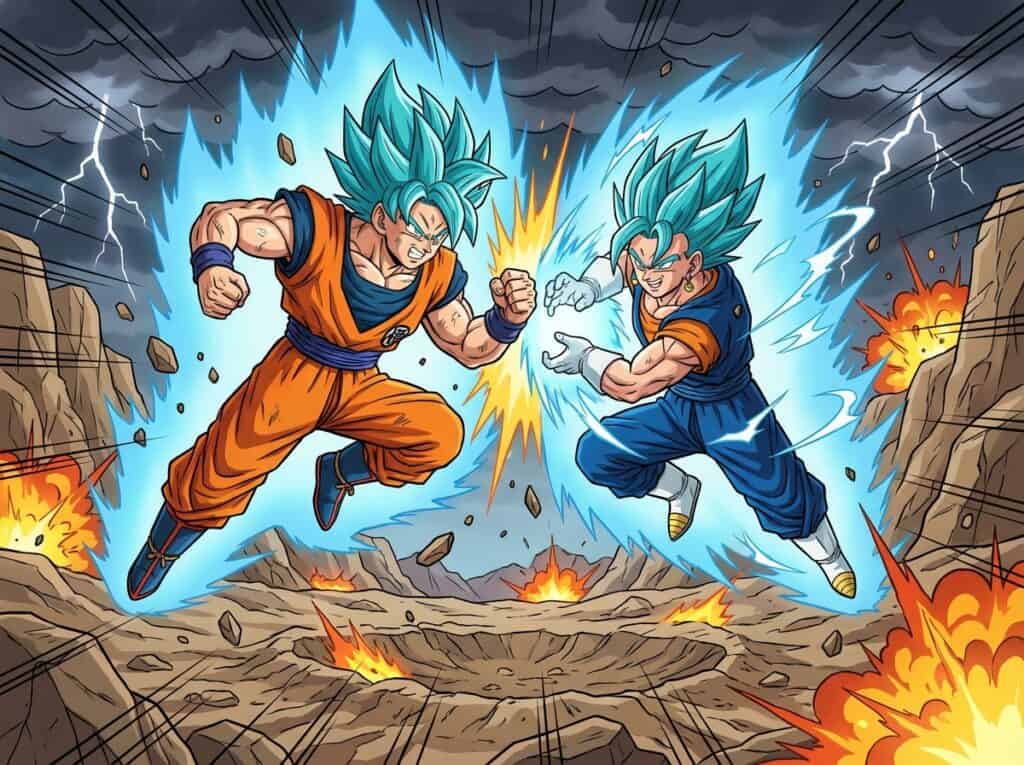
Nothing gets Dragon Ball fans more hyped than seeing Goku and Vegeta fuse into Gogeta or Vegito. Those epic battles where one warrior becomes two powerhouses combined still give me chills. Gogeta comes from the Fusion Dance, a precise 30-second pose routine they have to nail perfectly. Vegito wears the Potara Earrings for an instant merge that looks effortless. Both fusions crank their power to insane levels, making them unbeatable against gods and monsters. I love how these moments steal the show in every saga.
Fusion Dance and Potara deliver different power boosts, and that changes fights. The Fusion Dance multiplies strength by a solid factor but demands perfect timing and stamina from both fighters. Potara amps power even higher, blending their energies seamlessly without practice. Vegito’s fusion held up strong even after massive energy drains. The differences show why one might outshine the other in raw power or longevity. Understanding the lore behind these mechanics helps fans appreciate the strategic choices Goku and Vegeta make when the world is at stake.
In the sections ahead, I’ll break down the head-to-head on duration, requirements, risks, and real fight examples. We’ll see how Fusion Dance’s time limit plays out versus Potara’s one-hour window for mortals. By the end, you’ll know exactly when to root for Gogeta over Vegito or vice versa. This comparison will settle tons of fan debates and clarify why certain fusions appear in specific movies versus the main series episodes.
Key Takeaways
- Potara Earrings enable instant fusion without practice, providing a higher power boost (often 100x+) and lasting about 1 hour for mortals, though shorter with transformations.
- Fusion Dance requires precise synchronization, equal power levels, and same size, lasting 30 minutes with a 1-hour cooldown and risk of failure creating weak fusions.
- Potara fusions like Vegito generally outperform Fusion Dance fusions like Gogeta in raw power, but Fusion Dance allows repeatability.
- Choice depends on situation: Potara for quick, reliable max power; Fusion Dance for skill-based, repeatable bursts.
Fusion Dance Precision Moves Required
The Fusion Dance demands perfect precision. Both fighters mirror each other’s stance by extending one arm up and the other down in a V shape. They slide their feet together while keeping their power levels exactly equal, or the fusion just won’t happen. Next comes the synchronized breathing. They exhale sharply as they leap toward each other, fingers outstretched to touch precisely at the tips. It’s like a high-stakes dance routine that Goku teaches Goten and Trunks, and any tiny mistake ruins it all. Dragon Ball Z episode 268, Buu is Hatched.
Unlike the Potara Earrings that fuse anyone instantly, this dance requires both warriors to be the same size and strength for it to work right. They hold the pose for 30 minutes max once fused, after which they split apart automatically. There’s also a one-hour cooldown before they can try again, making it tricky in long battles. I always get hyped watching Goku and Vegeta nail it despite their egos clashing. Dragon Ball Z episode 280, Vegetas Respect!
Screw up the timing or alignment, and you end up with a deformed, weak fusion that’s basically useless, like a lumpy potato instead of a powerhouse. We’ve seen this happen hilariously with Gotenks when the kids mess around too much. That’s why practice is key. It turns two strong fighters into one godlike being, but only if they stay laser-focused. The risk adds so much tension to those epic fights. If one fighter extends their pinky finger instead of their index finger, the resulting warrior might be morbidly obese or frail and elderly, leaving them defenseless for the full duration.
Potara Earrings Instant Fusion Process

Potara earrings make fusion super straightforward and instant. You just need two people to each put on one earring, but they have to go on opposite ears. Once that’s done, boom, they’re fused together right away, no practice or poses required. The best part is it works even if one person doesn’t agree to it. I always get chills watching that happen in the series. The magnetic pull that draws the two bodies together is so forceful it can even pull a fighter out of a defensive stance.
For Supreme Kais, this fusion sticks around forever, which is why it’s such a big deal for them. Mortals get about one hour of fused power before they split back, but that time shrinks fast if they transform or go all out. Think Super Saiyan or higher, and minutes fly by. It’s a high-risk, high-reward move that demands smart energy use. Dragon Ball Z episode 269, Searching for Brolly. This energy consumption is the ultimate double edged sword for mortal warriors who lack the divine stamina of a Kai.
The power boost from Potara is insane. It multiplies strength way beyond what either fighter had alone. It combines their powers first, then cranks it up massively for a god-like warrior. We see this crush enemies in epic fights. Dragon Ball Super episode 130, Revived Warriors Heavy Assault. That’s why fans debate it against the Fusion Dance all the time. The Potara method also seems to blend the personalities more deeply, often resulting in a warrior who is more arrogant and tactical than the Fusion Dance equivalent.
The Impact of Rivalry on Fusion Strength
One of the most fascinating aspects of both fusion types is the Rivalry Boost. This is a special phenomenon where the power output is significantly increased if the two participants are rivals. In the case of Goku and Vegeta, their lifelong competition acts as a catalyst. When they perform the Fusion Dance to become Gogeta, their synchronized spirits create a warrior with unmatched offensive capabilities. However, the Potara Earrings seem to benefit even more from this dynamic.
Old Kai explicitly mentioned that because Goku and Vegeta are such fierce rivals, their Potara fusion, Vegito, is even more powerful than it otherwise would be. This suggests that the earrings tap into the underlying tension and mutual respect between the fighters. It turns their conflicting energies into a unified force that is greater than the sum of its parts. This is why Vegito is often seen as the ultimate trump card in the series. The deeper the bond or the more intense the rivalry, the more explosive the resulting power level becomes for the fused entity.
Power Boosts Fusion Dance vs Potara
Potara earrings crank up power way more than Fusion Dance. They multiply the combined strength of two fighters by a huge factor, often estimated at 100 times or beyond. Fusion Dance boosts power too, but it’s closer to a 50 to 100 times increase depending on how perfectly they sync up. I love how Potara just works instantly without needing practice, giving that edge in desperate fights. Still, Fusion Dance lets you retry if it fails, which keeps things flexible. The flexibility of the dance is often overlooked by those who only care about raw numbers.
Take Gogeta from the Fusion Reborn movie and Vegito from the Buu saga, both Goku and Vegeta fused. Vegito came out dominating Super Buu effortlessly, showing Potara’s raw edge in strength and speed. Gogeta held his own against Janemba, but fans debate Vegito edges him out overall due to the bigger power jump. In Dragon Ball Super, Vegito Blue overpowered fused Zamasu faster than Gogeta Blue did Broly later on. The sheer speed of Vegito’s combat movements often leaves opponents completely bewildered and unable to track his position.
Fusion Dance shines in battles with its 30-minute timer that you can repeat, perfect for wearing down tough foes over time. Potara lasts a full hour for mortals but drains quicker with big transformations, and it’s one shot only. I give Potara the win for superior overall power, making fusions like Vegito feel unstoppable from the start. That said, both turn rivals into legends we can’t get enough of. The choice usually comes down to whether the fighters have the luxury of time to perform the dance or if they need a sudden surge of power to survive an immediate threat.
Strategic Advantages in Combat
When analyzing a fight, the strategic choice between these two methods is vital. The Fusion Dance is often a last resort when no magical items are available. Since it requires the two fighters to lower their power levels to match the weaker individual, there is a brief moment of vulnerability before the fusion begins. This makes it difficult to use in the heat of a fast paced battle unless an ally provides a distraction. We saw this during the fight against Broly, where Frieza had to take a beating for an hour just to give Goku and Vegeta enough time to get the dance right.
Potara, on the other hand, is the ultimate tactical surprise. A fighter can be mid air or even injured and still complete the fusion by simply clipping on the earring. This allows for a sudden reversal of momentum that can catch even the strongest villains off guard. The downside is the reliance on a physical object. If an earring is destroyed or lost, the option is gone. This introduces a layer of equipment management that isn’t present with the Fusion Dance. Each method requires the warriors to weigh the risks of physical failure against the risks of losing their magical catalysts.
FAQ
1. What is the main difference between Fusion Dance and Potara?
Fusion Dance requires a precise 30-second dance with perfect timing and equal power levels from both fighters to merge. Potara uses special earrings for an instant fusion that blends their energies seamlessly. This makes Potara easier but Fusion Dance more skill-based.
2. How long does each fusion last?
Fusion Dance fusions like Gogeta last about 30 minutes before splitting. Potara fusions for mortals, like Vegito, last around one hour. Both can end early if they take too much damage or consume too much energy through high level transformations like Super Saiyan Blue.
3. Which fusion is stronger, Gogeta or Vegito?
Potara fusions like Vegito generally provide a higher power boost by multiplying strengths more efficiently. Fusion Dance like Gogeta is still insanely powerful but might fall short in raw output. It depends on the fight, but Vegito edges out in most cases due to the Rivalry Boost mentioned by Old Kai.
4. What are the requirements for Fusion Dance?
Both fighters need identical power levels, perfect synchronization in poses, and stamina to perform the V-shaped stance and breathing. Feet must slide together precisely, or it fails. Even Goku and Vegeta mess it up sometimes, leading to the birth of Veku.
5. What are the risks of Fusion Dance?
If timing or power levels are off, the fusion fails or creates a weak, clumsy fighter. It also drains stamina quickly due to the time limit. Potara has fewer risks but can’t be undone easily by mortals without the help of Dragon Balls or specialized magic.
6. Can anyone do the Fusion Dance or use Potara?
Fusion Dance works for most fighters if they train and match sizes, like Goku with others. Potara requires compatible partners and the earrings, originally for Kais. Size differences make Fusion Dance tricky, whereas Potara can fuse individuals of any size or shape.
7. Why choose Fusion Dance over Potara in a fight?
Fusion Dance is temporary and reversible, great for short epic bursts without permanent commitment. It’s trainable for repeated use if they split. Potara shines for longer battles needing max power, but it requires having the earrings on hand and ready to use.
8. Give examples of Fusion Dance and Potara in action.
Gogeta from Fusion Dance wrecked Janemba in Dragon Ball Z: Fusion Reborn and later fought Broly in Dragon Ball Super. Vegito dominated Super Buu in Dragon Ball Z episode 268 and faced Fused Zamasu in Super. These clashes show their unbeatable power.
Fusion Dance vs. Potara: Ultimate Verdict
Both the Fusion Dance and Potara Earrings pack a huge punch by combining fighters’ powers in Dragon Ball, but they shine in different ways. Potara offers instant fusion with no need for practice. Just pop on the earrings and you’re fused for about an hour, though it drains faster with big power-ups. The Fusion Dance demands perfect timing and matching sizes for its 30-minute boost, but you can redo it if you time it right. I love how Potara feels more reliable for desperate moments, while the Dance adds that fun, skillful twist that highlights the bond between the two warriors.
Picking between them often boils down to the situation and fighters involved. Potara’s permanent power for Kais makes it epic for gods like in the Buu saga, yet mortals risk shorter fusions under stress. Fusion Dance fails if poses mess up, like Goku and Vegeta fumbling early on, but it lets you fuse repeatedly without artifacts. This makes the dance a more sustainable option for long term training or recurring threats where resources are scarce. Each method multiplies power massively, turning underdogs into legends.
Neither is strictly better. They just fit different battles perfectly. Potara wins for quick, no-fail merges, while Fusion Dance rewards practice and teamwork. I’ve always rooted for the Dance’s flashy moves, but Potara’s raw power steals the show in clutch fights. Whichever you prefer, fusions make Dragon Ball’s hype unbeatable. Using a Fusion Power Calculator or a Dragon Ball Fusion Dance Generator can help visualize how these different methods stack up in theory. Ultimately, whether it is the dance or the earrings, the result is the same: a warrior capable of shattering the limits of reality.