
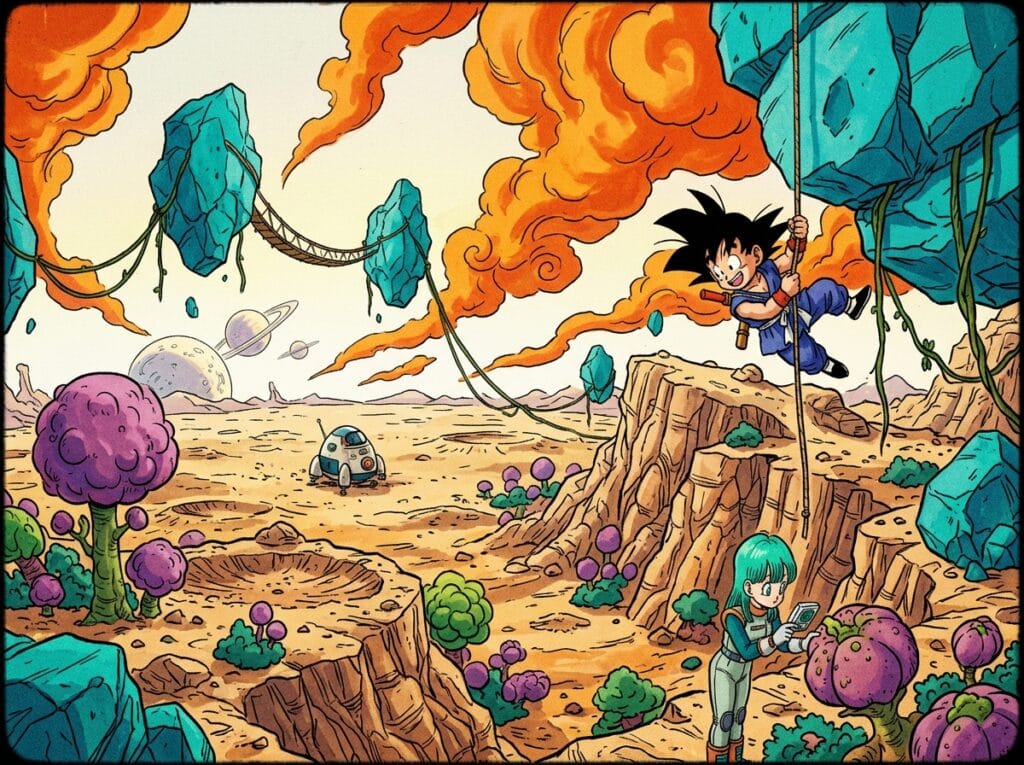
Scorching heat and endless dunes define the unforgiving terrain of Planet Rudeeze. Located in the far reaches of Universe 7, this desert world serves as a grueling stop for any space traveler brave enough to land on its shifting sands. The planet orbits multiple stars, ensuring the temperature remains high enough to challenge even the most seasoned warriors.
Finding a Black Star Dragon Ball on this sun-drenched rock is no easy task. Beneath the surface, giant predators wait for the slightest vibration to strike their next meal. Visitors must manage a world where water is scarce and every shadow could hide a swarm of hungry monsters.
Key Takeaways
- Planet Rudeeze is an anarchic desert world in Universe 7 defined by extreme solar radiation from multiple suns and relentless, low-visibility sandstorms.
- The ecosystem is dominated by aggressive, subterranean predators like giant Sandipedes that hunt via surface vibrations, alongside humanoid Weevils and flying Scarabs.
- Survival on Rudeeze requires specialized tracking equipment and constant hydration to endure a climate that can deplete the stamina of even the most powerful warriors.
- The world serves as a critical location in the search for the Black Star Dragon Balls, specifically housing the six-star ball within its shifting dunes and predatory wildlife.
Vital Statistics
Universe: Universe 7 Ruler/Governing Body: None (Anarchic/Wilderness) Native Race(s): Sandipedes, Weevils, Scarabs Current Status: Active
Planet Rudeeze is an unforgiving desert world defined by its brutal environmental conditions and extreme solar radiation. Because it orbits multiple stars, the surface remains in a state of perpetual, scorching heat that can quickly dehydrate even the most seasoned travelers. Massive sandstorms frequently sweep across the vast dunes, reducing visibility to nearly zero and making navigation almost impossible without specialized tracking equipment. The planet lacks a formal governing body or organized civilization, leaving the harsh wilderness to be ruled entirely by the laws of nature. This desolate area served as a challenging backdrop when Goku and his companions arrived in search of the six-star Black Star Dragon Ball (Dragon Ball GT Episode 15).
The native wildlife of Rudeeze has evolved specifically to hunt in these punishing conditions, making the planet incredibly dangerous for outsiders. Giant, centipede-like creatures known as Sandipedes burrow beneath the shifting sands, waiting to ambush anything that vibrates the surface. These predators are joined by humanoid Weevils and flying Scarabs, all of which are highly aggressive and territorial. Survival on this world requires constant vigilance, as the heat and the local monsters work together to overwhelm any visitors. Despite the lack of an Oozaru-triggering moon, the physical toll of the environment makes it one of the most grueling stops in the search for the Dragon Balls (Dragon Ball GT Episode 15).
The Scorching Environment of Planet Rudeeze

Universe: Universe 7 Ruler/Governing Body: None Native Race(s): Sandipedes, Weevils, Scarabs Current Status: Active
Planet Rudeeze is a harsh desert world defined by its punishing climate and relentless solar radiation. The planet orbits multiple stars, which ensures that the surface is constantly baked in a state of extreme heat. This intense temperature makes survival nearly impossible for most species without specialized protection or high levels of physical endurance. Massive sandstorms frequently sweep across the dunes, burying everything in their path and making navigation difficult for travelers. Goku and his companions found themselves struggling against these natural disasters while searching for the Six-Star Dragon Ball in Dragon Ball GT episode 15, 7-Foot Whale and 6-Star Ball.
The physical environment of Rudeeze consists of endless sand dunes and hidden oases that offer little relief from the scorching suns. Gravity on the planet is standard, but the shifting terrain and lack of water pose a greater threat than physical weight. Beneath the surface, giant predatory insects known as Sandipedes lie in wait to ambush anything that moves. These creatures have adapted perfectly to the heat, using the sand as a tactical advantage against unsuspecting prey. The combination of lethal wildlife and unpredictable weather patterns creates one of the most hostile environments in Universe 7 in Dragon Ball GT episode 15, 7-Foot Whale and 6-Star Ball.
Native Predators and the Giant Sandipedes
The scorching dunes of Planet Rudeeze are home to some of the most aggressive wildlife in Universe 7, most notably the massive burrowing Sandipedes. These giant, centipede like monsters move through the subterranean depths of the desert, waiting for the vibrations of unsuspecting travelers to signal their next meal. Their ability to erupt from beneath the sand with blinding speed makes them a constant threat to anyone searching for the Black Star Dragon Balls. During their journey, Goku and his companions found themselves relentlessly hunted by these creatures while moving through the extreme heat. The sheer size and predatory instincts of the Sandipedes prove that even seasoned fighters must remain alert in this hostile environment Dragon Ball GT episode 15, 7-Foot Whale and 6-Star Ball.
Beyond the massive Sandipedes, the planet’s ecosystem has produced various insectoid evolutions that specialize in different forms of combat and survival. The Weevils act as humanoid versions of the native pests, possessing the agility and strength needed to thrive in the shifting sands. Higher in the sky, the flying Scarabs represent the aerial evolution of these insectoid threats, providing no safety for those attempting to escape the ground. These creatures work in tandem with the harsh climate to create a gauntlet of survival for any visitor. The biological diversity of these insects highlights how life on Rudeeze has adapted to be as unforgiving as the multiple suns beating down from above Dragon Ball GT episode 15, 7-Foot Whale and 6-Star Ball.
The Search for the Six-Star Dragon Ball

Universe: Universe 7 Ruler/Governing Body: None Native Race: Sandipedes, Weevils, Scarabs Current Status: Active
Goku, Pan, and Trunks arrived on the scorching desert world of Rudeeze while tracking the signature of a Black Star Dragon Ball. The landing proved difficult when the extreme heat and a sudden sandstorm caused their spaceship to malfunction, leaving them stranded in the middle of an endless sea of dunes. While they worked to repair the vessel, the intense temperature and lack of water quickly became their most immediate threats to survival. Finding the Dragon Ball became a race against time as the harsh environment pushed the group to their physical limits. This desperate search for the artifact is depicted in Dragon Ball GT episode 15, 7-Foot Whale and 6-Star Ball.
The trio soon discovered that the shifting sands held more than just heat, as they were forced to confront the planet’s dangerous native predators. Massive, centipede like creatures known as Sandipedes burrowed beneath the surface, launching surprise attacks on the weary travelers. These giant monsters utilized the sand as cover, making it difficult for the heroes to land a decisive blow without being dragged under. Trunks and Goku had to remain vigilant while protecting the vulnerable ship from being swallowed by the dunes or crushed by the beasts. The struggle against these desert giants is highlighted in Dragon Ball GT episode 15, 7-Foot Whale and 6-Star Ball.
Moving through the treacherous terrain required immense focus, especially when the Six-Star Dragon Ball fell into the possession of a giant desert whale. Pan took the lead in the retrieval mission, showing her determination despite the overwhelming heat and the threat of sandstorms. The group eventually managed to secure the Dragon Ball after a series of chaotic encounters with the local wildlife. Their victory was short lived, however, as they had to quickly complete repairs and depart before the planet’s unforgiving climate claimed their lives. These survival efforts and the successful recovery of the ball are shown in Dragon Ball GT episode 15, 7-Foot Whale and 6-Star Ball.
Surviving the Harsh Elements of Planet Rudeeze
Planet Rudeeze serves as a harsh reminder that even the most powerful warriors in the universe are subject to the whims of nature. The planet is defined by its extreme solar radiation and relentless sandstorms that test the physical endurance of Goku, Pan, and Trunks. While the Z-Fighters are accustomed to battling cosmic tyrants, this environment forces them to rely on basic survival instincts and resourcefulness rather than raw power alone. The intense heat of the multiple suns creates a constant drain on their stamina, making every movement a calculated risk against dehydration and exhaustion. This setting reinforces the idea that the search for the Black Star Dragon Balls is a grueling effort across diverse and unforgiving regions (Dragon Ball GT episode 15, Invasion by the Scientists).
The native wildlife of the planet, particularly the giant Sandipedes, presents a unique biological challenge that complements the deadly climate. These massive creatures use the shifting dunes to their advantage, ambushing travelers who are already weakened by the scorching atmosphere. Watching the heroes manage these subterranean threats highlights their ability to adapt to alien ecosystems without the luxury of their usual support systems. By overcoming the predatory insects and the volatile weather, the group proves that their strength is rooted in more than just martial arts techniques. Their eventual success on Rudeeze stands as a testament to the resilience of the Z-Fighters when faced with the absolute harshest elements the galaxy has to offer (Dragon Ball GT episode 15, Invasion by the Scientists).
Frequently Asked Questions
1. Where is Planet Rudeeze located?
This desert world is found in the distant reaches of Universe 7. It orbits several stars at once, which keeps the surface in a state of constant, blistering heat (Dragon Ball GT Episode 15).
2. Who rules over Planet Rudeeze?
There is no governing body or official ruler on this planet. It is a wild and anarchic land where only the strongest survive the harsh environment and dangerous predators (Dragon Ball GT Episode 15).
3. What kind of environment should travelers expect?
The landscape consists of endless sand dunes and is prone to massive sandstorms that wipe out visibility. Extreme solar radiation and a lack of water make it one of the most unforgiving places in the galaxy (Dragon Ball GT Episode 15).
4. What dangerous creatures live on the planet?
Giant Sandipedes hide under the dunes and strike at anything that causes a vibration on the surface. Visitors must also watch out for aggressive humanoid Weevils and swarms of flying Scarabs (Dragon Ball GT Episode 15).
5. Why did Goku and his friends visit this world?
The heroes landed on this scorching rock during their search for the Black Star Dragon Balls. They specifically came to retrieve the six star ball hidden somewhere beneath the shifting sands (Dragon Ball GT Episode 15). Much like their earlier visit to Planet Gelbo, this mission required them to navigate a world plagued by a giant monster. Earlier in their journey, they faced a different kind of societal challenge on Planet Imegga, where they had to contend with a greedy tyrant. Later in the series, the negative energy from these artifacts would manifest as the ultimate Shadow Dragon, posing an even greater threat to the universe.
6. How can a visitor survive the heat of Rudeeze?
Survival requires specialized tracking equipment to manage the storms and a constant supply of water to fight dehydration. Even powerful warriors find the heat and the constant threat of underground predators to be a grueling challenge (Dragon Ball GT Episode 15). While this arc provided unique environmental obstacles, some fans argue it highlights the 4 biggest problems with the series’ pacing and character focus. Fans can see many of these iconic heroes in action by unlocking the massive Dragon Ball: Sparking! ZERO character roster to experience their power firsthand.