Imagine being one of the most powerful warriors in the universe, only to be brought to your knees by a simple tug on your backside. This is the reality of the saiyan tail weakness, a strange biological quirk that turns an elite fighter into a helpless target. For most Saiyans, this furry appendage is like a massive “off switch” that drains their energy and leaves them paralyzed the moment it is grabbed. It is a fascinating contrast to their near-limitless strength, making even the fiercest conquerors look surprisingly fragile.
I have always found it wild how a legendary hero like Goku could be completely neutralized just because someone got a grip on his tail. Whether it is a tactical blunder in a life-or-death battle or a funny moment from the early days, this vulnerability shaped how many of our favorite characters had to fight. Understanding how this physical flaw works helps us appreciate the discipline it takes for a warrior to truly move past their natural limitations. Taking a closer look at this trait reveals a lot about Saiyan biology and the clever ways they learned to protect their greatest liability.
Key Takeaways
- The Saiyan tail serves as a biological ‘off switch’ that causes instant paralysis and total energy loss when grabbed or squeezed by an opponent.
- Elite warriors can eliminate this vulnerability through rigorous endurance training to desensitize the nerves, transforming a liability into a combat-ready limb.
- While the tail provides access to the powerful Great Ape transformation, many fighters eventually remove it to eliminate the tactical risk of being neutralized by a single physical nerve ending.
- The evolution of Saiyan strength involves moving past primitive biological dependencies to focus on internal energy breakthroughs like the Super Saiyan forms.
Paralysis And Pain From The Saiyan Tail Weakness
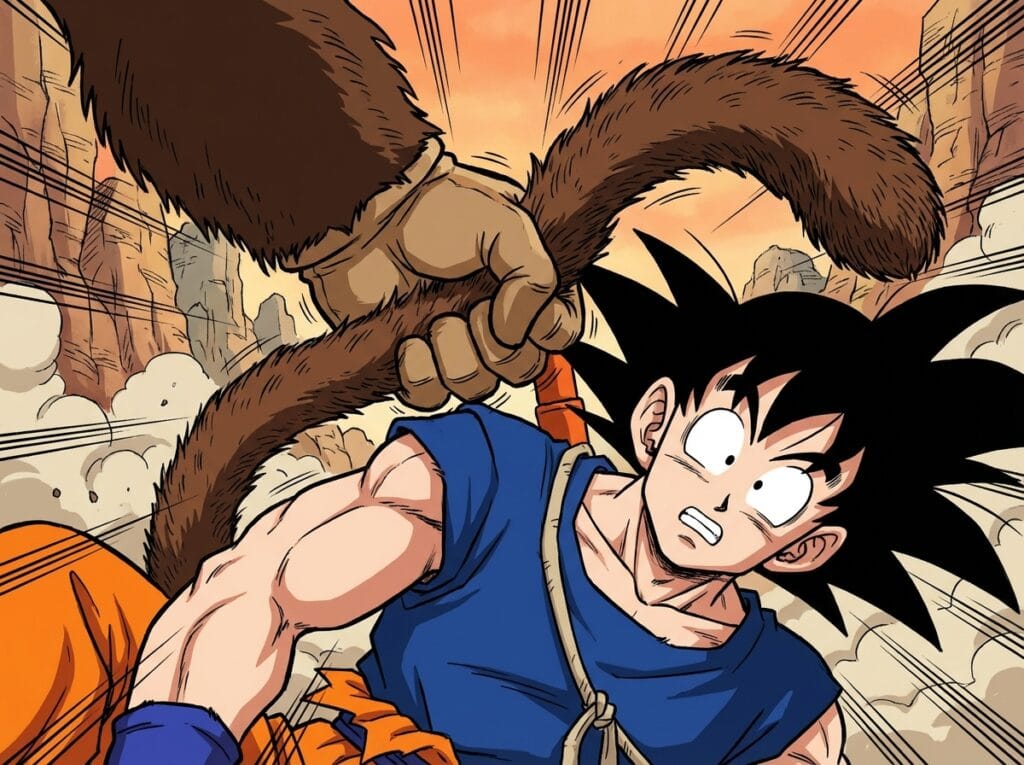
The Saiyan tail is a fascinating biological anomaly that acts as a literal “off switch” for their incredible combat power. When someone manages to grab or squeeze this sensitive appendage, it sends a shock through the Saiyan’s nervous system that causes their entire body to go limp. This physical reaction is so severe that even the strongest warriors find themselves unable to stand or maintain a grip on their surroundings. We see this firsthand when Goku loses all his energy the moment his tail is gripped during his early adventures in Dragon Ball episode 14, Gokus Rival.
This vulnerability highlights a unique evolutionary trade-off where a source of massive power also serves as a primary point of failure. The pain associated with a tail grab is not just a simple sting, but rather a debilitating sensation that bypasses their natural durability and strikes at their core biology. It effectively paralyzes the muscles, leaving the Saiyan completely defenseless against any follow-up attacks from their opponent. This exact weakness proves nearly fatal for Raditz when his younger brother manages to seize his tail during their high-stakes battle in Dragon Ball Z episode 2, The Return of Goku.
While this trait seems like a permanent disadvantage, it is actually a hurdle that can be overcome through intense physical conditioning. Most low-class warriors never bother to train their tails, which is why they remain so susceptible to being neutralized in a fight. By exposing the tail to repeated pressure and toughening the nerves, a Saiyan can eventually eliminate this biological blind spot and maintain their strength even when the limb is caught. Nappa and Vegeta demonstrate this mastery during their invasion of Earth, showing that they are no longer hindered by the same weakness that plagued Goku in Dragon Ball episode 14, Gokus Rival.
How Elite Warriors Overcome The Saiyan Tail Weakness

While the Saiyan tail is a source of incredible power, it starts out as a major biological liability for any untrained warrior. If an enemy manages to grab hold of this sensitive appendage, the Saiyan usually loses all muscle control and collapses in total paralysis. We saw this happen many times with Goku in his early adventures, and even the powerful Raditz was completely helpless when his brother gripped his tail during their fight. This physical vulnerability is a genetic trait that makes even the strongest fighters easy to defeat if they are caught off guard Dragon Ball Z episode 2, The World’s Strongest Team.
Elite warriors like Vegeta and Nappa refused to let such a simple physical flaw jeopardize their missions across the galaxy. They engaged in grueling endurance training specifically designed to desensitize the nerves in their tails so they could maintain their strength while being grabbed. By subjecting themselves to constant pressure and pain during practice, they effectively rewired their bodies to ignore the debilitating sensations that would normally freeze a Saiyan in place. This level of discipline transformed a dangerous weak point into just another part of their combat ready anatomy Dragon Ball Z episode 21, Say Goodbye, Piccolo.
This mastery was on full display when the Z-Fighters tried to use the old tail-grab trick against Nappa during the battle for Earth. To their absolute horror, Nappa did not lose his strength at all and instead used the opportunity to knock his opponent unconscious with a single blow. It proved that while lower-class Saiyans might be slaves to their biology, the elite class used intense conditioning to remove any tactical disadvantage. This evolution shows that Saiyan strength is not just about raw power, but also about the mental toughness required to overcome their own natural limitations Dragon Ball Z episode 22, Laughing Target.
Tactical Evolution And Removing The Saiyan Tail Weakness
Early in the series, the Saiyan tail was a major biological liability that often left our favorite heroes completely paralyzed during combat. This prehensile appendage is incredibly sensitive, and a firm grip on it causes a Saiyan’s muscles to go limp and their strength to vanish instantly. I remember watching Goku struggle with this vulnerability during his childhood adventures when even a simple grab could end a fight. Even elite warriors like Raditz fell victim to this physical flaw when Goku seized his tail to stop his rampage. This glaring weakness made the tail a dangerous gamble for any fighter who had not undergone rigorous endurance training to desensitize the area Dragon Ball Z episode 2, The Duo of Destiny.
As the story moved toward the high stakes of the Saiyan Saga and beyond, characters like Goku and Gohan eventually chose to remove it for good to eliminate this tactical risk. While the tail allowed for the massive Oozaru transformation, the trade-off of having a literal “off switch” attached to your body was simply too high for modern combat. We saw the narrative shift away from these unpredictable giant ape forms in favor of more controlled and efficient power. By removing the tail, the characters moved past their primitive biological limitations to focus on the explosive potential of Super Saiyan transformations. This evolution ensured that no enemy could ever defeat them again by simply exploiting a physical nerve ending Dragon Ball Z episode 32, Beyond the Limit.
The Saiyan Tail: A Powerful Weakness
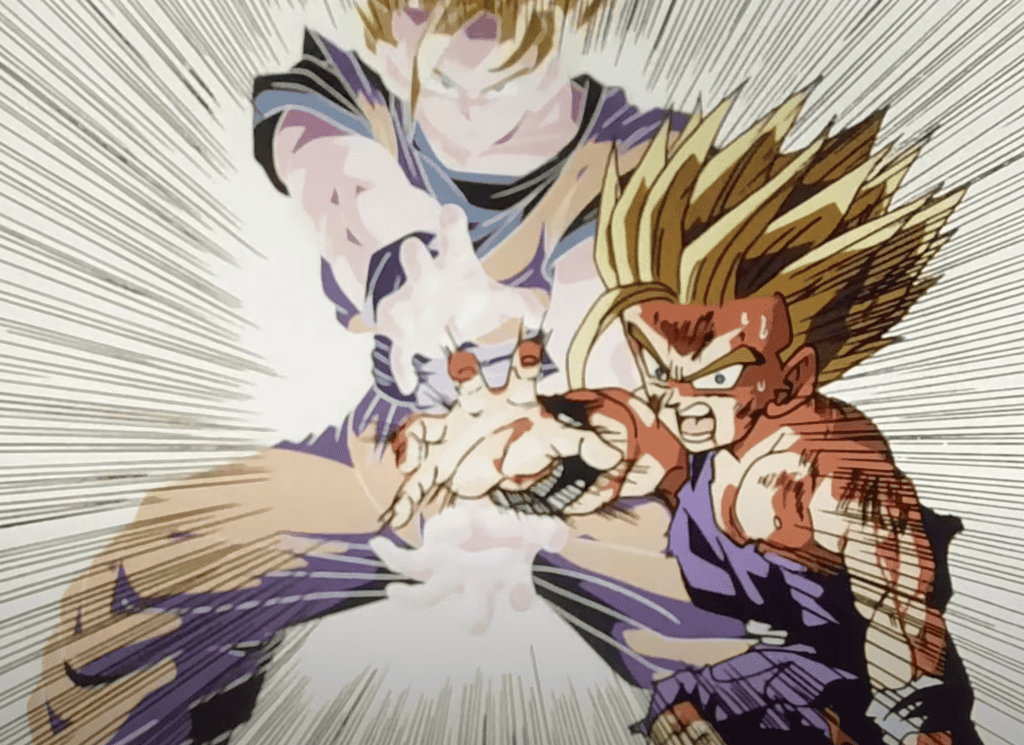
The Saiyan tail represents one of the most fascinating biological contradictions in early combat history. While it provided the incredible ability to transform into a Great Ape, it also acted as a literal “off switch” that could leave even the fiercest warrior paralyzed with a single squeeze. I find it incredible how early strategies revolved entirely around protecting this sensitive appendage, as seen when Goku was rendered helpless during his fight with Grandpa Gohan in Dragon Ball episode 53, The Kamehameha. This physical flaw forced Saiyans to either train their bodies to resist the pain or risk being defeated by an opponent who knew their secret.
As the series progressed, the loss of the tail marked a major turning point in how these characters evolved as fighters. Moving away from the tail meant Saiyans had to stop relying on the raw power of the Oozaru form and instead focus on their own internal strength and speed. We see this transition clearly when Vegeta realizes he can no longer rely on his primate transformation after his tail is cut off in Dragon Ball Z episode 35, Friends or Foes. This shift eventually paved the way for the internal energy breakthroughs of the Super Saiyan forms, proving that losing their biggest physical weakness was necessary for them to reach their true potential.
Frequently Asked Questions
1. What exactly happens when a Saiyan’s tail is grabbed?
When someone grabs a Saiyan’s tail, it sends a massive shock through their nervous system that causes instant paralysis. Their muscles go limp and they lose all their energy, making them completely helpless in a fight. This biological quirk acts like a literal off switch for their power as seen in Dragon Ball episode 14, Gokus Rival.
2. Do all Saiyans have this physical vulnerability?
Every Saiyan is born with this sensitive weakness, but it does not have to stay that way forever. Through intense training and discipline, warriors can toughen their tails so they no longer feel pain or lose energy when they are grabbed. This is why elite fighters like Nappa and Vegeta do not collapse during battle like Goku did in his youth as shown in Dragon Ball Z episode 21, Say Goodbye, Piccolo.
3. Does it hurt when someone squeezes a Saiyan tail?
Yes, it is extremely painful and goes far beyond a simple sting or pinch. The sensation is so overwhelming that it drains their physical strength and prevents them from standing up or fighting back. We see this intense reaction early on when Goku is rendered totally immobile by a simple grip in Dragon Ball episode 14, Gokus Rival.
4. Why would a warrior race have such a major weakness?
It is a strange evolutionary trade-off where their greatest source of power is also their biggest liability. While the tail allows them to transform into a Great Ape, it remains a primary point of failure if they do not train it properly. This flaw forced many Saiyans to develop clever combat styles to protect their backside during a fight as seen in Dragon Ball Z episode 2, The Secret of the Warriors.
5. Can a Saiyan still fight while their tail is being held?
Unless they have specifically trained to overcome the sensation, a Saiyan is completely unable to move or attack while their tail is held. Their body simply shuts down and they lose the ability to maintain their grip on anything. This vulnerability made even the strongest conquerors look surprisingly fragile in the face of a smart opponent in Dragon Ball episode 14, Gokus Rival.
6. Is the tail weakness the reason some Saiyans remove their tails?
While the weakness is a huge tactical disadvantage, most Saiyans keep their tails to access their Great Ape forms. However, removing the tail entirely is one way to get rid of the vulnerability once and for all. This choice often depends on whether the warrior prefers the raw power of the transformation or the safety of having no easy off switch in Dragon Ball Z episode 32, Beyond the Battle.
Understanding the Saiyan Genetic Makeup And Anatomy In Dragon Ball Z helps explain why such a powerful race would have such a glaring physical flaw. Exploring the deeper Saiyan history and mythology provides even more context for how these warriors adapted to their biological traits over time. Comparing evolutionary differences and power levels between different universes further illustrates how the presence or absence of a tail impacts a Saiyan’s growth.