
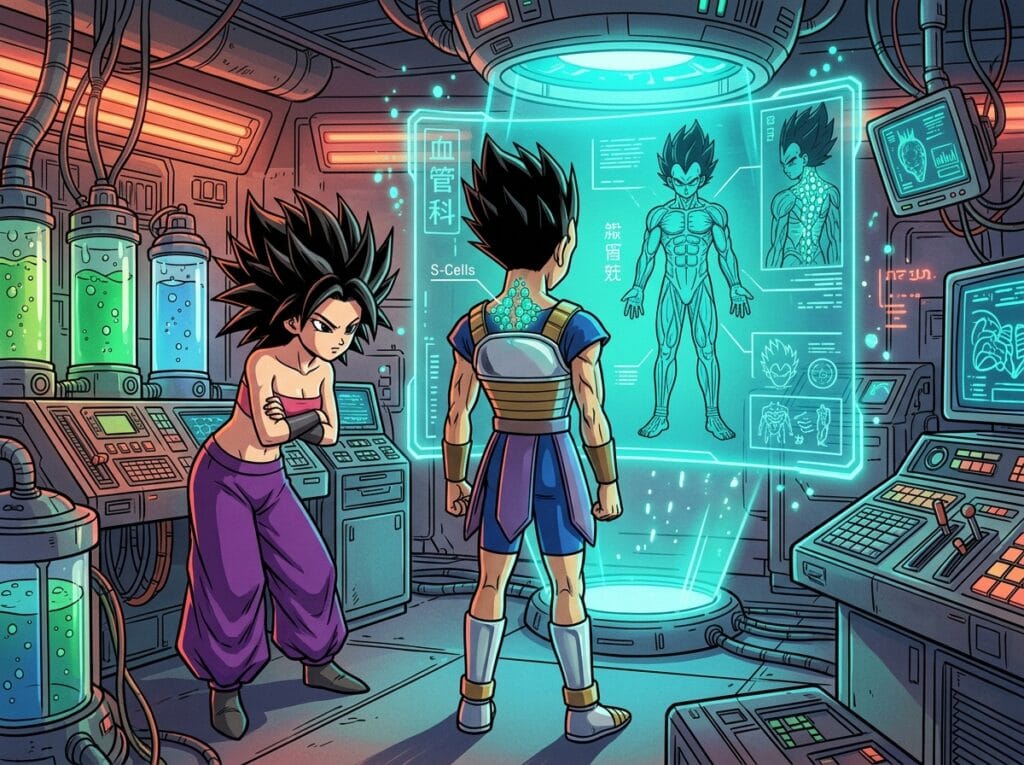
When I first saw Cabba step into the ring, I immediately noticed how different he looked compared to Goku or Vegeta. It turns out there is a fascinating scientific reason for this, rooted deeply in universe 6 saiyan biology. While our familiar heroes come from a long line of brutal conquerors, these Saiyans evolved on Planet Sadal as protectors, leading to a physical makeup that is built for speed and incredible energy potential.
The most striking difference is that these warriors have completely evolved past the need for tails, which means they never deal with the bulky Great Ape transformation. This leaner, more refined evolution actually gives them a massive advantage when it comes to raw power. Because their bodies are naturally packed with S-Cells, they can tap into legendary forms like Super Saiyan with an ease that would make a veteran Universe 7 fighter’s jaw drop.
Key Takeaways
- Universe 6 Saiyans have evolved past the need for tails and the Great Ape transformation, trading raw physical bulk for a leaner, more agile build optimized for speed.
- A peaceful culture and stable environment on Planet Sadal resulted in a naturally higher density of S-Cells, allowing these Saiyans to achieve Super Saiyan forms with significantly less effort than their Universe 7 counterparts.
- The streamlined physiology of Universe 6 warriors enables superior internal energy management and a ‘back tingle’ shortcut that triggers transformations through precise ki control rather than raw emotional trauma.
- The shift from galactic conquerors to elite peacekeepers has produced a more sophisticated biological makeup that prioritizes energy efficiency and rapid power scaling over brute strength.
Evolutionary Tail Loss And Planet Sadal Environmental Factors
I find the biological differences between the two universes fascinating because they show how environment shapes a species over thousands of years. While Universe 7 Saiyans moved to the harsh, high-gravity Planet Vegeta, the Universe 6 Saiyans stayed on their original homeworld of Planet Sadal. This stable environment meant they didn’t need the massive physical bulk or the raw destructive power of the Great Ape form to survive. Instead, they evolved into a leaner and more agile race that prioritizes speed and energy efficiency over brute strength. Their smaller stature actually seems to give them a natural advantage when it comes to internal energy control as seen in Dragon Ball Super episode 32, The Matches Begin! Finally, the First Team Challenge!.
The most striking change is definitely the completely evolved past the need for tails. In our favorite series, we learned that tails were once a staple of the Saiyan warrior, but the Universe 6 branch simply outgrew them long ago. Because they stopped relying on the Great Ape transformation for combat, their bodies eventually stopped producing the appendage altogether. This shift is actually a sign of their advanced evolution because it allowed them to focus their biological resources on developing S-Cells instead. Without the distraction of a tail, these Saiyans have a much higher natural affinity for the Super Saiyan transformation as shown in Dragon Ball Super episode 32, The Matches Begin! Finally, the First Team Challenge!.
I love how Planet Sadal’s unique conditions turned these Saiyans into elite peacekeepers rather than galactic conquerors. Their slender frames are perfectly suited for the rapid, high-intensity movements required for their work as heroes of justice. Because they aren’t weighed down by the heavy muscle mass seen on Planet Vegeta, they can channel their power into precise strikes and incredible bursts of speed. This evolutionary path proves that being a Saiyan isn’t just about being the biggest person in the room, but about how effectively you can master your own energy. It is incredible to see how a more peaceful culture led to such a sophisticated and powerful biological makeup as described in Dragon Ball Super episode 32, The Matches Begin! Finally, the First Team Challenge!.
S-Cell Density And The Back Tingle Transformation Shortcut

Universe 6 Saiyans have evolved quite differently from the warriors we know in Universe 7, primarily because their culture shifted toward peacekeeping rather than conquest. This peaceful lifestyle on Planet Sadal led to a natural biological boom in S-Cells, which are the microscopic triggers required for a Saiyan to transform. Because they lived in a stable society and focused on protecting others, their bodies naturally maintained a much higher S-Cell density than the battle-hardened Saiyans of the past. This high concentration makes reaching the Super Saiyan state much easier because the biological foundation is already primed for a massive energy spike. We see this ease of access firsthand when Cabba demonstrates how quickly his peers can adapt to the golden form in Dragon Ball Super episode 92, Emergency! We Dont Have All Ten Members!!.
This unique biology allows Universe 6 Saiyans to bypass the intense emotional trauma that Goku or Vegeta originally needed to transform. Instead of relying on pure rage, they can trigger the transformation by focusing their energy into a specific back tingle located in the upper back. This spot acts as a gateway for their high S-Cell count to ignite, turning the nervous system into a shortcut for power. By concentrating their ki at this pressure point, characters like Caulifla can instantly bridge the gap between their base form and Super Saiyan. It is a fascinating look at how evolution can change a warrior race from relying on raw emotion to utilizing a more refined physical trigger in Dragon Ball Super episode 92, Emergency! We Dont Have All Ten Members!!.
Divergent Physical Traits And Enhanced Energy Control
When I look at the Saiyans from Universe 6, the first thing I notice is how much leaner they are compared to the bulky warriors we know from Universe 7. Their bodies have evolved away from the raw muscle mass needed for primitive conquest, favoring a more streamlined and efficient build instead. This physical change suggests that their evolution on Planet Sadal focused on internal energy management rather than just brute physical force. Because they are smaller, they seem to move with a natural agility that allows them to channel their power much faster during a fight. We can see this incredible potential for growth when Cabba holds his own against much larger opponents during the Tournament of Power in Dragon Ball Super episode 100, Out of Control! The Wild Berserker Awakens!.
I find it fascinating that these Saiyans have completely lost their tails, which is a huge hint at how their biology has surpassed the need for a Great Ape transformation. Without the reliance on a giant, uncontrollable form, their bodies have adapted to keep all that massive power contained within a smaller frame. This evolutionary path has given them a much higher natural affinity for energy control and a higher concentration of S-Cells. It is this specific biological shift that allows them to access transformations like Super Saiyan with such surprising ease compared to Goku or Vegeta. Their energy output is incredibly efficient, meaning they do not waste power on unnecessary bulk while maintaining a high level of combat readiness in Dragon Ball Super episode 100, Out of Control! The Wild Berserker Awakens!.
The way Universe 6 Saiyans process power is more about precision than just swinging heavy fists. Their evolved nervous systems and muscle fibers seem built to handle rapid spikes in energy without the physical strain seen in Universe 7 warriors. This is likely why someone like Caulifla can jump through power tiers so quickly, as her body is already primed for high-level energy circulation. Even when they push their limits, their frames remain tight and focused, allowing for a more sustainable flow of power during long battles. This shift from brawn to brilliance shows just how much the environment of a peaceful world can change a warrior race’s DNA in Dragon Ball Super episode 100, Out of Control! The Wild Berserker Awakens!.
Evolution of Leaner and Efficient Saiyans
The biological evolution of Universe 6 Saiyans shows us how a species can thrive when they trade raw, primal power for refined energy control. By losing their tails and the volatile Great Ape transformation, these Saiyans moved away from the path of mindless destruction that defined their Universe 7 cousins. This physical shift toward a leaner, more efficient build allowed them to focus on protecting others rather than conquering worlds. Staying on their original home of Planet Sadal provided a stable environment where they could grow into a sophisticated society of galactic peacekeepers. It is fascinating to see how a tail disappearance turned a race of warriors into a force for justice.
This unique biology also means the future of the Saiyan race looks incredibly bright and full of potential. Because they have a naturally higher concentration of S-Cells, these peacekeepers can access powerful transformations with much less struggle than Goku or Vegeta ever did. Their bodies are built for high-level energy manipulation, which suggests that their ceiling for growth might be even higher than we previously thought. As they continue to interact with the Dragon Ball multiverse, I believe we will see these evolved Saiyans reach brand new levels of strength that honor their warrior roots while maintaining their peaceful hearts. It is clear that their evolution is not just about physical changes, but about the maturity of their entire civilization.
Frequently Asked Questions
1. Why don’t Universe 6 Saiyans have tails?
Universe 6 Saiyans have completely outgrown their tails through thousands of years of evolution on Planet Sadal. Since they never needed the massive Great Ape transformation to survive their environment, their bodies naturally moved past that trait Dragon Ball Super episode 32, The Matches Begin! Finally, the First Team Challenge!.
2. Are Universe 6 Saiyans naturally stronger than Universe 7 Saiyans?
While they might look smaller, these Saiyans have a massive advantage because their bodies are naturally packed with S-Cells. This biological makeup allows them to tap into legendary power and master Super Saiyan transformations much faster than Goku or Vegeta ever could Dragon Ball Super episode 92, A State of Emergency! The Failure of the Ten Members!.
3. How does their home planet affect their physical appearance?
By staying on their original homeworld of Planet Sadal, these warriors evolved to be lean and agile rather than bulky and destructive. This stable environment favored speed and energy efficiency, which is why fighters like Cabba have a much slimmer build than the warriors we are used to seeing Dragon Ball Super episode 32, The Matches Begin! Finally, the First Team Challenge!.
4. Can Universe 6 Saiyans turn into Great Apes?
No, they cannot undergo the Great Ape transformation because they lack the necessary tails to trigger it. Their evolution has traded that raw, uncontrollable bulk for better internal energy control and more refined power Dragon Ball Super episode 37, Don’t Forget Your Saiyan Pride! Vegeta vs. Cabba!.
5. What makes their energy control so special?
Their smaller and more refined stature gives them a natural edge when it comes to managing their internal energy. This efficiency allows them to focus their power more precisely, making them incredibly dangerous in a fast paced fight Dragon Ball Super episode 32, The Matches Begin! Finally, the First Team Challenge!.
6. Is it easier for them to become Super Saiyans?
Yes, their evolution has made their bodies much more receptive to the Super Saiyan transformation. Because they possess a high concentration of S-Cells and a less aggressive history, they can reach these powerful forms with surprising ease as requested by Champa in Dragon Ball Super episode 93, You’re the Tenth Warrior! Goku Goes to See Frieza!.

