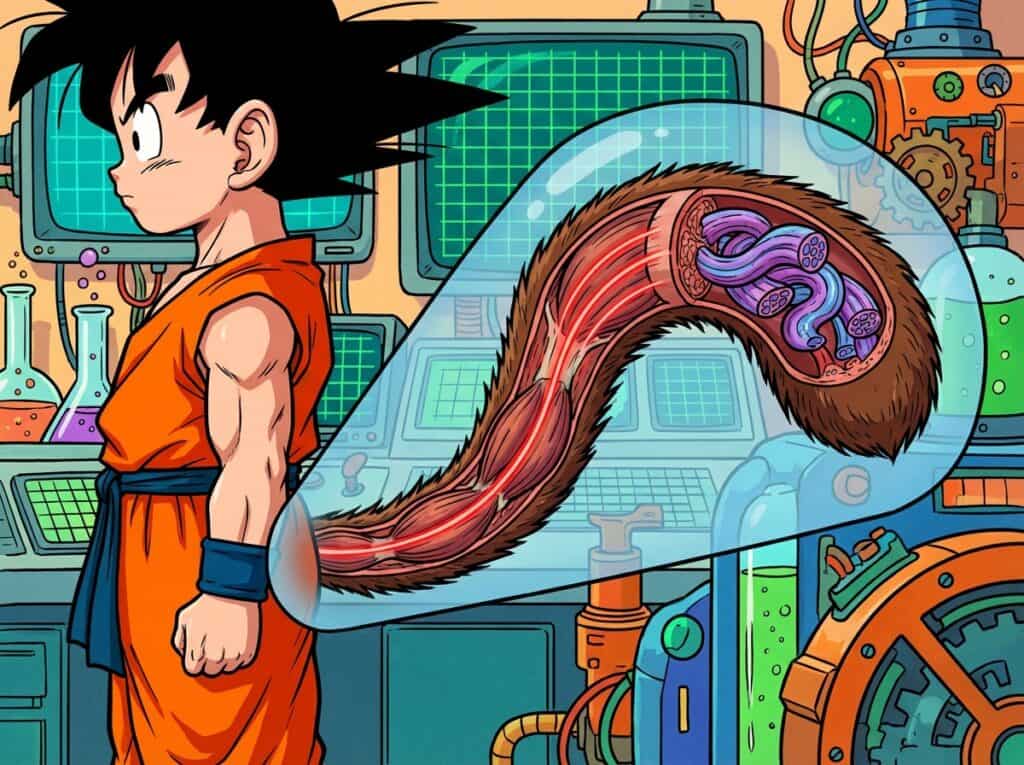
Ever wonder why a tiny furry appendage is the biggest secret to a warrior’s strength? Understanding Saiyan tail biology is the key to figuring out how Goku and his friends tap into their primal, planet-crushing power. It is not just a cool accessory; it is a complex organ that connects a Saiyan’s brain to the energy of the stars.
This unique limb acts as a bridge between a normal fighter and a towering Great Ape. While it gives them incredible balance and a hidden weapon in a scrap, it is also their biggest weakness if a foe grabs hold. From the science of Blutz Waves to the thrill of the transformation, the tail is what truly makes a Saiyan the ultimate galactic hunter.
Key Takeaways
- The Saiyan tail serves as a specialized sensory organ that triggers a ten-fold power increase into a Great Ape when it processes 17 million zeno units of Blutz Waves.
- The tail is a significant physiological liability because its dense nerve endings cause total paralysis and energy loss if squeezed by an opponent.
- As Saiyans evolve and increase their base strength, the body eventually views the tail as a redundant limb, leading to its genetic disappearance in favor of more advanced forms like Super Saiyan.
- While younger Saiyans can spontaneously regrow their tails during a crisis, this biological capacity diminishes with age, making tail loss permanent for most adults.
Blutz Waves And The Great Ape Transformation
The Saiyan tail is much more than just a fuzzy limb because it serves as a specialized sensory organ tuned to the cosmos. When a full moon reflects sunlight, it emits a specific type of radiation known as Blutz Waves. If a Saiyan with a tail absorbs at least 17 million zeno units of these waves through their eyes, a chemical reaction begins in the tail itself. This biological trigger causes the body to grow to a massive size and take on a primal appearance. This incredible process was first seen when Goku transformed into a monster while imprisoned by Emperor Pilaf in Dragon Ball episode 12, The Girl Who Overcame the Beast.
Transforming into an Ozaru provides a massive power boost that is exactly ten times the warrior’s base strength. This evolution was the primary reason Saiyans were feared as a planet-conquering race across the galaxy. However, the tail is also a major physiological liability because it is packed with sensitive nerves. This physical vulnerability was famously exploited when Krillin and Gohan used it to gain the upper hand against a rampaging Vegeta in Dragon Ball Z episode 34, Goku is Alive.
While the tail is a source of immense power, it eventually disappeared from the main cast as they grew stronger. Some Saiyans found that the tail was a liability in high-speed combat since it could be used against them so easily. Others simply grew out of the trait naturally or had it removed to prevent uncontrollable rampages. By the time the Z Fighters faced the ultimate threats of the universe, the reliance on primal transformations had shifted toward the legendary Super Saiyan forms. This transition from tails to golden hair marked a new era for the race’s biology in Dragon Ball Z episode 95, Transformed at Last.
The Prehensile Nervous System And Physical Weakness

I have always been fascinated by how the Saiyan tail acts as a direct extension of their nervous system, functioning almost like an extra limb. While it provides incredible balance and can even be used to grip objects, it is also the race’s most glaring physical flaw. Because the tail is so densely packed with sensitive nerves, any sudden pressure applied to it sends a shock straight to the brain. This unique biological connection is first famously showcased when Bulma accidentally grabs Goku’s tail, leaving him completely helpless Dragon Ball episode 3, The Nimbus Cloud of Roshi.
When a Saiyan’s tail is squeezed, it triggers a total systemic collapse that causes their muscles to go limp and their power to vanish. I think of it as a biological off switch that can turn a fierce warrior into a defenseless target in a matter of seconds. This extreme vulnerability is why Grandpa Gohan was able to easily subdue Goku during their training sessions by simply taking hold of his furry appendage Dragon Ball episode 76, The Five Warriors. It is a strange evolutionary trade off where the source of their Great Ape power is also the very thing that can bring them to their knees.
As the series progressed, we saw the main cast move away from this trait as they learned that the risks often outweighed the rewards. Some Saiyans like Nappa and Vegeta actually trained their tails to overcome this paralysis, but for most, it remained a dangerous liability. Eventually, the story shifted focus toward Super Saiyan transformations which did not require the tail at all. Seeing this trait disappear marked a major turning point in how these characters approached combat and their own biology Dragon Ball Z episode 32, Gohan’s Mutation.
Evolutionary Disappearance And Genetic Regrowth Factors
The disappearance of Saiyan tails is a fascinating mix of genetics and evolutionary necessity. In our favorite series, we notice that as Saiyans like Goku and Vegeta grew in power, their bodies began to view the tail as a redundant limb rather than an asset. This is especially true for hybrid Saiyans like Goten and Trunks, who were born without tails because the trait is considered a genetic disappearance or recessive quirk. Akira Toriyama even suggested that once a Saiyan’s base strength reaches a certain level, the body prioritizes its humanoid form over the giant ape transformation. This biological shift explains why we see fewer tails as the characters become strong enough to surpass the Great Ape’s power without needing the moon Dragon Ball Z episode 32, Friends or Foes?.
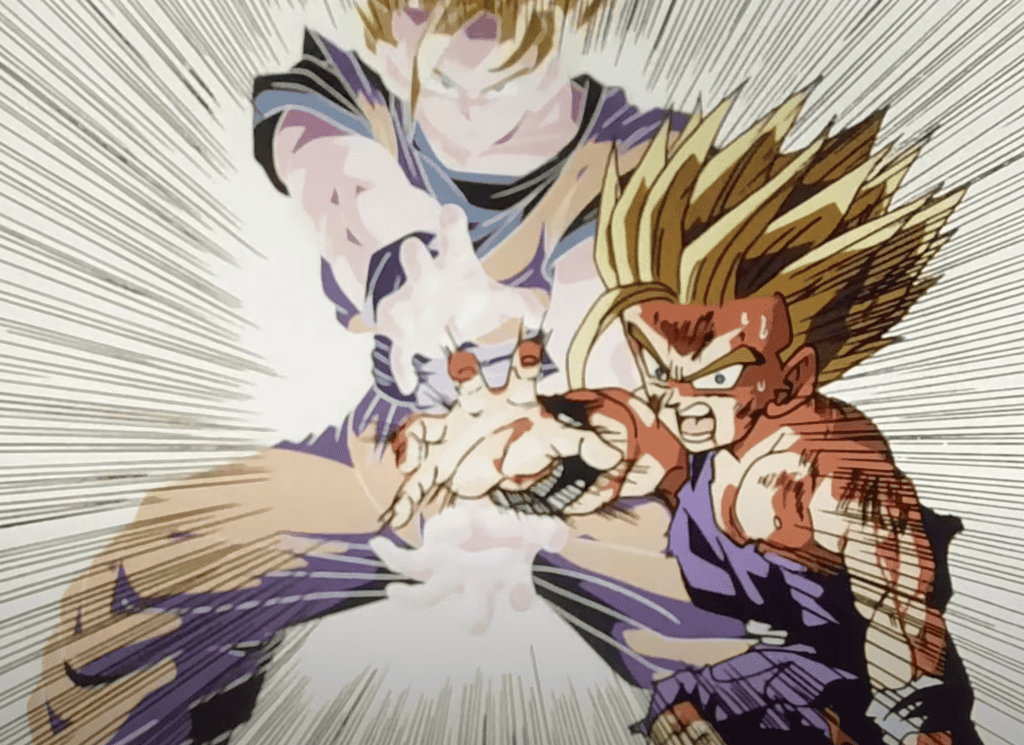
Regrowing a tail is not just a random occurrence, as it actually depends on specific biological triggers and the age of the Saiyan. For younger Saiyans, the tail can spontaneously grow back if the body feels a sudden need for that extra power boost or balance during a crisis. We saw this happen during Gohan’s incredible journey and battles, where his tail reappeared just when things were looking grim. However, once a Saiyan reaches adulthood, the window for natural regrowth seems to close almost entirely. This is why characters like Vegeta never saw their tails return after they were permanently severed in battle Dragon Ball Z episode 32, Friends or Foes?.
While the tail is a symbol of incredible strength, it also serves as a major physical weakness that many warriors eventually chose to outgrow. When an untrained Saiyan has their tail squeezed, it causes a total loss of muscle control and leaves them completely helpless. Goku had to undergo intense training to overcome this sensitivity, but many others simply found it easier to live without the appendage. By the time the characters reached the level of Super Saiyan, the tail became more of a liability than a benefit in high speed combat. This evolutionary trade-off shows how the Saiyan genetic makeup adapted to prioritize their internal energy over their primal, beastly origins Dragon Ball Z episode 32, Friends or Foes?.
The Primal Power of the Saiyan Tail
The Saiyan tail was more than just a cool visual accessory; it was a bridge to their primal roots and a massive power multiplier. Looking back at the early days of the series, this limb provided a unique balance of overwhelming strength and a dangerous physical weakness. It served as a constant reminder that Goku and his peers were alien warriors with a wild, untapped nature. I believe the tail was phased out because our favorite fighters eventually outgrew the need for such a volatile source of power. As they mastered every single Goku transformation, the Great Ape form became more of a liability than an asset in battle.
The disappearance of the tail also reflects the evolution of Vegeta and his peers as they adapted to life on Earth. In my view, the biology of the race shifted away from these monkey-like traits as they focused on refined ki control rather than raw, beastly destruction. While I miss the nostalgic days of tail-grabbing tactics and full-moon transformations, it makes sense that the newer generations like Goten and Trunks were born without them. This change shows how the Saiyan race moved from being conquerors of planets to protectors of the universe. The loss of the tail symbolizes their transition from wild animals into disciplined martial arts masters.
Frequently Asked Questions
1. How does a Saiyan tail trigger the Great Ape transformation?
The tail acts as a biological receiver for Blutz Waves emitted by a full moon. When a Saiyan absorbs 17 million zeno units of this radiation through their eyes, the tail triggers a chemical reaction that increases their size and power Dragon Ball episode 12, The Girl Who Overcame the Beast.
2. How much stronger does a Saiyan get when they transform?
A Saiyan becomes exactly ten times stronger than their normal self once they fully transform into a Great Ape. This massive power boost is why the Saiyan race was so successful at conquering planets across the galaxy Dragon Ball Z episode 31, Gohan’s Mutation.
3. Why is the tail considered a major physical weakness?
The tail is packed with sensitive nerves that connect directly to the Saiyan’s nervous system. If an enemy grabs and squeezes it, the Saiyan loses all their strength and becomes completely paralyzed Dragon Ball Z episode 32, Friends or Foes?.
4. Can a Saiyan still transform if their tail is cut off?
No, the tail is the essential organ needed to process Blutz Waves and trigger the change. Without it, a Saiyan cannot access their Great Ape form even if they are looking directly at a full moon Dragon Ball Z episode 33, Quicker than Lightning.
5. Does the tail provide any benefits during a regular fight?
Beyond the transformation, the tail serves as a helpful tool for balance and can be used as an extra limb to strike or trip opponents. It gives the warrior a more primal advantage in close quarters combat Dragon Ball episode 12, The Girl Who Overcame the Beast.
6. Is it possible for a Saiyan to overcome their tail’s vulnerability?
High level warriors like Vegeta have trained their tails to withstand being grabbed without losing their energy. This training removes the risk of paralysis and turns a potential weakness back into a powerful weapon Dragon Ball Z episode 31, Gohan’s Mutation.