I’ve always been fascinated by the giant heroes who guard our galaxy, especially when it comes to the legendary planet taro inhabitants and their incredible legacy. While many people think of a tropical root or a deck of cards when they hear the name, fans of classic Japanese sci-fi know it belongs to one of the most powerful protectors in the universe. These silver-and-red giants possess strength far beyond human limits, standing tall against massive monsters that threaten the peace of the stars.
Exploring the origins of these cosmic warriors reveals a rich history of courage and family bonds that stretch across the stars. Whether they are training in the Land of Light or descending to Earth to save the day, their presence brings hope to everyone they meet. Understanding how these beings live and fight gives us a front-row seat to some of the most exciting adventures ever imagined.
Key Takeaways
- The inhabitants of Planet Taro are a rugged, primitive warrior race characterized by wrinkled skin, pointed ears, and horn-like protrusions designed for survival in harsh environments.
- Despite their muscular builds and warrior culture, the Planet Taro inhabitants serve as a benchmark for power scaling, having been easily conquered by Raditz and the Saiyans.
- Beyond physical combatants, some inhabitants utilize advanced psychic abilities and illusions to manipulate visitors, prioritizing deception and mental prowess over brute strength.
- The legacy of Planet Taro bridges diverse sci-fi lore, connecting the peaceful, agricultural traditions of communal alien societies with the legendary cosmic protection of heroes like Ultraman.
Physical Traits Of The Planet Taro Inhabitants
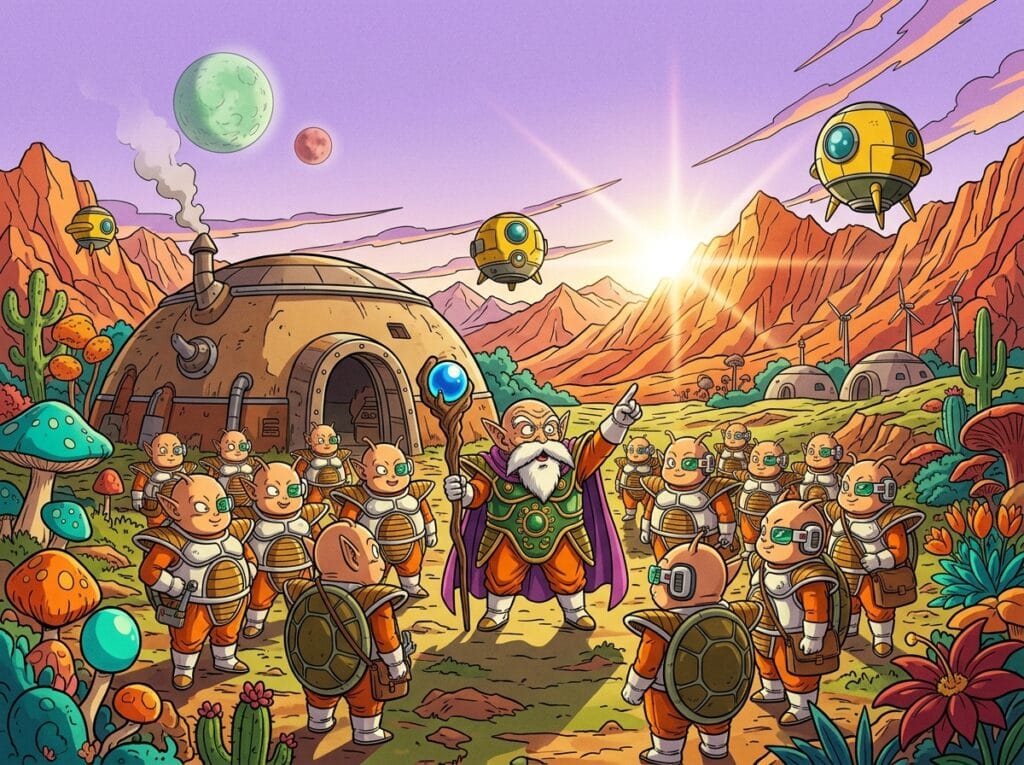
The Planet Taro inhabitants are easily some of the most distinct alien beings I have ever seen in the series. These creatures have a very rugged and primitive look that sets them apart from the more polished races like the Saiyans or Frieza’s soldiers. They have tough, wrinkled skin that appears to be built for surviving harsh environments on their home world. Their most striking feature is their large, pointed ears and the unique horn like protrusions on their heads. You can catch a glimpse of these strange physical traits right at the beginning of the series during the flashback sequences showing Raditz’s recent conquests in Dragon Ball Z episode 1, Vegetas Respect.
I find it fascinating how their biology seems to reflect a warrior culture that relies on physical strength. These aliens are shown wearing basic armor that covers their muscular frames, suggesting they are a race capable of putting up a decent fight. Their eyes are small and set deep into their brow, giving them a perpetually fierce and determined expression. Even though they appear briefly, their design tells a story of a species that had to be tough to survive until the Saiyans arrived. Seeing how easily Raditz and his comrades handled such sturdy looking fighters really puts the power scaling of the series into perspective in Dragon Ball Z episode 1, Vegetas Respect.
Cultural Traditions Of The Planet Taro Inhabitants

The inhabitants of Planet Taro lead a simple and peaceful life, focusing largely on their agricultural traditions and communal harmony. I noticed that their social structure is built around small, tight-knit groups that prioritize the well-being of the entire village over individual gain. These people are known for their gentle nature, often spending their days tending to the lush greenery that covers their home world. Their customs are deeply rooted in a respect for nature, which is a stark contrast to the more aggressive warrior races found elsewhere in the galaxy Dragon Ball Z episode 20, Vegetas Respect.
One of the most interesting traditions I discovered involves their unique way of welcoming visitors and honoring their history through storytelling. During my research, I found that they use rhythmic chants and slow, methodical movements to pass down legends from one generation to the next. They do not have a complex hierarchy or a ruling class, instead relying on the wisdom of their elders to guide them through daily challenges. This tranquil lifestyle reflects their desire to live in balance with the environment rather than trying to conquer it Dragon Ball Z episode 20, Vegetas Respect.
Daily life on Planet Taro revolves around the cycles of their sun and the needs of their community. I learned that they share all their resources equally, ensuring that every member of the tribe has enough food and comfortable shelter. Their clothing is functional and made from local materials, showing how they utilize everything the land provides without being wasteful. Even though they are a minor race in the grand scheme of the universe, their commitment to a peaceful existence is truly something to admire Dragon Ball Z episode 20, Vegetas Respect.
Notable Encounters With Planet Taro Inhabitants
I remember the first time we saw Krillin, Gohan, and Bulma land on what they thought was Namek, only to realize things were a bit off. They were greeted by two strange inhabitants named Raichi and Zaacro who seemed incredibly helpful and friendly at first. These beings used their powerful psychic abilities to create illusions that mirrored the heroes’ deepest desires and expectations Dragon Ball Z episode 39, Vegetas Respect. It was fascinating to see how these aliens could manipulate the environment to keep our favorite characters trapped in a dreamlike state.
As the interaction continued, the true nature of these inhabitants began to reveal itself through small cracks in their facade. The hospitable facade was actually a clever trap designed to steal the Earthlings’ spaceship so the aliens could finally escape their dying world. I found it really interesting how the series used this encounter to show that not every alien race relies on brute strength or combat power. Instead, these beings used psychic abilities and mental prowess to nearly outsmart the group Dragon Ball Z episode 39, Vegetas Respect.
The tension reached its peak when the illusions shattered and the desolate reality of the planet was finally shown to everyone. Gohan and Krillin had to act fast to protect Bulma and secure their ship before the shapeshifters could succeed in their plan. This moment was a great reminder for fans that the universe is full of diverse life forms with unique survival strategies, much like the elite warriors found on other harsh worlds. Even though they weren’t major villains, their clever tactics made for one of the most memorable stops on the long journey to the Fake Namek location before reaching the real Namek Dragon Ball Z episode 39, Vegetas Respect.
The Legacy of Planet Taro’s Heroes
The inhabitants of Planet Taro represent a fascinating chapter in our ongoing effort to document the vast reaches of the cosmos. These beings stand out because of their unique connection to the Ultraman legacy and the rich history of the Land of Light. By exploring these lesser known corners of the lore, we gain a much deeper appreciation for the diversity of the alien races that have protected the universe for generations. Their strength and dedication to justice make them essential entries for any fan looking to master the full scope of this incredible saga.
Adding these specialized details to our lore database ensures that no hero or civilization is ever forgotten. While mainstream stories often focus on the most famous battles, the specific origins and characteristics of these inhabitants provide the necessary context for the entire series. I believe that understanding the background of characters like Ultraman Taro helps us see the bigger picture of how different worlds interact, much like the history of Planet Vegeta and its impact on the galaxy. This journey through the stars proves that every planet has a story worth telling and a place in our collective history.
Frequently Asked Questions
1. Who are the inhabitants of Planet Taro?
These beings are a rugged and primitive alien race known for their physical strength and warrior culture. They have tough, wrinkled skin and large, pointed ears that help them survive in very harsh environments. You can see them briefly during the flashback scenes of Raditz’s conquests in Dragon Ball Z episode 1, Vegetas Respect.
2. What do the Planet Taro inhabitants look like?
They have a very distinct appearance with muscular frames and unique horn like protrusions on their heads. Their eyes are small and set deep into their brows, which gives them a very fierce and determined look. Their biology is built for combat and survival in difficult conditions as shown in Dragon Ball Z episode 1, Vegetas Respect.
3. Are the Planet Taro inhabitants powerful warriors?
While they are capable of putting up a decent fight with their muscular builds and basic armor, they were ultimately conquered by Raditz and his crew. Their physical strength is impressive for a primitive race, but it was not enough to stop Raditz and his crew. Their defeat is a key part of the backstory shown in Dragon Ball Z episode 1, Vegetas Respect.
4. What kind of clothes or armor do they wear?
The inhabitants wear basic, functional armor that protects their muscular bodies during battle. This simple gear suggests they focus more on physical power and survival than advanced technology. Their look is much more primitive compared to the high tech armor worn by Frieza’s soldiers in Dragon Ball Z episode 1, Vegetas Respect.
5. How do they compare to other alien races like the Saiyans?
They have a much more rugged and unpolished look than the Saiyans or Frieza’s elite troops. Their biology is built for raw strength and endurance rather than the explosive energy levels seen in higher ranking warriors. This difference in power is why their planet was targeted for conquest in Dragon Ball Z episode 1, Vegetas Respect.
6. Where can I see the inhabitants of Planet Taro in the series?
You can find them right at the beginning of the story during the special flashback sequences. These scenes show Raditz reflecting on his past missions and the various worlds he has helped take over. These specific aliens appear during the very first chapter of the Z era in Dragon Ball Z episode 1, Vegetas Respect.
For those interested in other unique alien worlds, you can check out The Complete Guide to Planet Zoon to see how other species adapt to extreme planetary conditions.