
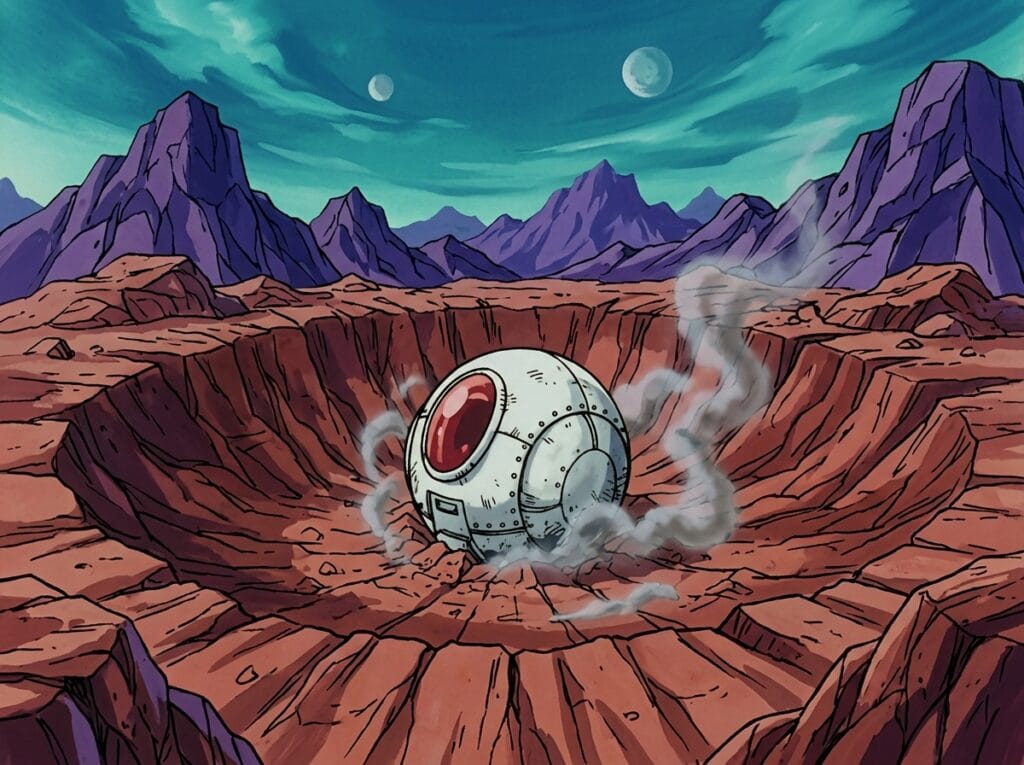
Imagine hurtling through the cold vacuum of space in a tiny, spherical cockpit barely larger than yourself, knowing you are traveling faster than any modern jet could ever dream. This is the reality of saiyan spaceship technology, a marvel of engineering that allowed a handful of warriors to dominate the stars. These iconic pods might look simple, but they are built to survive atmospheric re-entry at high speeds and crash-land into solid ground without a single scratch.
I have always been fascinated by how these compact ships can cross the galaxy in mere days while keeping a passenger safe and healthy. They are not just vehicles; they are mobile survival units that carry enough fuel and life support for years-long missions of conquest. Understanding the sheer power and efficiency of these crafts helps us appreciate how the Saiyans became the most feared force in the universe.
Key Takeaways
- Saiyan Attack Balls utilize specialized heavy armor and a spherical design to survive high-speed, direct-impact crash landings without the need for landing gear or parachutes.
- Advanced faster-than-light navigation systems allow these pods to travel at 3 light-years per hour, enabling warriors to cross entire galaxies in just a few days.
- Sophisticated life-support and suspended animation systems put pilots into a deep-sleep stasis, halting aging and the need for food or water for up to three years.
- The pods function as mobile medical hubs that monitor vital signs and sync with planetary bases to prepare healing tanks before the warrior even touches down.
Engineering The Durable Saiyan Attack Ball
I have always been fascinated by how much technology can be packed into a tiny 1.5 meter sphere. These Attack Balls are built with a specialized heavy armor that allows them to survive high-speed crash landings without a scratch on the pilot. Instead of using landing gear or parachutes, the ship is designed to slam directly into the planet’s surface at incredible speeds. This durability is essential because Saiyans often arrive at their destinations with a literal bang, creating massive craters upon impact as seen in Dragon Ball Z episode 5, Gohans Rage.
The engineering behind these pods focuses on keeping the warrior safe and ready for battle the moment the door opens. Despite their small size, they contain sophisticated life support systems and a compact cockpit that can sustain a passenger for years of interstellar travel. The spherical shape is not just for looks, as it helps distribute the intense pressure of atmospheric entry and the force of the eventual collision. You can really see the strength of this design when a pod remains fully functional even after being buried deep underground during a rough landing in Dragon Ball Z episode 5, Gohans Rage.
The technical specs of these ships are truly impressive for any fan of Saiyan lore:
- The exterior shell is made of a reinforced alloy that can withstand extreme planetary temperatures.
- An automated navigation system handles complex FTL calculations so the warrior can rest.
- The shock absorption internal padding prevents the passenger from being crushed during a crash.
- The circular hatch features a one way reinforced glass window for scouting the terrain before exiting.
Watching these pods in action makes it clear that the Saiyans prioritize efficiency and toughness over comfort. The ship acts as both a high speed transport and a sturdy shield, ensuring the pilot arrives healthy and prepared to fight. It is amazing to think that such a simple round design can travel across the galaxy and survive a mountain leveling impact without breaking. This rugged engineering is a perfect reflection of the warrior race that uses them to conquer the stars in Dragon Ball Z episode 5, Gohans Rage.
Faster Than Light Travel And Navigation

The sheer velocity of an Attack Ball is hard to grasp when you compare it to our own modern technology. These spherical crafts are capable of traveling at an incredible 3 light-years per hour, allowing Saiyans to cross entire galaxies in a matter of days. To put that into perspective, a traditional ship would have needed over a month to reach Namek, but a Saiyan pod cuts that trip down to just six days Dragon Ball Z episode 39, Friends or Foes?. This faster than light travel is essential for a warrior race that needs to deploy quickly to distant planets for conquest.
I find the navigation systems inside these pods just as impressive as the engines themselves. The ships are pre-programmed with coordinates that allow for hands-off piloting, which is perfect for warriors who need to rest or recover in a state of suspended animation during the flight. These pods are built with extreme durability to handle the intense pressures of high-speed travel and the impact of a crash landing Dragon Ball Z episode 1, The New Threat. Here are a few quick facts about how these ships handle long-distance missions:
- The navigation computer can store coordinates for thousands of different planets across the universe.
- Ships can be remotely recalled or redirected using a handheld remote control device.
- The internal systems manage life support automatically, allowing a passenger to survive for up to three years in transit.
- Advanced sensors can detect the atmosphere and gravity of a destination before the craft even touches down.
The engineering behind these pods shows just how advanced the technology under the galactic empire really was. Even though they look small and simple from the outside, they contain complex machinery that manages fuel efficiency for years of continuous use Dragon Ball Z episode 39, Friends or Foes?. It is this combination of extreme speed and reliable automation that made the Saiyans such a terrifying force throughout the stars. They could strike any world at a moment’s notice, arriving fresh and ready for battle thanks to their ship’s internal medical and life-support systems Dragon Ball Z episode 48, The Namekians’ Pride.
Life Support And Suspended Animation Systems
I find it absolutely fascinating how these tiny spheres can keep a warrior alive during a trip across the galaxy that lasts for years. The secret lies in a highly advanced suspended animation system that puts the pilot into a deep sleep, slowing down their biological functions to almost zero. This technology ensures that the Saiyan does not age or starve while drifting through the cold vacuum of space. It is incredibly efficient because the ship manages all their physical needs without the pilot ever having to wake up or move. We see this tech in action when Nappa and Vegeta spend an entire year in their pods before finally reaching Earth in Dragon Ball Z episode 11, The Arrival of the Saiyans.
Beyond just sleeping, the pods have a really cool way of keeping the air fresh for the occupant. Even though the pods are small, they contain a high-tech environmental system that recycles oxygen and manages waste perfectly. When a Saiyan lands on a new planet, the ship can actually refresh its entire internal atmosphere in just ten minutes to prepare for the next leg of the journey. This quick turnaround time is vital for a race that is always on the move to conquer new worlds. The pods are built with a few specific survival features to make sure the warrior arrives in peak fighting condition:
- A deep-sleep stasis mode that halts the need for food or water during long flights.
- An automated atmosphere scrub system that can fully replenish breathable air in minutes.
- Integrated medical sensors that monitor the pilot’s vitals and keep them stable during FTL travel.
The engineering behind these pods is a great example of how the series blends science fiction with martial arts action. I love that even though the Saiyans are known for their raw power, they rely on such sophisticated machinery to facilitate their galactic conquests. The pods are durable enough to survive a crash landing while keeping the delicate life support systems inside perfectly intact. It really shows how prepared the planetary forces were for interstellar warfare by providing these reliable tools to their soldiers. You can see the pods withstand extreme atmospheric entry speeds without the internal systems failing in Dragon Ball Z episode 11, The Arrival of the Saiyans.
Integration With Saiyan Medical Machine Technology

The engineering behind Saiyan tech is all about efficiency and keeping the warrior in fighting shape until they reach their target. I find it fascinating how these pods are not just for travel, but act as a mobile link to advanced medical networks. When a Saiyan is badly hurt, the pod’s internal computer can sync with a planetary base to prepare a medical machine before the craft even touches the ground. This seamless connection ensures that a soldier can go from a crash-landing directly into a healing tank without wasting a single second Dragon Ball Z episode 45, Frieza Returns!.
The integration between the ship and the medical tank is a perfect example of how the Saiyan tech ecosystem works together to minimize downtime. Inside the pod, life-support systems stabilize the pilot while data about their injuries is transmitted ahead to the automated medical bays. Once the pod arrives, the warrior is quickly moved into a pressurized tank filled with a special healing fluid that repairs muscle and bone at an incredible rate. You can see this process in action when soldiers rush to save high-ranking fighters who return from failed missions or brutal battles Dragon Ball Z episode 45, Frieza Returns!.
- The pod monitors the pilot’s vital signs and sends real-time health data to the nearest medical hub.
- Automated docking systems allow for the immediate extraction of unconscious or immobilized warriors.
- Medical machines use the ship’s data to calibrate the healing fluid mixture for specific alien physiology.
- The entire network is designed to get the fighter back onto the battlefield as fast as possible.
I love looking at how these machines work together because it shows the cold, calculated nature of the engineering. The technology is not there for comfort, but rather to serve as a high-speed pipeline for war that treats the pilot like a biological weapon. Seeing a battered warrior emerge from a medical tank just hours after a near-death experience proves how vital this ship-to-tank integration really is Dragon Ball Z episode 45, Frieza Returns!.
Inside the Engineering of Saiyan Space Pods
The engineering and travel capabilities behind Saiyan spaceship technology is a perfect reflection of their brutal and efficient culture. These compact pods allowed the warrior race to treat the entire galaxy like their own backyard, moving from planet to planet with unmatched speed and durability. By packing advanced faster than light travel and life support into a tiny spherical frame, the Saiyans could spend years in deep sleep while hurtling toward their next target. This specialized hardware was the backbone of their conquest, proving that you do not need a massive fleet when your individual soldiers are equipped with such reliable and rugged transport.
I find it fascinating how these simple round pods have become such a legendary piece of science fiction lore for fans everywhere. Even though the technology was technically refined over time, the way the Saiyans utilized these machines for solo missions gives them a unique, intimidating identity. Whether it is the iconic image of a pod crashing into a wasteland or the high tech medical machines used to heal warriors after a fight, this gear feels grounded in a specific kind of functional, alien logic. It is this blend of cold engineering and warrior spirit that keeps us talking about the tragic history and achievements of the civilizations that developed these tools decades later.
Frequently Asked Questions
1. How do Saiyan pods survive such violent landings?
The pods are built with a specialized heavy armor that allows them to slam directly into a planet’s surface at high speeds without taking damage. The spherical shape is a genius design choice because it evenly distributes the pressure during atmospheric entry and the force of the final impact. You can see the incredible durability of these ships when Nappa and Vegeta arrive on Earth and leave massive craters behind them in Dragon Ball Z episode 21, The Arrival of the Saiyans.
2. How can a person stay healthy inside such a small cockpit for years?
Each Attack Ball is a mobile survival unit packed with sophisticated life support systems that keep the passenger safe during long trips across the galaxy. These systems manage air and basic needs so a warrior can stay in peak condition until they reach their target. This technology allows a Saiyan to travel for months or years and step out ready for a fight immediately as seen in Dragon Ball Z episode 1, The Arrival of Raditz.
3. Why don’t Saiyan spaceships have landing gear or parachutes?
Saiyan engineering focuses on speed and intimidation, so they skip traditional landing methods in favor of a direct crash. The ships are strong enough to handle the collision, which also serves as a way to announce the warrior’s arrival to the local population. This aggressive landing style is a hallmark of Saiyan conquest as shown in Dragon Ball Z episode 5, Gohan’s Rage.
4. How fast can these spherical spaceships actually travel?
These pods are designed to cross the vast vacuum of space much faster than any modern jet or human technology could ever imagine. They can reach distant planets in mere days or weeks, allowing the Saiyans to dominate the stars with ease. Their incredible speed is what made the Saiyan army the most feared force in the universe in Dragon Ball Z episode 2, The World’s Strongest Team.
5. Is there enough fuel in the pods for long-distance missions?
Despite their tiny 1.5 meter size, these ships are incredibly efficient and carry enough fuel for long-term interstellar travel. The compact engineering ensures that every inch of space is used to support the mission and the pilot’s survival. This efficiency is why a lone warrior can be sent to a distant world and still have the power to return home in Dragon Ball Z episode 7, Day 1.
6. What happens to the pilot during the high-speed impact?
The interior of the cockpit is designed to protect the passenger from the G-forces and the sheer shock of a high-speed crash. The technology keeps the warrior perfectly still and cushioned so they do not get a single scratch during the landing. This protective engineering is vital for keeping the Saiyan army ready for combat the moment they land in Dragon Ball Z episode 21, The Arrival of the Saiyans.
The evolution of these warriors is just as impressive as their ships, especially when you consider Gohan’s incredible journey from a timid child to a powerful fighter who eventually surpassed his father’s expectations.