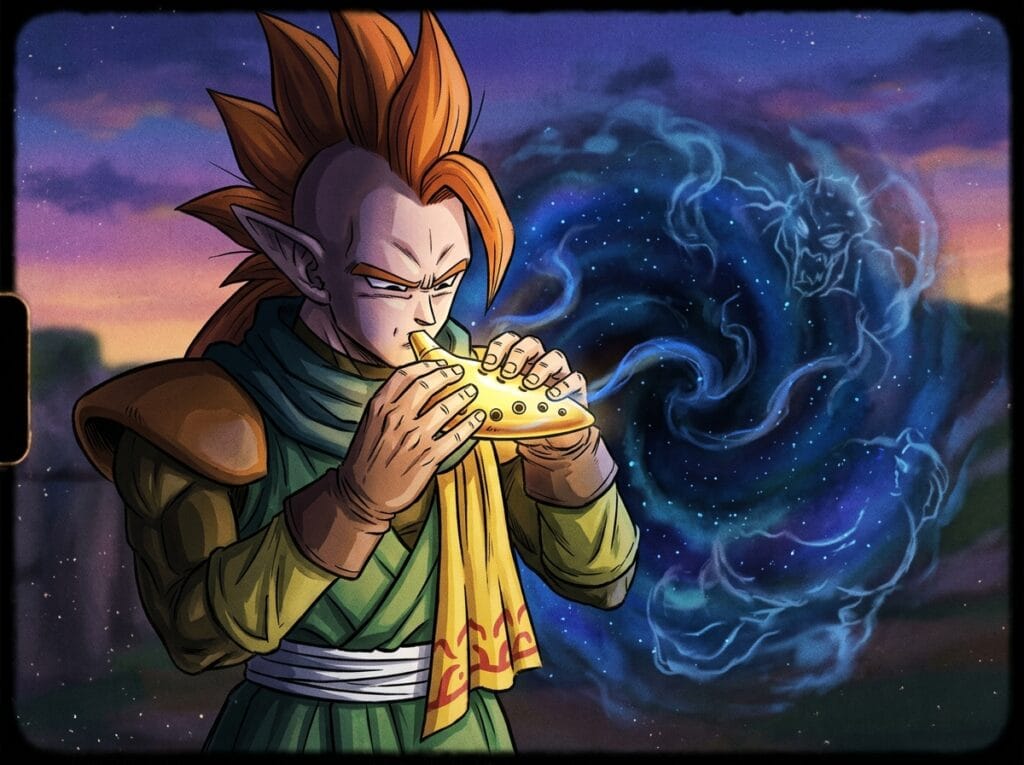
The legend of the tapion hero flute is one of the most haunting and beautiful stories in the entire Dragon Ball Z universe. Originally a sacred relic from the Planet Konats, this mystical ocarina was the only thing standing between peace and the total destruction of the galaxy. If you’ve ever watched Tapion play that iconic melody to suppress the phantom Hirudegarn, you know why I am obsessed with owning a piece of this history.
Whether you are a cosplayer wanting to complete a movie-accurate look or a collector searching for a high-quality prop for your shelf, finding the right replica can be tricky. Some versions are playable instruments that capture that melancholic tune, while others are high-end display pieces meant to look exactly like the wizard’s gift. I’ve tracked down the best options available so you can decide which version is worth your hard-earned Zeni.
Key Takeaways
- The Hero Flute is a sacred Konatsian relic engineered to generate mystical barriers and suppress the phantom monster Hirudegarn.
- The instrument serves as a symbol of sacrifice and heroism, as Tapion used its melody to seal the monster within his own body for a thousand years.
- The flute represents the emotional passing of the torch between Tapion and Trunks, bridging the gap between a legendary past and the future of Earth’s protectors.
- High-quality replicas and figures must prioritize accurate scaling and detail, such as wood-grain textures, to properly capture the flute’s role as Tapion’s defining accessory.
Origins Of The Sacred Konatsian Flute
Long ago on the distant Planet Konats, a group of wicked sorcerers brought a terrifying phantom monster named Hirudegarn to life. To stop this ancient evil from destroying their world, a wise Konatsian wizard crafted a pair of sacred flutes with the power to suppress the beast. These mystical instruments allow the user to play a melody that creates an impenetrable barrier and forces the monster back into a dormant state. Tapion and his younger brother Minotia were chosen as the legendary heroes to wield these relics and protect their people. This backstory sets the stage for one of the most emotional character arcs in the series, showing how Tapion sacrificed his freedom to keep the universe safe (Dragon Ball Z Movie 13, Wrath of the Dragon).
The flutes were more than just musical instruments because they acted as the primary keys to sealing Hirudegarn’s physical form. After the monster was split in half, Tapion used his flute to trap the upper torso inside his own body while Minotia did the same with the lower half. Because the monster could never be fully destroyed, Tapion agreed to be locked away in a magical music box to ensure the two halves would never reunite. This heavy burden turned the flute into a symbol of tragedy and heroism that stayed with Tapion for a thousand years. When he finally arrives on Earth, the flute becomes the bridge that connects his lonely past to his new friendship with young Trunks (Dragon Ball Z Movie 13, Wrath of the Dragon).
If you are looking to add a piece of movie history to your shelf, understanding this lore makes owning a replica or a Tapion figure much more rewarding. The flute is the defining accessory for any Tapion collectible, representing the bond he eventually shares with the Briefs family. Since the instrument is so central to his identity, I always look for figures that include the flute as a removable piece or a sculpted detail. It is a great way to remember the hero who gave Trunks his iconic sword and taught us about true bravery. Seeing the flute on a high-quality statue or action figure instantly brings back the memory of the tragic tale of Tapion and Minotia from the film (Dragon Ball Z Movie 13, Wrath of the Dragon).
How The Hero Flute Seals Evil

The Hero Flute is much more than a simple musical instrument because it carries the sacred power to hold back a literal nightmare. In the movie, we see Tapion use this sacred Konatsian relic to create a mystical melody that acts as a cage for the phantom monster Hirudegarn. This song generates an incredible golden barrier that is strong enough to deflect massive energy blasts and physical strikes from the beast. By playing the flute, Tapion is able to physically suppress the monster and pull its essence into his own body to keep it from destroying everything in sight (Dragon Ball Z Movie 13: Wrath of the Dragon).
I find the connection between the flute and the host to be one of the most tragic but heroic parts of the story. Because the flute seals the upper half of the monster inside Tapion, he can never truly rest or sleep, as the creature tries to escape the moment he loses focus. The flute acts as a lock on a door that must be constantly guarded, which is why Tapion originally asked to be sealed inside a music box. It is this heavy burden that makes his eventual bond with Trunks so meaningful, as the young Saiyan represents the peace Tapion can only find through the flute’s protection (Dragon Ball Z Movie 13: Wrath of the Dragon).
If you are a collector looking for the best Tapion merchandise, the flute is usually the standout accessory that determines if a figure is worth your money. High-quality statues often feature the flute with a beautiful wood-grain texture or metallic finish to capture its legendary status. When I look for a great Tapion figure, I always check if the flute is scaled correctly to his hands so he can be posed in his iconic playing stance. Whether it is a detailed professional action figure or a static gallery piece, the inclusion of a well-sculpted Hero Flute is what truly brings the character’s backstory to life on your shelf (Dragon Ball Z Movie 13: Wrath of the Dragon).
Tapion Passing The Torch To Trunks
The connection between Tapion and Kid Trunks is one of the most touching relationships in the entire series, serving as the emotional heart of the film. When Tapion first arrives on Earth, he is a lonely warrior burdened by the curse of the phantom Hirudegarn and the loss of his younger brother. Trunks sees this loneliness and tries to bridge the gap with kindness, eventually forming a brotherly bond that helps Tapion find peace. This friendship is solidified through the Hero’s Flute, as the iconic melody becomes a symbol of their shared trust. You can see how this mentorship shapes Trunks into a more disciplined and responsible hero during the climactic battle in Dragon Ball Z Movie 13, Wrath of the Dragon.
I love how the film subtly explains the origin of Future Trunks’ iconic fighting style through this specific interaction. Before Tapion leaves, he passes his legendary sword to Trunks, signifying that the young boy has the heart of a true protector. This moment bridges the gap between the playful Kid Trunks we know and the hardened warrior from the future timeline. The flute’s melody and the gift of the blade represent a passing of the torch that defines the character’s destiny across different dimensions. It makes the sword feel like more than just a weapon, turning it into a legacy of courage and friendship in Dragon Ball Z Movie 13, Wrath of the Dragon.
If you are a collector looking to capture this legendary moment, finding a figure that includes both the sword and the Hero’s Flute is a must. Many high-quality statues and action figures focus on the detail of the ocarina to highlight Tapion’s Konatsian heritage. When I look for the best versions to buy, I always check if the flute is scaled correctly to fit in the character’s hands for iconic posing. These accessories are what make a piece stand out on a shelf, especially for fans who appreciate the deep lore of the movie characters. Having a physical reminder of the bond between Tapion and Trunks is a great way to celebrate one of the best stories in Dragon Ball Z Movie 13, Wrath of the Dragon.
The Heart of Tapion’s Hero Flute
The Hero Flute is far more than just a musical instrument because it represents the deep, emotional bond between Tapion and Trunks. Throughout the movie, we see how this mystical ocarina bridges the gap between a lonely legendary hero and a boy looking for a brother figure. It serves as a symbol of protection and sacrifice, reminding us that true strength often comes from the burdens we carry for others. Even though it was originally meant to contain a monster, it ultimately became the catalyst for one of the most touching friendships in the entire franchise.
If you are a collector looking to capture a piece of Dragon Ball history, adding a replica of Tapion’s flute to your shelf is a fantastic choice. While many figures focus on combat and power levels, this artifact highlights the storytelling and lore that make the films so memorable. It is a unique conversation piece that stands out among the usual sea of Saiyans and energy blasts. Whether you want a high-end prop or a detailed statue of Tapion holding the instrument, it is a worthy investment for anyone who appreciates the sentimental side of the series.
Ultimately, the legacy of the Hero Flute lives on because it gives us a glimpse into the passing of the torch between generations. Seeing Trunks receive a gift from a hero he admires adds a layer of depth to his character that resonates with fans long after the credits roll. If you want a collectible that tells a story rather than just looking cool, this legendary ocarina is the perfect pick. It remains a timeless reminder of a hero who chose to suffer in silence to keep the world safe.
Frequently Asked Questions
1. What is the origin of the Tapion hero flute?
The flute is a sacred relic from the Planet Konats, created by a wise wizard to stop a phantom monster. It was specifically designed to suppress and seal away the evil beast known as Hirudegarn (Dragon Ball Z Movie 13, Wrath of the Dragon).
2. How does the flute actually work against Hirudegarn?
When a hero plays the flute’s specific melody, it creates a powerful mystical barrier that the monster cannot penetrate. This music forces the phantom back into a dormant state, allowing the user to trap the beast inside their own body (Dragon Ball Z Movie 13, Wrath of the Dragon).
3. Who were the original heroes chosen to play these flutes?
Tapion and his younger brother Minotia were the two legendary heroes selected to wield these instruments. They each used a flute to seal half of Hirudegarn’s body inside themselves to save their people (Dragon Ball Z Movie 13, Wrath of the Dragon).
4. Can you actually buy a playable version of the flute?
Yes, there are several versions available ranging from high-end display props to functional ocarinas that play music. Some replicas are specifically tuned so you can recreate the haunting melody from the movie yourself.
5. Is the flute considered a musical instrument or a weapon?
In the Dragon Ball universe, it serves as both a sacred musical instrument and a vital defensive tool. It is the only weapon capable of controlling the upper and lower halves of the phantom monster (Dragon Ball Z Movie 13, Wrath of the Dragon).
6. What happened to the flutes after the battle with Hirudegarn?
Tapion kept his flute as a symbol of his journey and his sacrifice to keep the universe safe. It remains one of the most iconic and emotional items in the entire series because of its connection to Trunks (Dragon Ball Z Movie 13, Wrath of the Dragon).