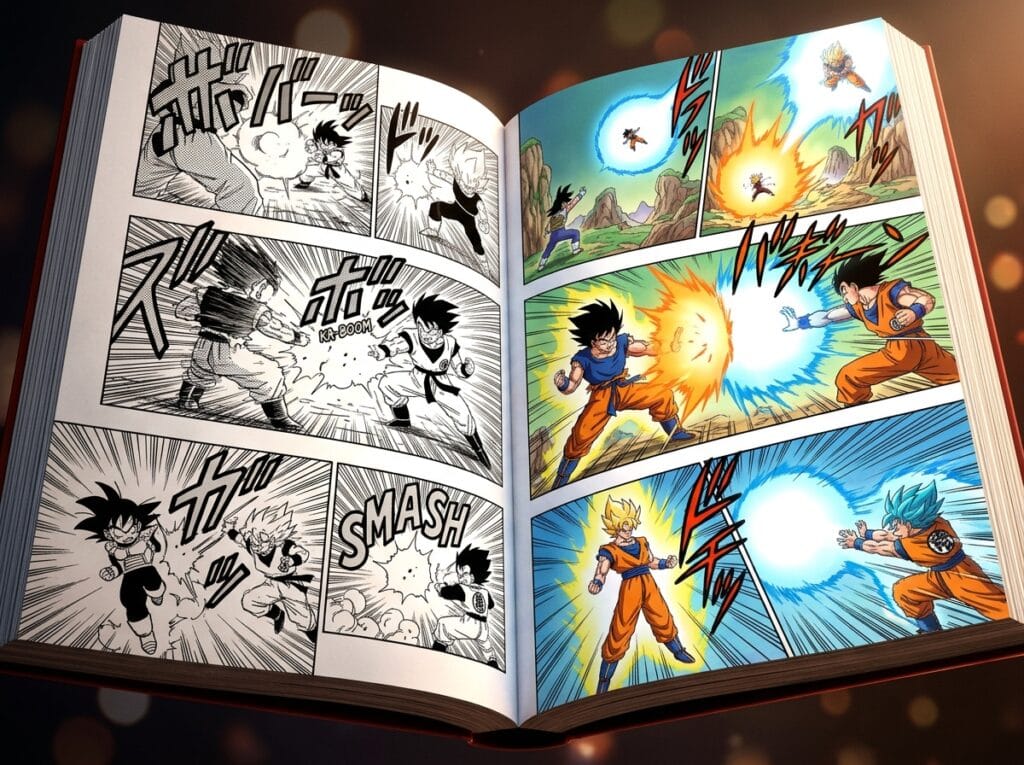
Dragon Ball manga differences go beyond small changes in dialogue or animation. When I compare the manga with its anime adaptations, I notice differences in pacing, filler scenes, character moments, and even the way major battles unfold. These details can change how a familiar story feels.
The original manga and the Dragon Ball and Dragon Ball Z anime remain fairly close, while Dragon Ball Z Kai mainly trims filler and tightens the pacing. Dragon Ball Super is a bigger exception because its manga and anime were developed in parallel. As a result, they take different paths through several arcs, battles, and character choices.
Key Takeaways
- The original 42-volume Dragon Ball manga is the most unified and concise version of the classic story, with faster pacing, less filler, and Toriyama’s original visual timing intact. The anime adds music, voice acting, extended battles, and extra character moments but often slows the narrative.
- Dragon Ball Z Kai is the best animated middle ground: it preserves the main story while cutting much of Dragon Ball Z’s filler, repeated footage, and pacing delays. It is closer to the manga without sacrificing animation, sound, or performances.
- Dragon Ball Super’s manga and anime are distinct versions because they were developed in parallel. They share major arcs and ideas but differ substantially in pacing, event order, battles, character roles, and story details, making both worth exploring.
- Choose the original manga for the fastest and most direct experience, Dragon Ball Z Kai for streamlined animation, and the older anime for expanded scenes and a slower presentation. For Dragon Ball Super, compare both formats rather than treating one as a definitive adaptation.
Original Manga Versus Dragon Ball Anime
The original 42-volume manga presents the entire story as one continuous series, while the anime divides it into Dragon Ball and Dragon Ball Z. I find that this makes the manga feel more unified because the shift from Goku’s childhood adventures to the larger Saiyan, Namek, Android, Cell, and Buu battles happens within the same publication. The manga usually moves faster because each chapter advances the story without opening themes, recaps, or extended pauses. Dragon Ball Z often slows major confrontations with added reaction shots, repeated dialogue, and anime-only material. This difference is especially noticeable during long battles, where the manga can deliver several story developments while the anime builds suspense around a single exchange.
The manga also keeps more of Akira Toriyama’s quick comedy and visual timing together, especially in the early Dragon Ball material. The anime expands many character moments, giving figures such as Piccolo, Vegeta, Gohan, and Krillin extra scenes that can make their relationships easier to follow. Some additions are meaningful, while others are filler, which means they were created for the anime instead of adapted from the manga. Violence can also feel different because the printed version shows Toriyama’s original panels directly, while television standards and international broadcasts sometimes reduced blood, changed dialogue, or softened certain scenes through censorship. As a result, the tone may shift between versions even when the main events remain the same.
When I compare the major arcs, I see the manga as a compact version of the essential story and the anime as a broader presentation of it. Dragon Ball Z adds training scenes, side battles, comic interludes, and emotional pauses. These additions can strengthen supporting characters, but they can also interrupt the story’s momentum. The anime’s division into two series gives the Saiyan arrival a stronger sense of transition, even though the manga does not treat Dragon Ball and Dragon Ball Z as separate original series. I prefer the manga for the clearest view of the plot and pacing, while the anime offers expanded character moments, music, voice performances, and a more gradual presentation of each arc.
Dragon Ball Z Versus Dragon Ball Z Kai

Dragon Ball Z Kai follows the original Dragon Ball manga more closely than Dragon Ball Z because it removes much of the anime-only filler. I see this most clearly in the Saiyan and Frieza stories, where Kai moves between major events with fewer detours and less repeated footage. Long battles are also shortened, so moments that took many episodes in Dragon Ball Z generally reach their conclusions sooner in Kai. The main plot and character relationships remain familiar because Kai is a revised version of the existing anime, not a separate adaptation made directly from the manga.
The difference in pacing continues through the Cell and Majin Buu stories, although Kai still includes material created for television. Scenes are trimmed, repeated reactions are reduced, and transitions are adjusted to create a more focused version of the story. This makes Kai feel closer to the manga’s quick movement from one panel to the next, while Dragon Ball Z often expands short manga moments into extended action sequences. I find this comparison useful because it shows that “more faithful” does not mean “identical.”
Kai also changes the viewing experience through its production choices. Its music differs from the original Dragon Ball Z soundtrack in many releases, and the voice performances were largely recorded again, giving familiar characters new deliveries. Some broadcasts also included edits to violence, language, or other content, so the exact version can affect how closely it resembles the manga’s tone. Since the manga has no animation, music, or voice acting, these differences belong to the anime versions rather than the printed story itself.
Dragon Ball Super Manga Versus Anime
I treat Dragon Ball Super as a separate comparison because its manga and anime were developed in parallel instead of one being a straightforward adaptation of the other. The manga moves quickly through Battle of Gods and Resurrection F, while the anime gives those stories more room and presents some events in a different order. That pattern continues in the Universe 6 arc, where the manga shortens several matches and changes how fighters such as Goku, Vegeta, and Hit are portrayed. As a result, the manga often feels more compressed and tactical, while the anime expands battles, character moments, and power progression.
The differences become even clearer in the Future Trunks and Tournament of Power arcs, where major fights, character roles, and story details do not always match. I also compare how the two versions handle transformations, Ultra Instinct, eliminations, and the balance between familiar heroes and supporting fighters. After the Tournament of Power, the manga continues with the Moro and Granolah stories, while the anime has not covered those arcs in the same serialized form. This makes a direct comparison less even. Looking at story order and creative emphasis, rather than asking only which version is more accurate, shows why Dragon Ball Super manga differences are more substantial than the usual changes between a manga and its animated adaptation.
Choosing Between Dragon Ball Manga And Anime

I find the original Dragon Ball manga best for readers who want the fastest and most direct version of the story. It is one continuous 42-volume series, while the split between Dragon Ball and Dragon Ball Z mainly comes from the anime and international releases. The manga moves quickly because it avoids extended reactions, repeated scenes, and most filler. Toriyama’s artwork also gives the fights and comedy a clear, energetic style. The anime adds music, voice performances, dramatic pauses, and extra character moments, which can make emotional scenes feel larger. I recommend the anime if those added moments matter more to you than a faster reading pace.
Dragon Ball Z Kai is a useful middle option for viewers who prefer animation but have little patience for filler. It trims much of the material added to the original Dragon Ball Z broadcast, bringing the pacing closer to the manga while keeping color, sound, and voice acting. I would choose the original manga for the most streamlined experience, Z Kai for a faster animated adaptation, and the older anime when extra scenes and a slower build add to the enjoyment. These versions follow the same main story in broad terms, so the choice mostly depends on how much added material you want. The manga offers stronger pacing and direct artwork, while animation adds movement, music, and expanded character moments.
Dragon Ball Super requires a different comparison because its manga and anime were developed in parallel instead of having the anime simply adapt a finished manga. Both versions share major ideas, but they can differ in pacing, event order, character roles, battles, and the amount of detail given to certain arcs. For a streamlined journey, I would read the original 42-volume manga first, watch Dragon Ball Z Kai next, and then use the Dragon Ball Super manga and anime as complementary versions instead of expecting one to replace the other. The Super manga is compact and often moves quickly, while the anime may spend more time on fights and character interactions. Comparing both is the best way to appreciate the full range of Dragon Ball manga differences without treating every change as a contradiction.
How the Original Manga Differs from the Anime
The biggest Dragon Ball manga differences appear in pacing, structure, and the amount of extra material added for animation. I find the original manga to be the most compact version of the classic story because it presents one continuous 42-volume narrative without the anime’s longer battles, filler episodes, or extended scenes. The Dragon Ball and Dragon Ball Z labels mainly reflect the anime and international publishing format, rather than a separate split in the original Japanese manga. For readers who want the clearest route through the core story, I believe the manga is the best starting point.
Dragon Ball Z Kai offers a faster animated version of the same general storyline by trimming much of the filler and reducing slow sections. It still uses color, music, voice acting, and motion to create an experience the manga cannot provide, but its tighter focus makes it easier to follow than the original television adaptation. I see Kai as a useful middle option for readers who want the classic story in animated form without committing to every extended scene. The main events and character arcs remain familiar, even when the presentation differs.
Dragon Ball Super requires a different kind of comparison because its manga and anime were developed in parallel instead of one simply adapting a finished version of the other. As a result, they share major ideas and story arcs while differing in pacing, scene order, character focus, and some plot details. I think of them as two related versions that expand the same Dragon Ball era, not as a single definitive version with minor changes. Taken together, these differences show why the original manga is the most concise foundation, Kai is the quickest animated adaptation of the classic material, and Super is best explored through both of its distinct forms.
Frequently Asked Questions
1. What are the biggest differences between the Dragon Ball manga and anime?
The biggest differences involve pacing, filler, character moments, and battle structure. The manga usually moves faster because it does not include opening themes, recaps, repeated reactions, or long anime-only scenes. The anime often expands emotional moments and fights, which can make the story feel fuller but less direct.
2. Is the original Dragon Ball manga different from the Dragon Ball and Dragon Ball Z anime?
The original manga tells the complete story as one continuous series across 42 volumes, while the anime divides it into Dragon Ball and Dragon Ball Z. I find that the manga feels more unified because Goku’s childhood adventures and later battles flow together without a major series break. The anime follows the same main story closely, but it adds scenes and sometimes slows the action.
3. Does Dragon Ball Z have more filler than the manga?
Yes, Dragon Ball Z includes anime-only material that does not appear in the manga. This filler can add side stories, training scenes, extra character interactions, and longer pauses during battles. Some additions are entertaining, but readers who want the fastest version of the main story will usually prefer the manga.
4. Why does the Dragon Ball manga feel faster than the anime?
The manga advances the story from chapter to chapter without opening sequences, recaps, or extended reaction shots. A fight that takes many anime scenes may cover several important developments in a small number of manga chapters. This faster pacing also keeps Toriyama’s comedy, action, and visual timing close together.
5. How is Dragon Ball Z Kai different from the original Dragon Ball Z anime?
Dragon Ball Z Kai mainly removes filler and tightens the pacing so the anime follows the manga more closely. It keeps the major story, battles, and character development while cutting many anime-only scenes and repeated moments. I recommend Kai for viewers who want an animated version with less waiting between major events.
6. Are the Dragon Ball Super manga and anime the same story?
No, Dragon Ball Super is a major exception because the manga and anime were developed in parallel. They share the main setting and broad story ideas, but several arcs, battles, power choices, and character decisions unfold differently. I treat them as separate versions of the story rather than expecting one to match the other scene for scene.
7. Does the manga show characters differently from the anime?
Yes, the manga and anime can give characters different amounts of attention. The anime adds extra scenes for characters such as Piccolo, Vegeta, Gohan, and Krillin, which can make their relationships and reactions easier to follow. The manga is more compact, so it often relies on quick expressions, short exchanges, and Toriyama’s visual storytelling.
8. Should I read the Dragon Ball manga or watch the anime first?
Choose the manga if you want the most direct version of the complete story, quicker pacing, and fewer filler scenes. Choose the anime if you enjoy voice acting, music, longer battles, and expanded character moments. For Dragon Ball Super, I recommend comparing both versions because their different story choices make each one worth experiencing.

