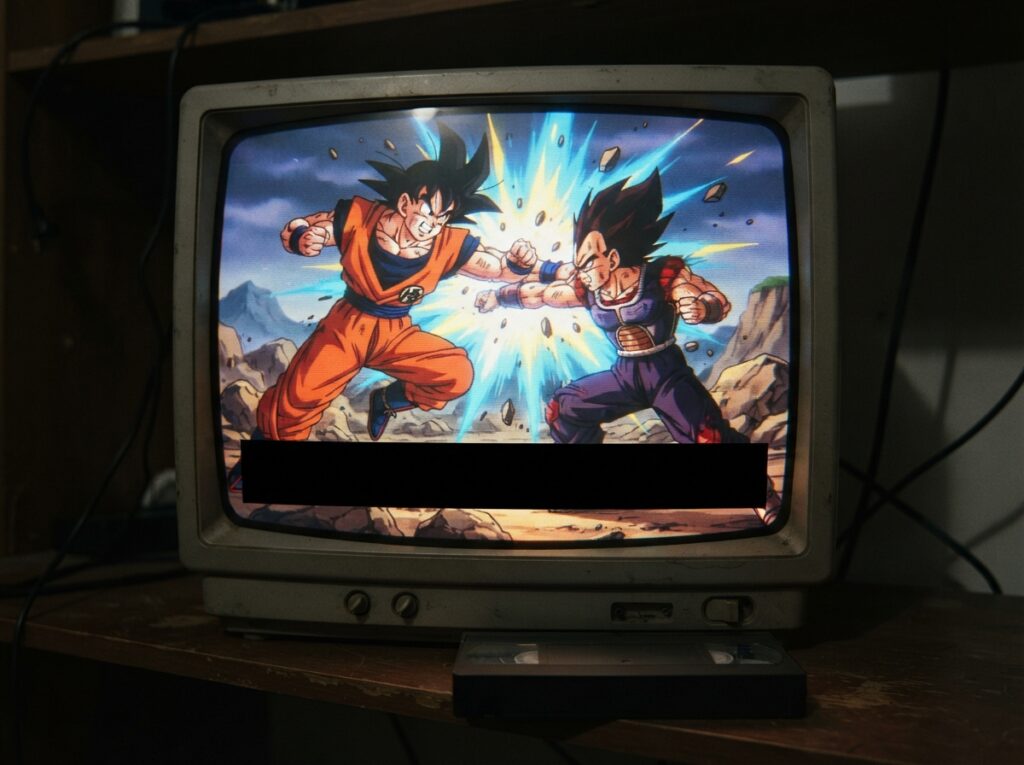
Dragon Ball censorship has never produced one definitive edited version. Early U.S. Dragon Ball Z TV edits changed dialogue and visuals, while home-video releases could differ. In a 1998 interview, FUNimation producer Barry Watson said network reviewers proposed replacing references to death with “another dimension,” and that the team painted out blood and direct punches for children’s television. He also described Pioneer releasing uncut Dragon Ball episodes alongside TV versions. Watson’s interview shows how broadcast and home-video versions could take separate paths.
Regional decisions add another layer. The UK’s BBFC records list Dragon Ball Z classifications for physical media and streaming, while a Cartoon Network broadcast in India prompted a complaint about magazine imagery and a council finding. Those cases involve different systems and content, not one worldwide standard. To compare versions, we look at where and how they were released, and whether the change involved dialogue, images, or classification. BBFC records offer one example of how regional ratings describe content.
Key Takeaways
- We found that Dragon Ball has no single censored version, because edits and classifications vary by country, broadcaster, and release format.
- FUNimation producer Barry Watson said in a 1998 interview that U.S. children’s-TV edits replaced some death references with “another dimension” and painted out blood and direct punches, while Pioneer also released uncut episodes alongside TV versions.
- BBFC records classify specific UK Dragon Ball Z physical-media and streaming releases, but a rating describes content suitability and does not by itself prove that scenes were cut.
- In India, Cartoon Network said it removed portions of an episode broadcast on October 22, 2024, after a complaint about magazine imagery; a May 22, 2025 council order found the episode offensive under IBDF guidelines, not as a worldwide rule.
- To compare Dragon Ball versions, identify the country, release format, decision-maker, and whether the claim concerns changed dialogue, altered or removed images, or an age classification.
Is There One Censored Dragon Ball Version?
No. There is no single censored Dragon Ball version that represents every release. Changes varied by broadcaster, country, and release format, so a TV edit, a home-video edition, and a regional rating may each describe a different part of a release’s history.
A television edit changes the programme itself, such as its dialogue or images. Home releases can offer a different version from the one shown on TV, but the label “home release” does not mean every edit has been removed. U.S. broadcast indecency rules provide relevant context: the safe-harbor rule limits indecent programming on broadcast radio and television between 6 a.m. and 10 p.m., but it does not require every violence or dialogue edit described in Dragon Ball Z’s production history. The U.S. broadcast safe-harbor rule
An age classification is a decision about who a release is suitable for, not an edit to the programme. The British Board of Film Classification (BBFC), for example, has separate records for Dragon Ball Z physical-media and streaming releases, with descriptions ranging from mild fantasy violence to moderate violence and gore. Those ratings describe content for audiences. They do not, by themselves, show that scenes were cut. BBFC classification records
We compare U.S. Dragon Ball Z broadcasts with home releases, then look at UK classifications and an India broadcast complaint. The India case involved magazine imagery in a Cartoon Network episode. The broadcaster removed the material, and the Broadcasting Content Complaints Council found the episode offensive under its self-regulatory guidelines. Each example reflects a different decision-making process, not one worldwide standard for Dragon Ball. The council’s order
What Did U.S. TV Change in Dragon Ball Z?

Early U.S. edits of Dragon Ball Z reflected network review for children’s programming, as well as the production team’s choices about adapting the show for TV. FUNimation producer Barry Watson said network censors reviewed scripts and proposed replacing references to characters’ deaths with “another dimension.” The phrase softened the dialogue, but Watson’s account describes a proposed substitution during the program’s review process, not a wording change required by a general law. Watson’s 1998 Animerica interview
Watson also described changes to the visuals: the team painted out blood and direct punches to the face, and sometimes used cutaways or graphic splashes to hide the moment of impact. The edits could involve more than changing a single shot. Watson said the team might work through 15 to 20 minutes of footage at 30 frames per second, a process involving tens of thousands of animation cels. The interview reprint describes the work as a painstaking response to the standards for American children’s TV.
Syndication had already shaped the show’s U.S. broadcast version before its move to Cartoon Network. A 1999 Dallas Observer report said the first 53 U.S. Dragon Ball Z episodes were edited for syndication standards before FUNimation moved the series to Cartoon Network in 1998. The report also described blood removal and digitally painted changes, placing Watson’s account within an earlier round of broadcast editing. The Dallas Observer report
The U.S. broadcast indecency safe harbor is relevant background, but it does not explain every edit Watson described. The law bars indecent programming on broadcast radio and television between 6 a.m. and 10 p.m. It is not a blanket requirement to remove every violent image or replace every line of dialogue. Watson’s account instead points to script review and visual adjustments made for children’s television, while the safe-harbor rule addresses indecent broadcast content. The U.S. Code defines that broadcast rule.
How Do Home Releases Differ From TV?
Home releases can offer a different version from the one shown on television, but that does not mean every disc or streaming edition is uncut. In a 1998 interview, FUNimation producer Barry Watson said Pioneer was releasing uncut Dragon Ball episodes as well as television versions. The 1998 Animerica interview documents those options at that time, not a rule for every later release. The distinction matters because a TV version is tied to a broadcast, while a home release is a separate release format. A title might be available in more than one version, but the format alone does not tell viewers which edits remain. Nor does one company’s release history establish that other distributors, countries, or platforms use the same cut.
Dragon Ball Z Kai provides a later U.S. home-release example. The series premiered on Japan’s Fuji Television in April 2009, and FUNimation announced that U.S. DVD and Blu-ray releases would begin on May 18, 2010. Those dates show how a series could move from a Japanese television premiere to U.S. home video. They do not establish that every edition in every market matched the broadcast. Pioneer’s Dragon Ball releases and FUNimation’s Dragon Ball Z Kai DVDs and Blu-rays show that audiences could encounter different release options. They do not guarantee that every territory or platform carries the same cut, or that every home release restores all material absent from a TV version.
How Did UK Classifications Describe Dragon Ball Z?

The BBFC’s Dragon Ball Z record shows UK classifications for physical-media and video-on-demand (VOD) or streaming releases dated September 16, 2013. Some entries describe mild fantasy violence, while others describe moderate violence and gore. The descriptions therefore differ across the listed release entries, rather than giving one content description for every Dragon Ball Z release in the UK. The BBFC record
The records concern classifications for particular entries. They do not prove that all UK versions were identical, or that scenes were edited or removed. A classification describes the content considered for a listed release. It is not, by itself, evidence of a cut. This distinction matters when comparing broadcasts, physical releases, and streaming editions: the record identifies how particular entries were classified, not whether their footage matched.
The BBFC’s Classification Guidelines explain how the board assesses content when assigning classifications. The guidelines cover ratings from U through 18 and R18, and the BBFC updates them every four to five years. They set out the standards behind classification decisions, so a rating reflects an assessment of content for audiences. The BBFC Classification Guidelines
What Happened to Dragon Ball in India?
In India, a viewer’s complaint about adult-magazine imagery led Cartoon Network to remove the referenced portions of a Dragon Ball episode. The Broadcasting Content Complaints Council later found the episode explicit and offensive under IBDF’s self-regulatory guidelines. An Indian Broadcasting & Digital Foundation order dated May 22, 2025 concerns an episode broadcast on October 22, 2024, after a viewer raised the concern.
Cartoon Network told the council that it had removed the portions identified in the complaint and reviewed the season. The broadcaster said it would air the programme again only after completing a content assessment. The order records Cartoon Network’s response, which describes the broadcaster’s actions after receiving the complaint, rather than a finding that every Dragon Ball episode required the same changes.
The council found the episode explicit and offensive, and said it contravened Theme 2, Category G of the IBDF self-regulatory guidelines on sex, obscenity, and nudity. The council’s finding applies to this complaint under India’s self-regulatory process. It is not a worldwide Dragon Ball censorship rule, nor is it the same as U.S. broadcast indecency rules. UK BBFC records, by contrast, classify particular physical-media and streaming releases; a classification does not itself show that a broadcaster removed scenes. India’s decision is a specific response to the content raised in this case, not evidence that the same standard governed broadcasts in the United States or United Kingdom.
How to Compare Dragon Ball Versions

Before calling a Dragon Ball episode “censored,” we compare what was released, where it was shown, and what kind of change is being discussed. Our checklist separates edits to the programme from decisions about access or age suitability.
- Release format: Is the example from a television broadcast, a home-video release, or a VOD/streaming entry? A TV version and a disc release may differ, while a streaming classification alone does not prove that footage was cut.
- Country and decision-maker: Which country, broadcaster, or classification body is involved? U.S. children’s-TV review, UK BBFC ratings, and India’s broadcaster complaint process are not one shared standard.
- Type of change: Is the claim about dialogue, visual alterations, removal of a programme or scene, or a content classification? Those describe different outcomes and should not be treated as interchangeable.
The India example is specific to a complaint: Cartoon Network said it removed portions raised in the complaint, and the Broadcasting Content Complaints Council found the episode offensive under IBDF guidelines, as recorded in the council’s order.
When discussing an edit, compare the same episode in the same release type, and identify the country and broadcaster or classification body involved.
Read Dragon Ball Edits in Context
If you’re checking a U.S. television edit, start with Barry Watson’s 1998 Animerica interview. Use it to understand the production choices he described, then note the country, broadcaster, and release format for the version you want to compare. The interview documents one period of Dragon Ball’s release history. It cannot confirm that a later broadcast or disc uses the same edit.
For a UK physical-media or streaming entry, look up the specific Dragon Ball Z listing in the BBFC record. Read the content description as a classification, not proof of a cut.
If your question concerns the India Cartoon Network complaint, read the Broadcasting Content Complaints Council order. It records the broadcaster’s response and the council’s finding in that case. Keep the conclusion tied to the complaint and the material it addressed; the order does not establish how other regions handled the same content.
Frequently Asked Questions
1. Does Crunchyroll stream an uncensored version of Dragon Ball?
The available release records do not establish whether Crunchyroll currently streams an uncensored Dragon Ball version. A Crunchyroll listing alone does not show whether its footage matches an uncut home-video edition. The 1998 interview with FUNimation producer Barry Watson documents different TV and home-video options from that period.
2. Is Dragon Ball manga censorship different from anime censorship?
Manga and anime have separate release histories, so anime edits do not establish whether a manga edition was changed. The evidence here documents anime broadcasts and releases, not censorship of Dragon Ball manga.
3. Is Dragon Ball Super censored on streaming services?
The available evidence does not establish whether Dragon Ball Super is censored on a particular streaming service. A rating does not prove that footage was cut: the BBFC’s Dragon Ball Z listings classify specific releases but do not, by themselves, show whether scenes were removed.
4. Is there a way to turn off censoring on Crunchyroll?
The available release records do not establish that Crunchyroll has a setting that removes edits from Dragon Ball. If a stream uses an edited version, a viewing setting should not be assumed to restore footage that was removed from that version.
5. Does Dragon Ball have inappropriate content?
Dragon Ball can include content some viewers may find inappropriate, including fantasy violence, blood, and punches to the face. FUNimation producer Barry Watson described those elements among the visuals altered for American children’s TV in a 1998 interview.

